Moe Shariff · November 11, 2026
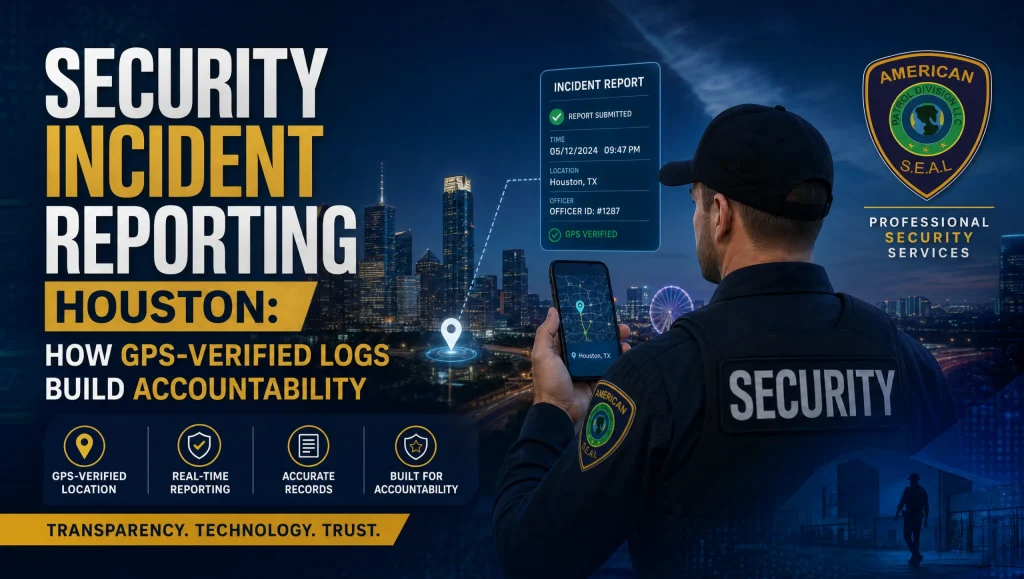
Security incident reporting Houston means consistent, time-stamped documentation of patrol activity and events on Houston properties—complete with GPS-verified routes, clear incident narratives, photo or video references, and follow-up actions. When done well, these reports create an auditable record that elevates accountability, supports compliance, and powers smarter, data-driven patrol decisions.
For apartments, multifamily communities, and HOAs across the Houston area, documentation gaps are where risk hides. GPS-verified, time-stamped logs turn routine patrols into concrete records you can review, audit, and act on—minimizing blind spots while strengthening resident safety, vendor oversight, and ownership-level reporting. If you’re evaluating providers, knowing what good patrol documentation looks like helps you set expectations and choose the right partner.
If you’re new to our team, you can learn more about our experienced security team and Houston security services on our homepage at https://americanspd.com/. When you’re ready to talk, contact our Houston team at https://www.americanspd.com/contact-us/ or request a free quote for a custom patrol plan at https://www.americanspd.com/free-quote/.
Plain-language definition and who uses the reports
At its core, security incident reporting is the practice of recording what happened, when it happened, where it occurred, who was involved, and what actions were taken. On Houston properties, these reports are used by:
Typical report components
Good patrol documentation is detailed yet easy to absorb. Look for:
Accountability you can audit
GPS-verified, time-stamped logs answer the essential questions: who was on site, where they patrolled, when they acted, and what actually happened. This creates a verifiable record managers and owners can audit without guesswork—especially important for larger Houston communities with multiple gates, amenities, and vendor access points.
From activity to insight with data-driven patrols
Logs become more powerful when reviewed for patterns. Over time, data-driven patrols help you:
Compliance readiness and clean documentation
Whether you’re preparing for an HOA review, working through a resident dispute, or documenting fire watch compliance, consistent reporting keeps you ready. Clean, properly time-stamped and GPS-verified documentation reduces confusion and saves time when stakeholders need to reconstruct events. When your partner prioritizes security incident reporting Houston standards, it’s easier to maintain compliance without adding noise to your day.
Pre-shift briefing, post orders, and zone priorities
Every shift should start with a briefing and a review of current post orders. On Houston multifamily sites, this often includes:
Mobile vehicle and foot patrols with GPS-verified, time-stamped entries
Guards document patrol passes and findings in real time. A complete record includes:
Real-time dispatch and incident documentation for escalations
When something escalates, 24/7 live dispatch coordinates the response and documentation. This creates a single timeline of:
Integrating CCTV monitoring and gate access control notes
Many Houston communities rely on cameras and controlled gates. Integrating CCTV and access notes into your patrol logs builds continuity:
Adjusting patrol focus based on heat maps and repeat calls
As time-stamped logs accumulate, trends come into focus. Managers can redirect patrol minutes to the right places and times—rather than simply adding hours—by:
Sharing digestible compliance reports with ownership and HOAs
Managers often need a clear, concise way to show “what’s happening and what’s improving.” Well-structured compliance reports make it easier to brief owners and boards with:
Coordinating with maintenance, leasing, and community teams
Security reports aren’t just for the guard roster. They support cross-functional work by:
On recent Houston multifamily patrols, our team documented several after-hours gate tailgating attempts. The GPS-verified entries and time-stamped photos helped the manager pinpoint peak times, tighten gate schedules, and post clearer signage. We also aligned specific patrol passes with trash enclosure checks, which cut down on nuisance issues without adding patrol minutes. That kind of small, practical adjustment adds up across a large property.
GPS-verified, time-stamped patrol logs
Expect verifiable logs for both vehicle and foot patrols, with clear timestamps and routes.
24/7 live dispatch with incident documentation
Live dispatch should link incoming alerts, on-site response, and follow-up in one auditable timeline.
Clear incident narratives and follow-up actions
Look for concise who/what/where/when narratives, photo/video references when applicable, and concrete next steps.
Property-specific post orders and fire watch capabilities
Your partner should tailor post orders to your property and support fire watch with proper documentation standards. For more on compliance, see our Houston fire watch services: https://www.americanspd.com/?p=3952
Licensed, bonded, insured; Texas DPS PSB license
Confirm your provider’s credentials. American S.E.A.L. Patrol Division is licensed, bonded, and insured; Texas DPS Private Security Bureau License #C28662701.
Armed and unarmed guards, courtesy officers for common areas
We staff commissioned armed officers and skilled unarmed guards, including courtesy officers who understand de-escalation and resident relations in shared spaces.
Mobile patrols with GPS-verified logs and real-time reporting
Our patrols generate time-stamped, GPS-verified documentation for both vehicle and foot coverage. If you’re comparing options, you may find our overview on GPS-verified mobile patrols helpful: https://www.americanspd.com/?p=3944
CCTV monitoring with real-time response and gate access control
We monitor CCTV feeds, coordinate with live dispatch, and document responses—including gate access entries and adjustments—so your timeline stays intact.
Fire watch services and property-specific security plans
From temporary system outages to construction phases, our fire watch services and reporting align with local requirements and your post orders. For a broader look at our capabilities, visit our Houston security services page: https://americanspd.com/
Note: Per our internal reports, heavily patrolled Houston zones have seen documented incident reductions of 60%+; results vary by property.
For quick reference, here are the key elements property teams should expect:
Houston communities often span large footprints with multiple entrances, steady visitor/vendor traffic, and shared amenities. That complexity makes standardized reporting invaluable: it aligns leasing, maintenance, community guidelines, and patrol coverage without relying on memory or anecdote. Our data-driven patrols and documented workflows aim to make your next budget discussion—or board meeting—more about solutions and less about uncertainty. For broader context on choosing coverage, you may find our Houston apartment security insights useful: https://www.americanspd.com/?p=3951
Site walk, risk review, and report format alignment
We begin security incident reporting Houston best practices with a property walk and risk review, then align on the reporting format you prefer—daily activity summaries, incident templates, and roll-up compliance reports.
Post orders and reporting cadence
We draft clear post orders with zone priorities and define how reporting flows:
Trial period and feedback loop
A short trial with regular check-ins helps confirm that patrol documentation answers your questions and supports your goals. We refine as needed, then lock in the cadence.
Security incident reporting Houston is about more than checking a box. When patrol documentation is GPS-verified and time-stamped, it creates accountability you can audit, strengthens compliance, and guides smarter, data-driven patrols—without adding noise to your day. If you’re ready to review options for your community, speak with dispatch or request a walkthrough. To learn more about our approach, explore our experienced security team and services at https://americanspd.com/, contact our Houston team, or get a custom patrol plan with a free quote at https://www.americanspd.com/free-quote/.
Internal resources and next steps:
American S.E.A.L. Patrol Division is licensed, bonded, and insured. Texas DPS Private Security Bureau License #C28662701. Address: 16420 Park Ten Place, #590, Houston, TX 77084.
Short answer: It’s GPS-verified, time-stamped patrol documentation used by managers, owners, HOAs, and risk partners to make informed decisions.
Expanded: Security incident reporting Houston means recording what happened, when, where, who was involved, and what actions were taken—supported by GPS-verified patrol routes, time-stamped entries, clear narratives, and follow-ups. Property managers, owners/asset managers, HOAs, and legal/insurance partners use these reports to audit coverage, track trends, validate vendor performance, and support claims or dispute resolution.
Short answer: Time-stamped logs, GPS routes, clear narratives, media references, and follow-up actions.
Expanded: Expect time-stamped entries for each patrol pass and action, GPS-verified routes for vehicle and foot patrols, concise incident narratives (who/what/where/when/response), photo or video references where appropriate, disposition/resolution steps, and follow-up tasks tied to your post orders. Roll-up compliance reports (daily, weekly, monthly) help summarize activity and outcomes.
Short answer: They create an auditable record that proves coverage and supports accountability.
Expanded: GPS-verified, time-stamped logs show who was on site, where they patrolled, when they acted, and what occurred—removing guesswork. For larger Houston communities with multiple gates and amenities, this verifiable trail makes it easier to audit performance, respond to questions confidently, and align patrols with actual risks.
Short answer: By reviewing patterns (hotspots, repeat calls) and adjusting patrol focus.
Expanded: Over time, logs reveal trends—like recurring issues near a pool after quiet hours or at mail kiosks during delivery windows. Managers can increase presence where it counts, schedule focused passes during peak problem times, and justify resource changes, lighting upgrades, or access control tweaks with evidence.
Short answer: Patrol entries are cross-referenced with camera time codes and gate activity notes.
Expanded: Integrating CCTV and gate access notes creates a single, coherent timeline. Reports can reference camera events, flag suspicious access attempts, note gate malfunctions, and include stills or video references for management review. This continuity strengthens incident reconstruction and compliance readiness.
Short answer: A single timeline links the alert, on-site response, actions, and outcome.
Expanded: With 24/7 live dispatch, the record typically shows when an alert came in, officer arrival time with GPS location, actions taken (warnings, resets, law enforcement notified), and the final disposition with follow-up tasks. This reduces confusion and speeds up reviews with boards or insurers.
Short answer: To share digestible snapshots of activity, resolutions, and next steps.
Expanded: Well-structured roll-ups provide weekly snapshots and monthly summaries covering incidents, resolutions, and recommendations. Clear before/after comparisons show the impact of changes to post orders or patrol focus, making budget and policy conversations more straightforward.
Short answer: In real time during patrol, with updates logged as events unfold.
Expanded: Officers document patrol passes and incidents as they happen, creating time-stamped entries and adding photos or notes when appropriate. Live dispatch coordinates escalations so managers can review a single, synchronized timeline without waiting for end-of-shift summaries.
Short answer: Small, verified entries add up to targeted improvements without extra hours.
Expanded: On recent Houston multifamily patrols, our team logged after-hours gate tailgating with GPS-verified timestamps and photos. The manager tightened gate schedules and added signage where it mattered most. We also paired targeted patrol passes with trash enclosure checks, which reduced nuisance issues without increasing patrol minutes—simple, practical adjustments guided by the data.
Short answer: Schedule a site walk, confirm risk priorities, and choose your reporting cadence.
Expanded: We begin with a property walk and risk review, then align on your preferred format—daily summaries, incident templates, and monthly compliance reports. A short trial with check-ins ensures the documentation answers your questions. Get started at americanspd.com, contact our Houston team, or request a free quote:
– Services overview: https://americanspd.com/
– Contact: https://www.americanspd.com/contact-us/
– Free quote: https://www.americanspd.com/free-quote/
Short answer: Yes—licensed, bonded, insured; we document fire watch to local standards.
Expanded: American S.E.A.L. Patrol Division is licensed, bonded, and insured; Texas DPS Private Security Bureau License #C28662701. We support fire watch services with proper, time-stamped documentation aligned to your post orders. For more, see our Houston fire watch resources: https://www.americanspd.com/?p=3952
Short answer: Only relevant details are recorded, with media references used when appropriate.
Expanded: Reports prioritize accuracy and necessity. They capture what’s needed to document an event—time, place, actions, and relevant media references—without unnecessary personal details. This approach supports accountability, compliance, and respectful handling of resident information.