Moe Shariff · September 3, 2026
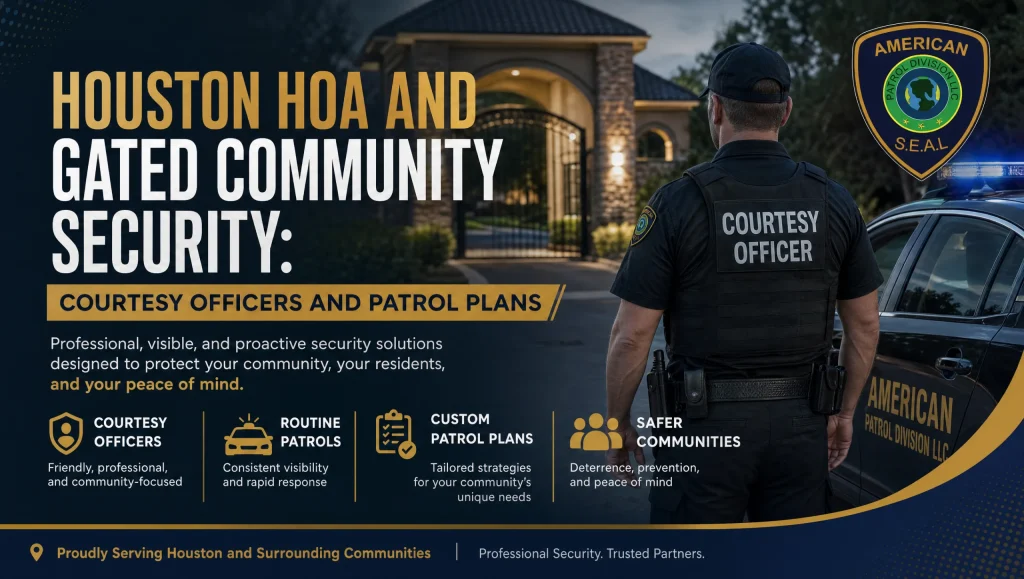
HOA Security Houston: Courtesy Officers and Patrol Plans for Gated Communities
HOA security Houston is about tailored protection for HOA and gated communities across Greater Houston—combining courteous, resident-facing coverage with targeted patrols, amenity enforcement, and overnight deterrence. The right program aligns courtesy officers, gated community patrols, and gate access support with GPS-verified logs, 24/7 dispatch, CCTV tie-ins, and property-specific post orders that match your board’s priorities across neighborhoods like Katy, Cypress, Memorial, and Westchase.
HOAs and gated communities in the Houston area face a familiar mix of needs: a visible presence that reassures residents, firm but respectful amenity enforcement, smooth gate operations, and after-hours patrols that actually prevent problems. As a licensed, bonded, and insured Houston provider (Texas DPS Private Security Bureau License #C28662701), American S.E.A.L. Patrol Division builds post orders around your community—courtesy officer coverage for day-to-day interactions, mobile and foot patrols with time-stamped, GPS-verified logs, real-time CCTV response, and 24/7 live dispatch based here in Harris County.
Courtesy officers focus on resident-facing duties: visibility, policy reminders, wellness checks during patrols, and de-escalation. They’re a strong fit for common areas, amenity checks, and community events. Security guards (commissioned officers) add higher-risk deterrence and incident response. Many Houston HOAs use a blend—courtesy officers for routine coverage and commissioned guards during specific risk windows or special situations. We provide both armed and unarmed options, defined by your post orders and budget.
Amenity enforcement is more than “checking the pool.” Clear closing times, posted rules, and consistent patrol touchpoints reduce complaints and curb late-night activity. Our patrols verify that access points are secured, control after-hours use of gyms and clubhouses, and document observed issues with photos and time stamps. During busy summer months, we often add short, frequent passes at peak times to reinforce rules without heavy-handed tactics.
Overnight patrols center on deterrence where and when it matters—entries, mail centers, parking areas, and amenity perimeters at or just after closing. Our 24/7 live dispatch routes calls in real time so officers can handle gate malfunctions, noise complaints, or trespassing, and then document outcomes for your board and property manager.
Gatehouses, call boxes, and visitor lanes work best with clear procedures. We align post orders with your access system—vendor codes, visitor check-ins, event guest lists—so residents experience smooth entry while non-residents receive consistent, polite screening. When paired with camera monitoring, we can flag tailgating or stuck gates and coordinate an immediate response.
“Data-driven” simply means we adjust to what’s happening on your property. We review incident history, resident feedback, and on-site observations to map routes that cover hot spots—mail areas, blind corners, and recurring noise pockets. In some HOAs, quick, frequent passes are more effective than long, infrequent ones; in others, targeted checks right after amenity closing prevent most issues with fewer minutes on site. Seasonal patterns in Houston—summer pool traffic, holiday deliveries, storm-related gate issues—also guide the schedule.
Vehicle patrols deliver faster coverage of perimeter roads and entries; foot patrols allow closer checks of pools, parks, fitness centers, and pedestrian paths. We use time-stamped, GPS-verified logs so boards can see exactly when and where patrols occurred. Logs can be summarized weekly or monthly for clean, board-ready reporting. For a deeper look at how GPS coverage works, see our related guide on mobile security patrols in Houston: https://www.americanspd.com/?p=3944
Well-written post orders reduce confusion and support consistent service. We include:
CCTV becomes a force multiplier when paired with patrols. Our team can monitor cameras, coordinate gate access, and dispatch officers when motion alerts or analytics flag activity after hours. Live dispatch closes the loop: we see something, we respond, and we document it. Learn how camera tie-ins streamline gate control here: https://www.americanspd.com/?p=3947
Parking violations and blocked fire lanes frustrate residents and create real safety risks. We help HOAs define a clear sequence: courtesy notification, recheck, then tow authorization if needed—documented with photos and timestamps. Coordination with your towing provider is built into post orders so enforcement stays consistent and professional, not confrontational.
Timing and tone make the difference. Brief patrol passes just before and after posted closing times, paired with polite reminders, typically reduce repeat issues. When needed, we escalate to written incident documentation for property management follow-up, maintaining a courteous approach throughout.
Mail center checks are quick but high impact. Officers verify that parcel lockers and mail areas are secure, look for propped doors, and log suspicious activity for board review. If your community sees theft clusters, we add short, randomized checks during typical delivery windows and early evening pickup times to increase visibility when it counts.
Regular lighting audits identify dark spots that invite vandalism. Patrols note outages, blocked fixtures, and overgrown vegetation so managers can prioritize maintenance. The combination of visible patrols and well-lit sightlines discourages opportunistic damage and night-time loitering.
Courtesy officers should be approachable, consistent, and calm—especially around amenities and at the gate. We train for concise, respectful reminders and non-escalatory body language. Residents should recognize officers and feel comfortable asking questions or reporting concerns, which builds trust and improves compliance.
Documentation should be simple and actionable: date, time, location, summary, and photos when appropriate. Boards typically receive monthly roll-ups with trends and recommendations; property managers get timely notifications on urgent matters. This structure makes it easier to adjust patrols or community rules based on real data.
A good security partner complements operations rather than complicating them. We coordinate with property managers, towing companies, landscapers, and gate vendors so scheduling conflicts and access issues don’t become service gaps. Clear contacts and service windows go into post orders to avoid confusion on busy days.
Start with known patterns: summer pool hours, holiday package surges, and seasonal visitor traffic. Higher-risk weeks may warrant more frequent overnight patrols; lighter periods can scale down. We recommend a quarterly review to fine-tune frequency without overspending, using incident data and resident feedback to guide adjustments.
Fixed-touch patrols (e.g., 10:00 p.m. and 1:00 a.m.) set expectations and deter routine violations. Randomized checks in between reduce predictability for anyone trying to game the schedule. GPS-verified logs confirm that both types occurred as planned and provide transparency to the board.
Aligning a patrol to start 10–15 minutes before closing and another shortly after resolves most after-hours pool or park use. Post orders should specify the reminder script, lockup steps, and who to contact if a gate or door won’t secure properly. That level of clarity helps officers resolve issues quickly and politely.
In Texas, reputable providers hold an active license through the Texas DPS Private Security Bureau. It signals required training, oversight, and accountability. American S.E.A.L. Patrol Division is licensed, bonded, and insured under Texas DPS PSB License #C28662701. Always verify license status when comparing Houston providers.
For HOAs and POAs, contracts should reference:
Including these terms up front minimizes headaches later and keeps security aligned with community rules and bylaws.
On recent HOA patrols in West Houston, our courtesy officers adjusted pool and park checks to match the actual resident use patterns we observed over two weeks. That small schedule shift cut noise complaints and trespass warnings at closing time without adding extra patrol minutes. We paired those timed passes with short mail center checks during evening parcel pickups and added a quick lighting audit of a dim footpath behind the clubhouse. Dispatch flagged one gate tailgating incident from CCTV after hours; a nearby mobile unit responded within minutes, verified no property damage, and documented the event for the next board update.
We begin with a short, no-pressure walkthrough to identify entry points, amenities, past trouble spots, and resident concerns. The result is a straightforward risk snapshot tailored to your community, not a generic template. If you’d like to see how we deliver quality Houston security services overall, visit: https://americanspd.com/
Next, we draft post orders that reflect your priorities—courtesy officer hours, amenity checks, parking standards, and gate process flows. You’ll see a sample schedule (e.g., patrol blocks around amenity closing times) and a preview of our incident and patrol log format, including GPS-verified checkpoints.
We provide clean documents for board packets and a short resident-facing notice explaining what to expect. On go-live, officers receive a site-specific briefing. After 30–45 days, we meet with you to review data, resident feedback, and any adjustments to the plan so the program keeps improving.
Per our reports, we’ve documented significant incident reductions—over 60% in one heavily patrolled Houston zone—when boards commit to data-driven patrols and consistent post orders. Results vary by community, but the combination of visibility, timing, and documentation tends to deliver steady improvements.
A tailored HOA security Houston plan blends courtesy officers, amenity enforcement, and targeted overnight patrols—supported by GPS-verified logs, 24/7 dispatch, CCTV monitoring, and clear post orders. The result is a safer, more livable community without guesswork. If you’re ready for a practical, locally managed approach, speak with our Houston team or request a free quote:
Suggested image alt text: HOA security Houston courtesy officer conducting gated community patrol with GPS-verified logs
Short answer: Courtesy officers, targeted patrols, amenity enforcement, gate access support, CCTV tie-ins, GPS-verified logs, and 24/7 dispatch.
Expanded: A tailored HOA security Houston plan blends day-to-day courtesy coverage with mobile/foot patrols, amenity closing checks, gate access control, and real-time CCTV response. Boards receive time-stamped, GPS-verified logs, incident documentation, and clear post orders aligned to your priorities across communities like Katy, Cypress, Memorial, and Westchase.
Short answer: Courtesy officers focus on resident-facing duties and de-escalation; commissioned guards add higher-risk deterrence and incident response.
Expanded: Courtesy officers handle visibility, policy reminders, amenity checks, and calm interactions. Commissioned (armed or unarmed) guards deter and respond to higher-risk situations. Many HOAs use a blend—courtesy officers for routine coverage and commissioned guards during specific risk windows or special events—defined by your post orders and budget.
Short answer: Data guides routes, timing, and “hot-spot” coverage.
Expanded: We review incident history, resident feedback, and on-site observations to map routes around entries, mail areas, blind corners, and recurring noise pockets. Seasonal Houston patterns—summer pools, holiday deliveries, storm-related gate issues—shape frequency and timing so patrol minutes are spent where they matter most.
Short answer: Date/time, location, and checkpoint proof for transparency.
Expanded: Mobile and foot patrols generate time-stamped, GPS-verified logs with notes and photos when needed. Boards can receive weekly or monthly summaries for clean, board-ready reporting that confirms coverage and supports adjustments to routes or amenity checks.
Short answer: Cameras plus patrols and live dispatch work best.
Expanded: CCTV is a force multiplier when someone is watching and can respond. We can monitor cameras, tie into gate access control, and dispatch officers in real time when motion alerts or analytics flag activity—then document outcomes for your manager and board.
Short answer: Clear rules, consistent timing, and respectful reminders.
Expanded: Post orders specify closing times, scripts for polite reminders, and lockup steps. Short passes before and after closing reduce after-hours use without heavy-handed tactics, and documented follow-up supports property management when written notices are needed.
Short answer: Entries, mail centers, parking areas, and amenity perimeters aligned to closing times.
Expanded: Overnight deterrence focuses on problem windows and locations. Our 24/7 live dispatch routes calls (e.g., noise, tailgating, stuck gates) to nearby units and logs the response so your board sees both coverage and outcomes.
Short answer: We align post orders with your access tools and procedures.
Expanded: Whether you use gatehouses, call boxes, or vendor codes, we match scripts and steps to your setup—visitor check-ins, vendor verification, event lists—and pair with camera monitoring to flag tailgating or malfunctions for immediate response.
Short answer: Yes—based on clear, documented steps in post orders.
Expanded: We set a fair sequence (courtesy notice, recheck, tow authorization if needed) and coordinate with your towing provider. Everything is photo- and time-documented to keep enforcement consistent, professional, and in line with your policies.
Short answer: Yes—Texas DPS PSB License #C28662701; licensed, bonded, and insured.
Expanded: Licensing through the Texas DPS Private Security Bureau signals required training and accountability. American S.E.A.L. Patrol Division is licensed, bonded, and insured under License #C28662701—important safeguards for HOA boards comparing providers.
Short answer: Schedule a walkthrough, review draft post orders, then go live with a short review cycle.
Expanded: We begin with an on-site walkthrough and risk snapshot, then provide draft post orders and a sample patrol schedule. After board review and a resident notice, officers receive a site briefing. We meet again after 30–45 days to tune the plan based on data and feedback. Start here: Quality Houston Security Services (https://americanspd.com/), Contact Us (https://www.americanspd.com/contact-us/), or Request a Free Quote (https://www.americanspd.com/free-quote/).
Short answer: Pricing varies by coverage type, hours, and scope.
Expanded: Costs depend on whether you use courtesy officers or commissioned guards, patrol frequency, and add-ons like CCTV monitoring or gate access control. For budgeting guidance, see Security Guard Cost in Houston: Pricing Factors (https://www.americanspd.com/?p=3950), then request a tailored proposal: Free Quote (https://www.americanspd.com/free-quote/).