Moe Shariff · November 20, 2026
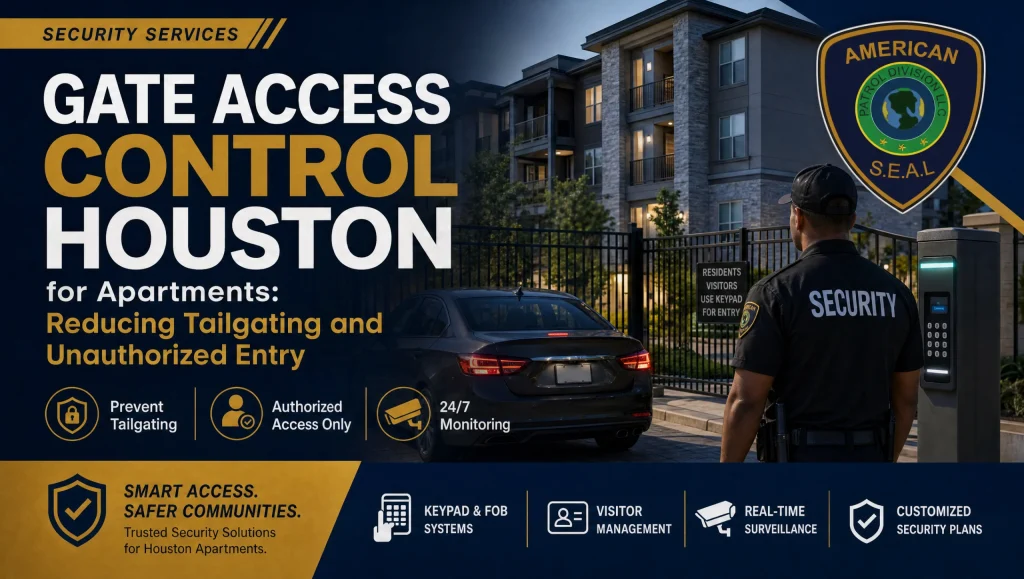
Houston property managers want gates that stay secure without making everyday life harder for residents. That’s exactly what the right gate access control Houston strategy delivers: fewer tailgaters and unauthorized entries, better visibility through access logs and visitor management, and faster response via CCTV integration—without creating a traffic jam at peak times. Based in Houston with 15+ years on patrol, American S.E.A.L. Patrol Division combines local, licensed expertise with on-the-ground patrols and 24/7 live dispatch to help apartments tighten gate security the practical way.
Gate access control is the combined set of policies, hardware, and software that determines who enters your community and when. It’s not a single device—it’s an integrated workflow that should stay simple for residents and clear for managers while reducing tailgating and unauthorized entry.
Suggested image alt text: gate access control Houston apartment community gate with CCTV monitoring
Morning departures and evening returns often create lines. Residents may wave others through to be courteous. This normal behavior is exactly why your configuration and signage must reduce opportunities to slip in behind a valid credential.
If your plate camera sits too high or gets washed out by glare, it won’t capture clear details at night or in Houston’s summer sun. Likewise, a single overhead “beauty” camera leaves blind spots where tailgaters thrive.
When PINs get shared among friends, contractors, and rideshares—or guest lists never expire—access control turns into suggestion, not control. Unmanaged data equals open gates.
A malfunctioning arm or a gate that closes like molasses practically invites follow-ins. Sidewalks and landscaping that allow easy pedestrian bypasses can also undermine your vehicle controls.
On recent patrols in West Houston, our team noticed tailgating spikes right after shift changes and during weekend move-ins. A simple combination of adjusted gate-close timing, clearer lane markings, and a camera repositioned to capture plates at night made reviews faster and discouraged follow-ins—small tweaks that kept traffic moving without frustrating residents.
Gate access control Houston for apartments refers to the policies, hardware, and software that manage who enters a community gate and when—using credentials, access logs, visitor management tools, and CCTV integration to reduce tailgating and unauthorized entry without burdening residents.
With the right blend of configuration, visitor management, access logs, and CCTV integration, community gates can stay secure and resident-friendly. Gate access control Houston solutions work best when they’re integrated: fast, reliable hardware; simple, expiring guest passes; clear rules; and real-time monitoring with dispatch and GPS-verified patrols when needed. If you’d like a practical assessment and a property-specific plan, start with our Houston security services, explore how we pair CCTV monitoring with gate access control, or review our GPS-verified mobile patrols.
Ready to take the next step? Speak with a security specialist or request a tailored plan:
Image alt text suggestion for featured image: gate access control Houston apartment entrance with reader and CCTV integration
Short answer: It’s the integrated policies, hardware, and software that control who enters your community and when.
Expanded answer: Gate access control Houston for apartments combines credentials (fobs, QR codes, PINs), readers/controllers, access logs, visitor management, and CCTV integration. Done right, it reduces tailgating and unauthorized entry while staying simple for residents and clear for managers.
Short answer: Tune gate closure speed, post clear “one car per credential” signage, and pair CCTV with real-time response.
Expanded answer: Aim for a safe but swift closure so only one vehicle clears per credential. Add friendly signage and lane markings to cue spacing. Use CCTV integration with alerts and 24/7 live dispatch to verify suspicious follow-ins and, when needed, dispatch patrols. See our Houston security services overview: https://americanspd.com/
Short answer: Use a mix—unique resident credentials plus time-limited visitor passes.
Expanded answer: For residents, issue unique, non-shared fobs/app/Bluetooth credentials. For guests and vendors, rely on expiring QR codes or PINs with clear use limits. This approach improves accountability in access logs and discourages sharing without burdening your staff.
Short answer: It links video to access events, speeds lookbacks, and enables real-time deterrence and dispatch.
Expanded answer: Place cameras for both overview and plate capture, then connect clips to access logs. Intelligent alerts can flag multiple vehicles per credential. Live operators verify events, trigger deterrents, and dispatch patrols when appropriate. For a deeper dive, see: https://www.americanspd.com/?p=3947
Short answer: Give residents simple tools to issue expiring passes; keep limits and audit trails.
Expanded answer: Let residents send one-time or time-bound QR/PIN passes for guests and deliveries. Keep vendor windows restricted to service hours and rotate vendor credentials when contracts change. Clear validity windows reduce long-term risk and data bloat.
Short answer: Log credential ID, timestamp, entry point, and visuals; review weekly for exceptions.
Expanded answer: Maintain logs that pair each event with the credential used and, when possible, a related image or plate capture. Use rules to flag multiple vehicles per credential or rapid repeats. Weekly reviews help you spot trends and adjust policies, signage, or patrol schedules.
Short answer: Short, visible coverage during peak times deters tailgating and supports residents.
Expanded answer: Align mobile/foot patrols to peak traffic (morning/evening rush, move-ins). GPS-verified reports confirm where and when coverage occurred and support incident documentation. Courtesy officers can also assist residents with visitor management at busy gates. Learn more: https://www.americanspd.com/?p=3944 and https://americanspd.com/
Short answer: Long queues, shared/recycled PINs, poor camera placement, and slow or broken gate arms.
Expanded answer: “Polite” follow-ins happen when lines form. Shared PINs erase accountability. Overhead-only cameras miss plates, and glare ruins night images. Slow or malfunctioning arms widen the window for tailgaters. Fixing these issues is often more impactful than adding new gadgets.
Short answer: Keep rules simple, passes easy to use, and equipment reachable and well-marked.
Expanded answer: Short signs (“One car per credential”) and occasional community emails help. Offer self-serve guest passes without app overload. Ensure keypad/reader height and audio/visual cues are accessible from sedans and for residents with mobility needs.
Short answer: When you’re seeing repeat tailgating, exception spikes, or need integrated CCTV, logs, and patrol response.
Expanded answer: If you’re troubleshooting frequent follow-ins, mismatched logs, or unreliable camera angles—or you need 24/7 live dispatch and incident documentation—an experienced, licensed local provider can help design and support a cohesive plan. Start here: https://americanspd.com/ or contact us: https://www.americanspd.com/contact-us/ | Request a quote: https://www.americanspd.com/free-quote/
Short answer: Speed up safe gate closure, fix sensors, enable expiring visitor passes, and review logs weekly.
Expanded answer: Adjust operator timing, verify loops/safety sensors, and enforce unique resident credentials. Configure time-limited guest/vendor passes and connect gate cameras to access events. Use exception rules to flag multiple vehicles per credential and follow up promptly.
Short answer: Small tweaks at peak hours made the biggest difference.
Expanded answer: On recent patrols in West Houston, tightening gate-close timing, adding clearer lane markings, and repositioning the plate camera for better night capture cut down follow-ins while keeping traffic flowing. These changes were simple to implement and reduced review time for staff.
{
“@context”: “https://schema.org”,
“@type”: “FAQPage”,
“mainEntity”: [
{
“@type”: “Question”,
“name”: “What does “gate access control Houston” mean for apartments?”,
“acceptedAnswer”: {
“@type”: “Answer”,
“text”: “Gate access control Houston for apartments is the integrated set of policies, hardware, and software used to control who enters your community and when. It combines unique resident credentials, time-limited visitor passes, readers/controllers, access logs, and CCTV integration to reduce tailgating and unauthorized entry while keeping the process simple for residents and clear for managers.”
}
},
{
“@type”: “Question”,
“name”: “How do we reduce tailgating without slowing traffic at community gates?”,
“acceptedAnswer”: {
“@type”: “Answer”,
“text”: “Tune gate closure for a safe but swift cycle so one vehicle clears per credential. Post friendly “one car per credential” signage and add lane markings. Pair CCTV integration with alerts and 24/7 live dispatch to verify suspicious follow-ins and, when needed, dispatch patrols. Learn more about integrated security services at https://americanspd.com/.”
}
},
{
“@type”: “Question”,
“name”: “Which credentials work best for Houston apartment gates?”,
“acceptedAnswer”: {
“@type”: “Answer”,
“text”: “Use a mix. Issue unique, non-shared resident credentials (fobs, Bluetooth/app) for accountability, and rely on expiring QR codes or PINs for guests and vendors. This supports accurate access logs and discourages sharing without adding friction for residents or staff.”
}
},
{
“@type”: “Question”,
“name”: “How does CCTV integration improve gate outcomes?”,
“acceptedAnswer”: {
“@type”: “Answer”,
“text”: “CCTV integration ties video to specific access events, enabling faster lookbacks and better incident documentation. Intelligent rules can flag multiple vehicles per credential, while live operators verify events, trigger deterrence, and dispatch patrols as needed. See the practical guide at https://www.americanspd.com/?p=3947.”
}
},
{
“@type”: “Question”,
“name”: “What should our visitor management look like at the gate?”,
“acceptedAnswer”: {
“@type”: “Answer”,
“text”: “Provide residents with simple tools to issue one-time or time-bound QR/PIN passes. Restrict vendor windows to service hours and rotate vendor credentials when contracts change. Clear validity limits reduce long-term risk and keep guest data manageable.”
}
},
{
“@type”: “Question”,
“name”: “What access logs should we keep—and how often should we review them?”,
“acceptedAnswer”: {
“@type”: “Answer”,
“text”: “Log credential ID, timestamp, entry point, and any related image or plate capture. Configure exceptions for multiple vehicles per credential or rapid repeat entries. Review weekly to spot trends, then refine policies, signage, camera placement, or patrol schedules accordingly.”
}
},
{
“@type”: “Question”,
“name”: “How do mobile patrols and courtesy officers support gate access control?”,
“acceptedAnswer”: {
“@type”: “Answer”,
“text”: “Short, visible patrols during peak times deter tailgating and help with visitor management. GPS-verified reports confirm where and when coverage occurred and support incident documentation. Explore mobile patrols at https://www.americanspd.com/?p=3944 and broader Houston services at https://americanspd.com/.”
}
},
{
“@type”: “Question”,
“name”: “What common setup mistakes lead to unauthorized entry at apartment gates?”,
“acceptedAnswer”: {
“@type”: “Answer”,
“text”: “Long queues that encourage “polite” follow-ins, shared or recycled PINs, poor camera placement or glare, and slow or malfunctioning gate arms all widen opportunities for unauthorized entry. Addressing these basics often delivers the biggest gains.”
}
},
{
“@type”: “Question”,
“name”: “How do we balance stronger security with a good resident experience (and ADA access)?”,
“acceptedAnswer”: {
“@type”: “Answer”,
“text”: “Keep rules and signage simple, make guest passes easy to send and redeem, and ensure keypad/reader placement and audio/visual cues are accessible. This maintains ADA considerations and keeps the process smooth for residents.”
}
},
{
“@type”: “Question”,
“name”: “When should we bring in a licensed Houston team like American S.E.A.L. Patrol Division?”,
“acceptedAnswer”: {
“@type”: “Answer”,
“text”: “Call in a licensed local team when you see repeat tailgating, exception spikes in logs, unreliable camera coverage, or when you need 24/7 live dispatch with documented incident response. Start at https://americanspd.com/, contact the team at https://www.americanspd.com/contact-us/, or request a quote at https://www.americanspd.com/free-quote/.”
}
},
{
“@type”: “Question”,
“name”: “What does a practical first step look like if we need improvements now?”,
“acceptedAnswer”: {
“@type”: “Answer”,
“text”: “Speed up but keep gate closure safe, verify loops and safety sensors, enforce unique resident credentials, enable expiring guest/vendor passes, and integrate gate cameras with access events. Review exceptions weekly and follow up promptly on multiple-vehicle entries.”
}
},
{
“@type”: “Question”,
“name”: “A quick field insight from your Houston patrols—what actually moved the needle?”,
“acceptedAnswer”: {
“@type”: “Answer”,
“text”: “During recent West Houston patrols, tightening gate-close timing, adding clearer lane markings, and repositioning the plate camera for better night capture reduced follow-ins without slowing traffic. These small, targeted changes were simple to implement and sped up incident review for staff.”
}
}
]
}