Security patrols near me are essential for ensuring both residential and commercial properties remain safe and secure. If you’re looking to improve the protection of your properties quickly, here’s what you should consider:
Maintaining a secure environment is a top priority for property managers like Sarah Thompson, who are responsible for the well-being of tenants and business stakeholders. Security patrols offer a proactive approach to safety with regular monitoring and immediate action in emergencies. With services custom to meet the unique needs of both residential and commercial properties, security patrols ensure a comprehensive shield against crime.
By opting for reliable security patrol solutions, you can rest assured that your properties are under constant vigilance, providing peace of mind to residents and business owners alike.

Security patrols near me terms to learn:
– mobile patrols services
– security patrol
Security patrols are crucial for maintaining safety and order in various settings, including residential and commercial areas. They involve consistent monitoring of properties to deter crime, respond to emergencies, and ensure a secure environment. Here’s a closer look at the main types of patrols: patrol security, foot patrols, and vehicle patrols.
Patrol security involves the strategic deployment of security personnel to monitor and protect an area. This can be achieved through foot patrols, vehicle patrols, or a combination of both, tailored to the specific needs of the property. The objective is to maintain a visible security presence that can deter criminal activity and provide quick responses to incidents.
Foot patrols consist of security officers walking through designated areas to closely monitor the surroundings. This method allows for detailed inspection of the property and direct interaction with residents or employees, enhancing community safety. Foot patrols are especially effective in residential neighborhoods or business complexes where close monitoring is crucial.
Vehicle patrols are suited for covering larger areas more efficiently than foot patrols, making them ideal for expansive properties such as industrial sites or large commercial complexes. Security officers perform regular and systematic patrols using marked vehicles, which also act as a deterrent to potential criminals. In emergencies, these patrols can respond swiftly, coordinating with local law enforcement or emergency services as needed.
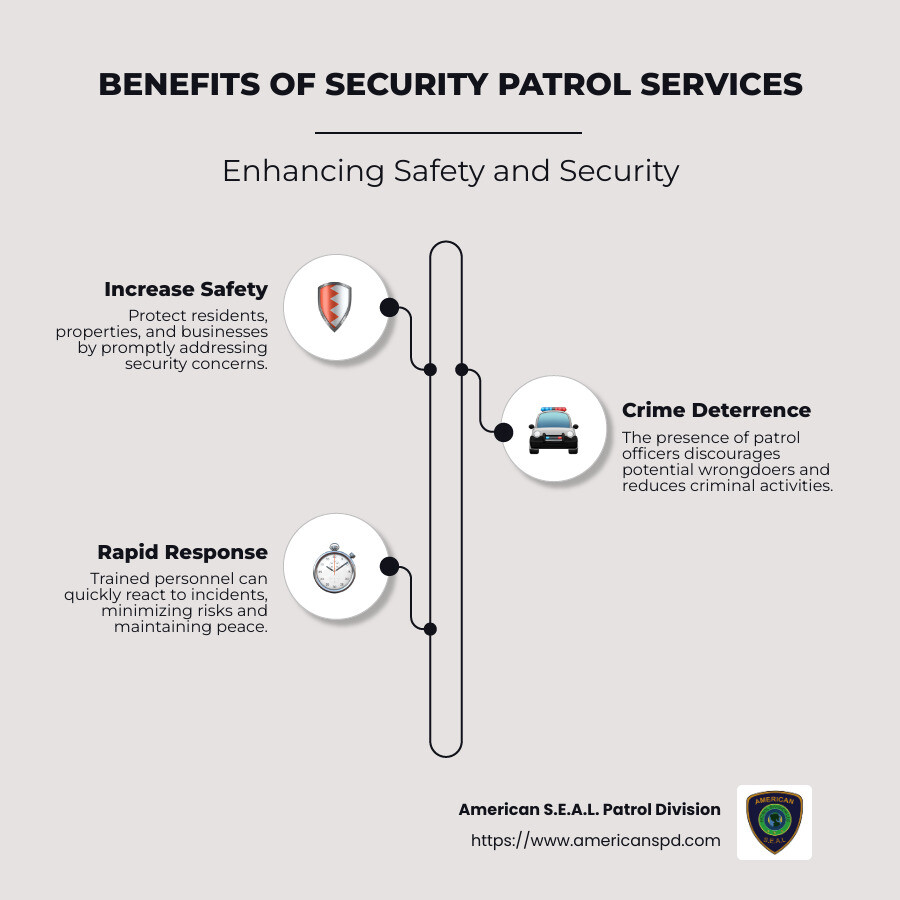
Security patrols provide several key benefits that enhance the safety and security of your area. Here’s how they contribute to deterring crime, providing emergency response, and ensuring effective surveillance.
A primary advantage of security patrols near me is their role in deterring crime. The presence of security personnel, whether on foot or in vehicles, acts as a deterrent to potential criminals considering illegal activities.
Security patrols are equipped to respond promptly to emergencies, including security breaches, medical incidents, or other urgent situations. Their quick action can prevent situations from escalating and minimize potential harm.
Regular monitoring by patrols helps in identifying unusual activities and reporting any suspicious behavior. This proactive surveillance is crucial in preventing threats before they escalate, maintaining a secure environment for all.
Selecting the best security patrol service for your needs involves considering several key factors. Let’s break down the essentials: patrol frequency, security needs, and technology integration.
The frequency of patrols is a crucial element in maintaining effective security. Regular and unpredictable patrols can prevent potential threats and ensure continuous protection.
Checkpoint Times: Determine how often you need patrols based on your specific security needs. High-risk areas might require 24/7 coverage, while lower-risk areas could do with less frequent patrols.
Example: In areas like Los Angeles, CA, vehicle patrols are scheduled systematically to cover all areas, minimizing security vulnerabilities through regular and comprehensive checks.
Every property has unique security requirements. Understanding these needs will help you choose the right service.
Residential vs. Commercial: Residential areas might prioritize community engagement and a reassuring presence, while commercial spaces may need strict access control and surveillance.
Event-Specific Needs: For events, security guards manage guest lists and ensure only authorized individuals gain entry, maintaining the exclusivity and safety of the event.
Modern security patrols often incorporate technology to improve their effectiveness.
Communication Tools: Security personnel use advanced communication devices to report incidents in real-time and coordinate with local law enforcement. This ensures rapid response and seamless operations.
Surveillance Systems: Integration with CCTV and other monitoring systems can provide an extra layer of security, allowing for continuous observation and quick action when needed.
Choosing the right security patrol service means balancing these factors to fit your specific situation. By considering patrol frequency, addressing your unique security needs, and integrating technology, you can ensure a robust security solution custom to your requirements.
Patrol frequency is essential for effective security. The number of patrols needed can vary based on the area and its risk level. High-risk areas might need 24/7 coverage, while less risky places could be fine with fewer patrols.
A patrol security officer has several key duties to ensure safety and security.
Monitoring: Officers watch over the property, keeping an eye out for any suspicious activity. They often use surveillance equipment to help with this.
Securing Property: The main goal is to protect the property and those within it. This might include checking that doors and windows are locked and ensuring only authorized people enter the premises.
During their patrols, security guards look for various issues to maintain safety.
Emergencies: Guards are trained to respond quickly to emergencies, such as medical incidents or fires. They coordinate with local emergency services when necessary.
Safety: They check for potential hazards, like broken glass or slippery floors, and make sure all safety protocols are followed. This proactive approach helps prevent accidents and injuries.
By understanding how often patrols should occur and what officers do during these patrols, you can better appreciate the role of security patrols in maintaining a safe environment.
Choosing the right security patrol service is crucial for ensuring the safety and security of your property. At American S.E.A.L. Patrol Division, we pride ourselves on providing top-notch security services custom to meet your unique needs. With over 15 years of experience, our expert personnel are equipped with cutting-edge technology to offer 24/7 monitoring and rapid response.
Our dedicated team is committed to delivering peace of mind to our clients. Whether you’re looking for residential or commercial protection, our security patrols are designed to deter crime, respond to emergencies, and maintain a safe environment.
By partnering with us, you can trust that your assets and loved ones are in good hands. Our proactive approach and attention to detail ensure that we not only meet but exceed your security expectations.
For more information on how our security patrols near you can improve your safety, visit our Mobile Security Patrols page. Let us provide you with the peace of mind you deserve, knowing that your security is our top priority.
Fire watch guards are crucial for maintaining fire safety in both residential and commercial properties. As a property manager, ensuring the safety of your tenants and assets is a top priority. But what exactly do fire watch guards do, and why are they essential? Here’s a quick answer:
The importance of fire watch guards cannot be overstated. With systems in place to detect issues early, they help prevent devastating fires and ensure compliance with safety regulations. Properties like those you manage—but also construction sites—are high-risk areas that can benefit from their expertise. Keeping these risks in check is vital for maintaining a safe and secure environment for everyone involved.
Feel secure knowing that fire watch guards are the watchful eyes that prevent minor issues from becoming major disasters.

Fire watch guards play a vital role in safeguarding properties from fire hazards. Their primary responsibilities revolve around ensuring fire safety and preventing potential disasters.
Regular Patrols: Fire watch guards conduct regular patrols around the property. This involves walking through all areas to identify any potential fire hazards. They are trained to spot issues like blocked fire exits, malfunctioning fire alarms, or flammable materials stored improperly.
Safety Equipment Checks: One of their key duties is to ensure that all fire safety equipment is in working order. This includes checking fire extinguishers, alarms, and sprinkler systems. If any equipment is found faulty, they report it immediately for repairs.
Documentation: During their patrols, fire watch guards maintain detailed logs. These logs include information about their rounds, any hazards identified, and actions taken. This documentation is crucial for both compliance and future reference.
Emergency Response: In case of a fire, guards are trained to act quickly. They are responsible for notifying the fire department and assisting with evacuations if necessary. Their prompt actions can significantly reduce fire damage and protect lives.

Fire hazards are everywhere, and recognizing them is a critical part of a fire watch guard’s job. Some common hazards include:
By identifying and addressing these hazards, fire watch guards help to prevent fires before they start. Their vigilance ensures that properties remain compliant with safety regulations, reducing the risk of fines and legal issues.
In summary, fire watch guards are the frontline defenders against fire-related dangers. Their proactive approach and keen attention to detail are what keep properties safe and secure.
The need for fire watch guards arises in specific situations where fire risks are heightened. Understanding when to deploy these professionals is crucial for maintaining safety and compliance.
According to OSHA, employers must ensure a safe working environment free from hazards, including fire risks. When fire safety systems like alarms or sprinklers are out of service, OSHA mandates the presence of fire watch guards. This is to prevent potential fire outbreaks and ensure immediate response if an incident occurs.
Certain activities and environments inherently carry a higher risk of fire. “Hot Work,” such as welding or brazing, is a prime example. These activities create sparks and flames, increasing the risk of fire. In such cases, fire watch guards are essential to monitor the area and respond quickly to any signs of fire.
Public gatherings and events also require fire watch services. With large crowds, the risk of fire-related accidents increases, and having trained personnel on-site ensures quick action if needed.
A malfunctioning fire alarm or sprinkler system is a call to action for fire watch guards. NFPA guidelines require fire watch services if these systems are down for 10 hours or more within a 24-hour period. During this time, guards patrol the premises to ensure safety and compliance.
Fire watch guards are not just a regulatory requirement; they are a proactive measure to safeguard lives and property. Their presence ensures that any fire risk is promptly addressed, reducing the likelihood of a disaster. By understanding these critical moments when fire watch guards are necessary, you can ensure that your property remains protected at all times.
Fire watch guards play a crucial role in fire prevention, acting as the eyes and ears of fire safety on-site. Their responsibilities extend beyond just being present—they actively patrol, monitor, and respond to ensure the safety of people and property.
One of the primary duties of fire watch guards is to conduct regular patrols. These patrols are not mere walk-throughs; they are systematic inspections of the premises. Guards are on the lookout for potential fire hazards, such as blocked exits, faulty wiring, or combustible materials. They follow a strict schedule, patrolling every 15 minutes or every hour, depending on the situation’s urgency.
Patrolling is about being proactive. By identifying risks before they become problems, fire watch guards prevent incidents rather than just responding to them.
Monitoring is another key aspect of a fire watch guard’s role. They keep a close eye on fire safety equipment like alarms and sprinklers to ensure everything is in working order. If any equipment is compromised, they document the issue and take immediate steps to address it.
They also maintain detailed logs of their activities, noting any irregularities or safety concerns. This documentation is crucial for compliance with safety regulations and provides a record of diligence in maintaining a safe environment.
In the event of a fire outbreak, fire watch guards are trained to respond swiftly and effectively. Their primary goal is to ensure the safety of all occupants. They do this by alerting the fire department, assisting with evacuations, and providing crucial information to emergency responders.
While fire watch guards are trained in emergency protocols, they do not engage in extinguishing fires unless it is entirely safe to do so. Their focus is on ensuring that professional firefighters can do their job without unnecessary risks.
By understanding the multifaceted role of fire watch guards in fire prevention, you can appreciate the value they bring to maintaining a safe and secure environment. Their vigilance and expertise are central to preventing fires and minimizing their impact when they occur.
Fire watch guards are not just ordinary security personnel; they are specially trained experts in fire safety. Their training ensures they are well-prepared to handle any fire-related situation with precision and confidence. Let’s explore the essential training and certifications that make them so effective.
The Occupational Safety and Health Administration (OSHA) plays a vital role in setting the standards for workplace safety, including fire safety. Fire watch guards undergo rigorous OSHA training to learn about fire hazards, safety protocols, and emergency response.
Key components of OSHA training for fire watch guards include:
OSHA training ensures that fire watch guards are equipped with the knowledge to provide a safe environment for everyone on-site.
The National Fire Protection Association (NFPA) establishes standards that are crucial for fire safety. Fire watch guards must be familiar with these standards to ensure compliance and safety.
Some critical NFPA standards covered in training:
By adhering to NFPA standards, fire watch guards ensure that all fire safety protocols are up to date and effective.
Beyond OSHA and NFPA guidelines, fire watch guards receive training in specific fire safety protocols custom to their roles. This training includes:
These protocols are essential for maintaining a high level of vigilance and preparedness, ensuring that fire watch guards can act swiftly and effectively in any situation.
By completing this extensive training and certification process, fire watch guards become an integral part of fire prevention and safety. Their expertise not only helps prevent fires but also minimizes the impact of any incidents that do occur.
Fire watch guards have a critical role in ensuring fire safety. Their primary duties include conducting regular patrols of the premises to identify and mitigate fire hazards. This involves checking for potential fire risks, ensuring that emergency exits are clear, and verifying that fire safety equipment is operational.
Additionally, fire watch guards are responsible for maintaining detailed logs of their patrols. These logs document patrol times, observations, and any actions taken to address fire hazards. This meticulous documentation is crucial for accountability and can be reviewed in the event of an incident.
The duration of a fire watch can vary based on specific circumstances and safety requirements. According to OSHA requirements, a fire watch is necessary during periods when fire systems, such as alarms or sprinklers, are not operational. The fire watch must continue until these systems are fully restored.
For construction sites or during “Hot Work” activities, such as welding, a fire watch is required for the duration of the activity and may extend for a period afterward to ensure no residual fire risks remain.
While fire watch guards are trained to use fire extinguishers, their primary role is not to fight fires. Instead, they focus on early detection and emergency response. In the event of a fire, their main responsibilities include alerting the fire department, assisting in the safe evacuation of occupants, and providing vital information to emergency responders.
The emphasis is on safety protocols and minimizing risk, ensuring that any fire-related incidents are managed swiftly and effectively.
At American S.E.A.L. Patrol Division, we understand that fire safety is not just about compliance—it’s about ensuring peace of mind for our clients. Our team of highly trained fire watch guards is dedicated to protecting your property and keeping occupants safe. With over 15 years of experience in residential and commercial protection, we combine cutting-edge technology with expert personnel to deliver unparalleled service.
Our commitment to fire safety is evident in our rigorous training and adherence to OSHA and NFPA standards. We ensure that our fire watch guards are not only well-equipped to monitor and detect potential hazards but also prepared to respond swiftly in emergencies. This proactive approach helps prevent incidents before they escalate, providing you with the assurance that your safety is in capable hands.
Whether you are dealing with temporary fire system failures, undergoing construction, or managing events with increased fire risks, we are here to support you. Our services are designed to adapt to your specific needs, ensuring continuous protection and compliance with local fire codes.
For more insights into fire safety and how we can help you maintain a secure environment, visit our Security Tips page. Trust American S.E.A.L. Patrol Division for reliable fire watch services that prioritize your safety and peace of mind.
Residential security guard duties are crucial for anyone tasked with protecting and ensuring the safety of homes and communities. For property managers like Sarah Thompson, understanding these duties means having peace of mind knowing her tenants are well-guarded against threats. Here’s a quick look at what these responsibilities entail:
Residential security isn’t just about guarding buildings; it’s about creating a safe haven where residents feel secure. Whether this involves monitoring state-of-the-art security systems or providing personable assistance to visitors, security guards are vital. They serve as both protectors and ambassadors of the property, ensuring an environment that’s as welcoming as it is secure. For Sarah and countless others, the presence of vigilant security personnel directly translates to a reduction in crime rates and a boost in tenant satisfaction.

Residential security is all about keeping people and their homes safe from harm. It’s a comprehensive approach that involves several layers of protection, threat prevention, and security measures. Let’s break it down.
The first and most obvious goal is property protection. This means safeguarding buildings, parking lots, and other community areas from damage, theft, and vandalism. Security guards are the frontline defense, ensuring that these spaces remain safe and secure.
Preventing threats before they happen is a key part of residential security. Security guards are trained to spot potential dangers and act quickly to stop them. This could involve anything from identifying suspicious behavior to intercepting unauthorized individuals trying to enter the property. By staying alert and proactive, security personnel help keep communities safe.
To effectively prevent threats and protect property, various security measures are put in place. These can include:
These measures work together to create a strong security framework that keeps residents safe and secure. It’s not just about having the right tools but also about using them effectively to maintain a peaceful living environment.
Residential security guards are more than just watchers; they are active participants in creating a safe and welcoming community. Their presence alone can deter crime and provide reassurance to residents, allowing them to live their lives without fear.
Residential security guards have a crucial role in maintaining a safe environment. Their duties are varied and essential, ranging from patrols to emergency responses. Let’s explore these responsibilities in more detail.
Security guards conduct regular patrols to ensure the safety of the property. They walk around the premises, checking for anything unusual. This visible presence acts as a deterrent to potential criminals. Patrols are not just about walking around; they involve being observant and proactive in identifying any security risks.
Controlling who enters the property is another key duty. Guards verify the identity of visitors and issue passes when needed. This ensures only authorized individuals gain access. By managing entry points effectively, guards help prevent unauthorized entry and protect residents from intruders.
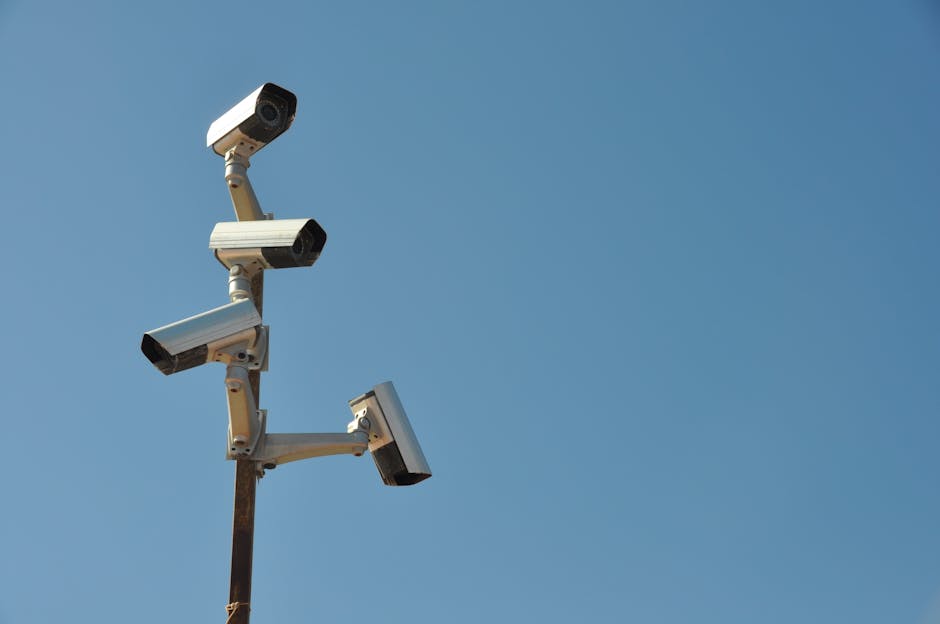
Using surveillance tools like CCTV cameras, guards monitor the premises for any suspicious activities. They keep a close eye on common areas and parking lots, which are often targets for criminal behavior. Surveillance is vital in detecting potential threats early and taking action to prevent incidents.
In emergencies, security guards are the first responders. They are trained to act quickly and efficiently in situations like break-ins, fires, or medical emergencies. Their role may involve coordinating with emergency services, evacuating residents, or providing first aid. A swift response can make all the difference in ensuring residents’ safety.
When an alarm is triggered, security guards must respond immediately. They investigate the cause, assess the situation, and take appropriate action. This could involve contacting law enforcement or addressing any immediate threats. Quick alarm response is crucial in minimizing potential damage or harm.
These residential security guard duties are vital for maintaining a secure and peaceful living environment. Guards are not just there to react to problems but to prevent them from happening in the first place. By effectively performing these duties, they provide residents with peace of mind and a sense of safety in their homes.
Residential security guards play a vital role in ensuring the safety and security of residents and their properties. Let’s dig into their key responsibilities, including deterrence, identifying suspicious behavior, effective communication, and emergency action.
A primary responsibility of security guards is to act as a visible deterrent to potential criminals. Their presence alone can discourage unlawful activities like theft, vandalism, and trespassing. By patrolling regularly and maintaining a vigilant stance, they make it clear that the area is well-protected and any criminal activity will be swiftly addressed.
Security guards are trained to spot suspicious behavior that could indicate a potential threat. This involves paying attention to unusual activities, such as individuals loitering in restricted areas or behaving erratically. Guards use their keen observational skills to assess situations and decide when to intervene or report to higher authorities.
Clear and effective communication is crucial for security guards. They must convey information accurately and quickly, whether it’s coordinating with law enforcement during an incident or providing directions to residents and visitors. Guards also document incidents carefully, noting details like time, location, and actions taken, which is essential for both internal records and legal purposes.
In any emergency situation, security guards are the first line of defense. They are trained to respond decisively and manage the situation until professional help arrives. This might involve evacuating residents during a fire, providing first aid in a medical emergency, or defusing a potentially violent situation. Their ability to remain calm and take swift action is crucial in ensuring the safety of all residents.
By executing these responsibilities effectively, residential security guards help create a safe and secure environment for everyone in the community. Their proactive approach not only addresses immediate threats but also fosters a sense of safety and confidence among residents.
Residential security guards need a unique set of skills to perform their duties effectively. These skills ensure they can handle various situations while keeping residents and properties safe.
Staying calm in stressful situations is crucial for security guards. Whether there’s an emergency or a potential threat, a calm demeanor helps them think clearly and make the right decisions. This ability to remain composed can prevent panic and keep situations under control.
Effective communication is another key skill. Security guards must clearly convey information to residents, visitors, and emergency services. Whether it’s giving directions, reporting an incident, or coordinating with law enforcement, clear communication ensures everyone understands the situation.
Technology plays a significant role in security. Guards should be proficient with devices like CCTV systems, two-way radios, and computers. This technological proficiency allows them to monitor surveillance feeds, log incidents, and communicate efficiently.
Security guards often face unexpected challenges. Strong problem-solving skills enable them to assess situations quickly and come up with effective solutions. Whether it’s resolving conflicts between residents or handling a security breach, being able to think on their feet is vital.
Lastly, leadership qualities are essential. Security guards may need to take charge during emergencies or guide others during routine checks. Leadership ensures they can direct people effectively and manage situations with authority.
By mastering these skills, residential security guards not only perform their duties efficiently but also contribute to a safer living environment for everyone. Their expertise and professionalism provide peace of mind to residents, knowing that their safety is in capable hands.
Residential security guards have a range of duties that are crucial for maintaining safety. Their primary role is to act as a visible deterrent. By being present and vigilant, they discourage criminal activity before it even starts. This visible presence alone can significantly reduce incidents of theft and vandalism.
Guards are also trained to identify suspicious behavior. They keep an eye out for unusual activities or individuals who may pose a threat. By spotting these early signs, they can take action to prevent potential security breaches.
In emergency situations, residential security guards are the first responders. Whether it’s a fire, medical emergency, or break-in, they are trained to act swiftly and efficiently. Their quick response can be the difference between a minor incident and a major crisis.
Residential security guards improve property safety through patrols, access control, and surveillance. Regular patrols help ensure that all areas of the property are secure. Guards check for any signs of tampering or unauthorized access, keeping residents safe from potential threats.
Access control is another critical duty. Guards verify the identities of visitors and issue passes when necessary. This ensures that only authorized individuals enter the premises, keeping unwanted intruders at bay.
Surveillance is a key component of property safety. Guards use CCTV cameras and other technology to monitor activities around the property. This constant watch helps deter criminals and provides valuable evidence in case of an incident.
To perform their duties effectively, residential security guards need several essential skills. Calmness is crucial, especially in high-pressure situations. Staying composed allows them to assess situations clearly and make informed decisions.
Communication is vital for conveying information accurately. Guards must communicate with residents, visitors, and emergency services. Whether it’s giving instructions or reporting an incident, clear communication ensures everyone understands the situation.
Familiarity with technology is also important. Guards use devices like CCTV systems and two-way radios to monitor and report activities. Being tech-savvy helps them perform their duties more efficiently.
By mastering these skills, residential security guards provide a safer environment for everyone. Their presence and expertise offer peace of mind to residents, knowing their safety is in capable hands.
At American S.E.A.L. Patrol Division, our commitment to security goes beyond mere duty—it’s our promise to provide peace of mind. We understand that safety is not just about responding to threats but also about creating an environment where residents feel secure and protected.
Our security services are designed with this in mind. With over 15 years of experience, we blend cutting-edge technology with expert personnel to deliver unparalleled protection. Our team is trained to handle all aspects of residential security, from patrols and surveillance to access control and emergency response.
By choosing American S.E.A.L., you are not just hiring a security service; you are investing in a comprehensive safety solution custom to your needs. Our approach ensures that every corner of your property is monitored, every potential threat is assessed, and every resident can enjoy the peace of mind they deserve.
For more information on how our services can safeguard your home and provide you with peace of mind, visit our Residential Security Services.
Your safety is our priority, and with American S.E.A.L. Patrol Division, you’re always in good hands.
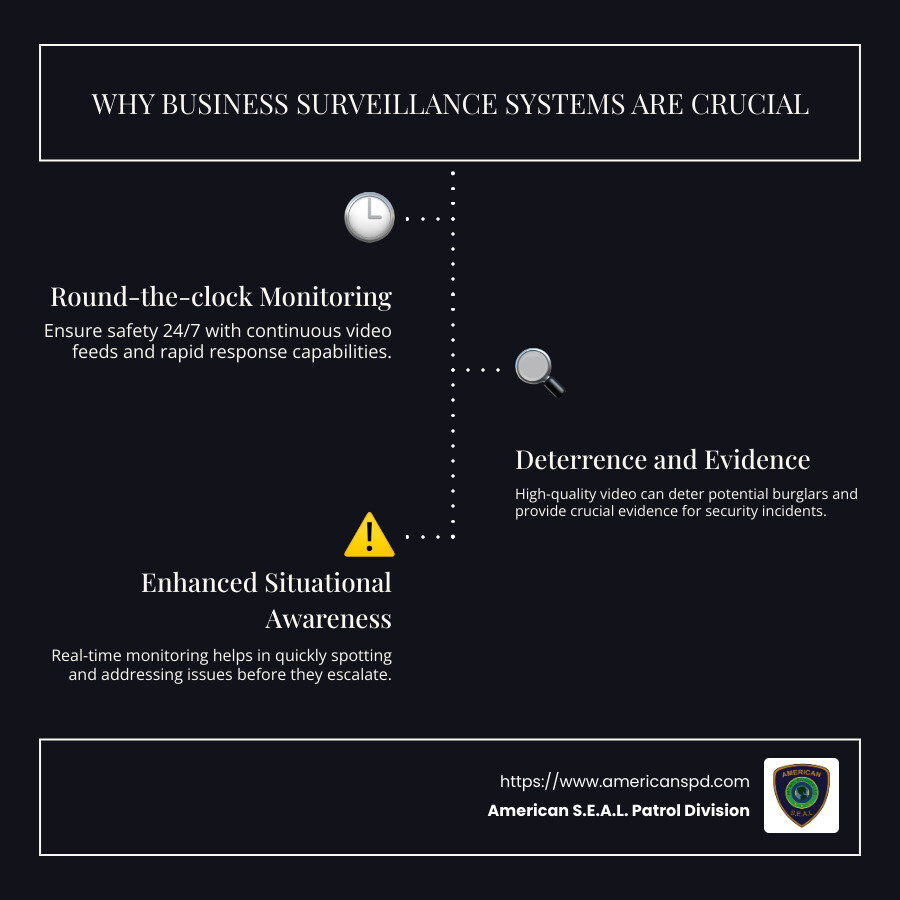
Business surveillance camera systems are essential tools for any business, large or small. Today, investing in these systems is not just about protection, but about gaining peace of mind and boosting operational efficiency. If you’re a busy property manager, like Sarah Thompson, you need to ensure safety across multiple locations. Here’s a quick look at why business surveillance systems are crucial:
These systems are indispensable in helping businesses deter crime, manage risk, and ensure a secure environment. Whether it’s through traditional CCTV or modern digital solutions like IP cameras, the choice of surveillance technology can significantly impact your security strategy.
When diving into business surveillance camera systems, it’s important to understand the different types of systems available: NVR systems, DVR systems, IP cameras, and analog cameras. Each plays a unique role in how video surveillance is captured, processed, and stored.
Network Video Recorder (NVR) systems are at the forefront of modern surveillance technology. They use digital IP cameras to capture video and audio, processing these signals before sending them to the recorder. This digital approach offers several advantages:
These systems are ideal for businesses looking to integrate advanced technology into their security setup.
Digital Video Recorder (DVR) systems represent a more traditional approach to surveillance. They use analog cameras, which are connected to the recorder through coaxial cables. Here are some key points about DVR systems:
DVR systems are perfect for businesses looking for a straightforward, cost-effective surveillance solution.
IP Cameras are digital cameras that offer high-resolution video and advanced features like motion detection and remote access. They are a staple in NVR systems and are known for:
Analog Cameras, used in DVR systems, are more traditional and provide basic video surveillance. They are:
In summary, the choice between NVR and DVR systems, as well as IP and analog cameras, depends on your business needs and budget. Understanding these options will help you make an informed decision about your surveillance strategy.
When choosing business surveillance camera systems, it’s crucial to focus on the key features that can improve security and operational efficiency. Here are the top features to consider:
Video analytics transform how businesses handle surveillance. This feature uses algorithms to analyze video footage in real-time, identifying specific patterns or behaviors. For example, businesses can set up alerts for unusual activities like loitering or unauthorized access. This proactive approach allows security teams to respond quickly to potential threats.
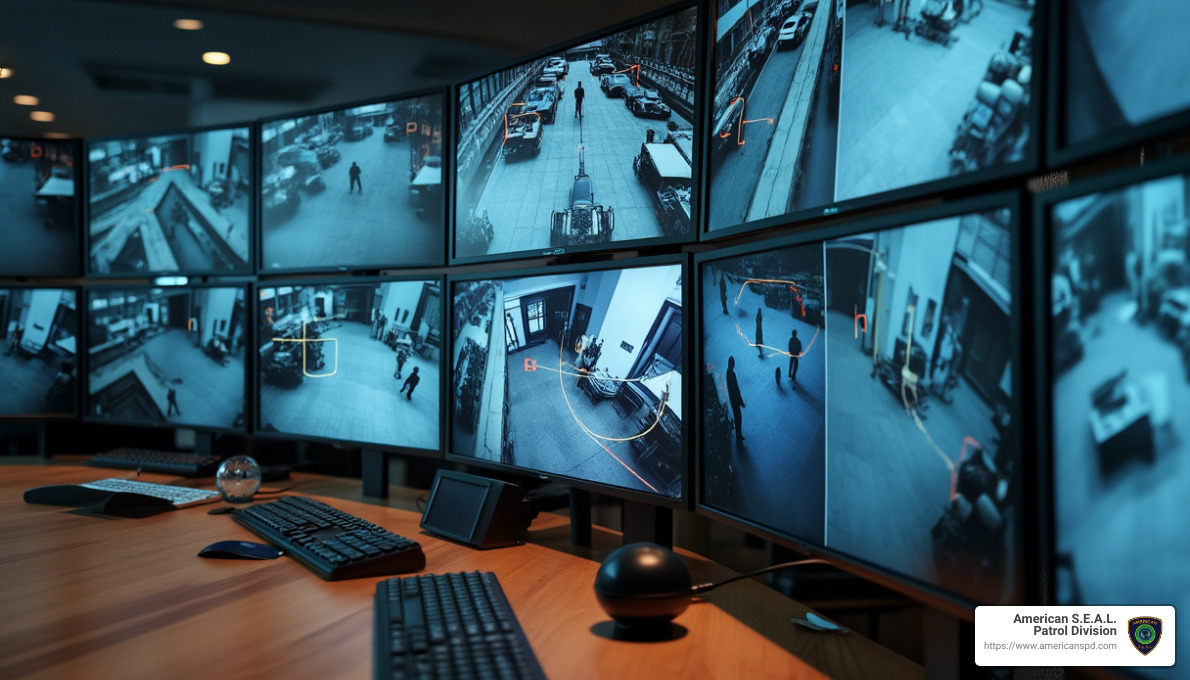
Remote monitoring is a game-changer for businesses. It allows you to keep an eye on your premises from anywhere, at any time. Using mobile apps or web interfaces, business owners and security personnel can access live feeds and recorded footage. This feature is especially beneficial for businesses with multiple locations or for managers who travel frequently.
Storage is an essential aspect of any surveillance system. Businesses must decide between on-premise storage and cloud storage. On-premise options often involve local hard drives, offering control over data but requiring maintenance. Cloud storage, on the other hand, provides scalable solutions with easy access to footage, though it may involve ongoing subscription costs.
AI-powered analytics take video surveillance to the next level. These systems use artificial intelligence to detect and analyze patterns, offering features like facial recognition and object detection. AI can differentiate between a person and a vehicle, reducing false alarms and providing more accurate data.
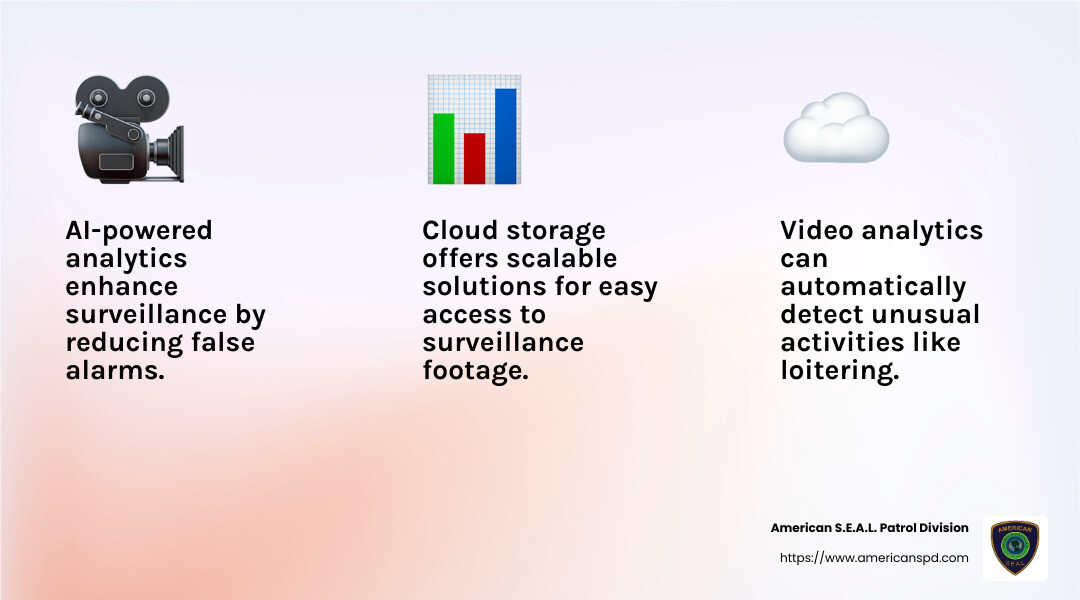
Incorporating AI into your surveillance system can significantly boost situational awareness and decision-making efficiency. This technology allows businesses to automate monitoring tasks, freeing up human resources for other critical functions.
By focusing on these key features, businesses can create a robust surveillance system custom to their specific needs. This ensures not only improved security but also improved operational efficiency, making it a worthwhile investment.
Next, we’ll explore the different types of cameras available for business surveillance systems, helping you choose the right ones for your setup.
Choosing the right types of cameras is crucial for business surveillance camera systems. Different cameras serve different purposes, and understanding their unique features can help you make informed decisions.
Dome cameras are popular for their sleek design and versatility. These cameras are typically mounted on ceilings and are encased in a dome-shaped housing. This design makes it difficult for onlookers to determine which direction the camera is pointing.
Bullet cameras are easy to recognize due to their long, cylindrical shape. They are typically mounted on walls and are excellent for capturing images over long distances.
PTZ (Pan-Tilt-Zoom) cameras offer dynamic surveillance capabilities. As the name suggests, these cameras can pan, tilt, and zoom, providing wide coverage and detailed monitoring.
360-degree cameras provide all-around visibility from a single vantage point. These cameras are equipped with fisheye lenses that capture a full panoramic view.
By understanding the specific benefits and uses of each camera type, businesses can tailor their surveillance systems to meet their unique needs. Whether you require discreet indoor monitoring or robust outdoor coverage, there’s a camera designed to meet your requirements.
Next, we’ll dig into the benefits of implementing business surveillance systems and how they can improve security and operational efficiency.
Implementing business surveillance camera systems offers a range of benefits that go beyond just keeping an eye on things. Let’s explore how these systems can improve your business through deterrence, operational efficiency, and situational awareness.
One of the most powerful aspects of surveillance systems is their ability to deter crime. Just the sight of a camera can make potential wrongdoers think twice. According to research, businesses, especially retail stores, lose thousands every minute to theft. However, the presence of cameras can significantly reduce these losses by discouraging shoplifters and dishonest employees.
Surveillance systems aren’t just about security; they’re also about improving how your business operates. By keeping an eye on daily activities, businesses can identify inefficiencies and streamline operations.
Having a comprehensive view of your business environment is crucial. Surveillance systems provide real-time insights into what’s happening across your premises.
Incorporating a business surveillance camera system is not just about security; it’s about creating a more efficient, safe, and aware business environment. Whether it’s deterring crime, improving operations, or enhancing situational awareness, the benefits are clear and impactful.
Next, we’ll tackle some frequently asked questions about these systems, helping you understand costs, differences between surveillance and security cameras, and employee monitoring considerations.
The cost of installing security cameras for a business can vary widely based on several factors. For small businesses, a simple DIY setup might be more cost-effective. However, larger businesses with complex needs often require professional installation, which can be more expensive.
While upfront costs are important, consider ongoing expenses like maintenance and potential subscription fees for cloud storage or advanced analytics.
Though often used interchangeably, surveillance cameras and security cameras serve slightly different purposes.
Surveillance Cameras: These are typically used for continuous monitoring, often in public or high-traffic areas. They are designed to capture footage over a large area and are often part of a broader surveillance system.
Security Cameras: These are usually part of a security system, designed to detect and alert for specific events, like unauthorized entry. They often work in conjunction with alarms and other security measures.
Both types can be integrated into a comprehensive business surveillance camera system to provide layered security and monitoring.
Yes, surveillance cameras can be used for employee monitoring, but there are important considerations to keep in mind.
Monitoring for Safety and Efficiency: Cameras can ensure employees follow safety protocols and help identify workflow inefficiencies. This is especially useful in industries like manufacturing and retail.
Misconduct Investigation: Cameras can provide evidence in cases of employee misconduct, such as theft or harassment. However, it’s crucial to balance monitoring with privacy considerations.
It’s important to communicate clearly with employees about the presence and purpose of cameras to maintain trust and comply with legal regulations.
Understanding these aspects of business surveillance camera systems can help you make informed decisions about implementing the right solution for your business needs.
At American S.E.A.L. Patrol Division, we understand the critical role that business surveillance camera systems play in ensuring the safety and security of your business. Our expertise in security services, honed over 15 years in Texas, allows us to offer custom solutions that meet the unique needs of each client.
We combine cutting-edge technology with expert personnel to deliver 24/7 monitoring and rapid response. This approach not only improves security but also provides peace of mind, knowing that your business is protected around the clock.
Whether you’re looking to deter potential threats, improve operational efficiency, or improve situational awareness, our business surveillance systems can help achieve your goals. By integrating advanced features like AI-powered analytics and remote monitoring, we ensure that you have the tools needed to keep your business safe.
If you’re ready to take your business’s security to the next level, we invite you to explore our CCTV Monitoring Services. Let us be your trusted partner in safeguarding what matters most to you.
Security patrol plays a crucial role in ensuring safety and deterring crime across various settings. By maintaining a visible presence, patrol services act as a powerful deterrent against potential threats, reducing the likelihood of incidents before they can occur. Here’s a quick overview of why security patrols are vital:
For property managers like Sarah Thompson, choosing the right patrol solution is essential for safeguarding her assets. By utilizing advanced technology and expert personnel, security patrol services offer a proactive approach to keeping environments secure, enhancing overall safety.
When it comes to security patrols, there are several methods to ensure safety and vigilance over a property. Each type of patrol offers unique advantages, allowing businesses and communities to choose the best fit for their security needs. Let’s explore the main types of patrols: foot patrol, vehicle patrol, and bike patrol.
Foot Patrol
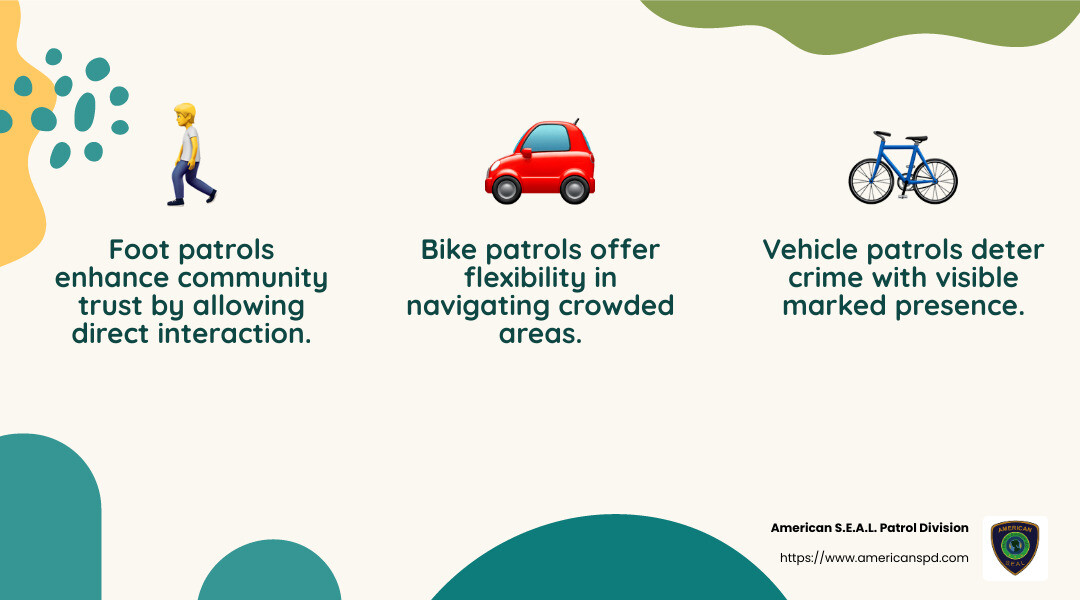
Foot patrols involve security officers walking through designated areas to observe and report any suspicious activities. This type of patrol is ideal for buildings and areas where vehicles can’t reach. Foot patrols provide a personal touch, as officers can interact directly with the community, enhancing trust and visibility.
A foot patrol officer might lock or open up specific entrances at certain times or check for potential threats, like open doors or unattended equipment. This proactive approach helps in identifying and addressing security vulnerabilities.
Vehicle Patrol
Vehicle patrols use cars or motorcycles to cover larger areas more efficiently. These patrols are perfect for sprawling properties, such as industrial complexes or large residential communities. Vehicles are often marked and equipped with advanced technology, like GPS and cameras, to monitor large areas swiftly and act as a visual deterrent to potential intruders.
The presence of a marked patrol vehicle can discourage criminal activities, as it signals that the area is under constant surveillance. This method allows for rapid response to incidents, ensuring that any security breaches are swiftly addressed.
Bike Patrol
Bike patrols offer a flexible and accessible option for security coverage, especially in urban or crowded environments. Bicycles can steer narrow pathways and congested areas where vehicles cannot go, maintaining high visibility and approachability. This makes bike patrols an efficient choice for parks, campuses, and event spaces.
The use of bicycles in patrols also promotes a healthy and environmentally friendly approach to security while ensuring every corner of the property is monitored.
By understanding the different types of patrols, property managers and community leaders can tailor their security strategies to meet specific needs, ensuring comprehensive coverage and enhancing overall safety.
When it comes to maintaining security over large areas, vehicle patrols are essential. They allow security personnel to cover vast spaces quickly and efficiently. This is particularly important in places like industrial complexes or large residential communities where foot patrols alone may not suffice.
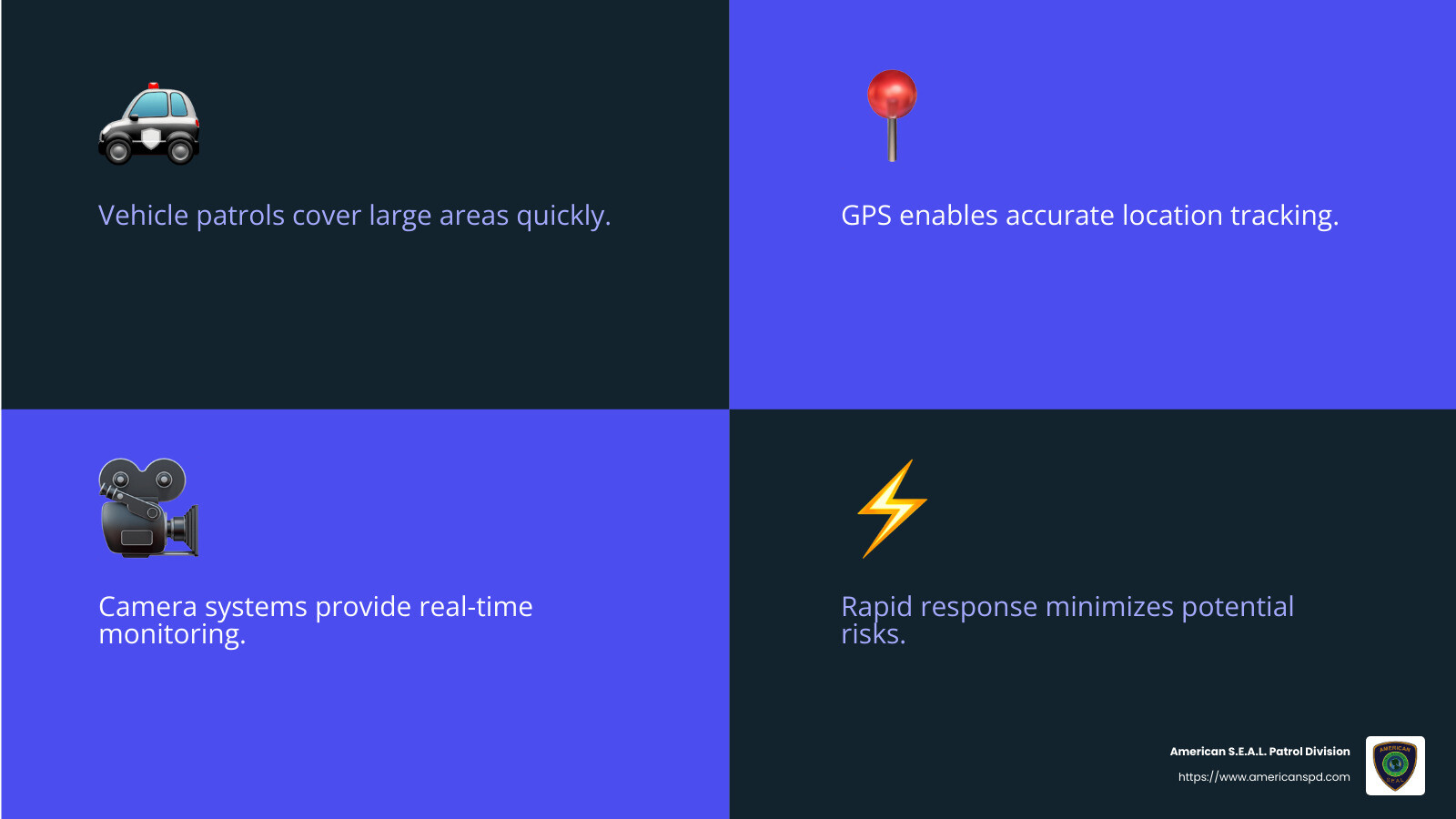
Mobile Patrol: Mobile patrols involve security officers moving between various locations in vehicles. This method is not only efficient but also provides a rapid response capability. If an alarm goes off or a CCTV system captures a breach, a mobile patrol can quickly reach the scene, minimizing potential risks and damages.
Rapid Response: One of the key advantages of using vehicles in patrols is the ability to respond swiftly to incidents. This rapid response capability is crucial in ensuring that any security breaches or suspicious activities are addressed promptly.
Real-Time Monitoring: Modern patrol vehicles are equipped with advanced real-time monitoring systems. These include GPS technology and camera systems that allow for continuous oversight of the area being patrolled. Such systems ensure that security officers are always aware of their surroundings and can quickly detect and react to any security threats.
GPS Technology: GPS technology in patrol vehicles provides accurate location tracking, allowing security teams to coordinate effectively. This technology enables more efficient patrol routes and ensures that officers can respond to incidents as quickly as possible. GPS also helps in maintaining detailed patrol logs, which can be useful for reviewing past incidents and improving future security strategies.
Camera Systems: Many patrol vehicles are equipped with camera systems that capture real-time video footage. These cameras can be used to monitor activities in and around the patrol area, providing an additional layer of security. The footage can also serve as valuable evidence in the event of a security incident.
Incorporating these features into patrol vehicles ensures they are effective tools in maintaining security. By leveraging the latest technology, security patrols can provide a robust and responsive service that adapts to the dynamic needs of any environment.
Crime Prevention: Security patrols are a powerful deterrent against crime. The visible presence of patrol officers can discourage potential wrongdoers from attempting illegal activities. According to research, the unpredictability of patrol patterns makes it difficult for criminals to anticipate movements, thus reducing the likelihood of security breaches.
Safety Improvement: Patrols contribute significantly to the safety of a community or business environment. By conducting regular checks and monitoring for any suspicious behavior, patrol officers help create a secure atmosphere. This proactive approach ensures that potential threats are identified and addressed before they escalate.
Rapid Response: One of the standout benefits of security patrols is their ability to respond quickly to emergencies. Whether it’s a break-in or a medical emergency, patrol officers can be on the scene in minutes. This rapid response capability is crucial in minimizing damage and ensuring the safety of people and property.
Deterrence: The mere presence of a security patrol can act as a strong deterrent to criminal activities. Knowing that a trained professional is monitoring the area can make potential offenders think twice before acting. This visible security presence is a key element in maintaining a safe environment.
Situational Awareness: Security patrol officers are trained to maintain high levels of situational awareness. They are constantly assessing their surroundings and can quickly identify unusual behavior or potential threats. This vigilance is essential in preventing incidents and ensuring a swift response when necessary.
Emergency Response: In the event of an emergency, having patrol officers on-site can make all the difference. They are trained to handle a variety of situations, from natural disasters to security threats. Their ability to coordinate with local law enforcement and emergency services ensures a comprehensive response to any incident.
By integrating these elements into their operations, security patrols provide a comprehensive safety net that improves the overall security of any environment. This combination of deterrence, rapid response, and situational awareness ensures that businesses and communities can focus on their core activities with peace of mind.
Integrated Patrols: Imagine a security strategy that leaves no stone unturned. By integrating vehicle and bicycle patrols, security teams can cover large areas swiftly and steer tight spaces with ease. This dual approach ensures that every corner of a property is monitored, providing comprehensive coverage that static posts simply can’t match.
Technology Integration: Cutting-edge technology is at the heart of effective security patrols. Vehicles are equipped with GPS and camera systems for real-time monitoring. This tech allows for immediate incident response, enhancing safety and reducing emergency response times. Bicycle patrols, meanwhile, maintain high visibility and approachability, fostering positive community relations.
Operational Excellence: The combination of vehicles and bicycles isn’t just about coverage; it’s about doing it well. Our patrols operate 24/7, using random patterns to keep potential wrongdoers guessing. This unpredictability is key to operational excellence, making it difficult for criminals to anticipate patrol movements and reducing the likelihood of security breaches.
Flexibility and Coverage: Vehicles can cover large areas quickly, making them ideal for patrolling vast spaces like parking lots or sprawling campuses. Bicycles, on the other hand, offer best flexibility. They can weave through narrow passageways and crowded areas that vehicles can’t access, ensuring that no part of a property is left unguarded.
Accessibility: Bicycle patrols offer a unique advantage in terms of accessibility. Their ability to steer through tight spaces and maintain a visible presence makes them an effective deterrent in high-traffic areas. This accessibility ensures that security officers can interact positively with the community, enhancing the overall sense of safety.
By combining vehicles and bicycles in their patrol strategies, security teams can achieve a level of coverage and flexibility that meets the demands of today’s dynamic landscapes. This integrated approach not only improves security but also builds trust within the community, making it an invaluable part of any comprehensive security plan.
A security patrol is essential for maintaining safety and deterring crime. Patrol officers move through designated areas to monitor and respond to suspicious activities. They act as a visible deterrent to potential wrongdoers, making it less likely for crimes to occur. Patrols also provide rapid response to incidents, ensuring any security breaches are addressed swiftly. This proactive presence helps in creating a secure environment for everyone.
Security patrols come in various forms, each offering unique advantages:
Foot Patrol: Officers walk through areas, providing a close-up view and personal interaction with the community. This method is effective in high-traffic zones and fosters a sense of safety.
Vehicle Patrol: Using cars equipped with advanced technology like GPS and cameras, officers cover large areas quickly. This type of patrol is ideal for vast properties and offers real-time monitoring capabilities.
Bike Patrol: Bicycles offer flexibility and accessibility, allowing officers to steer tight spaces and crowded areas. This method maintains high visibility and can improve community relations by being approachable.
Patrols improve security by enhancing situational awareness and providing a rapid response to incidents. They deter crime by maintaining an unpredictable presence, making it difficult for criminals to predict patrol patterns. This unpredictability is crucial for operational excellence in security. By constantly monitoring and adapting to the environment, patrols ensure that any potential threats are identified and managed promptly. The combination of foot, vehicle, and bike patrols offers comprehensive coverage, making it a robust security strategy.
At American S.E.A.L. Patrol Division, we are committed to providing top-notch security services across Texas. Our approach combines cutting-edge technology with experienced personnel to ensure that our clients feel safe and secure at all times. With over 15 years of experience, we understand the importance of being proactive in crime deterrence and rapid response.
Our security patrol services are designed to meet the unique needs of both residential and commercial properties. By utilizing advanced tools like GPS technology and real-time monitoring systems, we offer a level of protection that is both reliable and effective. Our patrol vehicles are equipped with the latest features to improve situational awareness and ensure a swift response to any incidents.
We believe in the power of innovation and continuously strive to integrate the latest advancements in technology with our security operations. This allows us to stay ahead of potential threats and provide our clients with peace of mind.
For more information on how our mobile patrol services can benefit you, visit our Mobile Security Patrols page. Let us help you create a safer environment with our comprehensive security solutions.
Technology-driven security is reshaping how we safeguard our environments in today’s rapidly evolving digital landscape. As technological innovations surge forward, integrating smart devices, advanced analytics, and interconnected systems has become more than an option—it’s a necessity. This change promises to improve safety across diverse sectors by providing:
When property management, like Sarah Thompson’s, demands cutting-edge security solutions, technology-driven strategies offer not just protection but peace of mind. With the integration of tools like AI, machine learning, and cloud-based networks, properties can be monitored more efficiently and securely than ever before. In Houston, TX, and beyond, businesses are recognizing the need to harness these technologies to stay ahead of potential threats.
To understand the scope and benefits of these advancements, let’s dive into the comprehensive features that make technology-driven security indispensable in safeguarding our homes, workplaces, and cities today.

Technology-driven security is more than just a buzzword—it’s a game-changer. With the rapid evolution of digital threats, businesses and individuals alike need robust solutions to keep their data safe and secure. Let’s break down how AI analytics, machine learning, and cybersecurity play a pivotal role in this change.
AI analytics is like having a super-smart assistant that never sleeps. It helps in identifying potential threats by analyzing vast amounts of data quickly and accurately. For example, AI can spot unusual patterns in network traffic that might indicate a cyberattack. This allows security teams to act fast, often stopping threats before they cause damage.
Imagine a security camera system that doesn’t just record footage but also analyzes it in real-time. AI can detect suspicious activities, like someone lingering at a door late at night, and send instant alerts to security personnel. This kind of proactive approach is essential in preventing incidents before they escalate.
Machine learning is a part of AI that focuses on learning from data. It gets smarter over time by recognizing patterns and improving its predictions. In security, machine learning can be used to improve threat detection systems. For instance, it can differentiate between normal user behavior and potentially harmful activities, even if it’s never seen the specific threat before.
This technology is crucial for staying ahead of cybercriminals who constantly change their tactics. With machine learning, security systems become more resilient and adaptable, providing a stronger defense against evolving threats.
Cybersecurity is the backbone of technology-driven security. It’s all about protecting systems, networks, and data from digital attacks. With the rise of remote and hybrid working models, as well as increased reliance on cloud-based systems, cybersecurity has never been more important.
AI and machine learning improve cybersecurity by automating many of the tasks that were once manual and time-consuming. This includes monitoring for threats, applying security patches, and managing access controls. By automating these processes, businesses can ensure their systems are always protected, reducing the risk of human error.

In summary, technology-driven security leverages AI analytics, machine learning, and cybersecurity to create a comprehensive defense strategy. These technologies work together to provide improved surveillance, rapid threat detection, and robust data protection. As we continue to steer the complexities of the digital landscape, embracing these innovations is key to staying secure.
Next, we’ll explore the key components that make technology-driven security so effective.
To truly understand technology-driven security, we need to look at its core components: prevention, deterrence, detection, and response. Each plays a vital role in crafting a robust security strategy.
Prevention is all about keeping threats at bay before they can cause harm. In the digital field, this involves setting up barriers like firewalls and multi-factor authentication (MFA). These tools make it harder for cybercriminals to gain unauthorized access.
Imagine a business using MFA to protect its sensitive data. Even if a hacker gets hold of a password, they won’t be able to access the system without the second authentication step, like a text message code. This simple yet effective measure significantly reduces the risk of breaches.
Deterrence involves visible security measures that make potential wrongdoers reconsider their actions. In the physical world, this could be security cameras or alarm systems. In the digital world, it’s about showing that a system is well-protected and monitored.
For example, a company might display a notice that its network is monitored 24/7 by advanced AI systems. This not only reassures users but also warns hackers that any suspicious activity will be detected immediately.
Detection is about identifying threats as soon as they occur. The faster a threat is detected, the quicker it can be addressed, minimizing damage. AI and machine learning play a crucial role here by analyzing data in real-time to spot unusual patterns.
Consider a security system that uses AI to monitor network traffic. It can detect anomalies, like a sudden spike in data transfer, which might indicate a breach attempt. By catching such activities early, businesses can act swiftly to neutralize the threat.
Even with the best prevention and detection systems, some threats will slip through. That’s where response comes in. A well-planned response strategy can mitigate the impact of an incident.
For instance, if a breach is detected, a company might have a protocol in place to immediately isolate affected systems, notify stakeholders, and begin recovery processes. This ensures that the situation is handled efficiently, minimizing downtime and data loss.

These components—prevention, deterrence, detection, and response—form the backbone of technology-driven security. By integrating these elements, businesses can create a security framework that not only protects but also adapts to new challenges.
Next, we’ll dive into the top trends shaping the future of technology-driven security.
In 2024, technology-driven security is evolving rapidly. Let’s explore some of the top trends that are shaping this field.
Artificial intelligence (AI) is revolutionizing security. By integrating AI with existing systems, businesses can improve both physical and digital security. AI cameras, for instance, automatically detect unusual activities, like a crowd forming in a low-traffic area, and notify security teams instantly.
Why it matters: These integrations streamline operations and improve response times, making security teams more effective.
Mobile technology is changing access control. More businesses are moving towards mobile credentials, allowing employees to use their smartphones to access secure areas. This trend is not only convenient but also improves security by reducing reliance on physical keys or cards.
Why it matters: Mobile credentials offer flexibility and can be updated or revoked instantly, reducing the risk of unauthorized access.
Cloud-based security solutions are gaining traction. With more businesses adopting cloud services, security teams can manage and monitor systems remotely. This is crucial for decentralized teams and hybrid work models.
Why it matters: Cloud security provides real-time visibility and control, enabling quick adjustments to security policies as needed.
Biometric authentication, like fingerprint and facial recognition, is becoming common in workplaces. These systems ensure that only authorized individuals can access sensitive areas or information.
Why it matters: Biometric systems add an extra layer of security, making it harder for unauthorized users to gain access.
Behavioral analytics is a game-changer in threat detection. By analyzing user behavior, systems can identify anomalies that may indicate security threats. This proactive approach helps in addressing potential issues before they escalate.
Why it matters: Understanding user behavior allows for more accurate threat detection and response, safeguarding critical assets.
These trends highlight the dynamic nature of technology-driven security. As businesses continue to innovate and adopt new technologies, staying informed about these trends will be key to maintaining robust security frameworks.
Next, we’ll explore the benefits that these technologies bring to security operations.
Technology-driven security is not just about having the latest gadgets; it’s about using technology to make security smarter and more efficient. Let’s explore three key benefits: operational efficiency, threat detection, and data protection.
With technology, security operations become smoother and faster. For instance, cloud-based video security systems allow security teams to monitor multiple locations from anywhere, at any time. This not only saves time but also reduces the need for physical presence on-site.
Why it matters: Streamlined operations mean security teams can focus on more critical tasks, improving overall effectiveness.
Advanced technologies like AI and machine learning are game-changers in threat detection. They can process vast amounts of data quickly, identifying unusual patterns or behaviors that might indicate a security threat.
Case in point: A leading technology company used AI to provide 100% visibility and manage millions of security events daily for a global supplier. This improved detection and response times significantly.
Why it matters: Faster and more accurate threat detection means threats can be neutralized before they cause harm.
Protecting data is crucial. Technology-driven security uses tools like encryption and zero-trust policies to keep data safe. For businesses using cloud services, these measures ensure that sensitive information remains secure, even when accessed remotely.
Why it matters: Strong data protection safeguards against data breaches, protecting both company assets and customer trust.
These benefits highlight how technology-driven security improves security operations, making them more efficient and effective. We’ll answer some frequently asked questions about these technologies and their impact on security.
Technology-driven security refers to the use of advanced technologies to improve security measures. This includes tools and systems that enhance how we prevent, detect, and respond to threats. Whether it’s using AI to monitor for unusual activity or cloud solutions to manage security across multiple locations, technology-driven security makes protecting assets smarter and more efficient.
AI is a game-changer in security. It helps by quickly analyzing large amounts of data to spot threats that humans might miss. For example, AI can detect patterns in data that suggest a cyberattack is happening. This allows security teams to respond faster and more accurately. A case study showed how a global supplier used AI to get 100% visibility into security events, improving their response times significantly.
Why it matters: AI reduces the time it takes to detect and respond to threats, which can prevent damage before it happens.
Cloud-based security solutions offer several benefits:
These solutions also improve operational efficiency by centralizing security management, allowing teams to monitor multiple locations from a single interface. This is especially useful for businesses with multiple sites or remote workforces.
Why it matters: Cloud-based solutions provide a flexible and cost-effective way to improve security, making it easier to keep up with changing needs and threats.
We’ll explore more about how these technologies are shaping the future of security.
At American S.E.A.L. Patrol Division, we believe in the power of technology-driven security to revolutionize the way we protect people and properties. By combining cutting-edge technology with our expert personnel, we’re not just responding to threats—we’re preventing them. This proactive approach is at the heart of what we do, ensuring that our clients in Texas enjoy peace of mind, knowing their security is in expert hands.
Security convergence is more than just a buzzword; it’s the future of comprehensive protection. By integrating digital and physical security measures, businesses can create a seamless security strategy that covers all bases. This convergence allows us to streamline operations, improve threat detection, and improve overall safety. For example, our GPS-tracked patrol officers work in tandem with advanced CCTV monitoring systems to provide a robust security framework that adapts to the unique needs of each environment.
Looking ahead, future trends in security technology promise even more exciting developments. The rise of AI integrations, mobile credentials, and biometric systems will continue to shape the landscape, offering new ways to safeguard assets and people. At American S.E.A.L., we’re committed to staying at the forefront of these trends, ensuring that our clients benefit from the latest innovations in security technology.
In conclusion, as technology evolves, so does our approach to security. By embracing these advancements, American S.E.A.L. Patrol Division is not only keeping up with the times but leading the way. Our mission is clear: to provide best security services that protect what matters most to you. As we look to the future, we remain dedicated to delivering security solutions that are as dynamic and forward-thinking as the world we live in.
Join us on this journey, and let’s build a safer tomorrow together.
Professional Security Guards for Apartment Complexes are essential for ensuring the safety and well-being of residents. When considering reliable security for your apartment complex, here are some key benefits to consider:
1. Crime Prevention – Professional security guards act as a deterrent to potential criminals.
2. Resident Safety – Guards provide peace of mind and quick assistance in emergencies.
3. 24/7 Monitoring – Continuous surveillance to ensure the safety of the property.
Security is more than just keeping unwanted visitors out; it’s about creating a safe haven where residents feel protected. With incidents like shootings in apartment complexes becoming concerningly common, it’s crucial to have measures in place to maintain a secure environment.
Investing in professional security guards is a proactive approach to address safety concerns and improve property value by ensuring tenants feel taken care of. A holistic security plan can include onsite guards, technological systems, and strategic infrastructure upgrades, crafting an all-encompassing shield around the community.

Security personnel play a crucial role in maintaining the safety and security of apartment complexes. They are not just figures of authority; they are the backbone of a secure residential environment. Their presence alone can deter potential criminals and provide a sense of safety for residents.
Access control is a primary responsibility of these guards. They manage who enters and exits the complex, ensuring that only authorized individuals gain entry. This is vital in preventing unauthorized access and potential security threats. Guards may check identification, maintain visitor logs, and monitor entry points to keep the complex secure.
Patrol services are another critical aspect of their duties. Security guards conduct regular patrols, either on foot or in vehicles, to monitor the premises for any suspicious activities or security breaches. These patrols are not just random walks; they are strategic checks designed to cover all areas of the property, ensuring that every corner is safe. By doing so, they can quickly identify and address any potential threats before they escalate.
In addition to these responsibilities, professional security guards are also trained to handle emergency situations. Whether it’s responding to a fire alarm, managing a medical emergency, or dealing with a security breach, they are equipped to act swiftly and efficiently. Their training includes conflict resolution and first-aid skills, ensuring they can manage a variety of situations effectively.
Professional Security Guards for Apartment Complexes are indispensable. They provide more than just protection; they offer peace of mind to residents, knowing that their home is a secure place. With their expertise in access control, vigilant patrols, and emergency response, they create a safe and welcoming environment for everyone in the community.
When it comes to ensuring the safety and security of apartment complexes, Professional Security Guards for Apartment Complexes come in various roles, each with specific duties and expertise. Here’s a closer look at the different types of security guards you might encounter in apartment settings:
Armed guards are specially trained to handle situations that may require the use of firearms. They are typically employed in areas where there is a higher risk of violent crime or where the presence of firearms is a necessary deterrent. These guards undergo rigorous training to ensure they can safely carry and use weapons if needed. They are adept in conflict resolution and are always prepared to respond to serious security threats.
Armed guards are often stationed at entry points or patrolling the perimeter, providing a visible and strong deterrent to potential criminals. Their presence alone can significantly reduce the likelihood of serious security incidents.
Patrol guards are the eyes and ears of the apartment complex. They conduct regular patrols, either on foot or in vehicles, covering all areas of the property to detect and deter any suspicious activity. These guards are responsible for maintaining a constant presence, which helps in preventing crimes such as vandalism, theft, and unauthorized entry.
Patrol guards often follow strategic routes and schedules to ensure comprehensive coverage of the complex. They are trained to report any irregularities and respond to incidents swiftly. By maintaining a vigilant watch, they help create a secure environment for residents.
Event security guards are crucial for managing security during special events held within the apartment complex. Whether it’s a community gathering, a party, or any other event, these guards ensure that the event runs smoothly and safely. They are responsible for managing access control, directing guests, and maintaining order.
Event security guards are trained to handle large crowds and potential disruptions. They can escort guests, manage entry and exit points, and monitor the event for any signs of trouble. Their presence ensures that events are enjoyable and safe for all attendees.

In conclusion, each type of security guard plays a vital role in maintaining the peace and safety of apartment complexes. Whether through armed readiness, vigilant patrols, or event management, these professionals are essential in safeguarding the community. Their diverse skills and expertise ensure that residents can live with peace of mind, knowing their safety is in capable hands.
When it comes to apartment complexes, hiring Professional Security Guards for Apartment Complexes offers numerous advantages. Let’s explore how these professionals contribute to crime prevention, improve resident safety, and provide efficient emergency responses.
Security guards are a powerful deterrent against crime. Their presence alone can significantly reduce incidents of theft, vandalism, and unauthorized access. Many apartment complexes have reported a 20% decrease in criminal activity within weeks of employing security guards.

Guards conduct regular patrols and monitor surveillance systems to spot suspicious activities before they escalate. This proactive approach helps keep the community safe and ensures that residents feel secure in their homes.
Resident safety is a top priority for any apartment complex. Security guards improve this by providing a constant watchful presence. They control who enters and exits the premises, ensuring only authorized individuals have access. This reduces the risk of unwanted visitors and potential threats.
Moreover, guards are trained in conflict resolution and can handle disturbances calmly and efficiently. Their ability to de-escalate situations helps maintain a peaceful environment for all residents.
In emergencies, every second counts. Security guards are trained to respond swiftly and effectively to various situations, from medical emergencies to fire alarms. Their training includes first-aid, CPR, and emergency preparedness, ensuring they can assist residents in critical times.
Guards also coordinate with local law enforcement and emergency services, providing essential information and support. This collaboration ensures that help arrives quickly and efficiently, minimizing potential harm and disruption.
With these benefits, it’s clear that Professional Security Guards for Apartment Complexes play a crucial role in maintaining a safe and secure living environment. Their presence not only deters crime but also provides peace of mind for residents, knowing they have a dedicated team ready to respond to any situation.
Choosing the right security service for your apartment complex is crucial for ensuring the safety and peace of mind of your residents. Here’s a simple guide to help you make the best choice:
Start by identifying the specific security needs of your apartment complex. Consider factors like:
Having clear requirements will help you find a service that meets your unique needs.
Security guards play a vital role in maintaining safety, so ensure they are trustworthy. Conduct thorough background checks on potential security providers. Look for:
Well-trained security guards are better equipped to handle various situations. Ensure that the security service you choose emphasizes guard training and certification. Key areas of training should include:
By focusing on these aspects, you can ensure that your apartment complex is protected by a competent and reliable security team.
Choosing the right security service is about more than just filling a position. It’s about creating a safe and welcoming environment for your residents.
Yes, many apartment complexes, especially upscale communities, employ professional security guards. These guards are crucial for maintaining safety, providing peace of mind, and managing entry control. In upscale communities, security guards often monitor who enters and exits, ensuring only authorized individuals gain access. This helps prevent unauthorized entry and reduces the risk of crime.
Hiring a security guard involves several important steps:
Define Your Requirements: Determine the specific needs of your apartment complex. Do you need armed guards, patrol services, or event security?
Conduct Background Checks: Ensure the security company performs thorough background checks on their guards. This includes verifying their licenses, insurance, and past work experience.
Verify Training and Certification: Make sure the guards have specialized training in areas like emergency response and conflict resolution. This ensures they are prepared to handle various situations effectively.
Check Reviews and References: Look for reviews of the security company and ask for references from other apartment complexes they have worked with.
By following these steps, you can hire a reliable security guard who meets the needs of your complex.
While both bodyguards and security guards provide protection, their roles and training differ:
Security Guards: Primarily focus on protecting property and maintaining safety in places like apartment complexes. They are trained in access control, monitoring surveillance systems, and conflict resolution. Their goal is to prevent unauthorized access and respond to emergencies.
Bodyguards: Specialize in protecting individuals, often in high-risk situations. They receive specialized training in personal protection, risk assessment, and may carry weapons if needed. Bodyguards are typically hired for personal protection rather than property security.
Understanding these differences helps in choosing the right type of protection for your specific needs.
In the field of apartment complex security, choosing the right partner is crucial. At American S.E.A.L. Patrol Division, we pride ourselves on delivering customized security solutions that perfectly fit your needs. With over 15 years of experience, we know that every apartment complex is unique, and so are its security requirements. Our approach combines cutting-edge technology with expertly trained personnel to ensure the highest level of safety and peace of mind for residents.
Our services are designed to adapt to the changing needs of your community. Whether it’s through our 24/7 monitoring systems, rapid response capabilities, or proactive patrol programs, we’re committed to reducing crime and enhancing safety in your area. In fact, our proactive patrol program has successfully reduced crime by over 60% in the largest community in Harris County, Texas.
With our headquarters in Houston, we are well-positioned to serve apartment complexes throughout Texas. Our team is ready to work with you to develop a security plan that addresses your specific concerns, from access control to emergency response. We believe in building strong relationships with our clients and providing transparency in everything we do.
When you choose American S.E.A.L. Patrol Division, you are not just hiring a security service; you are partnering with a team dedicated to protecting what matters most to you. Let us help create a safe and secure environment for your residents. Contact us today to learn more about how our Professional Security Guards for Apartment Complexes can make a difference in your community.
Multi-Family and Apartment Security Solutions are critical for protecting tenants and properties. As a property manager, ensure safety, and modern solutions can provide peace of mind. Here’s what you can consider:
Whether you’re managing a busy apartment complex or a serene residential community, ensuring the safety of your tenants is a top priority. Recent surveys reveal that 71% of renters believe more should be done to improve security. This highlights a growing concern about traditional security measures and their effectiveness.
The changing landscape of crime demands more sophisticated security solutions. Tenants are looking for advanced systems like real-time monitored cameras and AI-enabled surveillance, which help in enhancing their sense of security. Such systems are crucial, especially as nearly 70% of renters are aware of crimes near their properties.
To steer the complex world of property security, you’ll need a clear strategy. Stay tuned as we explore the intricate details of the best security systems available to help you secure your property and help ensure tenant satisfaction.

Multi-Family and Apartment Security Solutions are more important than ever. With 71% of renters expressing concerns over security, property managers must address these issues head-on. But where do you start?
Every property is unique, and so are its security needs. Start by assessing the specific requirements of your property. Are you in a high-crime area? Do you have multiple entry points? Understanding these factors will guide you in choosing the right security solutions.
For instance, properties in urban settings might need more advanced surveillance systems, while those in quieter neighborhoods might prioritize access control.
Conducting a thorough risk assessment is crucial. This involves identifying potential vulnerabilities in your property. Consider factors like lighting, visibility, and access points. Nearly 70% of renters have witnessed or are aware of crimes on their property, underlining the need for a comprehensive risk analysis.
A well-executed risk assessment can help you pinpoint areas that need immediate attention, such as poorly lit parking lots or unsecured entrances.
Integrating technology into your security plan is a game-changer. Modern solutions like AI-enabled surveillance systems and real-time monitored cameras are not just buzzwords—they’re necessities. These technologies reduce human error and improve response times, making them highly effective.
Consider implementing smart technologies that allow for remote monitoring and control. Mobile apps and smart home integrations can empower tenants, giving them more control over their safety.
By understanding the specific security needs of your property, conducting a detailed risk assessment, and embracing technology integration, you can significantly improve the safety of your multi-family or apartment property. Stay tuned as we dig into the top security solutions that can transform your approach to property security.
When it comes to Multi-Family and Apartment Security Solutions, focus on three main areas: Access Control Systems, Surveillance Systems, and Alarm Systems. These components work together to create a secure environment for residents.
Access control is all about managing who can enter your property and when. Traditional keys are becoming a thing of the past. Instead, many properties are opting for keyless entry systems and smart locks.
Smart Locks: These allow residents to open up doors using a smartphone app, RFID cards, or even biometrics. The INOX ISM7000 Series is a great example, offering customizable access levels and modes like Entrance, Passage, and Privacy. This flexibility is crucial for managing different access needs across a property.
Keyless Entry: Platforms like ButterflyMX offer cloud-based access control, providing seamless entry to various areas like elevators and parking garages, all from a single app. This not only improves security but also improves convenience for residents.
A robust surveillance system is a deterrent to crime and a vital tool for monitoring property activity.

Alarm systems are your first line of defense against intrusions and emergencies.
Intrusion Detection: These systems alert you to unauthorized entries. They can be integrated with other security measures to provide a comprehensive defense strategy.
Emergency Alerts: Quick communication during emergencies is critical. Modern alarm systems can send real-time alerts to residents and security personnel, ensuring swift action.
By focusing on access control, surveillance systems, and alarm systems, property managers can significantly improve the security of multi-family and apartment complexes. These solutions not only protect residents but also provide peace of mind, knowing that their safety is a top priority.
Next, we’ll explore how technology can further improve these security solutions and make them even more effective.
Technology is a game-changer in Multi-Family and Apartment Security Solutions. It offers smarter ways to keep properties safe and secure. Let’s explore how smart home integration, mobile apps, and remote monitoring are changing security.
Smart home technology connects different devices and systems in an apartment to make life easier and more secure.
Smart Thermostats and Smoke Listeners: Devices like the Arize Smart Thermostat and Smoke Listener help manage energy use and improve safety. They can send alerts to your phone if something goes wrong, like a smoke alarm going off.
Connected Locks and Lights: Smart locks and lights can be controlled remotely. This means you can lock doors or turn off lights from anywhere, adding an extra layer of security.
Mobile apps put control at your fingertips, making it easy to manage security from anywhere.
Access Control Apps: Apps like those used with the INOX ISM7000 Series smart locks let you manage access to your apartment. You can give guests temporary access or check who’s entered your home, all from your phone.
Security System Apps: These apps connect to your surveillance and alarm systems, providing real-time alerts and live video feeds. If there’s a security breach, you get notified immediately.
Remote monitoring means you can keep an eye on your property, even when you’re not there.
24/7 CCTV Monitoring: Companies like American S.E.A.L. offer CCTV monitoring that works all day, every day. This service uses high-resolution cameras and motion detection to spot potential threats and alert you right away.
AI-Powered Surveillance: AI-enabled cameras analyze video footage in real-time, reducing human error and speeding up responses to incidents. This makes them very effective in preventing crimes before they happen.
By integrating these technologies, property managers can greatly improve the security of their buildings. Tenants will appreciate the added safety and convenience, knowing that their home is protected by the latest in security tech.
Next, we’ll look at best practices for implementing these security solutions to ensure they work effectively and efficiently.
Implementing Multi-Family and Apartment Security Solutions effectively requires more than just technology. To truly safeguard a property, focus on tenant education, regular maintenance, and policy development. Here’s how to make these practices work for you:
Educating tenants is crucial for a secure environment. When residents understand security protocols, they become active participants in maintaining safety.
Workshops and Seminars: Host regular sessions to inform tenants about the security features available to them. Discuss how to use smart locks, report suspicious activities, and respond to emergencies.
Welcome Packets: Provide new tenants with a welcome packet that includes information on security systems and emergency contacts. This ensures they know what resources are available from day one.
Community Apps: Use community apps to share security tips and updates. This keeps everyone informed and engaged in real-time.
Security systems need regular upkeep to function at their best. Neglecting maintenance can lead to vulnerabilities.
Routine Inspections: Schedule regular checks for all security equipment, including cameras, alarms, and access control systems. This helps identify and fix issues before they become problems.
Software Updates: Ensure all security-related software is up-to-date. Updates often include important security patches that protect against new threats.
Professional Servicing: Engage professionals for annual system audits. They can provide insights and suggest improvements that might not be immediately obvious.
Clear policies help guide both tenants and staff in maintaining a secure environment.
Access Control Policies: Develop rules governing who can enter the building and how access is granted. This might include guidelines for issuing key cards or managing visitor access.
Incident Reporting Procedures: Establish a straightforward process for reporting and responding to security incidents. Ensure all tenants and staff are aware of these procedures.
Emergency Plans: Create detailed emergency response plans for various scenarios, such as fires or break-ins. Regularly review and practice these plans with tenants and staff.
By focusing on these best practices, property managers can create a secure and welcoming environment for all residents. Next, we’ll address some common questions about Multi-Family and Apartment Security Solutions to further clarify how these systems can be integrated effectively.
When it comes to securing multi-family dwellings, tenants and property managers often ask about the most effective solutions. Based on recent surveys and expert insights, several key measures stand out:
Monitored Surveillance Cameras: A significant portion of tenants feel safer with monitored surveillance systems. These cameras provide real-time oversight and can deter potential intruders. A survey by Deep Sentinel found that 70% of residents in complexes with these systems felt they effectively prevented crime.
Keyless Entry Systems: Smart locks and keyless entry systems improve security by reducing the risk of lost keys and unauthorized access. These systems offer customizable access levels and remote control features, making them a smart choice for modern apartments.
Alarm Systems: Intrusion detection and emergency alert systems are crucial for immediate threat response. They notify residents and authorities promptly, reducing the impact of potential incidents.
Technology plays a pivotal role in modernizing security measures for apartments. Here’s how it can make a difference:
Real-Time Monitoring: Advanced CCTV systems and AI-enabled surveillance offer real-time video analysis, reducing human error and improving response times. This is especially important in large complexes where manual monitoring is impractical.
Mobile Integration: Many security solutions now come with mobile apps that allow residents and property managers to monitor and control security systems remotely. This convenience ensures that security is always at your fingertips.
Smart Home Integration: By integrating security systems with smart home technology, residents can automate and customize their security settings. For instance, linking smart thermostats and locks can create a seamless security ecosystem that adapts to residents’ schedules.
Selecting the right security solutions for a multi-family property involves careful consideration of several factors:
Tenant Needs and Concerns: Understanding what makes tenants feel safe is crucial. Surveys, like the one conducted by Deep Sentinel, highlight that 71% of renters believe property managers should improve security, indicating a strong demand for effective solutions.
Cost vs. Benefit: While advanced systems can be costly, the benefits often outweigh the expenses by preventing crime and enhancing tenant satisfaction. Look for solutions that offer a good balance between cost and effectiveness.
Scalability and Flexibility: Choose systems that can grow with your property and adapt to changing needs. Cloud-based solutions offer comprehensive access control that can be easily scaled and customized.
Compliance and Legal Considerations: Ensure that any security measures comply with local regulations and legal responsibilities. This includes data privacy laws for surveillance systems and fair access policies for all residents.
By considering these factors, property managers can implement Multi-Family and Apartment Security Solutions that not only protect residents but also improve the overall living experience.
In the changing landscape of Multi-Family and Apartment Security Solutions, ensuring the safety and peace of mind of residents is paramount. At American S.E.A.L. Patrol Division, we recognize the importance of comprehensive security measures that are both effective and reliable.
Our approach combines over 15 years of expertise with cutting-edge technology to deliver custom security solutions. Whether it’s through our state-of-the-art CCTV monitoring systems or our highly trained on-foot patrol guards, we are committed to providing a secure environment for both residential and commercial properties.
Why choose American S.E.A.L. Patrol Division?
24/7 Monitoring and Rapid Response: Our dedicated team is vigilant around the clock, ensuring immediate action in case of any security threat. This constant oversight is crucial in maintaining a safe living environment.
Expert Personnel: We employ skilled security officers who are not only trained in the latest security practices but also excel in de-escalation and interpersonal communication.
Advanced Technology: From AI-enabled surveillance systems to mobile integration, we leverage the best technology to improve security measures. This ensures that our clients receive top-tier protection without compromising on convenience.
As property managers and residents steer the complexities of modern security challenges, partner with a provider that understands these dynamics and can offer solutions that meet today’s demands. American S.E.A.L. Patrol Division stands ready to deliver that peace of mind, ensuring that safety is never compromised.
For those seeking to improve their security strategies, we invite you to explore our services and find how we can create a safer environment for you and your residents. Trust in our expertise and commitment to protect what matters most.

Houston security services play a crucial role in ensuring the safety and protection of properties and individuals across the city. With Houston’s rapidly growing population and its reputation as one of the highest crime-rated cities in Texas, the demand for reliable security solutions has never been higher. If you’re looking for security services in Houston, here’s what you should know:
Houston is a busy metropolis, home to over 2.33 million residents. As the largest city in Texas, it faces unique security challenges that require comprehensive solutions. Security companies in Houston leverage years of experience and advanced technologies to address these challenges effectively. For property managers like Sarah Thompson, who oversees diverse properties, choosing a security provider isn’t just about protection—it’s about peace of mind for her tenants.

Houston is not just a big city; it’s a rapidly growing one. With a population exceeding 2.33 million, the city is expanding quickly, bringing both opportunities and challenges. A challenge is managing safety and security. This is where Houston security services become essential.
Houston has one of the highest crime rates in Texas, with 57 incidents per thousand residents. This statistic highlights the pressing need for effective security measures. Businesses and residents alike must be vigilant. The high crime rate makes it crucial for security services to be proactive and responsive.
As more people move to Houston, the demand for housing, jobs, and services increases. This growth can lead to more opportunities for crime, especially in densely populated areas. Security services must adapt to these changes, ensuring that they can protect both new and existing residents effectively.
Houston is home to many high-value assets, from major corporations to cultural landmarks. Protecting these assets requires specialized security services. For example, companies may need advanced surveillance systems, while museums might require discreet yet effective on-site security personnel.
Security providers in Houston, like American S.E.A.L. Patrol Division, offer custom solutions to meet these diverse needs. They use cutting-edge technology and experienced personnel to safeguard the city’s people and property.
In summary, understanding Houston’s unique security needs is the first step in creating a safer environment for everyone. With the right security services, residents and businesses can focus on growth and prosperity, knowing they are protected.
When it comes to keeping Houston safe, having the right security services is key. Whether you’re a business owner, a resident, or someone planning a big event, understanding the top security options available can make all the difference.
Armed guards provide a strong line of defense against potential threats. These professionals are often ex-military or former law enforcement officers, bringing valuable experience to the table. They are trained to handle high-pressure situations and can act swiftly to neutralize threats. In a city like Houston, where the crime rate is notably high, having armed guards can be a crucial part of a security strategy.
For situations where a visible security presence is needed without the use of firearms, unarmed guards are an excellent choice. They are ideal for places like retail stores, schools, and residential complexes. These guards focus on monitoring and reporting suspicious activity, ensuring safety through vigilance and presence.
Mobile patrols are a flexible and effective security solution. These patrols can cover large areas quickly, making them perfect for businesses with extensive premises or for neighborhoods looking to improve safety. The unpredictability of their routes makes it difficult for potential wrongdoers to anticipate their movements, increasing the security of the premises. Mobile patrols are equipped with advanced communication tools, allowing for real-time incident reporting and rapid response.
Concierge security combines traditional security roles with customer service. These professionals are often stationed at the front desk of office buildings, hotels, or residential complexes. They manage access control, greet visitors, and offer assistance while keeping an eye out for any security concerns. This dual role helps create a welcoming yet secure environment.
Each of these services plays a unique role in addressing Houston’s diverse security needs. As the city continues to grow and evolve, having access to a range of security options ensures that businesses and residents can find the right solution to keep their environments safe.

When it comes to Houston security services, several key features set the best providers apart. These features not only ensure safety but also provide peace of mind for businesses and residents alike.
Technology is a game-changer in security. Companies like American S.E.A.L. Patrol Division use cutting-edge technology to improve their services. This includes GPS tracking for accountability and real-time monitoring systems. Such technology ensures that security personnel are where they need to be and can respond quickly to any situation.
Round-the-clock vigilance is crucial for effective security. 24/7 monitoring means there is always someone keeping an eye on your property. Whether it’s through CCTV systems or on-foot patrols, continuous oversight helps in swiftly addressing any suspicious activities. This constant vigilance is especially important in a busy city like Houston, where incidents can happen at any time.
In emergencies, every second counts. A rapid response team is essential for dealing with threats swiftly and efficiently. American S.E.A.L. Patrol Division prides itself on having highly trained professionals ready to act at a moment’s notice. Their ability to quickly alert emergency services and manage evacuation procedures can make a significant difference in crisis situations.
No two properties are the same, and neither are their security needs. Offering custom solutions means tailoring security plans to fit specific requirements. Whether it’s a temporary setup during a construction project or ongoing support for a residential complex, personalized plans ensure that all unique concerns are addressed. This flexibility allows clients to choose the services that best fit their budget and security goals.
By focusing on these key features, Houston security services can effectively address the city’s diverse and evolving safety needs. As technology advances and threats change, these features remain critical in providing reliable and comprehensive protection.
Armed security guards in Houston play a vital role in protecting people and property. Their pay can vary based on experience, location, and the specific duties they perform. On average, armed security guards in Houston earn between $15 to $25 per hour. Factors like additional skills, such as advanced weapons training or experience in high-risk environments, can lead to higher wages.
In Texas, a Level 4 security officer is the highest tier of security personnel. These officers undergo advanced training that prepares them for personal protection roles. They are equipped to handle high-risk situations and often work with dignitaries, executives, or other high-profile clients. Their training includes firearms proficiency, defensive tactics, and crisis management, making them an essential part of any comprehensive security plan.
Security services revolve around three core principles: confidentiality, integrity, and availability.
Confidentiality ensures that sensitive information is protected from unauthorized access. This principle is crucial in preventing data breaches and maintaining privacy.
Integrity involves maintaining the accuracy and trustworthiness of data. It ensures that information is not altered by unauthorized parties, preserving its original state.
Availability guarantees that information and resources are accessible to authorized users whenever needed. This is vital for ensuring that security systems and protocols function correctly, especially during emergencies.
By focusing on these three principles, security services in Houston can provide robust protection for both physical and digital assets. These elements are fundamental to creating a secure environment, whether it’s for a business, a residential area, or a high-profile event.
In the dynamic landscape of Houston security services, American S.E.A.L. Patrol Division stands out as a trusted partner. Our commitment to excellence is rooted in over 15 years of experience in protecting residential and commercial properties. We combine expert personnel with cutting-edge technology to deliver unparalleled security solutions.
Our team of highly trained professionals is dedicated to safeguarding what matters most to you. Whether it’s through our 24/7 monitoring or rapid response capabilities, we ensure that you have peace of mind knowing that your safety is our top priority. Our officers are equipped with the latest tools and techniques, making them adept at handling a wide range of security challenges.
We understand that each client has unique needs, which is why we offer custom solutions custom to your specific requirements. Our proactive approach not only deters potential threats but also improves the overall security environment of your property.
By choosing American S.E.A.L. Patrol Division, you are opting for a security service that values integrity, reliability, and professionalism. We are committed to providing you with a secure and tranquil environment, allowing you to focus on what truly matters. Trust us to be your partner in security, and experience the peace of mind that comes with knowing you are in capable hands.
Fire watch construction is a critical aspect of safety protocols, particularly in environments prone to fire hazards, such as construction sites. In simple terms, it involves trained personnel continuously monitoring the site to detect and respond quickly to any fire emergency. This vigilance is especially essential when fire alarm systems are non-operational or under maintenance.
Key points about fire watch construction:
– Definition: Continuous monitoring of fire hazards in construction areas.
– NFPA Compliance: Required when fire alarm systems are down or inactive for specific durations.
– Safety Protocols: Includes identifying fire risks, ensuring fire equipment is accessible, and clear emergency exits.
Understanding these elements is crucial for maintaining the safety and compliance of construction sites, ensuring that the necessary precautions are in place to protect both personnel and property.

Fire watch construction plays a vital role in maintaining safety on construction sites. Fires can start quickly, especially when there are sparks from welding or cutting activities. To prevent such incidents, strict guidelines have been established by the National Fire Protection Association (NFPA) and the Occupational Safety and Health Administration (OSHA).
The NFPA outlines specific conditions under which a fire watch is required. For instance, if a fire alarm system is out of service for more than four hours in a 24-hour period, a fire watch must be implemented. This ensures that there is a continuous and systematic surveillance of the construction site to identify and control fire hazards promptly.
NFPA 101®, Life Safety Code®, also emphasizes that a fire watch should involve special actions beyond normal staffing. This means assigning additional personnel to patrol areas where fire hazards are present. These individuals are responsible for detecting early signs of fire and promptly notifying the fire department.

OSHA has its own set of rules for fire watch during construction. According to OSHA standards, fire watchers are essential when welding, cutting, or brazing is performed in areas where a fire could develop. If combustible materials are within a 35-foot radius, a fire watch is mandatory. These regulations are detailed in OSHA’s section 1910.252(a)(2)(iii)(A).
Fire watchers must be trained in using fire-extinguishing equipment and should be ready to extinguish small fires and communicate alarms effectively. This training ensures they can act swiftly and efficiently in case of an emergency.
The responsibilities of a fire watch in construction are clear and critical. They include:
By understanding and adhering to these NFPA and OSHA standards, construction sites can significantly reduce the risk of fire incidents. This not only protects the workers but also safeguards the property and ensures compliance with local fire codes.
The next section will dig into the specific responsibilities of a fire watch, highlighting the importance of fire prevention and emergency notification.
Fire watch personnel have crucial roles in keeping construction sites safe. Their duties focus on fire prevention, emergency notification, and hazard control. Let’s break these down:
A primary responsibility of fire watch personnel is to prevent fires before they start. This involves:
Monitoring Hot Work: Always watch when activities like welding or cutting are happening. Sparks and heat can easily ignite nearby materials. Therefore, continuous oversight is key.
Managing Ignition Sources: Identify and control anything that could start a fire. This includes keeping flammable materials away from work areas and ensuring proper ventilation.
Checking Fire Extinguishers: Ensure they are available, accessible, and functional at all times. Fire extinguishers are the first line of defense in case a fire does break out.
In case of a fire, quick action is critical. Fire watch personnel must:
Alert the Fire Department: Contact them immediately if a fire is detected. This rapid response can prevent a small fire from becoming a large disaster.
Sound Alarms: Know how to activate the building’s fire alarm system to alert everyone on site. This is crucial for safe and timely evacuations.
Controlling hazards involves identifying and addressing potential fire risks. Responsibilities include:
Inspecting Exits and Pathways: Ensure all exits are clear and pathways are unobstructed. In an emergency, everyone must be able to leave quickly and safely.
Documenting Patrols: Keep detailed records of fire watch rounds and findings. This documentation is essential for accountability and compliance with regulations.
Training and Authority: Fire watch personnel should have the authority to stop work if they identify unsafe conditions. They must also be trained in site-specific hazards and emergency procedures.

By fulfilling these responsibilities, fire watch personnel ensure the safety of workers and the protection of property. Their vigilance helps maintain compliance with NFPA and OSHA standards, reducing the risk of fire-related incidents on construction sites.
The next section will explore when a fire watch is required, focusing on system impairments, hot work operations, and construction and demolition activities.
Understanding when to implement a fire watch is crucial for construction site safety. Let’s explore the situations that necessitate a fire watch, focusing on system impairments, hot work operations, and construction and demolition activities.
Fire protection systems are like the unsung heroes of a building. They quietly wait to spring into action if a fire breaks out. But what happens if these systems are down?
If your fire protection system (like sprinklers or alarms) is impaired for more than 4 hours in a 24-hour period, a fire watch is necessary. This ensures that any fire risks are monitored while the system is offline. This requirement is backed by both NFPA and state laws, like those in Colorado, which mandate a fire watch during such impairments.
Examples of System Impairments:
Hot work activities, such as welding, cutting, or brazing, are common on construction sites. These tasks produce heat, sparks, and flames, which can easily ignite nearby materials.
A fire watch is mandatory during these operations and for at least 30 minutes after completion. This ensures any smoldering fires that might have started are detected and extinguished promptly. The NFPA’s guidelines emphasize this requirement to prevent fires from escalating.
Construction and demolition sites are high-risk areas for fires. With many flammable materials and potential ignition sources, these sites need careful monitoring.
A fire watch is required during nonworking hours for new constructions taller than 40 feet or with an area exceeding 50,000 square feet. These large sites pose significant risks if a fire starts, potentially leading to substantial community loss and resource consumption.
Why is a Fire Watch Critical in Construction and Demolition?
By understanding these requirements, construction managers can ensure compliance and safety, protecting both workers and the community from fire hazards. The next section will cover how to conduct an effective fire watch, including the role of trained personnel and the importance of documentation.
Conducting an effective fire watch construction is all about being proactive. It requires trained personnel, continuous patrols, and meticulous documentation. Let’s break down these key elements.
The backbone of any successful fire watch is the personnel. These individuals must be well-trained in fire prevention, emergency response, and notification procedures. They should know how to use fire extinguishers and be familiar with the layout of the construction site.
Why is training so important?
Training should cover fire hazard recognition and emergency procedures, ensuring that all fire watch personnel are prepared for any situation.
A fire watch isn’t a one-time check; it’s a continuous process. Personnel must patrol the construction site regularly, keeping a vigilant eye for any signs of fire or hazards.
What does a continuous patrol involve?
Continuous patrols help in early detection of fires, allowing for prompt action to prevent escalation.
Documentation is a critical component of an effective fire watch. Keeping detailed records ensures accountability and provides valuable information for fire code officials.
Key documentation practices include:
These records not only ensure compliance with fire safety regulations but also provide insights for improving fire watch procedures.
By focusing on trained personnel, continuous patrols, and thorough documentation, construction sites can maintain a high level of safety and compliance. This proactive approach minimizes fire risks, protecting both the site and the surrounding community.
Next, we’ll address some frequently asked questions about fire watch in construction, including specifics about hot work and OSHA requirements.
A fire watch in construction is a safety measure where trained personnel continuously monitor a construction site for fire hazards, especially during high-risk activities like hot work. Hot work includes operations like welding and cutting, which generate heat, sparks, or flames that can ignite nearby materials.
Fire watch personnel are responsible for spotting any signs of fire and taking immediate action to prevent it from spreading. They are also tasked with ensuring that all fire safety equipment is ready for use and that escape routes are clear.
OSHA has specific standards for fire watch during welding, cutting, and brazing operations. According to OSHA, a fire watch is required when work is done in areas where a fire might develop, particularly if combustible materials are within a 35-foot radius.
Key duties of a fire watch under OSHA standards include:
Fire watch personnel must be trained in fire safety procedures and the use of extinguishing equipment to comply with OSHA requirements.
Even after hot work is completed, the risk of smoldering fires remains. According to NFPA guidelines, a fire watch should continue for at least 30 minutes after the work is finished. This extended watch period allows personnel to monitor for any lingering heat or sparks that could ignite a fire.
However, the fire code official or responsible manager may require a longer fire watch depending on the specific hazards involved. Continuous vigilance is key to ensuring that any smoldering fires are detected and extinguished quickly.
By adhering to these guidelines and regulations, construction sites can significantly reduce the risk of fire incidents, ensuring the safety of workers and surrounding areas.
American S.E.A.L. Patrol Division is committed to providing top-notch fire watch services, ensuring safety and compliance on construction sites. With over 15 years of experience in security services, we understand the importance of maintaining a vigilant watch over high-risk activities. Our team is trained to spot potential fire hazards and respond swiftly, minimizing risks and ensuring peace of mind for our clients.
Fire safety is not just about compliance; it’s about protecting lives and property. By adhering to NFPA and OSHA standards, we help construction sites meet all necessary regulations. This not only prevents costly fines but also protects your business reputation. Our expert personnel are equipped with the knowledge and tools to manage fire watch duties effectively, from continuous patrols to maintaining clear documentation.
Compliance is critical in fire safety management. By partnering with us, you ensure that your construction site is always in line with local fire codes and regulations. We work closely with authorities to ensure every protocol is followed, providing you with the assurance that your site is secure.
In conclusion, fire watch services are a vital part of construction safety. Trust American S.E.A.L. Patrol Division to deliver reliable and compliant fire watch solutions. For more information on how we can help safeguard your site, contact us today and ensure comprehensive protection and peace of mind.