Let’s face it—renting comes with its share of limitations. That gorgeous gallery wall you’ve been dreaming about? The landlord might have other ideas. The same goes for security systems, but that doesn’t mean you have to compromise on safety.
An apartment friendly security camera gives you the protection you need without risking your security deposit or getting on your landlord’s bad side. These clever devices are designed specifically with renters in mind.
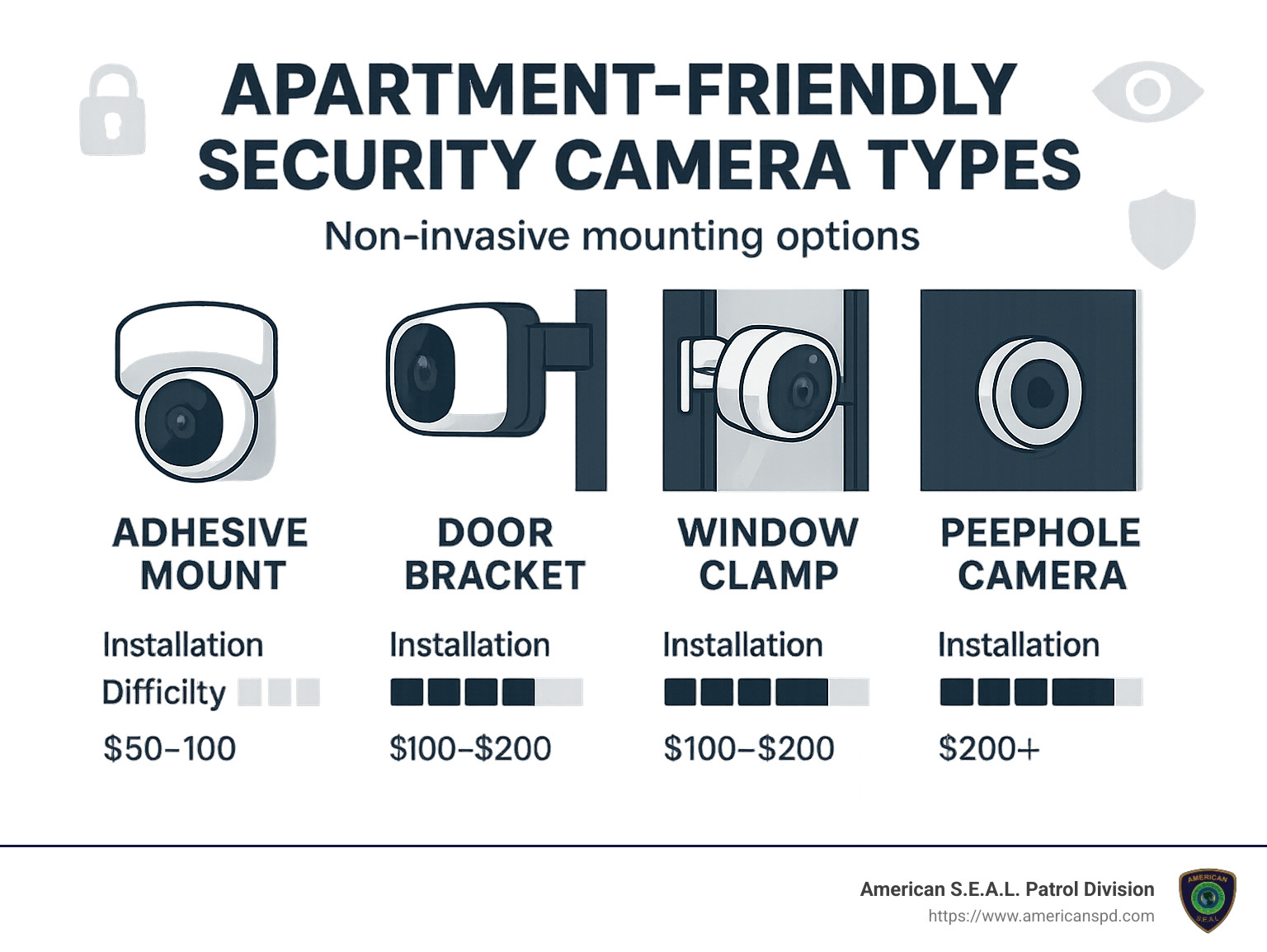
What makes a security camera truly apartment-friendly? It’s all about non-invasive installation. These cameras use no drilling or permanent mounting methods, instead relying on smart solutions like strong adhesives or clamps. They’re easy to remove when it’s time to move out, leaving absolutely no trace behind. Most focus on monitoring your indoor personal space rather than common areas, respecting both your lease terms and your neighbors’ privacy. And perhaps best of all, they’re completely portable, ready to protect your next home when you move on.
With FBI data showing a burglary occurs roughly every 30 seconds in the United States, security isn’t something even temporary residents can afford to ignore. I’ve seen how effective the right camera setup can be—both as a deterrent and for peace of mind.
“You don’t have to deck your house with window, door, and motion sensors and hire an on-call monitoring service to stay safe,” as security experts at Wired point out. For a typical apartment, expect to invest between $200-$400 on equipment with optional monitoring services running $10-$50 monthly. That’s a small price to pay for significant protection and the peace of mind that comes with it.
Most rental agreements specifically prohibit drilling holes or running wires through walls—exactly where apartment friendly security cameras shine. These innovative devices use mounting solutions that keep both you and your landlord happy. Whether you’re worried about package theft at your front door, want to check in on your pets while at work, or simply need that extra layer of security in a new neighborhood, there’s a non-invasive solution that won’t trigger warning notices from property management.
The beauty of modern security technology is how it adapts to different living situations. Whether you’re in a studio apartment, a multi-bedroom unit, or even a townhouse rental, there’s an apartment friendly security camera solution that works for your specific needs. Many renters are surprised at just how effective these non-invasive systems can be—providing professional-grade security without a single screw or nail.
Looking for more specialized security options? Explore our hidden cameras, comprehensive home camera systems, or full smart home security solutions that can be customized for rental properties.
Renting doesn’t mean you should compromise on safety. In fact, according to FBI research, apartments can be particularly vulnerable to break-ins due to their predictable occupant patterns and higher density living arrangements. The Scientific research on burglary trends shows burglaries happen with alarming frequency, making security a must-have, not a luxury.
But here’s the renter’s dilemma: How do you protect your home without kissing your security deposit goodbye? This is exactly where apartment friendly security cameras come into play.
Take a quick peek at your lease agreement and you’ll likely spot clauses about property modifications. Those innocent-looking drill holes for mounting traditional security cameras? They could cost you. Drilling into walls, running wires through doorframes, or making permanent alterations might result in lease violations, lost deposits, or even extra restoration fees when you eventually move out.
And let’s be honest – as a renter, you’re probably not staying put forever. Americans move nearly 12 times in their lifetime on average, with renters relocating much more frequently than homeowners. Why invest in security that stays behind when you leave?
As one security expert from CNET put it: “Renters, rejoice: These home security systems are affordable, DIY and won’t mess up your walls.” That’s music to any apartment dweller’s ears!
When talking with our apartment-dwelling clients about security cameras, three worries consistently bubble to the surface:
Privacy Considerations
Living in close quarters means your apartment friendly security camera needs to respect boundaries – both yours and your neighbors’. Your camera shouldn’t be capturing footage of the shared hallway, your neighbor’s door, or their living room window.
In multi-unit buildings, privacy extends beyond your personal comfort. Some states require two-party consent for audio recording, and many lease agreements explicitly prohibit surveillance of common areas.
I recently heard from a client who shared: “My apartment complex specifically prohibits cameras in common hallways, but they’re fine with interior cameras and doorbell cameras that only capture your own entrance.” This perfectly illustrates the balance you need to strike.
Landlord Approval
While you probably don’t need permission to set up interior cameras, anything that affects common areas or exterior walls typically requires a conversation with your property manager.
Before installing any security device, especially doorbell cameras, it’s worth:
– Checking your lease for specific security device clauses
– Submitting a written request that emphasizes the non-invasive installation
– Highlighting how your chosen solution won’t damage property
One of our customers shared a success story: “I explained to my property manager that my doorbell camera uses a door mount bracket with no screws or permanent fixtures. They approved it immediately since it doesn’t damage anything.” A little communication goes a long way!
Wi-Fi Reliability
Nothing’s more frustrating than a security camera that can’t maintain a connection. Unfortunately, apartment buildings are notorious Wi-Fi battlegrounds with:
Congested networks competing for bandwidth, signal interference through shared walls, and potential dead zones that can affect video quality and reliability.
To combat these apartment-specific challenges, look for apartment friendly security cameras with local storage options and adjustable resolution settings. This way, even if your internet connection hiccups, your security doesn’t have to.
Protecting your apartment doesn’t mean sacrificing your deposit or creating tension with your landlord. With the right approach, you can have peace of mind that moves with you, wherever your renting journey takes you.
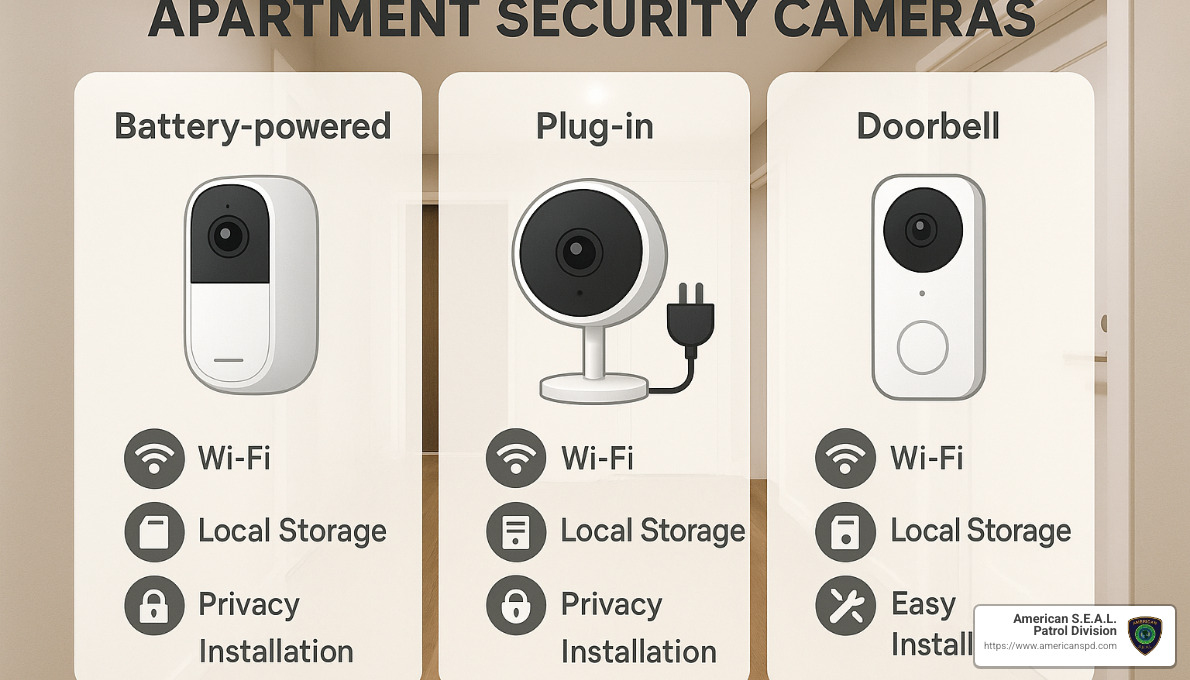
Shopping for the perfect apartment friendly security camera can feel overwhelming with so many options out there. I’ve helped dozens of renters find their ideal security setup, and I’ve learned that certain features make all the difference between a camera that works with your lifestyle and one that causes headaches (or worse—lease violations!).
Battery-powered cameras offer incredible flexibility for renters. You can place them anywhere without worrying about outlet locations, making them perfect for monitoring entryways or balconies. One of my clients, a grad student in a tiny studio, placed a battery-powered camera by her door and loved that she could reposition it whenever needed.
“My Wyze Video Doorbell Pro lasted three months on one charge,” shared a renter I recently helped. “It kept 50% battery even during those brutal Texas winter storms we had.”
The downside? You’ll need to recharge every few months, which can be a pain if you’re forgetful.
Plug-in cameras, meanwhile, offer peace of mind with their continuous power supply. No need to worry about dead batteries during critical moments! They typically cost less upfront too. The trade-off is those visible cords that can be an eyesore in a carefully decorated apartment. I usually recommend these for fixed spots like living rooms or home offices where outlets are plentiful and cords can be discreetly managed.
The hallmark of any truly apartment friendly security camera is how it attaches to your space without damaging walls or doors. This is non-negotiable for renters!
Modern cameras offer clever mounting solutions that leave zero evidence behind when you move out. Strong adhesive mounts using 3M command strips work wonderfully for lightweight indoor cameras. Door bracket mounts slip over the top of doors without a single screw needed—perfect for peephole replacements.
For outdoor monitoring, look at clamp mounts that secure to window sills or balcony railings. One tenant I worked with used a magnetic base to attach his camera to the metal railing of his fire escape—ingenious and completely lease-compliant!
“When I moved out,” a satisfied customer told me, “I just warmed the adhesive with a hair dryer for a few seconds and the mount came off clean—no wall damage at all. Got my full deposit back!”
Let’s talk about where your footage lives—a crucial decision that affects both your privacy and your wallet.
| Storage Type | Pros | Cons | Monthly Cost |
|---|---|---|---|
| microSD Card | No recurring fees, works during internet outages, complete privacy | Limited capacity, vulnerable to theft, manual backup needed | $0 after card purchase ($10-30) |
| Free Cloud | Remote access, automatic backup, theft protection | Limited retention (typically 1-7 days), limited features | $0 |
| Paid Cloud | Extended history (30-60 days), advanced features, multiple cameras | Recurring cost, requires internet, potential privacy concerns | $3-30 |
| Hybrid Solution | Flexibility, redundancy, best of both worlds | More complex setup, may require paid plans for full functionality | Varies |
Many of my clients opt for a hybrid approach. As one security-conscious renter explained, “I use a 128GB microSD card in my indoor camera for continuous recording, but I also have the basic cloud plan for my doorbell camera since it’s more vulnerable to theft.”
In apartments with spotty Wi-Fi (we’ve all been there!), local storage provides a reliable backup when your internet decides to take a coffee break.
After helping dozens of renters set up their security systems, I’ve identified three features that are absolutely essential:
Motion Detection Zones make apartment living with security cameras actually bearable. Without them, you’ll be bombarded with alerts every time a car drives by your window or neighbors walk down the hallway. Being able to tell your camera “only watch this area” saves your phone battery, your sanity, and your camera’s battery life too.
When it comes to resolution, don’t settle for less than 1080p, though 2K is even better if your budget allows. I had a client who opted for a cheaper 720p camera and couldn’t identify the person who stole her package—a frustrating experience that could have been avoided with higher resolution. As our security experts at American S.E.A.L. Patrol Division often say, “If your camera can’t zoom in enough to identify someone’s face, it’s not doing its primary job.”
Voice Assistant Compatibility might seem like a luxury, but it’s incredibly practical for apartment dwellers. Asking Alexa or Google to show your front door when you hear a knock saves you from interrupting your cooking or workout. Plus, the automation possibilities add another layer of security—like automatically turning on lights when motion is detected.
If your budget has some wiggle room, these premium features are worth considering:
Color Night Vision transforms those grainy, ghostly nighttime images into clear, color footage that provides much more useful information. “Color night vision isn’t true night vision,” explains our camera specialist. “It’s really just a highly sensitive sensor that needs minimal ambient light. But the ability to see that an intruder wore a red jacket rather than just a dark one can make all the difference in identification.”
A camera with a Built-in Siren can actively deter potential troublemakers before they become actual troublemakers. These typically range from 80-105 dB—loud enough to startle someone up to no good, but not so loud you’ll get noise complaints from neighbors. Paired with two-way audio, you can speak to visitors (or warn off suspicious characters) directly through your phone.
Some higher-end cameras include Environmental Sensors that monitor more than just motion. One apartment resident shared a compelling story: “My camera detected when my smoke alarm went off while I was at work. I was able to call my neighbor to check on my apartment immediately.” These additional sensors can detect temperature changes, humidity levels, and even air quality—valuable information for protecting both your possessions and your health.
The best apartment friendly security camera is one that fits your specific needs while respecting your lease agreement. Whether you’re concerned about package theft, want to check on pets while at work, or simply need that extra peace of mind, there’s a non-invasive solution perfect for your rental home.
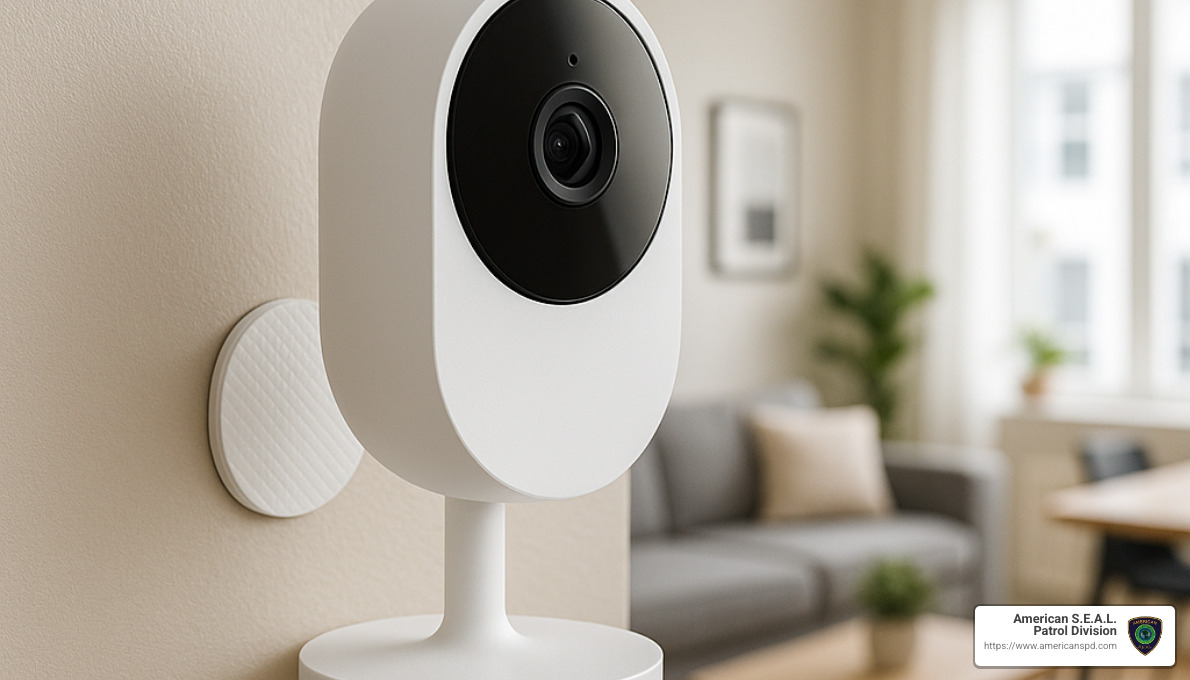
When it comes to hassle-free apartment security, nothing beats the simplicity of a peel-and-stick indoor camera. These clever little devices have become the go-to choice for renters who want solid protection without risking their security deposit.
What makes these apartment friendly security cameras so perfect for rental living is their no-fuss installation. You won’t need to dig through that dusty toolbox or worry about putting holes in your walls. The high-quality adhesive mounts stick firmly to virtually any surface but remove cleanly when it’s time to move out.
“I was skeptical at first about whether an adhesive mount would actually hold,” admits Jen, a Dallas apartment resident. “Six months later, my camera hasn’t budged an inch, even in our humid Texas summer.”
The best peel-and-stick models feature tool-free adhesive mounting using commercial-grade 3M Command strips that can support the camera’s weight for years. They typically use USB power with thoughtfully designed cable management to keep things tidy. Many newer models include a privacy shutter – a physical lens cover you can close when you want guaranteed privacy.
Perhaps most impressive is the AI detection capability in today’s models. Rather than sending alerts for every shadow or movement, these smart cameras can distinguish between people, pets, and other motion, dramatically reducing false alarms.
Getting your indoor camera up and running is refreshingly simple – most people complete the entire process in under 5 minutes. The typical setup follows a straightforward pattern: clean the mounting surface with the included alcohol wipe, peel off the adhesive backing, press firmly to your chosen spot, plug into a nearby outlet, and connect to your Wi-Fi through the manufacturer’s app.
“The QR code setup was actually kind of fun,” shares Miguel, a Houston renter. “I just scanned it with my phone, followed a few prompts, and suddenly I could see my living room from anywhere.”
Look for cameras offering 1080p HD resolution at minimum – this provides clear enough detail to identify faces and objects. A field of view between 110-130 degrees works well for most apartment spaces, though wider angles are better for studio apartments or open floor plans.
Good two-way talk functionality turns your security camera into a communication tool. Many renters use this feature to check in on pets or speak to delivery people. Night vision is essential for 24/7 protection, while customizable motion detection zones help you focus on doors and windows while ignoring high-traffic areas.
Don’t overlook the importance of local storage options. While cloud storage is convenient, having a microSD slot (64GB+ recommended) gives you recording options during internet outages and can eliminate monthly subscription fees.
These cameras have become renters’ favorites for two compelling reasons: they cause zero wall damage and they move with you when your lease ends.
The damage-free aspect can’t be overstated. Quality adhesive mounts distribute weight properly and, when removed correctly, leave no trace behind. For best results when removing your camera, warm the adhesive slightly with a hair dryer before gently pulling parallel to the wall (not straight outward). For stubborn adhesive, a length of dental floss slid behind the mount works wonders.
“I’ve used the same indoor camera through three different apartments,” explains Taylor, who moves frequently for work. “I just buy new adhesive strips each time I relocate, and it’s good as new. My security deposit has never been affected.”
The portability factor makes these cameras an investment that keeps paying off. Unlike hardwired systems that stay behind when you move, these cameras pack up easily and re-install just as quickly at your next place. This flexibility is particularly valuable in Texas cities like Dallas and Houston, where the rental market moves quickly and being able to take your security system with you provides consistent protection.
At American S.E.A.L. Patrol Division, we’ve seen how these simple, portable solutions have prevented countless break-ins and given our clients the peace of mind they deserve, no matter where they call home.
The front door remains the most common entry point for burglars, making doorbell cameras a critical security component. For renters, wire-free doorbell cameras offer powerful protection without modification.
The best apartment friendly security camera for your door should include:
I recently spoke with Maria, an apartment resident who installed a battery-powered doorbell camera after a concerning incident. “After an unfortunate attempt to break into one of our vehicles, getting these cameras was a must for us,” she explained. The peace of mind was immediate, and her landlord had no objections to the installation.
Setting up a wireless doorbell camera is surprisingly simple, typically taking just 10-15 minutes from box to fully operational. The process usually involves charging the battery fully before installation, attaching the mounting bracket to your door using the included adhesive or door hanger, connecting the doorbell to your Wi-Fi network via the app, and finally adjusting motion zones and notification settings.
When shopping for your doorbell camera, pay attention to the field of view—look for 150-180 degrees to capture your entire doorway. Battery life is another crucial factor; you’ll want at least 2+ months under normal use to avoid frequent recharging. Person recognition helps reduce those annoying false alerts from passing cars or swaying trees, while storage options (cloud or local) determine how long you’ll keep your footage. Perhaps most importantly, notification speed should be near-instant when motion is detected.
“I ran a Wyze doorbell for three months in a snowy region and still had 50% battery remaining,” shared Jake, a user living in Minnesota. “The motion alerts are nearly instantaneous, which gives me peace of mind even when I’m traveling.”
What makes these doorbell cameras particularly suited for apartment living? It all comes down to installation flexibility and respect for shared spaces.
Most apartment friendly security camera doorbells offer multiple mounting solutions that won’t damage your door or frame. Door bracket mounts simply slip over the top of the door without any tools required. Strong adhesive mounting plates provide a secure hold without leaving residue. Some even allow for existing doorbell replacement if your lease permits minor electrical modifications.
As one renter told me, “I used the door bracket mount on my apartment door, and my property manager had no issues with it since it doesn’t damage anything.” This no-modification approach keeps both you and your landlord happy.
Many apartment complexes have strict rules about recording in shared spaces, and for good reason—privacy matters. Renter-friendly doorbell cameras address this concern by focusing narrowly on your door area, offering adjustable motion zones to limit recording range, and providing privacy settings to blur portions of the image where neighbors might pass by.
At American S.E.A.L. Patrol Division, our security experts always advise: “Always angle your doorbell camera to primarily capture your own entrance, not common hallways or neighbors’ doors. This respects privacy while still protecting your entryway.”
The beauty of these wireless solutions is that when your lease ends, your security investment moves with you—simply remove the camera, pack it up, and it’s ready for your next home, providing continuous protection no matter where you live.
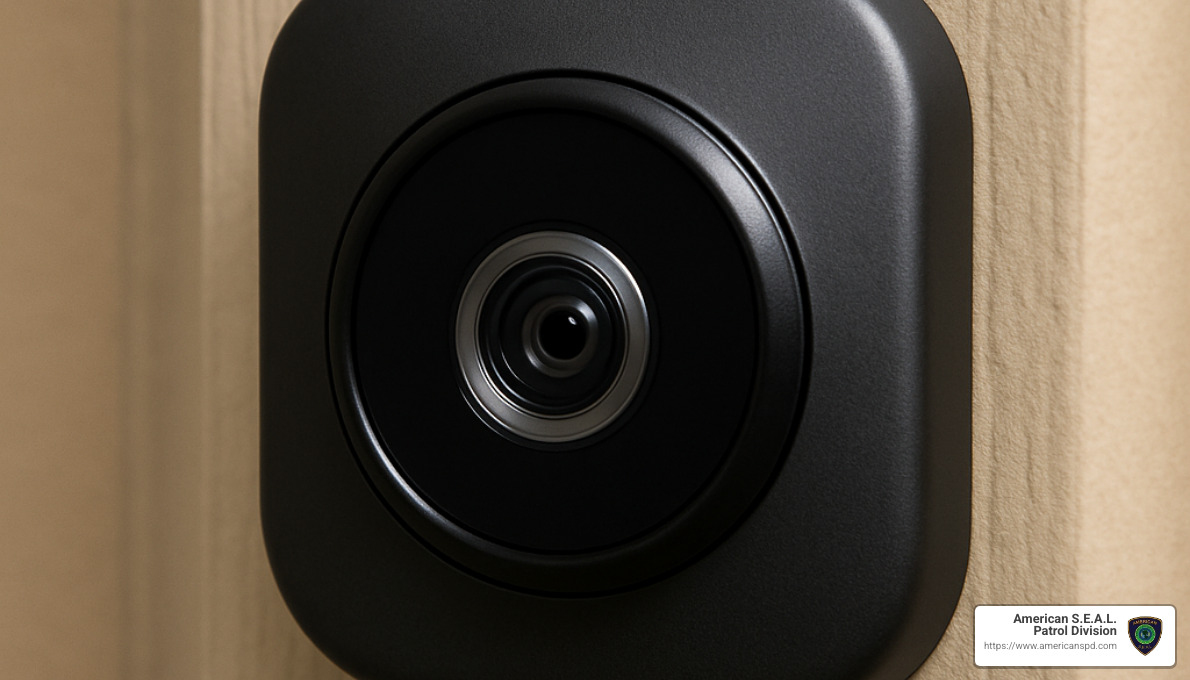
If you’re looking for the ultimate stealth security solution that won’t raise a single eyebrow from your property manager, a peephole camera might just be your perfect match. These clever devices work with what’s already built into your door, making them perhaps the most lease-friendly option available for apartment dwellers.
Think about it – your door already has a peephole, so why not upgrade it with smart technology? An apartment friendly security camera that uses your existing peephole gives you all the security benefits without any of the installation headaches.
“I was nervous about installing any security device in my apartment until I finded peephole cameras,” shares Maria, a Dallas renter. “My building has strict rules about modifications, but since this just replaces the existing peephole, my landlord had absolutely no objections.”
The beauty of these systems lies in their simplicity. They typically feature over-the-door installation that requires zero tools or permanent changes. The camera simply mounts through your existing peephole opening, giving you a digital view of visitors while maintaining the door’s original function.
Many models also include knock sensors that alert you even when someone doesn’t press a doorbell – perfect for those midnight visitors you’d rather avoid. And with hallway recording capabilities, you’ll capture motion-activated video of anyone approaching your door.
“The Ring Peephole Cam mounts inside over a standard apartment peephole to avoid lease violations and hallway camera bans,” notes a security expert reviewing renter-friendly options. This makes it ideal for buildings with strict rules about cameras in common areas.
Getting a peephole camera up and running typically takes just 15-20 minutes, even if you’re not particularly handy. The process is refreshingly straightforward:
First, you’ll remove your existing peephole, which usually just unscrews or pops out. Then, install the camera module through that same opening and attach the interior viewing screen. Finally, connect to your Wi-Fi network and adjust your settings to your liking.
The technology packed into these unassuming devices is impressive. Most feature a crisp LCD viewer that gives you a much clearer image than that tiny traditional peephole ever could. With 1080p HD video becoming standard, you’ll see visitors in remarkable detail.
Battery life is another consideration – most models last 2-3 months between charges, meaning minimal maintenance. Many offer local storage options via microSD cards if you prefer keeping your footage private rather than in the cloud.
“The night vision feature sold me,” explains Jordan, an apartment resident in Houston. “My hallway is poorly lit, and my old peephole was useless after dark. Now I can clearly see visitors any time of day or night.”
There’s a reason property managers rarely object to peephole cameras – they’re virtually undetectable from the outside and don’t modify the door structure in any meaningful way.
By using your existing peephole, these cameras maintain your door’s original appearance and function. There’s no drilling, no new holes, and absolutely no permanent changes that might violate your lease agreement. When it’s time to move out, simply reverse the installation process and take your camera with you.
The zero landlord complaints factor can’t be overstated. Unlike doorbell cameras or other security devices that might be visible from common areas, peephole cameras remain discreet. The external appearance of your door stays unchanged, keeping you in the clear with even the strictest property management companies.
“Peephole cameras are one of the few security modifications we never have issues with,” confirms a property manager we consulted. “They don’t damage the door and they’re completely removable, so there’s no reason for us to object.”
For renters concerned about both security and their deposit, peephole cameras offer the perfect balance. You get improved protection and peace of mind without risking lease violations or damage charges when you move out – truly the definition of an apartment friendly security camera.
For monitoring outside your apartment without permanent installation, clamp-on cameras provide the perfect solution for balconies, patios, and windows. These apartment friendly security cameras secure to railings, window frames, or sills without screws or adhesives.
The best clamp-on outdoor cameras feature:
“Eufy solar cameras with solar panels can operate unattended for nearly a year in outdoor conditions,” reported one user who mounted cameras on their apartment balcony.
Installation typically takes 5-10 minutes:
Important specifications include:
“I affixed Eufy solar cameras to my balcony railing to monitor my patio. The property management had no issues since it didn’t damage anything, and the solar panel meant I never had to take it down for charging,” shared an apartment resident.
Clamp-mounted cameras solve several challenges for apartment dwellers:
No Drilling Outside Walls
These cameras attach securely without any permanent modification:
– Adjustable clamps work with various railing types
– Window mounts secure to frames or sills
– Tension-based systems require no tools or hardware
“The clamp mount is incredibly secure—it’s survived multiple storms on my balcony without budging,” noted one user.
Ideal for Patio or Fire Escape
These cameras excel at monitoring:
– Package deliveries left on balconies
– Potential intrusion points like sliding doors
– Shared outdoor spaces (within privacy guidelines)
As security experts at American S.E.A.L. Patrol Division explain: “Balcony cameras serve dual purposes—they monitor a vulnerable entry point while also keeping an eye on any belongings you store outside.”
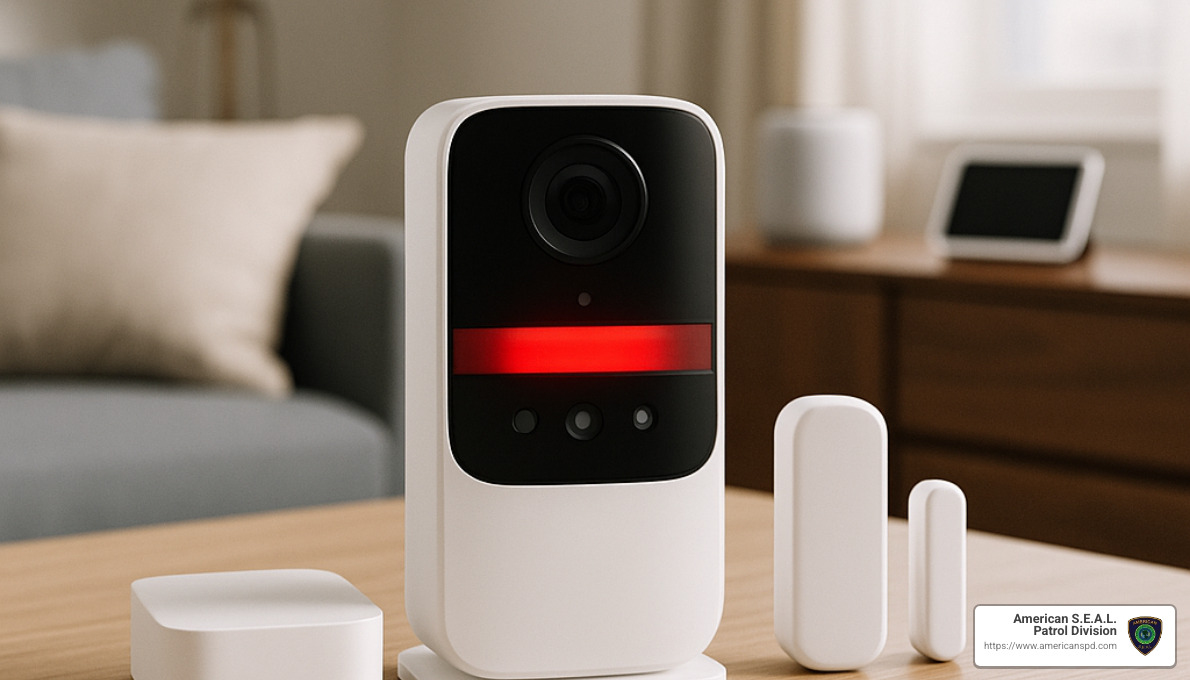
When you’re living in a cozy studio apartment, every square inch counts. That’s why all-in-one security hubs have become a game-changer for small-space dwellers. These clever devices pack multiple security features into one compact unit, giving you comprehensive protection without cluttering your limited living area.
Think of these systems as the Swiss Army knife of apartment security—they combine a high-quality camera with several other protective features that would normally require multiple devices. Most studio apartment residents I’ve spoken with love how these systems eliminate the need for multiple gadgets while still providing complete coverage.
The best apartment friendly security camera hubs come equipped with built-in sirens reaching 90+ decibels—loud enough to startle an intruder and alert neighbors, but not so overwhelming that you’ll be on bad terms with the folks next door if it accidentally triggers. Many also function as Zigbee or Z-Wave hubs, allowing you to connect additional sensors throughout your apartment without needing separate control centers.
“I was skeptical about fitting a security system into my 450-square-foot studio,” Megan from Austin told me, “but my all-in-one hub sits discreetly on my bookshelf and controls everything from my door sensors to my smart lights. My landlord had no issues with it since there’s zero installation damage.”
Environmental monitoring is another fantastic bonus feature in these systems. They’ll keep tabs on temperature, humidity, and even air quality—particularly valuable if you have pets staying home alone or valuable collections that could be damaged by extreme conditions.
Getting an all-in-one hub up and running is refreshingly simple. Most renters can complete the entire process in about 15-30 minutes—roughly the time it takes to brew and enjoy a cup of coffee.
The setup process typically follows these straightforward steps: place your hub in a central location with reliable Wi-Fi coverage, plug it in, download the manufacturer’s app, create your account, and follow the guided setup instructions. The systems are designed to be user-friendly, with most offering QR code scanning for quick connection.
What should you look for in these systems? At minimum, seek out 1080p HD resolution—anything less won’t provide the clarity you need to identify faces or details during a security event. Geo-fencing capability is another standout feature, automatically arming your system when you leave and disarming it when you return home, based on your smartphone’s location.
Power requirements are minimal—just a single outlet, though many models offer battery backup for continued protection during power outages. This is particularly valuable in older apartment buildings where electrical reliability might be questionable.
“The Abode Starter Kit integrates seamlessly with my existing smart home devices,” shares Tomas, a studio apartment resident in Dallas. “I started with just the hub, but I’ve gradually added door sensors and a water leak detector near my bathroom. The whole system runs through one simple app.”
The space-saving benefit of these all-in-one systems simply can’t be overstated. When you’re working with limited square footage, having a single device that replaces a camera, siren, smart hub, and environmental monitor is incredibly valuable. Many of these hubs have been thoughtfully designed with aesthetics in mind too, so they blend nicely with your décor rather than screaming “security device!”
Perhaps the most renter-friendly aspect is the expandability of these systems. You can start with just the hub camera and gradually add door sensors, window contacts, or motion detectors as your security needs evolve or your budget allows. This modular approach means you’re not locked into a fixed system that might not work in your next apartment.
These hubs truly shine when it comes to future-proofing your security investment. As Carlos, a frequent mover, explained to me: “I’ve taken my hub camera through three different apartments now. In my ground-floor unit, I added window sensors. When I moved to a higher floor, I removed those but added a water leak sensor since I was concerned about the aging plumbing. The system adapts to wherever I live.”
The integration capabilities also mean you’re not starting from scratch with each move. Whether you use Amazon Alexa, Google Home, or Apple HomeKit, most quality hub systems play nice with at least one major smart home ecosystem, allowing you to build on your existing tech setup rather than replacing everything.
For studio apartment dwellers seeking comprehensive security without sacrificing precious space, these all-in-one hubs represent the perfect balance of protection and practicality. As our experts at American S.E.A.L. Patrol Division often remind clients, good security doesn’t have to be complicated—sometimes the most effective solutions are the ones that simplify your life while keeping you safe.
The short answer is: it depends on your lease and local laws.
When it comes to apartment friendly security cameras, the rules can feel like a maze. Most leases have specific language about modifications and security devices. In my experience working with hundreds of renters, interior cameras that monitor your own space are typically permitted without any special permission. These are considered personal devices, similar to a laptop or TV.
However, things get trickier with exterior cameras or those requiring permanent installation. Your landlord may have restrictions, especially if installation involves drilling or wiring. As one property manager told me, “We generally allow tenants to install cameras inside their units as long as they don’t damage walls or doors. Exterior cameras require written permission.”
Even when your camera is perfectly legal and lease-compliant, being a good neighbor matters. I always recommend informing adjacent neighbors about doorbell cameras, ensuring your devices don’t capture private areas of neighboring units, and respecting shared space privacy expectations. This small courtesy can prevent misunderstandings down the road.
Most apartment buildings draw a hard line when it comes to recording in common areas like hallways (except immediately outside your door), lobbies, mailrooms, parking garages, and amenity spaces like pools or gyms. As one security expert succinctly put it: “Inside is almost certainly fine; outside usually requires landlord or management approval for anything permanent.”
One of the biggest perks of apartment friendly security cameras is their portability. After helping dozens of clients relocate their security systems, I’ve developed a foolproof process.
Before you start packing, document everything. Take photos of your current setup from multiple angles, label each component and its location, store small parts in labeled bags, and save screenshots of your camera settings. This preparation saves hours of head-scratching during reinstallation. As one frequent mover shared with me, “I take screenshots of my camera settings before moving so I can quickly reconfigure everything in my new place.”
For security reasons, perform a factory reset on all your devices before packing them away. This means removing all devices from your account, clearing local storage (after downloading any important footage), and updating firmware before reinstallation. This clean slate approach prevents potential access issues at your new location.
Removing adhesive mounts without damaging walls is crucial for getting your security deposit back. The technique I recommend to all my clients: use a hairdryer on low heat to warm the adhesive, then gently pull parallel to the wall (not outward). For stubborn adhesive, dental floss works wonders to separate it from the wall. Finish by cleaning any residue with isopropyl alcohol. One of my clients recently told me, “When I moved out, I just warmed the adhesive with a hair dryer for a few seconds and the mount came off clean—no wall damage at all.”
This question comes up in nearly every consultation I have with apartment dwellers, and the answer depends on your lifestyle and priorities.
DIY self-monitoring gives you complete control with no monthly obligations. You’ll receive alerts directly to your phone and decide how to respond. This approach typically costs nothing beyond your initial equipment purchase, or perhaps a minimal storage fee ($0-10 monthly). For budget-conscious renters or those rarely away from home, this freedom is appealing.
Professional monitoring provides that extra layer of protection through 24/7 emergency response teams. When your alarm triggers, trained professionals assess the situation and can dispatch emergency services if needed. Monthly fees typically range from $10-50, but many renters find the peace of mind worth every penny—especially those who travel frequently or work unpredictable hours.
The flexibility of month-to-month monitoring plans is perfect for the rental lifestyle. Most reputable companies now offer no-contract options that can be activated or deactivated seasonally and transferred between addresses when you move. “Ring Alarm offers professional monitoring starting at $20 per month, one of the most affordable options tested,” according to a recent security system review I read.
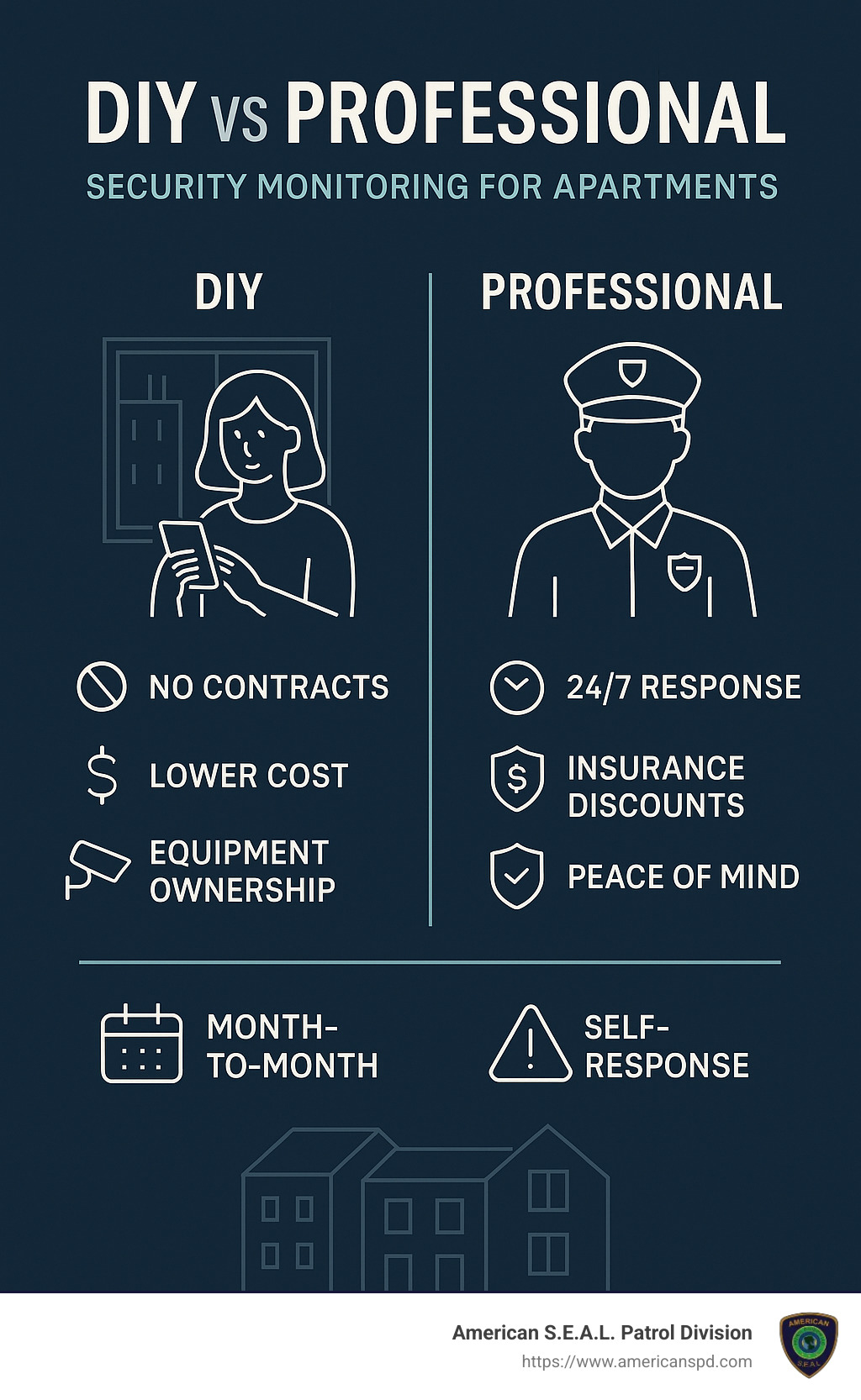
Your response capability is another important consideration. With self-monitoring, everything depends on your availability to check alerts, your proximity to your apartment when something happens, the reliability of your internet connection, and whether you have neighbors who can assist in your absence.
As our security experts at American S.E.A.L. Patrol Division often explain to clients: “Professional monitoring provides peace of mind for renters who travel frequently or work unpredictable hours. For those who are typically nearby and responsive to alerts, self-monitoring can be equally effective at a lower cost.”
Securing your apartment shouldn’t mean sacrificing your security deposit or violating your lease. With the right apartment friendly security camera solutions, you can achieve comprehensive protection that moves with you from one rental to the next.
Think of apartment security as a backpack rather than a built-in closet—it should be effective, adaptable, and ready to move when you are. The systems we’ve explored offer exactly that kind of flexibility while still providing serious protection.
Non-invasive mounting options have truly revolutionized apartment security. Whether you choose adhesive pads that leave no trace, door brackets that slip on and off in seconds, or clever peephole cameras that use existing hardware, today’s solutions respect both your security needs and your lease agreement.
Your specific living situation should guide your camera choices. Those in studio apartments might benefit most from all-in-one hub systems that maximize functionality while minimizing space requirements. If you’re in a larger unit with multiple entry points, a combination of indoor cameras and a doorbell or peephole camera might make more sense.
Privacy considerations remain crucial in multi-unit buildings. The best apartment dwellers are those who secure their own space without compromising their neighbors’ privacy. Be thoughtful about camera placement, angle your devices to capture only your property, and always follow building policies regarding recording in common areas.
The portability of these systems might be their greatest strength for renters. When moving day comes—and it always does eventually—you can simply detach your cameras, pack them up, and reinstall them in your new place. No abandoned investment, no explaining damage to your landlord.
Storage flexibility gives you control over both your footage and your budget. Whether you prefer the simplicity of local microSD storage or the convenience of cloud access, today’s cameras let you choose what works for your needs and finances.
With FBI data showing burglaries occurring every 30 seconds in the U.S., apartment dwellers simply can’t afford to leave security to chance. The good news is you don’t have to choose between protection and your lease agreement.
At American S.E.A.L. Patrol Division, we’ve spent over 15 years helping Houston residents secure their homes and apartments with cutting-edge technology. Our expertise in residential security allows us to recommend solutions that provide maximum protection while respecting property rules.
Whether you’re worried about package theft, want to check on pets throughout the day, or simply need that extra layer of security that helps you sleep better at night, there’s an apartment friendly security camera solution that will keep both you and your landlord happy.
For more information about comprehensive apartment security camera systems, visit our dedicated resource page or contact our Houston office for personalized recommendations custom to your specific rental situation.
The best security system isn’t just the one with the most features—it’s the one that provides genuine peace of mind without creating new headaches. That’s exactly what these apartment-friendly options deliver, and why they’ve become essential tools for today’s renters.
CCTV for farm security is becoming essential as rural crime rates continue to soar. Here’s what you need to know:
“The huge increase we’ve seen in criminal activity is significantly impacting farm businesses and families both financially and emotionally.” – David Exwood, NFU Vice President
Farms present unique security challenges. Their remote locations often mean delayed law enforcement response, while valuable equipment, livestock, and crops make them attractive targets for thieves. A shocking 80% of surveyed farmers have experienced some form of crime, with 76% being victimized multiple times.
Modern CCTV solutions have evolved to address these challenges. Today’s systems can operate in extreme weather conditions, function without traditional power or internet connections, and provide clear footage even in complete darkness.
Whether you manage a small hobby farm or a large commercial operation, implementing the right security cameras can significantly reduce your vulnerability to crime while providing peace of mind and potentially lowering insurance premiums.

Quick cctv for farm security definitions:
The idyllic image of country living is increasingly being challenged by a harsh reality—rural crime is on the rise, and farms are prime targets. The peaceful, wide-open spaces that make farm life so appealing are the same features that make these properties vulnerable to criminal activity.
According to the 2024 Rural Crime Report, a concerning 50% of rural residents now view crime as a major worry in their communities. The statistics tell a troubling story: rural theft has surged by 18% in 2024 alone, with costs to farmers approaching a staggering £55 million annually. Perhaps most alarming is that 80% of surveyed farmers have experienced some form of crime, and 76% of these hardworking individuals have been victimized multiple times.
Many farmers, who once felt no need for surveillance, have begun to realize that criminal activities are becoming more frequent. After incidents involving stolen livestock, fuel, or equipment, they have found that installing cameras is increasingly necessary to protect their livelihoods.
The isolation that many farmers cherish also creates perfect opportunities for criminals. When your nearest neighbor is half a mile away and the closest police station is 20 minutes down the road, security becomes a serious concern.
This remoteness means law enforcement response times can stretch to 30 minutes or more in many rural areas. During that time, thieves can load up valuable equipment and disappear without a trace. Many farm crimes aren’t even finded until hours or sometimes days after they occur, making recovery of stolen items extremely unlikely.
Modern farms are treasure troves of expensive assets that attract criminal attention. A single tractor can be worth upwards of $100,000, while smaller equipment like ATVs, power tools, and generators are easily transported and quickly resold.
Fuel storage tanks containing hundreds of gallons of diesel or gasoline are increasingly targeted as fuel prices rise. Livestock theft has also made an unfortunate comeback, with smaller animals like sheep and calves being especially vulnerable. Even agricultural chemicals and fertilizers can represent thousands of dollars sitting in unsecured storage buildings.
Farm operations typically follow consistent schedules that observant criminals can learn and exploit. Most farming activities happen during daylight hours, leaving properties less supervised at night. Seasonal patterns mean expensive equipment might sit unused for months at a time, and regular market days or livestock auctions create predictable windows when farmers are known to be away.
This evolving threat landscape explains why CCTV for farm security has transformed from a luxury into a necessity for today’s agricultural operations. At American S.E.A.L. Patrol Division, we’ve witnessed how proper surveillance systems dramatically reduce these risks while providing farmers with the peace of mind they deserve.
The good news? Today’s security camera technology is specifically designed to overcome rural challenges, with options that work without traditional internet connections or power sources. With the right system in place, your farm can be protected even in the most remote locations.
When it comes to protecting your agricultural livelihood, CCTV for farm security is one of the smartest investments you can make. These systems provide comprehensive protection and peace of mind, extending into every aspect of farm management.
Nothing says “look elsewhere” to potential thieves quite like visible security cameras. The psychological impact alone is worth the investment—criminals typically seek easy targets, and a farm equipped with cameras simply isn’t one. This preventative effect can be improved by pairing cameras with motion-activated lighting, which often reduces vulnerability to opportunistic theft.
Modern farm life involves juggling countless responsibilities. You can’t be everywhere at once—that’s where CCTV for farm security truly excels beyond crime prevention. Remote monitoring has been transformative for livestock farmers, especially during calving or lambing seasons, allowing them to observe animals without disturbing them. By checking camera feeds on a smartphone or tablet, farmers can address issues immediately, boosting both animal welfare and operational efficiency.

The remote viewing capabilities of today’s systems mean you can check on your property from anywhere with internet access. Whether you’re at the feed store, at a cattle auction, or on a rare vacation, your farm is never more than a tap away on your smartphone.
Unfortunately, even with deterrents in place, crimes can still occur. When they do, having high-quality video evidence makes all the difference. Modern CCTV for farm security systems capture clear footage—often in 4K resolution—that can identify faces, license plates, and other distinguishing features. This evidence is invaluable to law enforcement and increases the chances of recovering stolen property while supporting successful prosecutions.
Beyond criminal prosecution, this documentation streamlines insurance claims. Many insurance companies offer premium discounts for farms with comprehensive security systems, recognizing that documented evidence improves recovery rates and reduces fraudulent claims.
Integration with other farm management tools further boosts the value of your cameras. Some farms pair their camera feeds with weather monitoring or other smart farm features, creating a comprehensive monitoring network. For larger operations, professional monitoring services provide an extra layer of security, ensuring immediate response to suspicious activity—day or night.
According to a recent study by the National Rural Crime Network, farms with comprehensive security systems experience up to 67% fewer theft incidents compared to those without such protection.
Finding the perfect CCTV for farm security solution isn’t a one-size-fits-all situation. Farm environments present unique challenges that your average home or business security system might not be equipped to handle. Let’s walk through what you’ll want to consider when protecting your agricultural operation.
The discussion about wired versus wireless is particularly important for farms where distances can be vast and infrastructure can be limited.
Wired systems have stood the test of time for good reason. They offer rock-solid reliability without the signal dropouts that can affect wireless options. Since they’re hardwired to your power supply, you won’t face battery issues at inopportune moments. They can also handle higher-resolution video streams for clearer images. The main drawback is the complexity and cost of installation, especially if trenching is required to run cables across large properties.
Wireless systems shine in flexibility. They are ideal for places where running cables would be impractical or too costly. Installation is simpler, and you can reposition cameras as your security needs change. However, you’ll need to be mindful of potential signal strength issues caused by weather, buildings, or large equipment. Battery-powered options require regular maintenance, though solar solutions can help alleviate this challenge if they receive enough sunlight.
At American S.E.A.L. Patrol Division, we often recommend a combination of both. Wired cameras can secure main buildings with reliable power, while wireless or solar-powered units can extend coverage to remote sections of the property.
When selecting cameras for your farm, certain features matter more than others. High resolution—1080p or better—is important for identifying crucial details, and night vision is essential given that many thefts occur under cover of darkness. Infrared night vision typically provides clear visibility up to around 100 meters, while thermal imaging can detect activity even in complete darkness. Importantly, these infrared emissions won’t harm your crops or livestock.
Look for weather resistance with at least an IP65 or IP66 rating, and ensure the camera’s operating temperature range matches your local climate. Metal housing often outperforms plastic under harsh farm conditions.
Advanced features like PTZ (Pan-Tilt-Zoom), smart motion detection, and AI-powered person/vehicle recognition can further improve security. Two-way audio can also be effective for warning intruders that they are on camera.

Power supply is often the biggest challenge for remote farm locations. Solar-powered systems have revolutionized farm security by using a small solar panel and built-in battery. As long as there’s enough sunlight, these cameras remain operational, storing excess energy for nighttime or cloudy conditions.
Battery-powered options offer complete freedom of placement and can run for months on a single charge, making them perfect for areas without easy access to electricity. Just remember that you’ll need a plan for recharging or replacing batteries periodically.
A hybrid approach combines solar, battery, and traditional electrical power where available. This ensures coverage in varied conditions and across different sections of your property. By carefully considering factors like resolution, power options, and communication methods, you can build a custom CCTV for farm security system that fits your property’s needs and budget.
Setting up CCTV for farm security isn’t just about buying cameras and mounting them. A thoughtful installation makes the difference between effective protection and a false sense of security.
Positioning your cameras correctly is crucial. Entry and exit points should be top priority, capturing clear views of main gates and driveways. Be sure to cover secondary access routes as well, as intruders often use less obvious paths. Focus on high-value asset areas like equipment sheds and fuel tanks, and don’t forget livestock zones, especially where animals may be loaded or unloaded.
Mount cameras at 12–15 feet high to provide better coverage and reduce the risk of tampering. For large properties, consider using existing structures or installing dedicated poles to gain a higher vantage point.

Conduct a thorough site survey to identify vulnerabilities before installing cameras. Create a coverage map to help spot potential blind spots. Consider power and connectivity options in each location. Use robust mountings and housing designed to withstand weather extremes.
Test each camera in various lighting conditions—day, dusk, and night—to ensure you get usable footage. The best time to find a camera’s limitations is before an incident occurs.
Farm environments can be tough on equipment, so schedule regular cleaning of camera lenses and housings, especially during dusty times like planting or harvesting. Keep firmware updated to fix security vulnerabilities and improve performance. If you’re using battery-powered systems, set reminders to check battery status to avoid downtime.
Seasonal changes can also introduce new obstructions—like foliage growth—that block the camera’s view, so inspect placements regularly.
Privacy laws vary, but a few principles apply universally. Ensure your cameras don’t capture areas of your neighbors’ property without permission. Respect workers’ privacy and post visible signage indicating that video surveillance is in use. Proper data protection policies—such as deciding how long to retain footage—are also essential.
Using cameras responsibly not only keeps you in line with regulations but also maintains good relationships with neighbors, visitors, and workers.
While CCTV for farm security is a powerful tool, it works best when combined with a broader security strategy. Think of your farm’s security in layers—a camera system is just one part, complemented by other practices.
Physical barriers like fences and secure gates are your first line of defense. High-quality padlocks, chains, and reinforced doors can deter opportunistic thieves. Motion-activated lighting not only improves visibility but also helps your cameras capture clearer footage at night.
For areas housing particularly expensive equipment, consider adding bollards or barriers to prevent thieves from ramming buildings with vehicles.
Store valuable items in locked structures whenever possible, and consider marking equipment with your farm’s name or identification to discourage resale. Wheel clamps, hitch locks, and steering wheel locks add another layer of protection to vehicles and trailers. Keep detailed inventory records, including serial numbers and photographs, to expedite insurance claims and aid in recovery efforts.
Pairing your CCTV for farm security with an effective alarm system magnifies overall protection. Perimeter alarms or door/window sensors can send immediate alerts to your smartphone, allowing for rapid response. Audible alarms or automated messages can scare away intruders before they do significant damage.
Working with neighbors creates a supportive network. Sharing information about suspicious activities can thwart crime before it spreads. Setting up group messaging or social media alerts for your local farming community can quickly warn others of potential threats. Also, strong relationships with local law enforcement can speed up response times if a crime does occur.
Educate employees on basic security measures, including how to recognize suspicious behavior and how to report it. Implement clear policies about who is authorized to access certain areas of the property, and define proper procedures for handling unexpected visitors or deliveries.
Schedule routine checks of your farm’s security measures. As seasons change, so do the risks—your camera angles, lighting, and fencing may need adjustments. Make sure insurance coverage matches your current assets to avoid coverage gaps in the event of a theft or disaster.
A well-rounded strategy combines CCTV for farm security with robust physical measures, cooperative community efforts, and thorough employee training. This layered approach creates an environment where criminals find it too difficult to operate, reducing overall risk for everyone involved.
Yes, but you need to choose the right equipment. Modern farm security cameras are built with robust, weatherproof designs to handle dust, heavy rain, and temperature extremes ranging from -22°F to 140°F. Look for cameras with IP66 or higher ratings and ensure they include surge protection and proper grounding for lightning events.
Covering extensive acreage doesn’t necessarily require dozens of cameras. Mounting cameras high—on towers or tall buildings—can provide wide views. Focus on critical areas like entrances, equipment storage, and livestock zones. Thermal cameras and PTZ (Pan-Tilt-Zoom) functionality are especially useful for scanning large perimeters in low-light conditions. Smart placement can save costs while still offering comprehensive coverage.
Absolutely. 4G/LTE cameras use cellular networks to transmit video, making them ideal for remote farms without reliable broadband. Solar-powered variants can operate independently of the power grid, and many have onboard storage to continue recording even if the cellular connection drops temporarily. Point-to-point wireless solutions can also create a private network between multiple buildings on large properties.
Ongoing costs may include minimal electricity use for wired systems or data plans for 4G/5G cameras. Cloud storage subscriptions vary based on the number of cameras and how long you want to retain footage. Periodic equipment maintenance—like cleaning lenses or updating firmware—helps ensure consistent performance. High-quality cameras can last several years if properly cared for.
No. Plants only absorb light under 700 nm, while infrared cameras operate above this range. Livestock also remain unaffected, as infrared illumination is gentle and undetectable to most animals. These cameras merely detect heat signatures; they do not emit harmful radiation.
Select scalable systems that allow adding more cameras or features over time. Opt for open standards rather than proprietary technology to avoid compatibility issues. If possible, invest in higher-resolution cameras now for better detail. Ensure your recording system can expand its storage capacity, and keep firmware updated for continued performance and security improvements.
For more detailed information about farm security trends, check out this recent study on farm crime rates, which also offers insights into emerging best practices.
As rural crime rates continue to climb, implementing effective CCTV for farm security has transformed from a luxury into an essential investment for protecting your agricultural operation. The right surveillance system does more than just record footage—it actively deters criminals, provides crucial evidence when needed, and offers genuine peace of mind knowing your property remains protected even when you’re miles away.
Farm environments present unique security challenges that standard residential systems simply can’t handle. The remote locations, expansive areas, and limited infrastructure require specialized solutions. Thankfully, today’s advanced camera systems rise to these challenges with features like 4G connectivity, solar power options, and rugged designs built to withstand everything from scorching Texas summers to frigid winter storms.

At American S.E.A.L. Patrol Division, we’ve spent over 15 years walking alongside Texas farmers and ranchers, helping them protect their livelihoods with customized security solutions. We’ve seen how devastating farm theft can be—and conversely, how effective the right security system can be in preventing it. Our experience has consistently shown that the most powerful approach combines cutting-edge technology with professional expertise and vigilant monitoring services.
As you consider implementing or upgrading your farm’s security cameras, keep these essential points in mind:
Choose cameras specifically designed for agricultural environments, with proper weatherproofing, night vision capabilities, and resolution that allows for identification of people and vehicles. Consider your connectivity options carefully—some remote locations benefit more from 4G-enabled cameras than traditional WiFi systems. Place your cameras strategically to cover vulnerable areas like equipment storage, fuel tanks, and access points rather than trying to monitor every square foot. Your CCTV for farm security works best when integrated with other measures like quality lighting, secure fencing, and proper locks. Always ensure you’re complying with privacy laws by posting appropriate signage and respecting boundaries. And don’t forget that even the best system requires regular maintenance to perform optimally.
The investment in quality farm security cameras typically pays for itself many times over. Beyond the obvious financial protection against theft and vandalism, there’s something profoundly valuable about being able to check on your property from anywhere, at any time. Many of our clients tell us they sleep better knowing their livelihood is being watched over, even when they’re not physically present.
For more information about how American S.E.A.L. Patrol Division can help secure your farm with personalized security solutions, contact our Houston office for a consultation. Our team understands the unique challenges facing Texas agricultural operations—we speak your language and can design a system custom to your specific situation.
Don’t wait until after you’ve become another rural crime statistic. The peace of mind that comes from properly protecting what you’ve worked so hard to build is invaluable. Take that proactive step today—your future self will thank you.
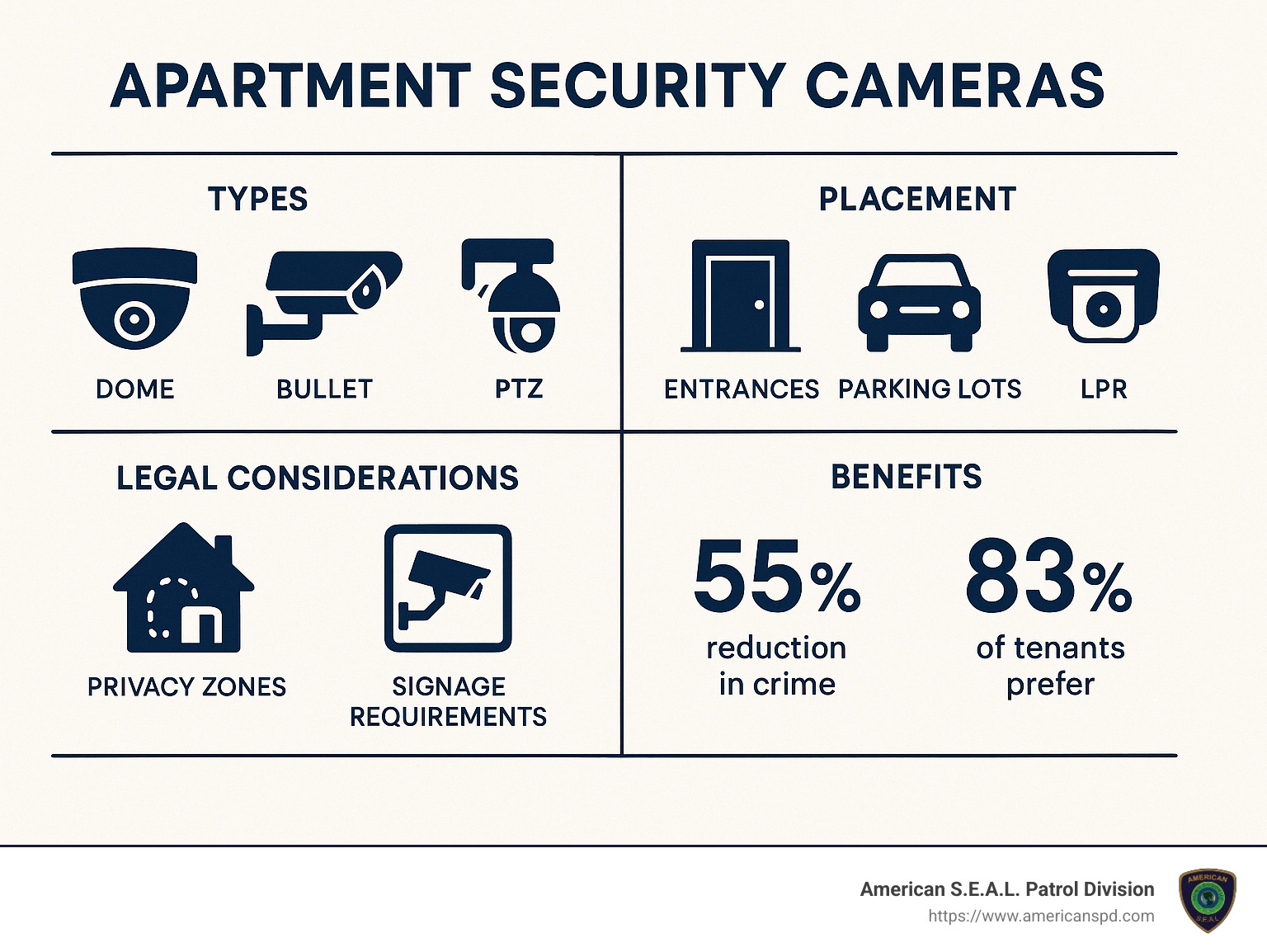
Apartment complex security cameras are surveillance systems specifically designed to monitor and protect multi-family residential properties. They provide visual monitoring of common areas, entry points, and perimeters to deter crime and document incidents.
Quick Answer: Apartment Complex Security Cameras Essentials
| Key Aspect | Details |
|---|---|
| Best Locations | Entrances, parking lots, mail rooms, laundry facilities, hallways, stairwells |
| Camera Types | Dome (indoor areas), Bullet (perimeters), PTZ (large spaces), LPR (parking gates) |
| Legal Considerations | Cannot be placed in private areas; require proper signage; some states restrict audio recording |
| Key Features | Motion detection, night vision, high resolution (min. 1080p), remote access |
| Benefits | Crime reduction (up to 14%), tenant retention (66% prefer buildings with cameras), insurance discounts |
Security is a top priority for both property managers and tenants alike. A 2023 survey found that 66% of renters said they would choose an apartment with security cameras over one without. This preference isn’t surprising, as properly implemented surveillance systems create safer communities while offering multiple benefits beyond just crime prevention.
The FBI reports that residential properties account for 62.8% of all burglary offenses. For apartment complexes with multiple entry points, shared spaces, and higher resident density, the security challenges are even greater. Modern camera systems address these challenges through advanced features like AI-powered analytics, high-resolution imaging, and integration with other security measures.
“Burglars are opportunists who target places with obviously minimal security,” notes The Guardian, highlighting why visible security cameras serve as powerful deterrents. Beyond preventing crime, these systems help resolve disputes, verify package deliveries, and provide valuable evidence when incidents do occur.
For property managers like you, implementing the right security camera system is not just about safety—it’s about increasing property value, enhancing tenant satisfaction, and improving operational efficiency.
Picture this: A would-be thief approaches your apartment building, notices several apartment complex security cameras watching his every move, and promptly decides to try his luck elsewhere. This scenario plays out daily across America, and it’s exactly why camera systems have become essential for modern apartment communities.
The numbers tell a powerful story. FBI data shows that residential properties make up a whopping 62.8% of all burglary offenses in the United States. With multiple entry points and frequent resident turnover, apartment communities face unique security challenges that cameras directly address.
As one security expert noted in The Guardian, “Most burglars are opportunists who target places with obviously minimal security.” This simple insight explains why visible security cameras serve as powerful crime deterrents. When potential wrongdoers see your property is being watched, they typically move on to easier targets.
At American S.E.A.L. Patrol Division, we’ve witnessed remarkable changes across Houston and throughout Texas when communities install quality surveillance systems. Package theft—a growing headache in our online shopping era—drops dramatically when mail rooms and delivery areas are visibly monitored. Residents report feeling safer, which naturally improves their overall satisfaction with your community.
The peace of mind that comes from knowing someone is watching over your home can’t be overstated. Our clients frequently share stories of residents who sleep better at night simply knowing their building has proper security measures in place.
According to scientific research on camera impact, video surveillance is particularly effective when implemented as part of a comprehensive security approach. The National Institute of Justice evaluation confirms what we’ve seen firsthand: cameras not only prevent crime but also aid in catching and prosecuting offenders when incidents do occur.
For property owners and managers, the benefits of apartment complex security cameras extend far beyond just deterring criminals—they deliver impressive financial returns that directly impact your bottom line.
Crime reduction is substantial and measurable. Studies consistently show that comprehensive video surveillance systems reduce overall crime by approximately 14% and property offenses specifically by 16%. This means fewer damaged facilities, less vandalism, and reduced repair costs.
The tenant satisfaction factor cannot be overstated. When residents feel secure, they stay longer. Our clients report that buildings with visible security measures enjoy significantly higher retention rates. Considering that each tenant turnover can cost thousands in lost rent, marketing, and unit preparation, even small improvements in retention translate to major savings.
Perhaps most surprising to many property managers is that 54% of tenants are willing to pay higher rent for better security features. This premium rental potential means your security investment can actually generate additional revenue while providing a valued service to your community.
Insurance companies have taken notice too. Many now offer reduced premiums for properties with comprehensive surveillance systems, recognizing the significantly lower risk profile these buildings present. One of our Houston clients saw their insurance costs drop by nearly 7% after installing a complete camera system.
The operational efficiencies shouldn’t be overlooked either. Modern camera systems help your staff monitor multiple areas simultaneously, verify maintenance issues remotely, and resolve disputes with objective evidence. When a resident claims the hallway wasn’t cleaned or a package never arrived, having video documentation saves countless hours of back-and-forth discussions.
When we installed a comprehensive camera system at a 250-unit complex in Houston last year, the property management team calculated an 8% increase in their net operating income (NOI) within just twelve months. Between reduced vacancies, higher rent potential, insurance savings, and fewer maintenance disputes, their investment paid for itself faster than they ever expected.
The bottom line? In today’s rental market, quality apartment complex security cameras aren’t just about security—they’re about creating communities where people want to live while maximizing your property’s financial performance.
When it comes to protecting your apartment community, not all cameras are created equal. Understanding the different types of apartment complex security cameras is like learning the difference between tools in a toolbox – each has its perfect job and place.
Let’s break down these camera types in a way that makes sense for your property:
| Camera Type | Best For | Strengths | Limitations |
|---|---|---|---|
| Dome Cameras | Indoor areas, hallways, lobbies | Discreet, 360° coverage, vandal-resistant | Shorter range than bullet cameras |
| Bullet Cameras | Perimeters, parking lots, entrances | Long-range visibility, weather-resistant, visible deterrent | More susceptible to vandalism, fixed viewing angle |
| PTZ Cameras | Large open areas, courtyards, pools | Remote pan/tilt/zoom capability, active monitoring | More expensive, require operator for maximum benefit |
| Turret Cameras | Outdoor areas with glare concerns | No IR reflection issues, compact design | Limited zoom capabilities |
| LPR Cameras | Parking entrances, gates | Captures license plate information | Specialized use, higher cost |
| Fisheye Cameras | Wide indoor areas, lobbies | 180-360° panoramic view | Image distortion at edges |
Today’s apartment complex security cameras have evolved dramatically from the fuzzy footage of yesteryear. The technology now available would make security professionals from even a decade ago green with envy. Modern systems offer crystal-clear 4K resolution that can capture the smallest details – from facial features to license plate numbers – even from a distance.
Night vision capabilities have also improved tremendously. Rather than the ghostly green glow of old systems, today’s cameras use advanced infrared technology to see clearly in complete darkness. And they’re tough too – with weatherproof ratings that let them withstand Texas thunderstorms, summer heat, and even attempts at vandalism.
For apartment communities concerned about future compatibility, look for cameras with ONVIF compliance – it’s like ensuring your system speaks a universal language that will work with other security equipment for years to come. Similarly, NDAA compliance matters particularly for properties with government connections.
Your apartment community has unique areas with specific security needs. Think of your property as having different security zones, each requiring the right camera for the job.
For parking areas, bullet cameras shine brightest. Their long-range vision (typically 50-150 feet) lets you monitor large parking lots with fewer cameras. At entrance gates, specialized LPR cameras can automatically record license plate information, creating a digital log of every vehicle entering your property.
Indoor hallways call for a more subtle approach. Dome cameras blend nicely with interior ceilings while still providing wide-angle coverage. Their discrete appearance doesn’t scream “surveillance” to your residents, maintaining the homey feel of your community while still keeping watch.
For your community courtyards and larger outdoor spaces, PTZ cameras (pan-tilt-zoom) give you flexibility to actively monitor activities. Think of these as your security team’s eyes that can move around and zoom in when something looks suspicious.
Rooftop areas and outdoor locations with harsh lighting benefit from turret cameras. Unlike some other models, they don’t suffer from infrared reflection issues when pointed at challenging angles.
At American S.E.A.L. Patrol Division, we’ve found that most apartment communities need a thoughtful mix of camera types. One property we worked with in Houston used bullet cameras for perimeter security, dome cameras in hallways and common areas, PTZ cameras for their large pool area, and LPR cameras at their gated entrance – creating a comprehensive security blanket across the entire property.
Beyond just camera types, certain features are absolute must-haves for any modern apartment complex security cameras system.
AI-detection capabilities have revolutionized apartment security. These smart systems can tell the difference between a resident walking their dog, a delivery person dropping off a package, or a suspicious person lingering near cars. This intelligence dramatically reduces false alarms while ensuring genuine security concerns get immediate attention.
Remote monitoring is another game-changer. Your on-site team can’t be everywhere at once, but your cameras can be. With secure mobile apps and web portals, property managers and security personnel can check in on things from anywhere, anytime. One property manager we work with loves being able to quickly verify if a resident’s complaint about noise at the pool is valid – without having to drive to the property at 11 PM.
When it comes to storing all this footage, you have options. Cloud storage offers convenience and off-site security – if something happens to your property (like a fire), your evidence remains safe. Local storage through Network Video Recorders (NVRs) gives you faster access to footage without monthly subscription fees. Many of our clients prefer a hybrid approach: keeping a few weeks of footage locally while backing up critical events to the cloud.
Tamper-alerts are another essential feature. The best security cameras know when someone is trying to disable them by covering the lens, changing their position, or cutting wires. When this happens, instant alerts go out to security personnel who can respond immediately.
The real power of modern security comes from integration. Your cameras should work seamlessly with your access control systems, alarm systems, and even your package management solutions. When these systems talk to each other, security becomes more than the sum of its parts – it becomes a comprehensive safety ecosystem.
At American S.E.A.L. Patrol Division, we’ve been helping Texas apartment communities steer these technology choices for over 15 years. We’ve seen how the right camera system not only deters crime but also builds resident confidence and trust – turning security from a necessity into a genuine community amenity.
When it comes to protecting your apartment community, it’s not just about having cameras—it’s about having them in the right places. A thoughtfully designed security system can make all the difference between merely recording incidents and actually preventing them.
At American S.E.A.L. Patrol Division, we’ve seen how strategic camera placement transforms security outcomes for our Houston clients. The most effective apartment complex security cameras cover several critical areas:
Your property’s entrances and exits should be your first priority—these cameras capture everyone coming and going, creating a visual record that’s invaluable for investigations. Position these cameras at 7-9 feet high, angled downward to capture clear facial images while staying out of easy reach for tampering.
Parking areas deserve special attention too. In our experience, vehicle-related crimes are among the most common issues at apartment communities. Overlapping camera coverage eliminates blind spots where break-ins might otherwise occur undetected.
Don’t overlook elevators and stairwells—these confined spaces can make residents feel vulnerable. Vandal-resistant dome cameras work beautifully in elevators, while stairwells benefit from cameras at each landing.
With today’s package delivery boom, mail rooms have become prime targets for theft. High-definition cameras with excellent low-light performance ensure you can identify anyone who shouldn’t be handling other people’s deliveries.
Common areas like lobbies, fitness centers, and pools need protection too. These spaces often contain valuable equipment and are places where residents expect to feel safe. The right camera coverage helps deliver on that expectation.
Visibility matters! Post clear signage about your surveillance system—it serves both as a legal disclosure and as a powerful deterrent. Many would-be troublemakers will simply move on when they know they’re being watched.
Let’s talk dollars and sense. Installing apartment complex security cameras represents a significant investment, but one that pays dividends in reduced liability, lower insurance premiums, and increased resident satisfaction.
Hardware costs vary widely based on quality and features. Entry-level cameras might start around $100 each, while professional-grade models with advanced features can exceed $1,000. For a typical mid-sized apartment complex, you’ll also need to budget for an NVR system ($500-$5,000), monitoring equipment ($1,000-$3,000), and networking infrastructure ($500-$2,000).
Installation adds another layer of expense—typically $80-$200 per camera for professional mounting, cabling, and configuration. Depending on your property’s existing infrastructure, you might need electrical or network upgrades, which can add $1,000-$10,000+ to your project.
Don’t forget the ongoing costs! Cloud storage fees ($10-$100+ per camera monthly), maintenance contracts (usually 10-15% of hardware costs annually), and software licenses for advanced analytics ($20-$50 per camera yearly) should all factor into your long-term budget.
If that seems overwhelming, consider a phased approach. Many of our Houston clients start by securing high-risk areas like entrances and parking lots, then expand coverage as budget allows. This strategy lets you demonstrate ROI before committing to a full-scale deployment.
When calculating your security budget, remember to factor in the cost of NOT having adequate surveillance. A single liability lawsuit can dwarf the cost of even the most comprehensive camera system. According to recent research from Fannie Mae, security concerns are a leading cause of renter dissatisfaction and turnover—which costs property managers thousands in lost rent and unit preparation.
A camera that’s down is worse than no camera at all—it creates a false sense of security. Here in Houston’s challenging climate, keeping your apartment complex security cameras operational year-round requires planning and maintenance.
Weather resistance is non-negotiable. Look for cameras with at least IP66 ratings, which can handle our intense summer downpours and occasional winter freezes. Operating temperature ranges should accommodate our extremes—from occasional freezing temperatures to our famously sweltering summer heat.
Establish a regular maintenance schedule that includes monthly visual inspections, quarterly lens cleaning, and annual firmware updates. Dirty lenses can render even the most advanced cameras practically useless, and outdated firmware can leave your system vulnerable to security exploits.
Build redundancy into your system wherever possible. Overlapping camera coverage ensures that if one unit fails, you’re not left with a security gap. Backup power supplies keep your system running during our notorious Gulf Coast power outages, and redundant storage protects your footage from data loss.
At American S.E.A.L. Patrol Division, we’ve learned that integration makes the difference between a collection of cameras and a true security system. When your cameras work seamlessly with access control systems, alarm panels, and lighting controls, they become much more than passive observers—they become active participants in your security strategy.
For example, when someone uses their key fob to enter your building, an integrated system can automatically flag that video for easy retrieval if needed. When motion is detected after hours, smart lighting can activate to ensure clear footage and deter intruders. These integrations multiply the effectiveness of each component.
The most successful apartment communities approach security as an ongoing commitment rather than a one-time installation. With proper planning, regular maintenance, and thoughtful integration, your camera system will provide years of reliable service—keeping your residents safe and your property protected through all seasons.
Let’s talk about something that keeps property managers up at night: the legal side of surveillance. Installing apartment complex security cameras isn’t just about buying equipment—it’s about navigating a maze of laws that protect your residents’ privacy while still keeping your property secure.
The phrase “reasonable expectation of privacy” might sound like legal jargon, but it’s actually pretty straightforward. Think of your property as having invisible privacy zones:
In common areas like lobbies, hallways, and parking lots, residents understand they’re in shared spaces. These are generally fair game for cameras. But step inside someone’s apartment, bathroom, or changing room, and everything changes—these are absolute no-camera zones where people expect complete privacy.
Then there are those tricky in-between spaces—like the area right outside someone’s door or their balcony. These require careful consideration based on your local laws and whether these areas are visible from public spaces.
One of our Houston clients initially placed cameras that could see into ground-floor patios, not realizing this created a privacy issue. We helped them reposition the cameras to maintain security while respecting their residents’ private outdoor spaces.
Honesty isn’t just the best policy—it’s often legally required. Your residents have a right to know they’re being recorded. This means:
Posting clear signs at entrances and throughout the property. Nothing sneaky—just straightforward notices that cameras are in use. Your lease agreements should also mention your surveillance system, including general information about where cameras are located.
When residents ask questions about your cameras, being transparent builds trust. We’ve found that most people appreciate security measures when they understand how they work and why they’re in place.
Here’s where things get especially tricky: audio recording faces much stricter regulation than video. As explained by legal experts at Lawyers.com, the Federal Wiretap Act makes it “illegal to intentionally or purposefully intercept, disclose, or use the contents of any wire, oral, or electronic communication through the use of a device.”
In Texas, we’re a one-party consent state, meaning at least one person in a conversation must consent to being recorded. But in states like California and Washington, everyone involved must agree. Since you can’t possibly get consent from everyone in your common areas, we typically recommend disabling audio features on your apartment complex security cameras entirely.
One property manager in Houston learned this lesson the hard way when a tenant threatened legal action after finding their conversation in the lobby had been recorded with audio. A simple configuration change to disable audio recording resolved the situation before it escalated.
Modern camera systems come with features specifically designed to balance security with privacy:
Privacy masking is particularly valuable—this technology lets you digitally “black out” portions of the camera view. For example, if your hallway camera can see into apartments when doors open, you can mask just that part of the image while still monitoring the hallway.
Keeping your video data encrypted both during transmission and storage protects it from hackers. And by limiting who can access footage and keeping detailed logs of who viewed what and when, you create accountability.
Don’t keep footage forever, either. Most properties we work with in Texas retain standard footage for 30-90 days before automatic deletion, unless it’s flagged for an investigation.
Security isn’t a set-it-and-forget-it proposition. We recommend quarterly reviews of your entire camera system:
Walk your property to make sure cameras haven’t been moved or redirected in ways that might violate privacy. Check that all your required signs are still in good condition and visible. Verify that your access controls are working—only authorized personnel should be able to view footage. And stay current on any changes to local surveillance laws that might affect your system.
Can landlords record audio in apartment common areas?
Generally speaking, this is a bad idea. Even in one-party consent states like Texas, the property manager would need to be physically present and participating in every conversation being recorded—which is obviously impossible in common areas. We strongly recommend keeping audio recording turned off unless you’ve received specific legal advice for your situation.
What information about security cameras must be disclosed to tenants?
While requirements vary by location, you should at minimum tell tenants that cameras exist on the property, generally where they’re located, why they’re there, and how long footage is kept. This information should appear in your lease agreement, and signs should be posted in monitored areas. Being upfront about your security measures actually increases their effectiveness as a deterrent.
Can tenants install their own security cameras inside their units?
In most cases, yes—tenants can install temporary, non-damaging security devices like wireless cameras inside their apartments. However, they shouldn’t point cameras toward common areas where other residents have privacy expectations, make permanent alterations to the unit, or install exterior cameras without permission. Your lease agreement should clearly address this issue to prevent misunderstandings.
At American S.E.A.L. Patrol Division, we’ve guided countless property managers through these legal complexities. Our experience in Texas properties means we understand both the letter of the law and its practical application in apartment communities. The goal is always the same: maximum security with minimum legal risk, creating a community where residents feel both safe and respected.
There’s something deeply reassuring about walking into an apartment complex and seeing those small domes or sleek cameras watching over the common areas. It’s not just about feeling protected – it’s about knowing someone cares enough to invest in your safety.
Throughout this guide, we’ve explored how apartment complex security cameras have transformed from simple recording devices into sophisticated security solutions that do far more than just capture footage. They’ve become essential tools that actively deter crime, improve property values, and genuinely improve residents’ daily lives.
When we sit down with property managers to discuss security investments, the conversation quickly turns to returns – and for good reason. The benefits of quality surveillance systems extend far beyond basic security:
Crime reduction is perhaps the most immediate benefit, with properly implemented systems reducing criminal activity by up to 14%. This means fewer incidents, less property damage, and lower insurance claims – savings that go straight to your bottom line.
Tenant satisfaction and retention see remarkable improvements too. With 66% of renters actively preferring buildings with visible security measures, your occupancy rates stay higher and turnover costs lower. In today’s competitive rental market, this advantage can’t be overstated.
Day-to-day operations become more efficient as well. Remote monitoring capabilities mean your staff can verify maintenance issues without lengthy trips across the property. Disputes between residents can be resolved quickly with objective evidence. Package deliveries can be verified without staffing a desk full-time.
And let’s not forget property valuation – as security features become marketable amenities and insurance costs potentially decrease, the overall value of your investment grows.
When these factors combine, most of our Houston clients see complete payback on their apartment complex security cameras within 12-24 months, followed by years of ongoing benefits. That’s the kind of investment that makes property managers look like heroes to their ownership groups.
The technology powering these systems continues to advance at an impressive pace. Looking ahead, we’re particularly excited about several developments:
AI-driven analytics are becoming increasingly sophisticated. Soon, these systems won’t just record incidents – they’ll predict potential security issues before they occur, allowing for truly preventative security measures.
Integration with smart building systems will create comprehensive property management solutions where your security cameras work seamlessly with access control, climate systems, and even maintenance scheduling.
Privacy protections continue to improve through advanced masking and encryption technologies, allowing for robust security that respects resident privacy in ways that weren’t possible just a few years ago.
Camera hardware itself keeps getting better while becoming more affordable. Higher resolution, better low-light performance, and longer equipment lifespans mean better protection at lower long-term costs.
These advancements will make apartment complex security cameras even more valuable for communities like yours, offering both improved protection and additional operational benefits that we’re only beginning to explore.
With over 15 years of experience protecting residential properties throughout Houston and Texas, we’ve seen how the right security approach transforms communities. Our team understands the unique challenges facing apartment complexes – from package theft to unauthorized pool access, from parking enforcement to tenant disputes.
What sets our approach apart is how we combine cutting-edge technology with expert personnel. The best cameras in the world can’t replace human judgment, and the most dedicated security staff can’t be everywhere at once. Together, they create a security solution greater than the sum of its parts.
We pride ourselves on creating customized solutions rather than one-size-fits-all packages. Every property has unique layouts, specific concerns, and particular budget constraints. Whether you manage a garden-style community in the suburbs or a high-rise downtown, we’ll design a system that addresses your specific needs.
Our relationship with clients doesn’t end at installation. We provide ongoing maintenance, regular system assessments, and continuous support to ensure your investment continues protecting your community for years to come.
Taking the next step toward a safer community is easier than you might think. Our team is ready to walk you through the process, starting with a free, no-obligation consultation to understand your property’s unique needs.
We’ll help you steer the technical considerations, legal requirements, and budgetary constraints to create a security camera system that provides genuine protection and lasting value for your residents and your business.
When it comes to protecting your property and the people who call it home, professional guidance makes all the difference. Let us help you steer the complex world of apartment complex security cameras to create a community where everyone feels safe, secure, and at home.
Visit our security services page to learn more about how we can help transform your apartment community’s security approach.
Digital CCTV cameras are network-connected devices that capture, process, and transmit high-resolution video data over IP networks, offering advanced features like remote viewing, AI analytics, and flexible storage options.
If you’re comparing digital and analog CCTV cameras, here’s what you need to know:
| Feature | Digital CCTV Camera | Analog CCTV Camera |
|---|---|---|
| Resolution | Up to 4K/12MP | Typically limited to 720p |
| Network | IP-based, works over Ethernet or WiFi | Requires coaxial cables |
| Storage | NVR or cloud-based | DVR system |
| Features | AI analytics, remote access, PTZ control | Basic recording, limited features |
| Installation | PoE or wireless options | Requires dedicated cabling |
| Scalability | Highly scalable, easy to add cameras | Limited by DVR inputs |
In today’s security-conscious world, digital CCTV cameras have revolutionized how we protect our properties. These modern surveillance solutions offer significantly improved capabilities over their analog predecessors, providing property managers like you with clearer images, smarter analytics, and more flexible installation options.
The shift from analog to digital surveillance represents one of the most significant advancements in security technology. While traditional CCTV systems have served us well for decades, digital IP cameras now deliver superior performance that can make a real difference in preventing crime and responding to incidents.
Whether you’re upgrading an existing system or installing surveillance for the first time, understanding the differences between these technologies is crucial for making the right investment in your property’s security.
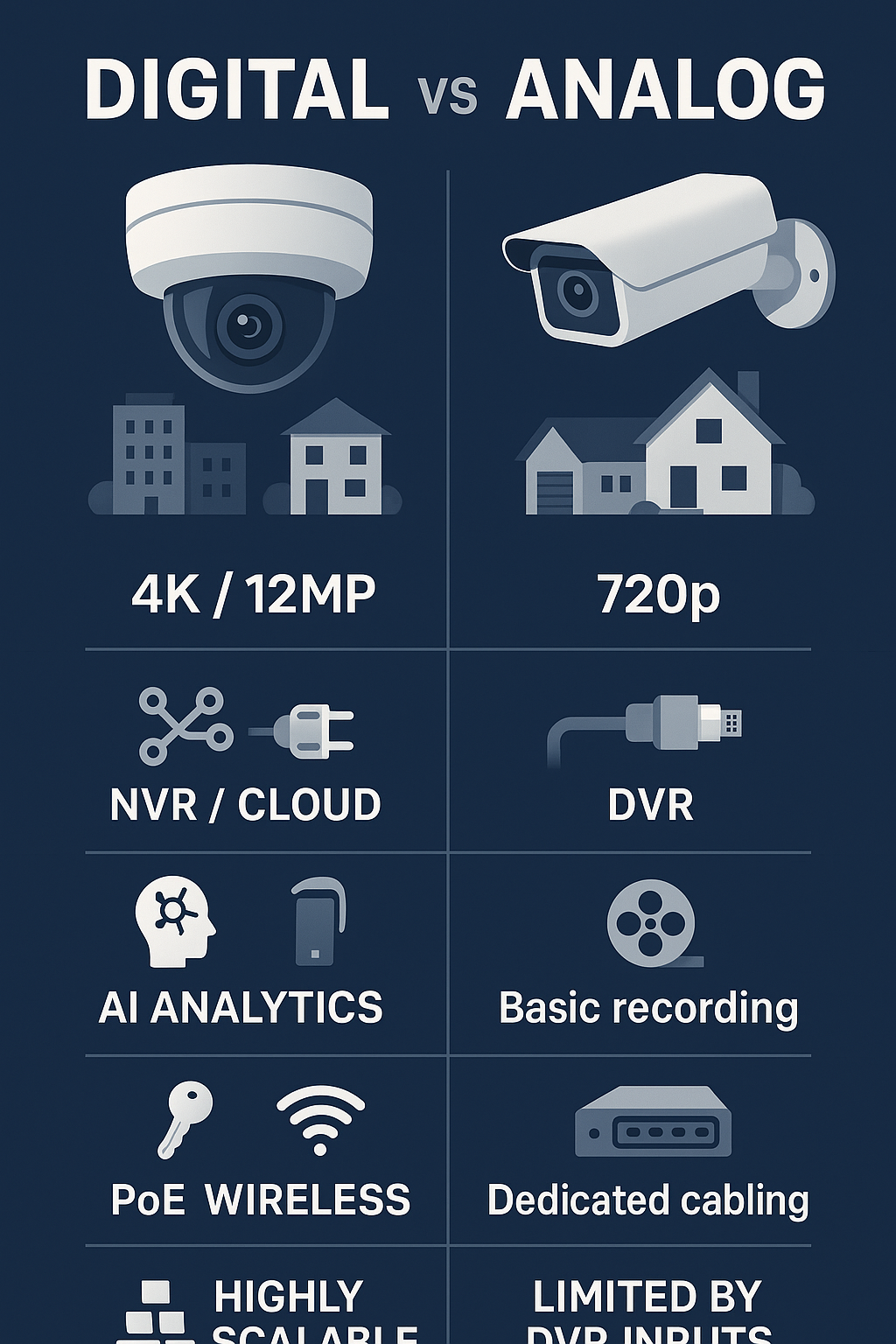
Digital cctv camera helpful reading:
– latest cctv camera
– cctv camera with ip address
– cctv monitoring security
CCTV, or Closed-Circuit Television, is the watchful guardian that keeps an eye on your property when you can’t. Unlike the television shows that beam into millions of homes, CCTV operates on a “closed circuit” – sending video signals to specific monitors or recording devices for your eyes only.
Think of CCTV as your property’s silent sentinel. These surveillance systems monitor and record activities in virtually any environment – from cozy homes and small boutiques to sprawling corporate campuses and busy public spaces. Whether you’re protecting a family residence in Houston or a commercial complex in Dallas, CCTV serves as your ever-vigilant security partner.
The heart of any CCTV system is protection. These systems deter would-be troublemakers, capture crucial evidence when incidents occur, and provide that invaluable peace of mind we all seek for our homes and businesses. It’s like having an extra set of eyes that never blinks, never tires, and never takes a coffee break.
The evolution of CCTV technology tells a fascinating story of innovation. What began decades ago as simple analog cameras with basic recording has transformed into sophisticated digital CCTV cameras with crystal-clear imaging, smart detection features, and the ability to check in on your property from anywhere in the world using just your smartphone.
Here in America, CCTV has become as common as apple pie, with an estimated 70 million security cameras keeping watch across the nation. In our home state of Texas, where American S.E.A.L. Patrol Division proudly serves communities, security cameras have become an essential ingredient in the recipe for comprehensive protection – whether for your family home or your thriving business.
The fundamental difference between old-school analog CCTV and modern digital CCTV cameras comes down to how they capture, process, and share video information. Analog systems operate much like the VCRs of yesteryear, while digital systems leverage the same technology that powers our smartphones and computers. Understanding these differences isn’t just technical trivia – it’s the key to choosing the right security solution for your unique needs.
As we explore deeper into these technologies, you’ll find which approach makes the most sense for your property’s protection – because at American S.E.A.L., we believe the best security comes from making informed choices.
When you think about security cameras, those boxy cameras with the visible wires might come to mind first. These are analog CCTV cameras, the traditional workhorses of surveillance that have been keeping watch for more than 25 years. They capture video using analog signals and send that information through coaxial cables to a Digital Video Recorder (DVR), which converts and stores the footage.
Analog cameras typically deliver standard definition video with resolutions between 420 and 700 TV lines. In today’s terms, that’s roughly equivalent to 380p to 540p resolution. While this was perfectly acceptable a decade ago, it now looks quite grainy compared to the crystal-clear footage we’ve become accustomed to on our smartphones and TVs.
The beauty of analog technology lies in its simplicity. There’s something reassuringly straightforward about how these cameras work, making them accessible even if you’re not particularly tech-savvy.
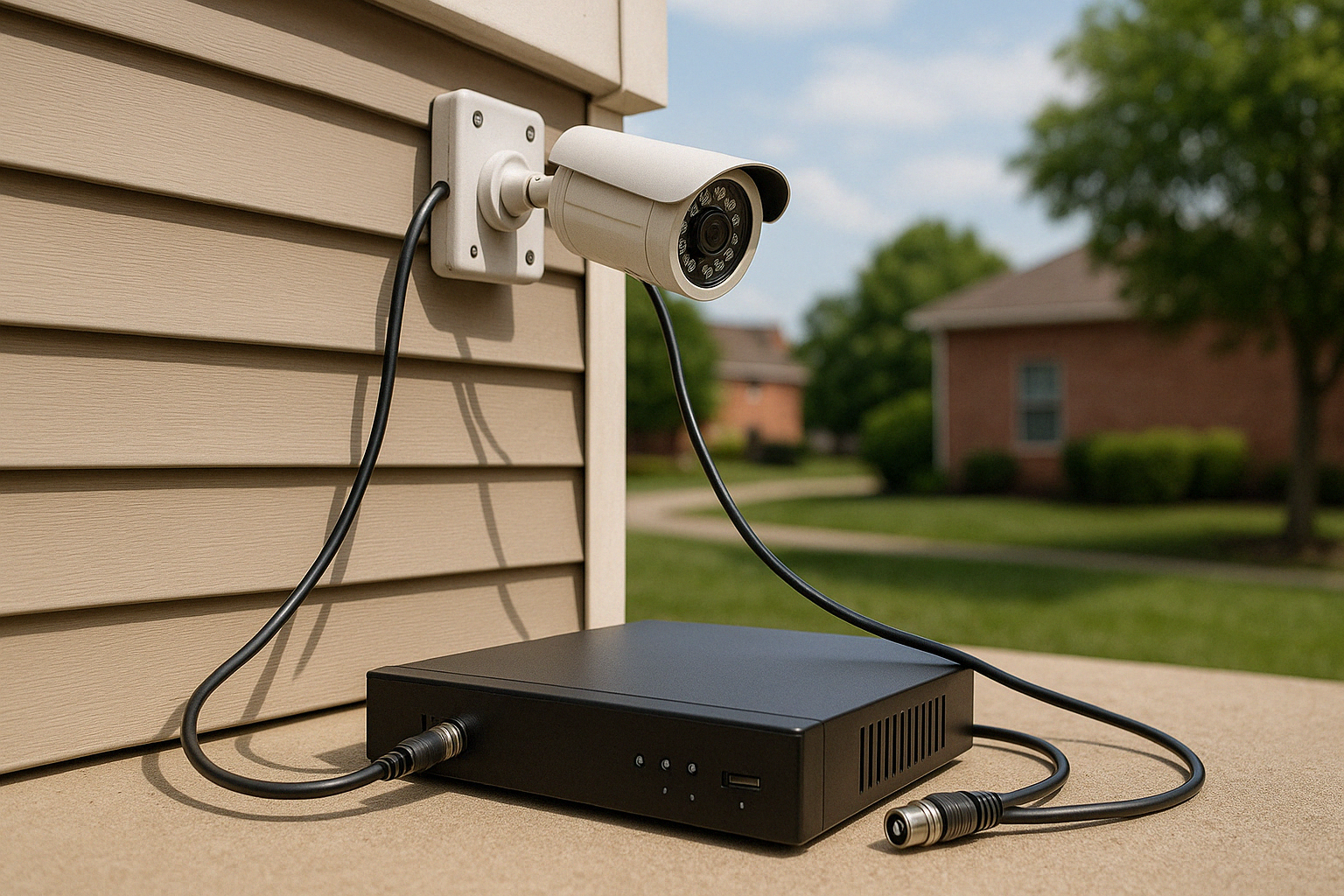
Analog cameras operate through a remarkably straightforward process. First, the camera lens focuses light onto an image sensor (usually a CCD or CMOS chip). This sensor converts the light into an electrical signal – essentially translating what the camera “sees” into information that can travel through cables.
This electrical signal then journeys through coaxial cable – those round, somewhat rigid cables you might recognize – all the way back to the DVR. Each camera needs its own dedicated cable running directly to the recording unit, which is why you’ll often see bundles of cables in older security setups.
When the signal reaches the DVR, it’s converted from analog to digital format and stored on the DVR’s hard drive. You can then view this footage on monitors connected to the DVR system.
“Analog systems convert raw video into a format that can be stored on DVRs, providing continuous recording capabilities,” explains one of our security experts at American S.E.A.L. Patrol Division. “However, the quality is limited by the transmission medium and the conversion process.”
These systems do have physical limitations. The signal can only travel about 300-500 meters through standard coaxial cable before it starts to degrade noticeably. For larger properties, this means you might need signal boosters or amplifiers, which adds another layer of complexity to your security setup.
Like that reliable old pickup truck that keeps running year after year, analog CCTV systems have stuck around for good reasons, though they do come with their share of limitations.
On the positive side, analog cameras are typically more budget-friendly upfront than their digital counterparts. Their mature technology makes them straightforward to understand and troubleshoot when problems arise. There’s also a certain reliability that comes with simpler technology – fewer complex components often means fewer things that can go wrong.
Another advantage is cross-brand compatibility – analog cameras from different manufacturers generally play nice together, allowing you to mix and match as needed. And perhaps most reassuringly, they don’t depend on network infrastructure to function at a basic level, meaning they’ll keep recording even if your internet goes down.
However, the drawbacks are significant in today’s high-tech world. The limited resolution (maxing out around 700 TVL or roughly 960×480 pixels) simply can’t compete with modern HD and 4K options. Each camera requires its own dedicated coaxial cable running all the way back to the DVR, making installation more challenging and less flexible, especially in larger buildings.
These coaxial cables are also vulnerable to interference from nearby electrical equipment and even lightning strikes. And if you want to add more cameras later, you might need additional DVR hardware and more cable runs, making expansion a headache.
Perhaps most significantly, analog systems lack many of the advanced features we’ve come to expect, like intelligent video analytics, convenient remote viewing, or useful digital zoom capabilities. Most analog cameras also have fixed lenses without optical zoom options, limiting what you can see.
“While analog systems still have their place, particularly in budget-conscious applications,” we’ve observed at American S.E.A.L. Patrol Division, “they simply can’t match the capabilities and future-proofing offered by digital CCTV cameras. We’ve seen many clients upgrade after realizing the limitations of their analog systems during critical security incidents.”
For smaller properties with basic security needs and tight budgets, analog might still be a reasonable choice. But for most modern applications, the limitations of analog technology are becoming increasingly apparent as digital options continue to advance and become more affordable.
For more information about traditional CCTV systems, you can visit Wikipedia’s CCTV article which provides a comprehensive history of surveillance technology.
Welcome to the future of surveillance! Digital CCTV cameras, often called IP cameras, have completely transformed how we protect our homes and businesses. Think of these modern marvels as tiny computers with eyes – they don’t just see; they process, analyze, and communicate what they see across networks.
Unlike the old-school analog cameras that simply capture and transmit raw signals, digital CCTV cameras are smart devices that turn what they see into digital information packets. This fundamental difference changes everything about how surveillance works.
The clarity is remarkable – while analog cameras topped out at around 700 TVL (roughly equivalent to standard definition TV), today’s digital CCTV cameras start at 1.3 megapixels and can go all the way up to 12MP or beyond. To put that in perspective, a mid-range 5MP camera gives you about five times more detail than the best analog camera ever could. This means you can actually zoom in on recorded footage later and still clearly see faces, license plates, or other crucial details.
The magic of a digital CCTV camera happens in several neat steps. First, light enters through the lens and hits a digital image sensor (similar to what’s in your smartphone). But instead of simply converting this to an analog signal, the camera’s internal processor – its brain – transforms this raw data into digital video and compresses it using advanced formats like H.264 or H.265.
Each camera operates as its own network device with a unique IP address. Once processed, the video data travels over your Ethernet network or WiFi connection to a Network Video Recorder (NVR), which stores all this digital information. The beauty of this system is that you can access your footage through multiple devices – your NVR, computer, or even your smartphone when you’re away from home.
One of our clients in Houston recently told me, “I was at my daughter’s soccer game when I got an alert. I pulled up the camera on my phone and saw someone checking my door handles. I called police while watching them in real-time – they were caught two blocks away.”
“IP cameras capture raw video, convert it to a digital stream, and transmit it to a Network Video Recorder (NVR) for storage. This digital approach eliminates many of the quality and distance limitations of analog systems.”
Perhaps the most practical advantage of digital CCTV cameras is their use of Power over Ethernet (PoE) technology. This clever innovation allows both power and data to flow through a single Ethernet cable, making installation cleaner and simpler than the multi-cable mess required by analog systems.
These cameras don’t necessarily need internet access to function – they can operate perfectly well on a local network. However, connecting them to the internet opens up remote viewing possibilities, letting you check on your property from anywhere in the world with an internet connection.
When we install digital CCTV camera systems for clients across Houston, they’re often amazed by the difference compared to older systems they’ve used. The benefits are substantial and immediately noticeable.
The image quality is truly exceptional, with crystal-clear footage that makes identification of people and objects much more reliable. This clarity has helped numerous clients provide conclusive evidence to law enforcement when needed.
The smart features built into these cameras make them far more than passive observers. Many models can distinguish between a person, animal, or vehicle, sending you specific alerts based on what they detect. Some can even recognize familiar faces or detect unusual activities like someone lingering too long in one area.
Installation flexibility is another huge advantage. We can use your existing network infrastructure, run a single PoE cable to each camera, or even set up wireless cameras in hard-to-reach locations. This adaptability makes digital CCTV cameras suitable for virtually any property.
The ability to access your cameras remotely provides peace of mind that was simply impossible with analog systems. Whether you’re on vacation or just at work, you can check in on your property with a few taps on your smartphone.
As your security needs grow, digital CCTV cameras grow with you. Adding new cameras to your network is straightforward and doesn’t require completely new infrastructure each time you expand.
Of course, there are some considerations to keep in mind. The initial investment for digital systems is typically higher than analog equivalents, though this gap has narrowed significantly in recent years. These systems also rely on your network infrastructure, so having a reliable network is important for optimal performance.
High-resolution cameras can use significant bandwidth, particularly when multiple cameras are streaming simultaneously. And as with any network device, proper cybersecurity measures are essential to prevent unauthorized access to your cameras.
There’s also a bit more technical complexity involved in setting up and maintaining digital systems, though at American S.E.A.L. Patrol Division, we handle all of that for you so you don’t need to become a network expert overnight.
Over the past five years, we’ve installed hundreds of digital CCTV camera systems throughout Texas, and the feedback has been overwhelmingly positive. From homeowners who finally feel secure to business owners who’ve reduced theft and improved employee safety, these modern surveillance systems have proven their worth time and again.
When comparing digital CCTV cameras to analog systems, several key differences become apparent. Understanding these distinctions is crucial for making an informed decision about which technology best suits your security needs.
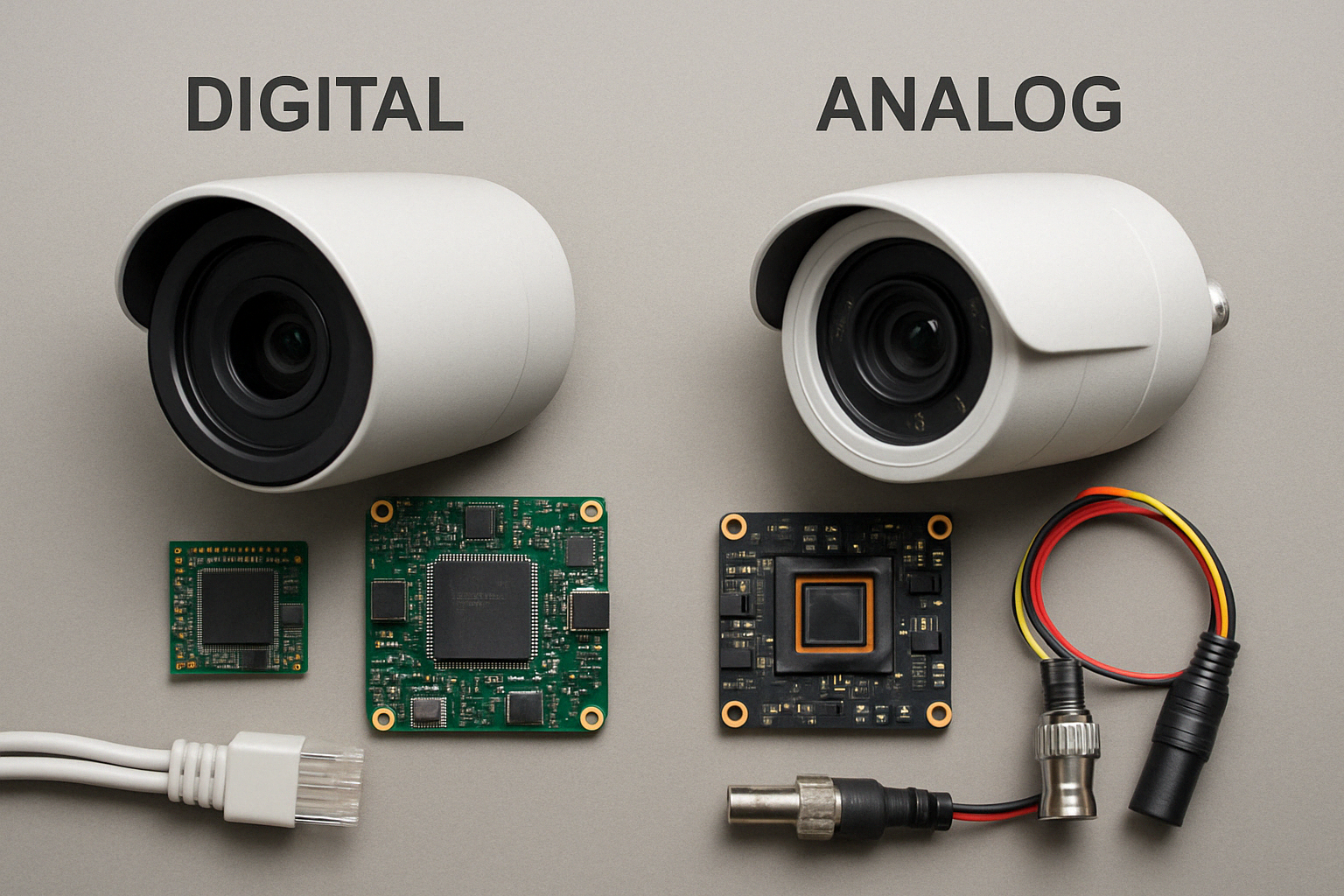
Let’s take a closer look at how these two technologies stack up against each other. The differences go far beyond just image quality – they extend to installation requirements, flexibility, and the overall capabilities you can expect from your security system.
| Feature | Digital CCTV Camera | Analog CCTV Camera |
|---|---|---|
| Resolution | 1.3MP to 12MP+ (1080p to 4K and beyond) | 420-700 TVL (roughly 380p-540p) |
| Image Quality | Sharp, detailed images with accurate colors | Lower detail, may be grainy or blurry, especially in low light |
| Zoom Capability | Digital zoom without quality loss (within resolution limits) | Digital zoom with significant quality degradation |
| Transmission | Network cables (CAT5e/CAT6) or wireless | Coaxial cables (RG-59 or RG-6) |
| Power | PoE (Power over Ethernet) or separate power | Separate power supply required |
| Recording Device | Network Video Recorder (NVR) | Digital Video Recorder (DVR) |
| Cabling Distance | Up to 100m with standard Ethernet (extendable with switches) | 300-500m with standard coaxial (signal degradation beyond) |
| Storage Efficiency | Better compression, smart recording options | Continuous recording, less efficient |
| Remote Viewing | Native capability through apps/web browsers | Requires additional hardware/software |
| Analytics | Built-in capabilities like motion detection, line crossing, object counting | Limited or none (requires external processing) |
| AI Integration | Many cameras support advanced AI features | Not available |
| Scalability | Easy to add cameras to network | Limited by DVR inputs and cabling |
| Cybersecurity | Requires proper network security measures | Less vulnerable (closed system) |
| Audio | Many models include built-in microphones or audio inputs | Requires separate audio system |
| Integration | Works with other IP-based systems | Limited integration capabilities |
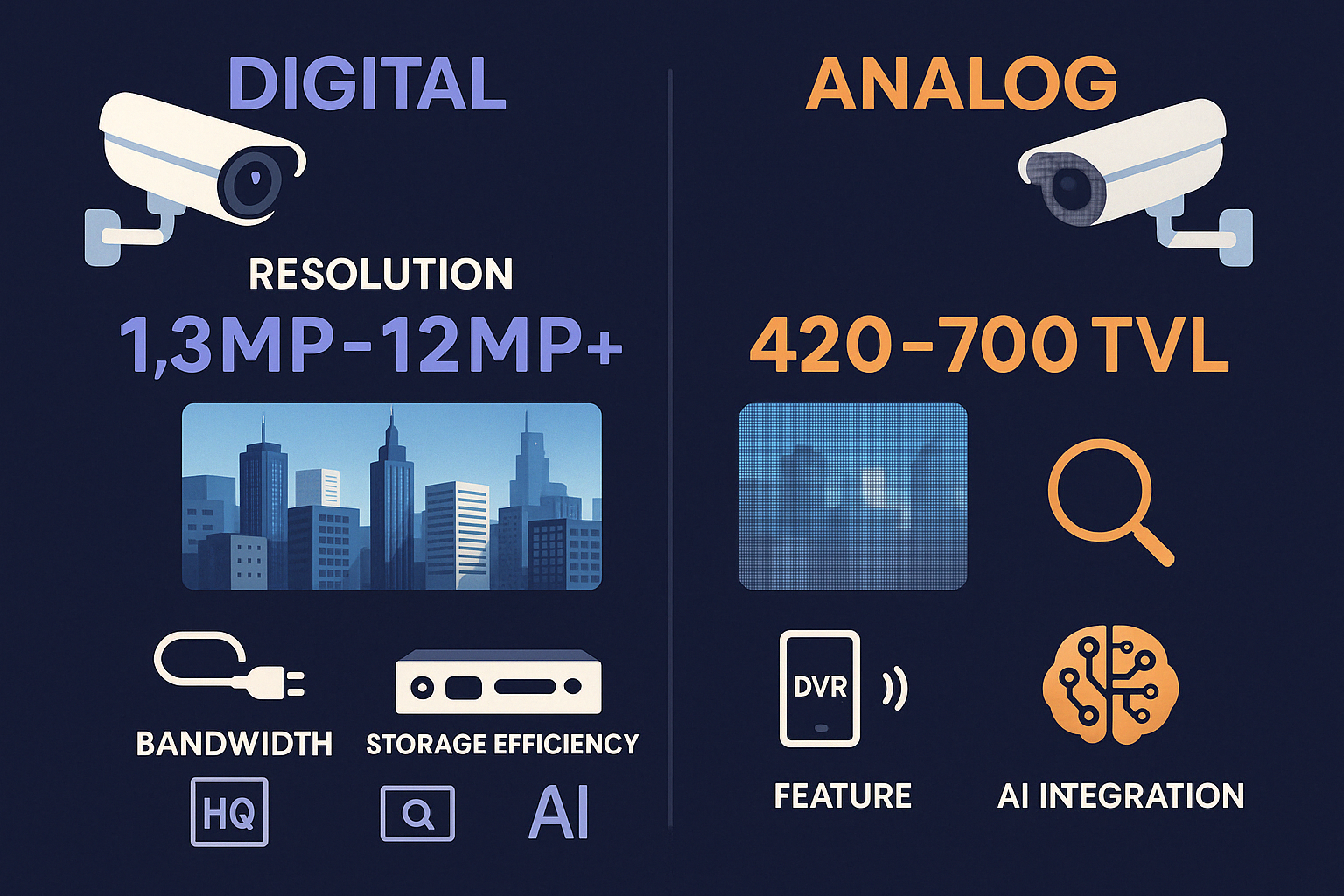
The numbers tell part of the story, but what do these differences mean in real-world situations? Let’s break it down in practical terms.
Image quality is perhaps the most noticeable difference. When we install digital CCTV cameras for our Houston clients, they’re often amazed at the clarity. One property manager told us, “I can actually read the text on delivery packages from my front door camera now!” This level of detail simply isn’t possible with analog systems.
In fact, our security team recently helped solve a case where a digital CCTV camera captured a license plate number from over 50 feet away – something that would have been impossible with even the best analog camera.
Installation flexibility is another major advantage of digital systems. With analog cameras, each device needs its own dedicated cable running all the way back to your DVR. It’s like having to run a separate water pipe from the street to every faucet in your house – inefficient and messy.
Digital CCTV cameras can use your existing network infrastructure, and many can even connect wirelessly. Plus, with Power over Ethernet (PoE) technology, a single cable provides both power and data – making installation cleaner, faster, and more cost-effective for larger properties.
The intelligence built into modern digital CCTV cameras is truly impressive. Many of our clients are surprised to learn their cameras can distinguish between people, vehicles, and animals – automatically filtering out false alarms from things like swaying trees or passing shadows. Some cameras can even recognize specific faces or alert you when someone lingers in a designated area for too long.
“With analog cameras, you might be able to tell that someone entered your property, but identifying specific features can be challenging,” explains our senior security consultant. “With high-resolution digital CCTV cameras, you can clearly see faces, read license plates, and capture small details that could be crucial evidence.”
Remote access capabilities have also transformed how our clients use their security systems. Being able to check in on your property from anywhere in the world, receive instant alerts, and even speak through two-way audio features has made security systems more interactive and useful day-to-day. While some analog systems can be retrofitted with internet connectivity, these features come standard with digital systems.
Scalability is another factor worth considering. Adding cameras to an analog system often means running new cables and possibly upgrading your DVR if you’ve maxed out its inputs. With digital CCTV cameras, adding new devices to your network is relatively simple, making it easier to expand your security coverage as your needs grow.
The one area where analog systems still hold an advantage is in initial cost. If you’re working with an extremely tight budget and only need basic surveillance, analog might make sense. However, when factoring in installation costs, future expansion, and the superior capabilities of digital systems, the value proposition often tilts heavily toward digital CCTV cameras for most of our clients.
For most property owners in Texas, the decision ultimately comes down to whether the superior performance and features of digital systems justify the higher initial investment. In our experience at American S.E.A.L. Patrol Division, the answer is usually yes – especially when considering the long-term benefits and peace of mind that comes with having clear, detailed footage when you need it most.
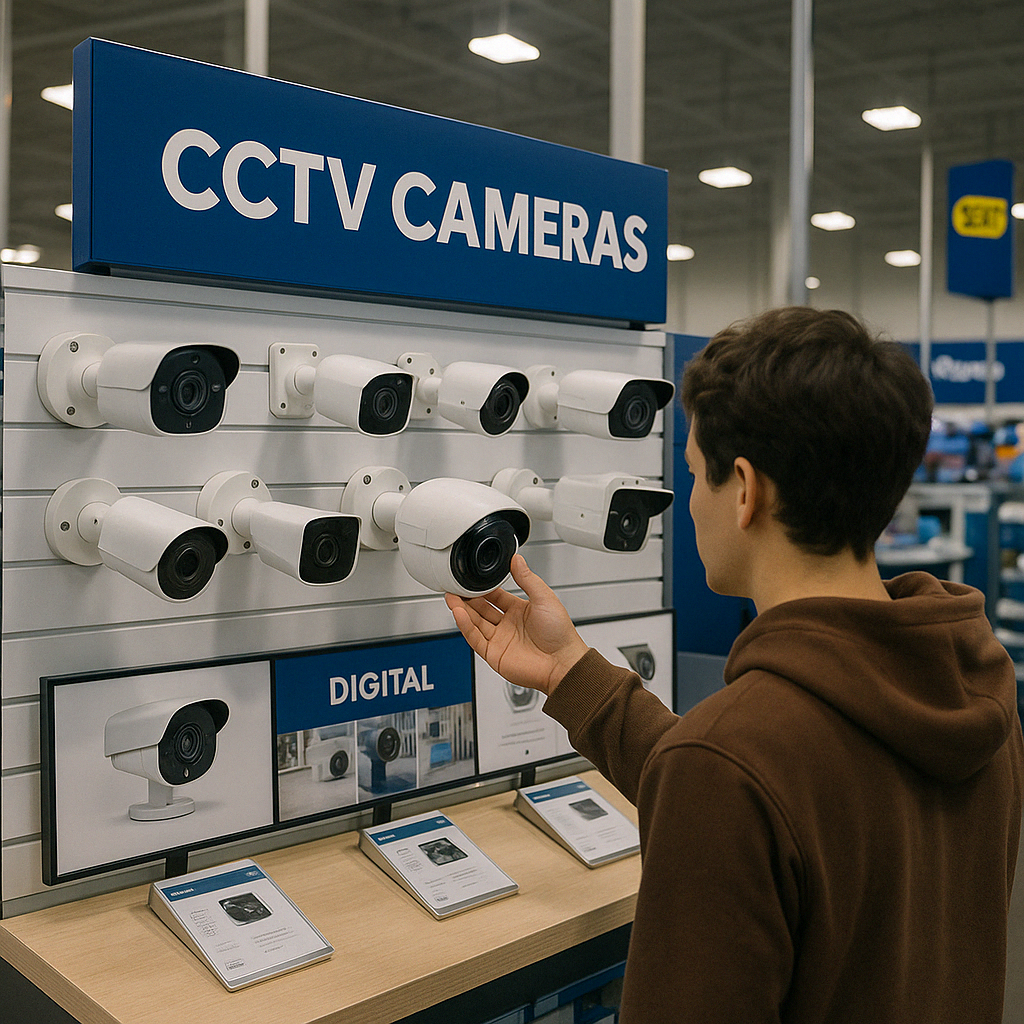
Choosing between analog and digital CCTV cameras doesn’t have to feel like solving a complex puzzle. Here in Houston, we’ve helped hundreds of property owners make this decision, and it really comes down to understanding a few key factors that matter most for your specific situation.
Let’s be honest – image quality is probably the first thing most of us notice when comparing camera systems. The difference between analog and digital CCTV cameras can be striking.
Think about what you actually need to see. If you’re just wanting to know if someone entered your backyard, even a basic camera might do the trick. But if you need to identify who that person was, resolution becomes crucial.
For clear facial recognition, you’ll want at least 2MP (1080p) resolution, though our clients get much better results with 4-5MP cameras. We installed these at a local retail store last year, and the owner told me, “After upgrading from analog to 4MP digital CCTV cameras, we were finally able to clearly identify shoplifters. The difference in image quality paid for itself within the first three months.”
Need to capture license plates? You’ll want to step up to at least 4MP, with proper positioning and good lighting. And for large areas like parking lots or warehouses, higher resolutions (5MP+) let you digitally zoom in while maintaining important details.
In good lighting, here’s roughly how far different resolutions can capture facial details:
– 1080P (2MP): Up to 25 feet
– 4MP: Up to 45 feet
– 8MP (4K): Up to 55 feet
– 12MP: Up to 70 feet
We’ve found 4MP and 5MP cameras hit that sweet spot of excellent detail without breaking the bank for most commercial applications.
The way cameras connect to your recording system makes a huge difference in installation complexity and cost.
Analog systems require two separate cables for each camera – one for video (coaxial) and another for power. This means more drilling, more cable management, and more potential points of failure. Plus, there’s a distance limit of about 300-500 meters before the signal starts to degrade.
Digital CCTV cameras simplify things considerably. Most use Power over Ethernet (PoE), meaning a single network cable carries both power and data. As our lead technician often says, “Installing one CAT6 cable with PoE is much faster and cleaner than running separate coaxial and power cables. This can reduce installation time by 30-40% in most cases.”
If you already have coaxial cables installed, don’t worry! There are hybrid solutions that let you use existing cabling while getting some digital benefits through formats like HD-CVI, HD-TVI, or AHD.
Digital systems also offer wireless options for those hard-to-reach places where running cables would be impractical or too expensive. And since they connect to your network, you can easily add cameras as your needs grow.
This is where digital CCTV cameras really shine. They’re essentially mini-computers with lenses, capable of analyzing what they see and acting on it.
Modern digital cameras can tell the difference between a person, a car, and your neighbor’s cat wandering through your property. They can alert you when someone crosses a virtual line you’ve drawn on the screen or lingers in an area too long. Some can even recognize faces or license plates.
A property manager at one of the apartment complexes we serve in Houston told me, “The line crossing alerts have been incredibly useful—we receive immediate notifications when someone enters restricted areas, allowing our security team to respond proactively rather than reviewing footage after an incident.”
Digital cameras also handle challenging environments better. They adjust to changing light conditions (WDR), automatically switch to night vision mode when it gets dark, and many come with built-in infrared illumination for seeing in complete darkness.
Many models even support two-way audio, allowing you to speak to visitors (or warn potential intruders) through the camera. Try doing that with an analog system!
Let’s talk dollars and sense. Yes, digital CCTV cameras typically cost more upfront than their analog counterparts. Analog cameras might run $30-150 each, while digital IP cameras generally range from $80-500+ depending on features and resolution.
The recording equipment follows a similar pattern – DVRs for analog systems ($200-500 for 4-16 channels) cost less than NVRs for digital systems ($300-1000+ for similar capacity).
But initial purchase price is just one piece of the puzzle. With analog, you’ll spend more on cabling (separate video and power runs) and installation labor. Digital systems generally need less cabling and installation time, potentially offsetting some of that higher upfront cost.
Then there’s the long-term value to consider. Digital systems are more future-proof, with software updates often adding new features over time. They’re easier to expand when you need more cameras. And most importantly, they’re simply more effective at what matters most – preventing security incidents and providing clear evidence when needed.
As I often tell our clients at American S.E.A.L. Patrol Division, “The true cost of a security system isn’t just what you pay upfront—it’s also measured by its effectiveness in preventing incidents and providing usable evidence when needed.”
When you factor in all these considerations, the value proposition of digital CCTV cameras becomes much clearer, even with the higher initial investment. For most of our clients, the benefits of clearer images, advanced features, and simpler installation make digital the smarter long-term choice.
This is probably one of the questions we hear most often when talking with new clients at American S.E.A.L. Patrol Division. I’m happy to clear this up: digital CCTV cameras don’t actually need internet access to perform their basic functions.
Think of IP cameras as operating on a network, but that network doesn’t have to be connected to the internet. It can be completely self-contained within your property. In this setup:
Your cameras connect to a Network Video Recorder (NVR) through Ethernet cables or your local WiFi
The NVR handles recording and storing all your footage on its internal hard drives
You can watch live video on monitors directly connected to the NVR
So why do people think internet is required? Because internet connectivity does open up some pretty useful features:
You can check your camera feeds from your phone when you’re away from home
Cloud storage gives you an off-site backup if something happens to your NVR
You’ll receive instant notifications on your phone when motion is detected
Your system can automatically update its time and firmware
As Carlos, our technical director, often tells clients: “Internet isn’t a requirement—it’s an improvement. Your cameras will capture everything just fine without it, but you’ll need internet if you want to check those cameras while you’re sitting on a beach in Galveston!”
For most of our Houston clients, we recommend setting up systems that can work independently on their local network while also connecting to the internet for remote access. This gives you the best of both worlds—your security doesn’t fail during internet outages, but you still get all those convenient remote features when your connection is working.
Yes! Many digital CCTV cameras can capture audio either through built-in microphones or by connecting external audio devices. This feature adds another dimension to your security footage, providing context that video alone might miss.
But—and this is important—there are some serious legal considerations when recording audio:
Texas is what’s called a “one-party consent” state, which means you can legally record conversations if you’re participating in them or if at least one person in the conversation has given permission. However, recording private conversations between other people without anyone’s knowledge could potentially violate privacy laws.
Public spaces generally have lower privacy expectations, but that doesn’t mean there are no rules.
Because of these legal nuances, we typically advise our clients to:
Post clear notices informing people that audio recording is in progress
Turn off audio recording in areas where private conversations are likely
Check with a lawyer about your specific situation to stay on the right side of the law
When used appropriately, audio recording proves incredibly valuable. One of our retail clients in west Houston installed audio-enabled cameras at their returns counter, which helped them resolve several customer disputes and actually improved their staff training.
Modern digital CCTV cameras with audio capabilities often include some impressive features:
Two-way audio that lets you speak through the camera (great for telling delivery people where to leave packages)
Audio analytics that can detect specific sounds like breaking glass or shouting
Noise filtering technology that improves the clarity of recorded sound
Compression systems that keep audio files from eating up all your storage space
This is like the classic “paper or plastic” question of the security world—both options have their place, and the right choice really depends on your specific situation.
Wired (PoE) IP Cameras are the workhorses of professional security systems:
They provide rock-solid reliability with consistent performance that doesn’t fluctuate
Power over Ethernet (PoE) technology eliminates the need for separate power cables
They’re much more difficult for someone to hack or jam than wireless systems
They typically support higher video quality without compression compromises
There’s no competition for wireless bandwidth with your other devices
Wired cameras make the most sense when:
You’re protecting high-value areas where reliability is non-negotiable
Your property allows for relatively easy cable installation
You need the absolute best video quality for identification purposes
You’re planning to record continuously 24/7
Wireless IP Cameras offer flexibility that wired systems can’t match:
Installation is significantly easier with no need to run cables through walls
You can place them almost anywhere within range of your WiFi network
They can be relocated as your security needs change
They’re perfect for temporary setups or rental properties
They’re ideal for historic buildings where drilling holes for cables isn’t an option
Wireless cameras shine brightest when:
Running cables would be prohibitively difficult or expensive
You need a security solution you can take with you when you move
You want to extend coverage to detached structures like a garage or shed
You need cameras up and running quickly
Maria, our installation manager, has a saying I love: “We use wired cameras where we must, and wireless cameras where we can.” For many of our Houston clients, a mixed approach works best—wired cameras for critical areas and main coverage, with wireless cameras filling in the gaps or covering those hard-to-reach spots.
If you do go wireless, just remember:
Your WiFi needs to reach all the areas you want to monitor
Other wireless devices might cause interference
Even “wireless” cameras need power from somewhere (usually an outlet)
You’ll want to take extra precautions to secure your wireless network
For larger properties, we sometimes install wireless mesh networks or dedicated wireless bridges to ensure cameras in far-flung locations maintain reliable connections back to the recording system.
The journey through surveillance technology brings us to a crossroads: analog or digital CCTV cameras? While both have their place, the security landscape is clearly shifting toward digital solutions for compelling reasons.
After helping hundreds of Houston businesses and homeowners improve their security over the past 15 years, we at American S.E.A.L. Patrol Division have witnessed how the right camera system can make all the difference. Not just in capturing evidence after an incident, but in actively preventing security breaches before they happen.
Digital CCTV cameras have revolutionized what’s possible in property protection. The crystal-clear imagery that allows you to identify faces from 50 feet away. The intelligent analytics that can distinguish between a stray cat and a potential intruder. The peace of mind that comes from checking in on your property from anywhere in the world with just a few taps on your smartphone.
For properties with existing analog infrastructure, hybrid solutions offer a practical stepping stone. You can leverage your current investment while gradually transitioning to the improved capabilities of digital technology—a pragmatic approach we often recommend to budget-conscious clients who still want improved security outcomes.
The reality is that security threats continue to evolve in sophistication, and your protection measures need to keep pace. Today’s digital CCTV cameras aren’t just recording devices; they’re intelligent security partners that can actively alert you to suspicious activities, integrate with other security systems, and provide valuable insights beyond simple surveillance.
One of our clients, a small business owner in downtown Houston, recently told us: “I used to review footage only after something happened. Now my system alerts me when someone approaches after hours, and I can actually speak to them through the camera. It’s completely changed how I think about security.”
That change from reactive to proactive security represents the true value of modern surveillance technology. It’s not just about having evidence after the fact—it’s about creating an environment where incidents are less likely to occur in the first place.
We understand that every property has unique security challenges and constraints. That’s why our team at American S.E.A.L. Patrol Division offers personalized consultations to assess your specific needs and recommend solutions custom to your situation. Whether you’re securing a family home, a retail space, or a large commercial property, we’ll help you steer the options and implement a system that provides genuine protection and peace of mind.
The most expensive security system isn’t necessarily the right one—but the right system, properly installed and configured, is an investment that pays dividends in safety and security for years to come.
More info about our security solutions
Looking for the best cctv camera for farm security? Here’s a quick overview of the top options:
| Camera Type | Best For | Key Features | Recommended Model |
|---|---|---|---|
| Solar-Powered | Remote areas without power | Self-sufficient, weather-resistant | Eufy 4G Cam S330 |
| 4G LTE Cellular | Farms without WiFi | Independent connectivity, real-time alerts | SEHMUA 4G LTE Cellular Solar Camera |
| Long-Range | Large properties | Extended viewing distance (75+ feet) | Barn Owl Off-Grid Camera |
| Thermal | Night monitoring | Equal performance day/night, detects heat signatures | FLIR Systems |
| PTZ (Pan-Tilt-Zoom) | Comprehensive coverage | 360° rotation, zoom capabilities | RuralView 360 Zoom Camera |
Farm security presents unique challenges that standard home security cameras simply can’t handle. With vast open spaces, limited connectivity, and harsh weather conditions, protecting your agricultural investment requires specialized solutions.
According to the 2025 Rural Crime Report, half of rural residents consider crime a major concern—and for good reason. Farms are vulnerable to equipment theft, livestock rustling, and vandalism due to their isolated locations.
“Don’t wait—take action today and secure your farm with the best cameras on the market!” This advice isn’t just sales talk—it’s a practical response to a growing problem.
The most effective farm security cameras combine several critical features:
In many large-acreage properties, nighttime surveillance can be especially challenging if the area is nearly completely dark. Standard cameras often struggle in these conditions, highlighting the need for specialized solutions like thermal cameras or liftd installation points to effectively monitor your property.

Let’s face it – farming isn’t just about growing crops and raising livestock anymore. Today’s farmers are also guardians of valuable equipment, infrastructure, and animals that make rural properties increasingly attractive targets for thieves.
The numbers tell a sobering story. According to the 2025 Rural Crime Report, agricultural crime continues to rise across the country, with farm equipment theft costing millions annually. Expensive tractors, ATVs, and tools aren’t just costly to replace—they’re essential to your livelihood.
Some farmers in the Houston area have found themselves losing valuable equipment used for irrigation or other critical tasks. However, once suitable camera systems were installed, many reported a significant drop in theft incidents—and they gained the added convenience of being able to check on their properties remotely.
Here at American S.E.A.L. Patrol Division, we’ve seen how the right best cctv camera for farm settings can transform security outcomes. Our rural Houston clients consistently report not just fewer thefts, but greater peace of mind knowing their investments are protected.
Your farm isn’t a suburban home or city business—it comes with security challenges all its own.
Isolation creates the perfect opportunity for thieves. When your nearest neighbor is a mile away, who’s watching when you’re not there? Limited connectivity means standard WiFi-dependent security solutions often fail in rural settings. And those harsh weather conditions would destroy typical home cameras within months.
Large coverage areas present another major hurdle. How do you effectively monitor hundreds of acres without breaking the bank? Many farms also deal with power limitations in remote locations, making traditional camera setups impractical. And let’s not forget about curious (or hungry) wildlife that can trigger constant false alarms or damage equipment.
Some ranchers in the Houston region have observed that standard home cameras often suffer weather damage and generate frequent false alarms triggered by deer or other wildlife. Switching to proper farm security cameras specifically designed for rural environments usually makes all the difference.
While theft prevention might be your primary motivation, the right best cctv camera for farm setup delivers much more value.
Livestock monitoring becomes simpler with high-definition cameras strategically placed in barns and pastures. You can check on a newborn calf in the middle of the night without having to leave your house. Many farmers use their cameras for calving and foaling observation, saving on sleepless nights and enabling prompt intervention if needed.
Employee management also improves, as workers know operations are continuously monitored—promoting both safety and accountability. The operational efficiency benefits can be substantial, such as catching irrigation issues or confirming gate status without making a lengthy trip across your property.
Some modern farm cameras include weather monitoring features that provide additional data about on-site conditions, while wildlife management becomes more targeted by tracking predator movements or pest patterns.
A specialty-crop grower near Houston finded that farm cameras not only improved security but also became essential for daily operations: from monitoring moisture levels to gathering wildlife data that informed future planting strategies. In many cases, such systems quickly pay for themselves through both cost savings and peace of mind.
At American S.E.A.L. Patrol Division, we understand that Texas farms face unique security challenges. That’s why we specialize in creating customized camera solutions that not only protect your property but also improve your entire operation. Because in farming, peace of mind isn’t just nice to have—your success.
Choosing the best CCTV camera for farm security isn’t like picking a camera for your home or small business. Farm environments throw everything Mother Nature has at your equipment—from scorching Texas summers to freezing winter nights, plus dust storms, heavy rain, and curious livestock. Let’s walk through what really matters when you’re shopping for cameras that can handle agricultural demands.
Your average security camera would surrender to farm conditions within weeks. That’s why weatherproofing isn’t just a nice feature—it’s essential.
Those little numbers after “IP” on camera specifications? They’re your best friends. An IP rating tells you exactly how tough a camera is. For farm use, don’t settle for anything less than IP65. This means your camera is completely sealed against dust (the “6”) and can withstand water jets from any direction (the “5”).
Many clients in the Houston area prefer IP66 or IP67 cameras because they provide even better protection against heavy downpours. Temperature resistance matters too—your camera should handle extremes from -22°F to 140°F without complaining. UV protection is also key to prevent the sun from degrading plastic housings.
Impact resistance might seem like overkill until you’ve seen a horse use your camera housing as a scratching post or watched branches fall during a storm. The best farm cameras are built with reinforced housings that can take a beating and keep recording.
“But my barn doesn’t have WiFi!” is something we hear almost daily at American S.E.A.L. Patrol Division. Fortunately, modern farm security cameras have evolved to address this common challenge.
4G LTE cameras have revolutionized farm security by operating independently of your property’s internet. You simply insert a SIM card, mount the camera, and you’re monitoring your property from anywhere.
Some farmers in East Texas, for example, use cellular cameras to check on calving season from a smartphone without spending time driving to remote fields at night. If your WiFi doesn’t quite reach, consider WiFi range extenders or mesh networks to cover barns and nearby fields.
For extremely isolated locations with poor cellular service, satellite-connected security systems provide the ultimate connectivity solution. While more expensive, they ensure you’re never truly out of touch with your property.
Power constraints often determine what kind of security system is feasible for remote farm locations. Thankfully, modern solutions offer several reliable alternatives to traditional electrical outlets.
Solar-powered security cameras have become the gold standard for remote farm monitoring. These self-sufficient systems combine solar panels with rechargeable batteries, providing continuous operation miles from the nearest power line. Quality systems can run 5-7 days with no sunlight before needing a recharge.
Some Houston-area farms have weathered multiple hurricane seasons with solar cameras that remained operational even when the main house lost power. Battery technology is considerably better now, with many cameras offering six months of battery life or more, especially when coupled with motion-activated recording to conserve energy.
For complete peace of mind, some farmers opt for dual-power systems that switch between solar, battery, and traditional power. Such redundancy is valuable for monitoring high-value assets like equipment sheds or livestock. Power consumption varies by model, so choose a camera designed for energy efficiency in off-grid situations.
In short, combining weatherproofing, connectivity, and power solutions properly can yield a farm security system that works reliably year-round, in all conditions. When these features come together, you get both robust protection and peace of mind knowing your investment is covered.

When it comes to protecting your agricultural investment, one size definitely doesn’t fit all. Finding the best CCTV camera for farm security means matching technology to your specific needs, property layout, and budget considerations. At American S.E.A.L. Patrol Division, we’ve helped countless Texas farmers identify the right surveillance solutions for their unique situations.
Farm security systems generally fall into several categories, each designed to address specific challenges. Larger farming operations often need comprehensive coverage provided by a mix of camera types—ranging from fixed cameras at entry points to pan-tilt-zoom models for broader surveillance.
Some farmers have found that after multiple incidents of equipment theft, installing a mixed-camera system covering main barns, equipment sheds, and entry gates provided not only better peace of mind but also real cost savings by detecting intruders before major losses occurred.
Certain agricultural operations benefit from cameras geared toward specific objectives. Livestock operations often need indoor barn cameras with excellent low-light performance and wide viewing angles for monitoring animal health and birthing events.
Crop farmers might prioritize long-range cameras with weather monitoring capabilities to keep an eye on field conditions from afar. These solutions serve both security and operational functions, maximizing your return on investment.
Thermal cameras, for instance, have proven integral in reducing predator risks in poultry operations—helping farmers avert losses and even spotting other security breaches they might have missed. For orchards and vineyards, motion-activated cameras can be configured with precise detection zones to distinguish between wildlife and potential intrusion.
Farm security is an investment in your livelihood, but we understand budgets can be tight. Strategic placement of moderately priced cameras often outperforms a few high-end models placed poorly.
Entry-level systems can start in the $300-$500 range for basic coverage of a single area, while more comprehensive setups may range from $2,000 to $10,000 depending on your acreage and specific needs. Insurance discounts are sometimes available, helping offset part of the installation cost.
Professional installation ensures your system is set up correctly from the start, optimizing camera placement and preventing issues. Larger or more complex operations often benefit greatly from professional services, as technicians are experienced in dealing with unusual structures, challenging power sources, or extensive cable runs.
For simpler systems designed with DIY in mind, manufacturers typically offer user-friendly resources to guide you through setup. Those with limited time or technical confidence, however, may still prefer professional assistance for a smoother experience.
Your monitoring approach shapes both the system’s effectiveness and recurring costs. Some farmers self-monitor via smartphone apps, receiving motion alerts and checking live feeds. Others opt for professional monitoring with 24/7 surveillance services that can alert authorities in case of suspicious activity. A blend of both approaches is also possible—self-monitoring during busy hours and professional coverage after dark.
The best CCTV camera for farm security depends on your unique priorities, property layout, and budget. By weighing these considerations, you’ll be better equipped to make a decision that provides robust, long-term protection for your agricultural investment.
Securing your farm’s boundaries is your first line of defense against unwanted visitors, and not just any camera will do the job. The best CCTV camera for farm perimeter security needs to be as tough and vigilant as you are.
Distance is a major factor in perimeter security. Effective cameras should provide clear, usable footage at 75 feet or more from their mounting point. Many farmers have complained in the past that distant activity at the edge of their property was impossible to distinguish, but with proper long-range cameras, you can see what’s happening no matter where you are.
A good perimeter security camera features reliable motion detection that distinguishes between a person and a deer wandering by. Weather resistance—IP66 or higher—ensures the unit can handle everything from Texas rainstorms to dust storms. Night vision is essential, since many incidents occur after dark, and advanced infrared LEDs can illuminate areas 100 feet away or more.
Real-time alerts let you know immediately if someone crosses onto your property. Visible deterrents, such as bright spotlights or warning sounds, can help discourage intruders before they even try to enter.
Here in Houston, where properties can be quite extensive, we often recommend focusing on strategic positioning around gate entrances, low-lying areas, and spots near public roads or land. This helps cover your most vulnerable points without requiring cameras along every inch of fencing.
For remote corners of your property where running power lines is impractical, solar-powered security cameras provide a self-sustaining solution. Panel efficiency is critical—you want monocrystalline panels that can generate sufficient power even on cloudy days. Look for battery capacities of 15000mAh or larger, so your cameras continue operating at night or through poor weather.
Systems designed for farm use often feature rugged housings rated against dust and rain, plus adjustable mounts for optimal angle alignment between the solar panel and the camera lens. Maintenance is relatively minimal—just occasional cleaning of the solar panel to ensure peak efficiency.
On many farms, WiFi coverage is limited. Cellular-connected cameras solve that problem by using 4G/LTE networks for data transmission. This makes them fully independent of existing internet infrastructure.
Look for models with strong signal reception technology, especially in areas with borderline cellular coverage. Some cameras come with SIM cards that include preloaded data; others allow you to select your own carrier.
Remote access capability means you can check live feeds, rewind footage, and receive alerts from anywhere you have phone service. Instant notifications for motion events let you respond quickly, whether it’s a trespasser or livestock edging too close to fences.
A number of 4G LTE Solar Security Cameras package cellular connectivity with solar power, giving you a fully off-grid monitoring option. By selecting the right combination of power, connectivity, and camera features, farm owners can maintain reliable surveillance for even the most remote parts of their property.

When it comes to watching over your animals, not just any camera will do. Livestock monitoring demands cameras that can handle barn and pasture environments while providing clear visibility of your valuable animals.
Many ranchers find that high-definition imaging (2K or better) is crucial for spotting subtle changes in behavior or potential health concerns. Night vision via infrared technology ensures you can see clearly after dusk without disturbing animals. Two-way audio can be helpful for listening in or giving instructions to on-site workers.
A wide-angle lens (180° or 360°) means you can cover more area with fewer cameras—particularly useful in large pens or stalls. Even indoor cameras should be weatherproofed in agricultural settings to handle humidity, dust, and temperature swings.
Barn interiors pose unique challenges. Dust levels can be high, so your camera needs to be properly sealed against fine particles. Moisture also fluctuates significantly due to animal respiration and cleaning routines.
Look for cameras with at least IP65 protection, plus infrared capabilities that won’t disturb rest periods when you need nighttime monitoring—especially critical during birthing season. Some farmers also pair these with audio detection features to clue them in on distressed animals.
For improved reliability, Power over Ethernet (PoE) cameras supply both power and data through one cable, reducing the need for multiple wiring runs and making it simpler to set up coverage in large barn areas.
Surveillance in expansive pastures often calls for pan-tilt-zoom (PTZ) cameras, which rotate 360° and provide significant optical zoom—letting you quickly zero in on a specific animal or section of the field. Long-range capabilities can identify animals hundreds of feet away, ideal for ranches with vast grazing lands.
For full coverage, multi-camera systems may feed into a single NVR (Network Video Recorder), letting you keep tabs on multiple locations or herds at once. Automated tracking features allow the camera to follow motion across wide areas, reducing the need for manual adjustments.
Taken together, these specialized cameras for livestock monitoring help ensure animal safety and well-being. From checking on newborn calves without leaving the house to deterring potential predators, the right technology becomes an invaluable management tool.

Finding the perfect spots for your best CCTV camera for farm security isn’t just about buying great equipment—it’s about smart placement that creates a protective blanket around your entire property. After helping dozens of Houston-area farmers secure their livelihoods, we’ve learned that strategic positioning makes all the difference.
Think of your farm security camera system as a team where each player has specific strengths. Here’s how different camera types shine in various locations:
| Camera Type | Ideal Placement | Coverage Area | Special Considerations |
|---|---|---|---|
| PTZ (Pan-Tilt-Zoom) | Liftd positions with clear sightlines | 360° rotation with up to 400m zoom | Requires stable mounting to prevent wind interference |
| Fixed Bullet | Entry gates, driveways, equipment sheds | 60-90° field of view, 75-100ft range | Position at 8-10ft height angled downward |
| Dome | Barn interiors, processing areas, workshops | 360° coverage with 30-50ft range | Protected design reduces dust accumulation |
| Thermal | Perimeters, livestock areas, remote fields | Detects heat signatures at 100m+ | Performs equally well day and night |
| Solar-Powered | Remote locations without power access | Varies by model (typically 90-120° view) | Requires 5-6 hours daily sunlight on panel |
| 4G/LTE | Areas without WiFi coverage | Varies by model | Consider data usage and signal strength |
One rancher we worked with in rural Houston initially placed all his cameras at eye level—a common mistake that left him with footage of hat brims instead of faces. “Choose your location, decide on the type of camera installation based on the site—wired (PoE), wireless, or battery/solar-powered,” advises our lead security technician at American S.E.A.L. Patrol Division. This custom approach ensures you’re not just installing cameras, but creating a comprehensive security system that addresses your property’s unique challenges.
Your farm’s critical infrastructure represents both significant investment and potential vulnerability. These areas deserve special attention in your security planning:
Equipment Sheds often contain tens or even hundreds of thousands of dollars in machinery. We recommend positioning cameras to capture both interior activity and all entry points. One clever approach we’ve implemented for several clients combines interior fixed cameras with exterior PTZ models for comprehensive coverage.
Fuel Storage areas need dedicated surveillance not just for theft prevention but for safety. A Texas client recently caught trespassers attempting to siphon diesel from his storage tanks—the motion-activated alerts allowed him to contact authorities before any fuel was stolen or spilled.
Grain Silos represent your harvest’s value and vulnerability. Weatherproof cameras positioned to capture clear images of anyone approaching these structures can prevent devastating losses. One grain farmer told us, “After installing cameras on my silos, attempted thefts dropped to zero—the visible cameras alone are a powerful deterrent.”
Water Sources including wells, irrigation systems, and storage facilities should never be overlooked. We’ve seen cases where tampering with water infrastructure caused crop losses that far exceeded the value of any stolen equipment.
Electrical Systems like generator houses, solar arrays, and main electrical panels need protection from both theft and sabotage. The recent rise in copper wire theft makes these locations particularly vulnerable.
Processing Facilities benefit from interior cameras that serve double duty—monitoring for security breaches while also providing quality control oversight of operations.
Rather than thinking about individual camera placements, we encourage our farm clients to envision security zones that work together for complete protection.
Layered Security Approach creates multiple barriers against threats. Like the rings of an onion, your security should start with perimeter detection, followed by monitoring of approach routes, and finally securing immediate building surroundings. This depth of protection gives you more time to respond to potential threats.
Overlapping Coverage eliminates vulnerable gaps. Position cameras so their fields of view overlap slightly, preventing blind spots where intruders might avoid detection. One cattle rancher we worked with initially had six cameras that looked impressive on paper but left several approach paths completely unmonitored.
Blind Spot Elimination requires thinking like an intruder. Walk your property and identify areas where buildings, equipment, or terrain features might create surveillance gaps. These are exactly the routes a knowledgeable thief will attempt to exploit.
Prioritizing High-Value Areas makes the most of your security budget. Allocate your highest-quality cameras to areas containing your most valuable assets or most vulnerable access points. As one client wisely noted, “My combine harvester costs more than my house—it deserves the best protection I can give it.”
Integrating with Other Security Measures multiplies effectiveness. Coordinate camera placement with lighting, fencing, gates, and signage to create a comprehensive security system where each element improves the others.
“Install cameras at entry and exit points, barns and sheds, perimeter fencing, high-traffic areas, and remote fields to ensure key areas are covered,” recommends our farm security specialist at American S.E.A.L. Patrol Division. “But remember—the most sophisticated camera won’t help if it’s pointing in the wrong direction.”
By approaching your farm security with this strategic mindset, you’ll create a system that not only deters potential threats but provides valuable operational insights that can improve your farm’s efficiency and productivity.
Farm security has come a long way from simple motion-activated cameras. Today’s systems provide sophisticated capabilities that transform how you protect and manage your property:
Artificial Intelligence (AI): Modern AI algorithms greatly reduce false alarms by distinguishing between humans, vehicles, and animals. You’ll only get notifications for relevant activity.
Facial Recognition: Some cameras identify known individuals, making it easy to differentiate between your employees and unknown visitors. This can save time and minimize unnecessary alerts.
License Plate Reading: Specialized cameras can capture and record vehicle plates even in low light or at moderate speeds, ensuring every vehicle entering or exiting your property is documented.
Thermal Imaging: Thermal cameras read heat signatures and work effectively day or night. This makes them ideal for distant areas with little or no lighting, as they’ll detect intruders or predators regardless of visibility.
Two-Way Audio: Communicate with workers or address trespassers remotely. Whether you’re giving directions to a delivery driver or warning away someone who shouldn’t be there, this feature can be invaluable.
Rather than sending alerts each time a branch sways in the wind, smart detection filters out routine motion. Key capabilities include:
Mobile Apps and Desktop Interfaces allow you to check live feeds, review footage, and adjust settings from anywhere. Alert customization ensures you’re notified instantly about pressing concerns, like late-night intrusions, without being overwhelmed by trivial events.
Whether you’re self-monitoring or employing professional monitoring services, a well-chosen system with advanced features does more than just watch—it actively helps manage your farm. Instant mobile alerts, AI-driven differentiation of motion, and remote communication tools work together to keep your property secure without requiring constant hands-on supervision.
At American S.E.A.L. Patrol Division, we often recommend these advanced features to farms with diverse needs—from small homesteads to large commercial operations. By leveraging smart technology, farmers gain both improved security and actionable data to improve daily management.
One of the most common questions we hear from Houston farmers is how to monitor remote areas where traditional internet isn’t available. Modern best CCTV cameras for farm use doesn’t necessarily require WiFi.
Cellular connectivity is particularly popular. Cameras equipped with 4G LTE modules can transmit footage and alerts through mobile networks, bypassing the need for wired or wireless internet. Some models come with built-in SIM cards and data options, simplifying the process.
For even more remote spots beyond cell coverage, satellite-connected systems offer a reliable—though more expensive—solution. In all these scenarios, the cameras often use solar power and onboard storage to function independently.
Resolution depends on your specific monitoring goals. While 1080p (2MP) is acceptable for basic surveillance, many farmers in wide-open spaces prefer at least 4MP or 5MP cameras to capture finer details at longer distances. Higher resolution does require more storage, so balance your desire for clarity with practical memory considerations.
Night vision quality also matters. Infrared performance often differs from daytime clarity, so choosing a higher-resolution camera helps preserve detail after dark.
Many farms span several properties or include separate fields miles apart. This is where centralized systems shine. A Network Video Recorder (NVR) can consolidate feeds from cameras located on different sites, which can then be accessed via a single interface. Some farmers also use cloud services, enabling real-time monitoring of multiple farms through one website or mobile app.
Professional monitoring services, like those offered by American S.E.A.L. Patrol Division, provide 24/7 oversight of multiple locations. Trained staff can address any alerts, confirm on-site activity, and coordinate responses if necessary.
Security platforms with geofencing enable automated actions based on your location, such as adjusting camera sensitivity when you leave or return. For busy farmers juggling several sites, this sort of multi-site integration takes a lot of stress out of day-to-day operations, letting you stay focused on running your business.
Investing in the best CCTV camera for farm security isn’t just an optional upgrade—it’s increasingly a core component of modern farming. As we’ve discussed, farms face unique challenges: large, isolated areas; harsh weather conditions; limited connectivity; and valuable assets spread across multiple locations.
Fortunately, advances in technology are meeting these challenges head-on. From completely off-grid solutions that combine solar power and cellular data, to AI-driven systems that accurately distinguish between trespassers and stray livestock, the range of farm-oriented security cameras continues to expand.
American S.E.A.L. Patrol Division offers over 15 years of security experience to farms and ranches in Houston, TX, and throughout the state, combining the latest camera technology with expert personnel for 24/7 monitoring and rapid response. This holistic approach delivers both thorough protection and genuine peace of mind.
When choosing the best CCTV camera for farm applications, it’s vital to consider weatherproof ratings, connectivity options, power sources, strategic placement, and advanced features like AI and thermal capabilities. Tailoring these elements to fit your exact needs is the key to creating a robust security system that protects your operation effectively.
Don’t wait for a theft or break-in to highlight vulnerabilities on your property. Be proactive about safeguarding your livestock, equipment, and livelihood. With the right camera system in place—and the right support team behind it—you can focus on what matters most: growing your farm, not worrying about its security.
For more information about security services or to discuss a customized farm surveillance solution, visit us at American S.E.A.L. Patrol Division and find the best way to keep your agricultural investment safe.
For those looking for the best farm CCTV kits, here’s a quick guide to the essential features:
| Feature | Why It Matters |
|---|---|
| Weatherproofing (IP65+) | Ensures durability in harsh farm environments |
| Connectivity (4G/WiFi) | Provides monitoring options with/without internet |
| Power Source | Solar/battery options for remote locations |
| Resolution (1080p+) | Clear footage for identification purposes |
| Night Vision | 24/7 monitoring regardless of lighting conditions |
According to the 2022 Rural Crime Report, nearly half of rural residents view crime as a major concern. This growing threat has made farm CCTV kits an essential investment for agricultural operations of all sizes.
“When it comes to farming we know that it’s more than a job. It’s a calling. Don’t leave your way of life and livelihood up to chance or in the hands of cheap equipment,” notes a specialist with over 30 years of farm security experience.
Modern farm security cameras have evolved significantly, now offering remote monitoring capabilities that allow farmers to keep an eye on livestock, equipment, and property from anywhere using their smartphones. Whether you’re checking on animals during critical periods like calving season or deterring potential thieves from targeting valuable machinery, the right CCTV system provides peace of mind and tangible protection.
With farms particularly vulnerable due to their isolated locations and valuable assets, investing in purpose-built security technology isn’t just about preventing theft—it’s about protecting your livelihood. The best systems combine durability, connectivity options for remote locations, and user-friendly features that make monitoring simple.
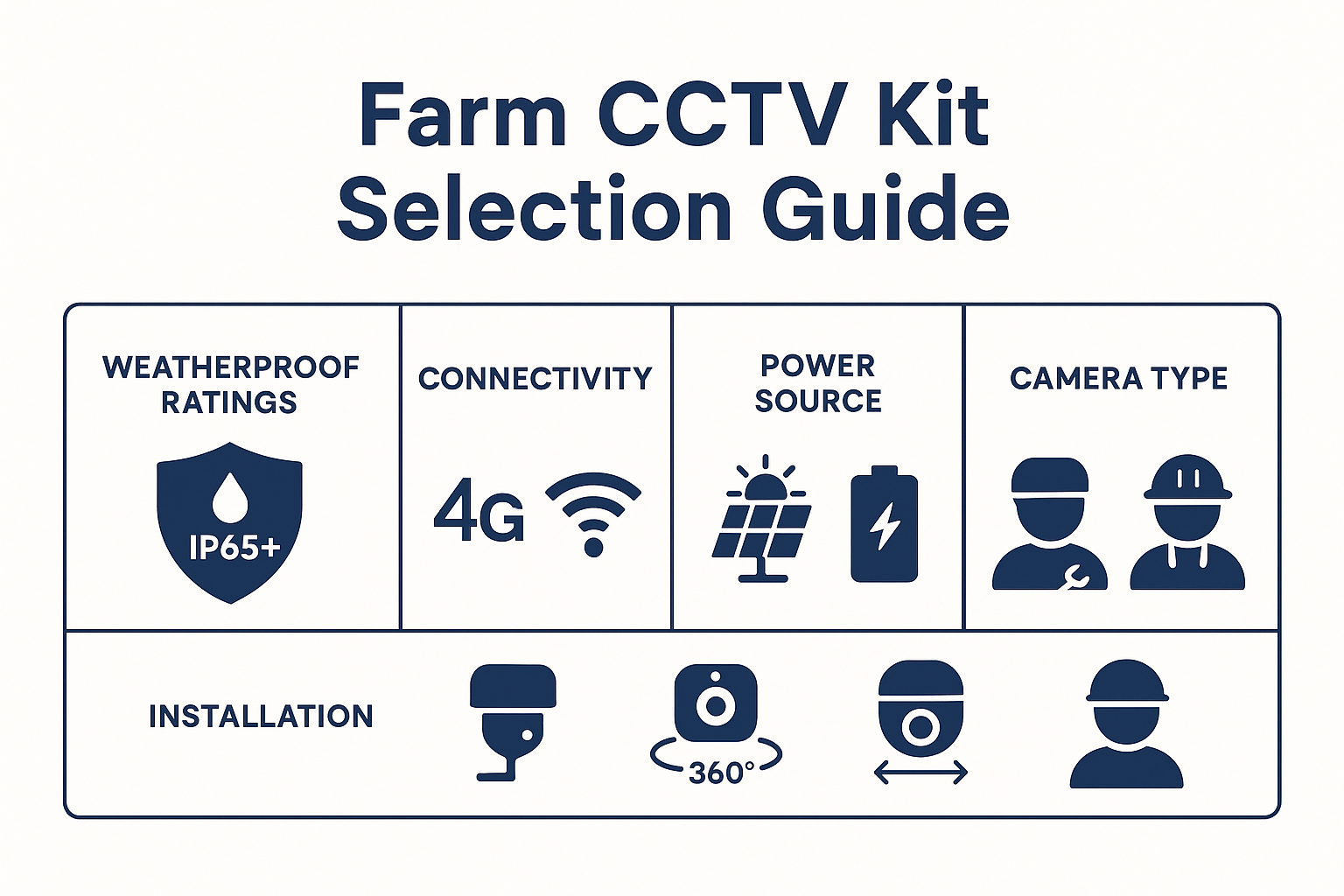
Simple guide to farm CCTV kits terms:
– best cctv solution
– cctv monitoring security
– latest cctv camera
There’s something almost sacred about farmland. The open spaces, the connection to the earth, the sense of peace that comes with rural living. But that tranquility can sometimes create a false sense of security.
“Farms may seem safe, but they are not immune to threats – trespassers can act anytime, putting your assets at risk.”
Those words from a seasoned agricultural security expert hit home for many farmers who’ve experienced the growing problem of rural crime firsthand. The countryside isn’t the safe haven it once was.
The truth is, the farming landscape has changed dramatically. According to the latest statistics on rural crime, theft of farm equipment, fuel, and livestock continues to climb year after year. What’s particularly concerning is how organized criminal groups have begun specifically targeting isolated agricultural properties.
Why are farms such attractive targets? For starters, they’re often in remote locations with limited oversight. Valuable equipment frequently sits in fields or minimally secured outbuildings. Then there’s the predictable patterns of owner absence during busy seasons, extensive perimeters that challenge traditional security methods, and the presence of high-value assets like machinery, livestock, and stored crops.
Here in Texas, our team at American S.E.A.L. Patrol Division has witnessed this troubling trend firsthand. We’ve responded to numerous incidents where hardworking farmers suffered devastating losses that proper security measures could have prevented. The impact goes far beyond just dollars and cents – it’s about protecting a way of life and generations of hard work.
But theft prevention is just one piece of the puzzle. Modern farm CCTV kits serve multiple essential purposes that benefit daily operations too. They allow for comprehensive livestock monitoring, especially during critical periods like calving or lambing when quick intervention can save lives. They enable remote property management, letting you check on distant corners of your land without making the trip. They provide worker safety oversight, ensuring everyone follows proper protocols around dangerous equipment.
These systems also offer invaluable evidence collection if something does go wrong, and perhaps most importantly, they provide genuine peace of mind. There’s real comfort in knowing you’ll be alerted to any unusual activity, whether you’re in the next field or across the state.
The agricultural sector faces unique security challenges that standard home systems simply can’t address. The harsh weather conditions, remote locations, and specialized monitoring needs of farms demand purpose-built solutions. That’s precisely why farm CCTV kits have become essential tools for forward-thinking agricultural operations.
When your livelihood depends on protecting your land, livestock, and equipment, investing in proper security isn’t just smart business – it’s necessary protection for everything you’ve worked so hard to build.
When you install a farm CCTV kit on your property, you’re doing much more than just putting up cameras. You’re creating a comprehensive security and management system that transforms how you protect and run your farm.
Modern farm security cameras offer a powerful deterrent effect that shouldn’t be underestimated. Studies have consistently shown that properties with visible surveillance equipment are about 300% less likely to be targeted by criminals. There’s something about knowing they’re being watched that makes potential thieves think twice. Many of our clients at American S.E.A.L. Patrol Division improve this effect by posting signs that clearly indicate video monitoring is in place.
Beyond keeping troublemakers away, the remote monitoring capabilities of today’s farm CCTV kits have revolutionized how farmers manage their properties. Imagine checking on your entire operation from the comfort of your kitchen table, or while you’re in town running errands. With smartphone access to live feeds, you can keep an eye on multiple locations simultaneously without driving across your property. When something unusual happens, instant alerts let you know right away.
“After installing our system, I saved at least 10 hours a week that I used to spend driving around checking different parts of the property,” one of our clients told us recently. “Now I can see everything from my phone and only drive out when something actually needs my attention.”
The evidence collection aspect of these systems provides invaluable peace of mind. High-definition footage gives you clear documentation for insurance claims if something does go wrong. We’ve seen cases where video evidence not only simplified the claims process but significantly increased the chances of recovering stolen property. Those timestamped recordings can also help resolve disputes with contractors or neighbors that might otherwise become complicated “he said, she said” situations.
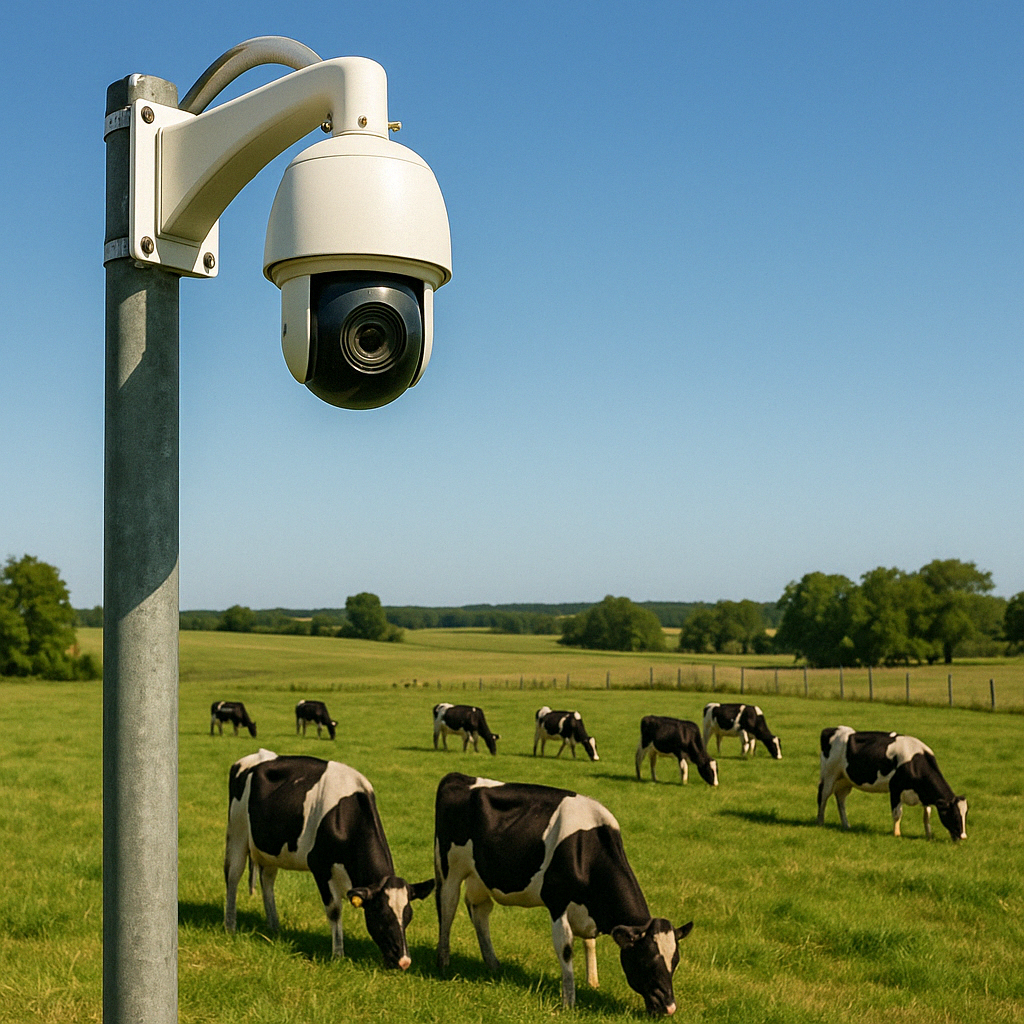
Livestock monitoring has become one of the most appreciated benefits of farm CCTV kits among our clients with animals. During critical periods like calving, lambing, or foaling, you can observe your animals without disturbing them. This reduces stress on both you and your livestock. As one livestock specialist put it, “Keep an eye on your livestock during foaling, lambing or calving season without having to be on-site 24 hours a day.” Many farmers have told us they’ve spotted health issues early by noticing changes in feeding patterns or behavior through their cameras.
The operational efficiency gains can be substantial. No more driving out to check if a delivery arrived or if workers completed a task. You can verify these things remotely, saving valuable time and fuel. Many of our clients monitor multiple operations simultaneously, allowing them to be in several places at once, at least virtually.
Your insurance company might thank you too. Many providers offer premium discounts ranging from 5% to 20% for properties with security systems. Beyond the potential savings on your premiums, having video evidence typically simplifies and speeds up the claims process if you ever need to file one.
Perhaps the most valuable benefit, though, is the hardest to quantify: peace of mind. There’s something deeply reassuring about being able to check on your property anytime, from anywhere. Whether you’re on vacation or just trying to get a good night’s sleep, knowing you’ll be alerted to any unusual activity lets you rest easier.
A Texas farmer who installed a system through us shared this story: “After having equipment stolen twice in one year, we installed cameras covering our equipment storage areas and main access points. Six months later, we received an alert at 2 AM showing two vehicles entering our property. We immediately contacted authorities who arrived while the thieves were still loading equipment. Not only did we prevent the theft, but the clear footage helped prosecute individuals connected to several other farm thefts in the area.”
This real-world example shows how modern farm CCTV kits protect not just individual properties but can help address broader rural crime issues when properly implemented. The right system doesn’t just react to problems—it helps prevent them from happening in the first place.
Choosing the right farm CCTV kit isn’t a one-size-fits-all decision. Your specific agricultural operation has unique security challenges that require custom solutions. Let’s explore the different types of systems available and how they might fit your particular farm needs.
When I visit farms around Houston, I often find that owners aren’t aware of just how many options exist beyond basic security cameras. The technology has evolved dramatically in recent years, creating specialized solutions for every type of farming operation.
The foundation of your decision often starts with choosing between wired and wireless systems.
Wired systems offer rock-solid reliability and consistent performance. They’re ideal for permanent installations around main farm buildings where power and network connections are readily available. Many farmers prefer wired systems for their main equipment sheds, processing areas, and valuable livestock housing. The lack of potential signal interference and elimination of battery concerns makes these systems virtually maintenance-free once installed.
Wireless systems provide remarkable flexibility and easier installation. You can place these cameras virtually anywhere within signal range, making them perfect for temporary monitoring of seasonal operations or rotating between different areas of concern. The trade-off is typically battery life and potential signal disruptions during extreme weather.
As one Texas cattle rancher told me, “I started with wired cameras around my main barn and equipment storage, but added wireless cameras when I needed to monitor calving season in our south pasture. The combination gives me complete coverage without breaking the bank.”
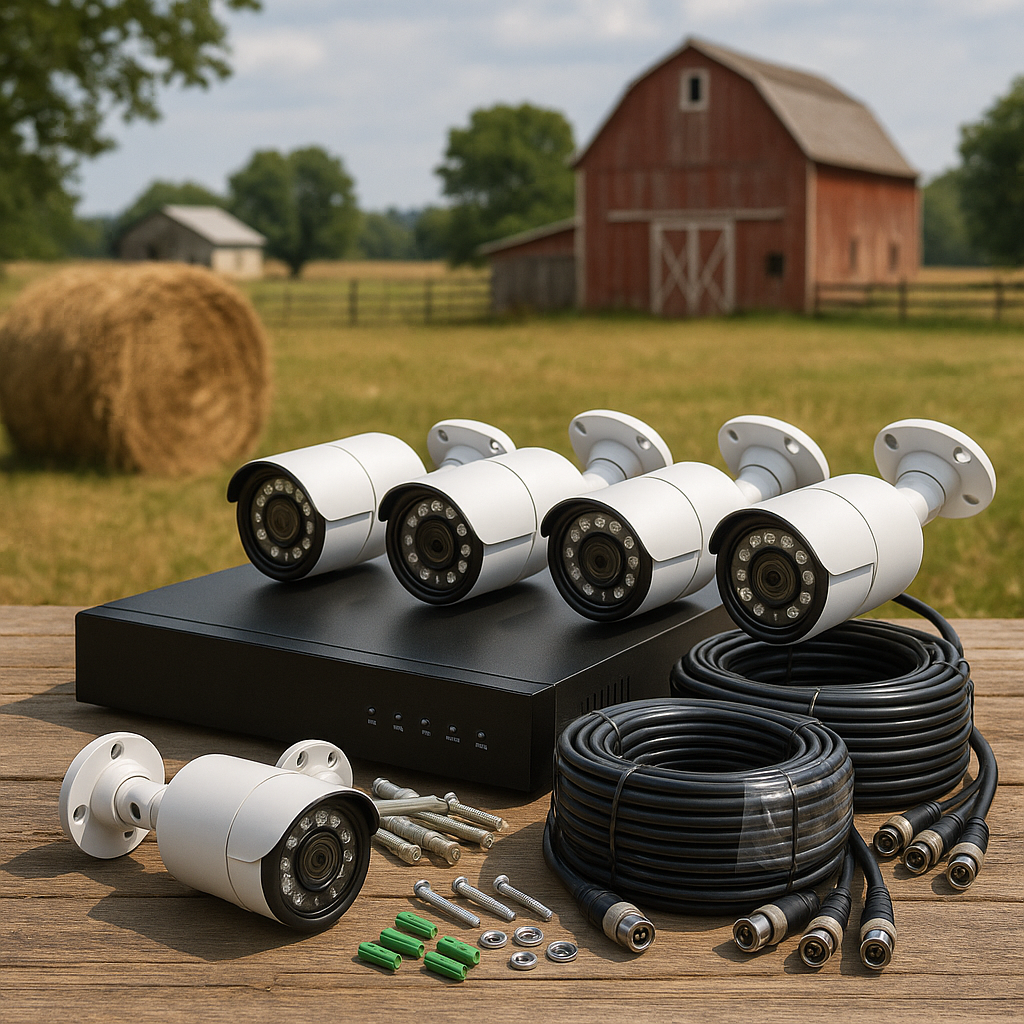
Solar-powered security cameras have revolutionized farm monitoring by eliminating the two biggest obstacles to comprehensive coverage: power sources and connectivity.
These innovative systems combine solar panels, rechargeable batteries, and wireless connectivity to create truly independent security stations. The best models can operate indefinitely with just 3-4 hours of daily sunlight – perfect for our sunny Texas climate.
Key advantages of solar-powered systems include:
The freedom from electrical infrastructure means you can monitor literally any location on your property with adequate sunlight. That remote gate where equipment keeps disappearing? Now you can watch it 24/7 without running a single wire.
Battery backup in quality systems provides 5-7 days of operation even during cloudy periods, ensuring continuous protection regardless of weather conditions.
Simple installation typically takes less than an hour per camera, with no trenching for electrical lines or complex mounting requirements. Most systems use simple pole or fence post mounting options.
One Houston-area farmer shared his experience: “After losing two ATVs from a remote equipment shed, I installed a solar-powered 4G camera system. Three months later, it caught trespassers in the act, and the sheriff’s department made arrests before anything was stolen. The system paid for itself in that single incident.”
The most effective farm security doesn’t rely on cameras alone. Modern farm CCTV kits work best when integrated with complementary security measures to create a comprehensive protection system.
Motion detectors can trigger lights, alarms, or camera recording when movement is detected in sensitive areas. This combination serves both as a powerful deterrent and ensures you capture crucial footage when it matters most. The latest systems can even distinguish between human, vehicle, and animal movement to reduce false alarms.
Access control systems like electronic gates and keypad locks create secure perimeters while logging who enters and exits your property. When paired with cameras, you have both visual verification and access records for complete security oversight.
Perimeter alarms provide early warning of boundary breaches, giving you precious time to respond before intruders reach valuable assets. These can range from simple trip wires to sophisticated laser systems depending on your budget and needs.
Two-way audio capabilities allow you to speak directly through camera systems, perfect for warning off trespassers or providing instructions to workers in remote areas. As one farmer put it, “Nothing scares off potential thieves like a voice coming out of nowhere telling them they’re being recorded.”
At American S.E.A.L. Patrol Division, we specialize in creating integrated security systems that address each farm’s specific vulnerabilities. We find that a thoughtfully designed combination of technologies provides substantially better protection than any single solution could offer.
For example, we recently helped a Houston-area farm implement a system that combines solar-powered cameras at remote entry points with wired cameras around main buildings, all connected to motion-activated lighting and a central monitoring system. The owner now receives immediate smartphone alerts with video clips whenever unexpected activity occurs, allowing for rapid response regardless of his location.
The beauty of modern security technology is its scalability. You can start with a basic farm CCTV kit covering your most vulnerable areas, then expand the system over time as budget allows. The modular nature of these systems means you’re never locked into a single approach or forced to replace existing equipment as you grow.
Whether you’re primarily concerned with livestock monitoring, equipment theft prevention, or general property security, today’s farm surveillance options can be custom to address your specific needs with remarkable precision and reliability.
Farms come in all shapes and sizes—from small family operations to sprawling commercial enterprises. That’s why there’s no one-size-fits-all approach when it comes to choosing the right farm CCTV kit for your property. Let’s explore the options available to help you find the perfect match for your specific needs.
When it comes to the fundamental choice between wired and wireless systems, each offers distinct benefits depending on your farm’s layout and requirements.
Wired systems using Power over Ethernet (PoE) technology deliver exceptional reliability—something many farmers value above all else. These systems connect directly to your network via physical cables, eliminating concerns about signal interference or battery life. The video quality tends to be consistently higher, making identification of people or animals much clearer. The trade-off? Installation requires running cables throughout your property, which can be labor-intensive and sometimes challenging in older farm buildings.
“We installed a wired system throughout our main operations area,” shares a cattle farmer from outside Houston. “The peace of mind knowing the system won’t drop out during a critical moment is worth the extra installation effort. Plus, the crystal-clear footage has already helped us identify and recover stolen equipment.”
Wireless systems, on the other hand, offer remarkable flexibility and simpler installation. Without the need to run cables through walls or across fields, these systems can be operational in a fraction of the time. They’re particularly valuable for temporary monitoring needs or for areas where running cables would be prohibitively difficult or expensive. However, they may be subject to signal interference from other equipment, and each camera typically needs its own power source.
Many farmers find that a hybrid approach works best. As one Houston livestock producer told us: “We started with a wired system in our main barn and equipment shed, then added wireless cameras to monitor calving pens that we relocate seasonally. The combination gives us both reliability and flexibility.”
Most security providers, including American S.E.A.L. Patrol Division, offer comprehensive packages custom to different farm sizes:
Small farm packages typically include 4-6 cameras and cover the essentials—main building entrances, equipment storage, and perhaps a couple of livestock areas. These are perfect for properties up to about 10 acres.
Medium farm packages step up to 8-12 cameras, providing more extensive coverage for operations between 10-50 acres. These systems often include a mix of fixed cameras for consistent monitoring of critical areas and perhaps a PTZ (pan-tilt-zoom) camera that can cover larger spaces.
Large farm packages with 16+ cameras are designed for extensive operations with multiple buildings, equipment yards, and livestock areas spread across significant acreage. These comprehensive systems often incorporate various camera types—fixed cameras for consistent monitoring, PTZ cameras for covering expansive areas, and possibly 360° cameras for complete coverage of enclosed spaces like barns or equipment sheds.
“Different camera kits are available with specifications ranging from HD imaging to specialized 360-degree views, custom for various farming tasks,” notes an agricultural technology specialist we work with regularly.
The development of solar-powered security cameras has truly revolutionized farm surveillance, making it possible to monitor locations that were previously impossible to secure due to lack of power infrastructure.
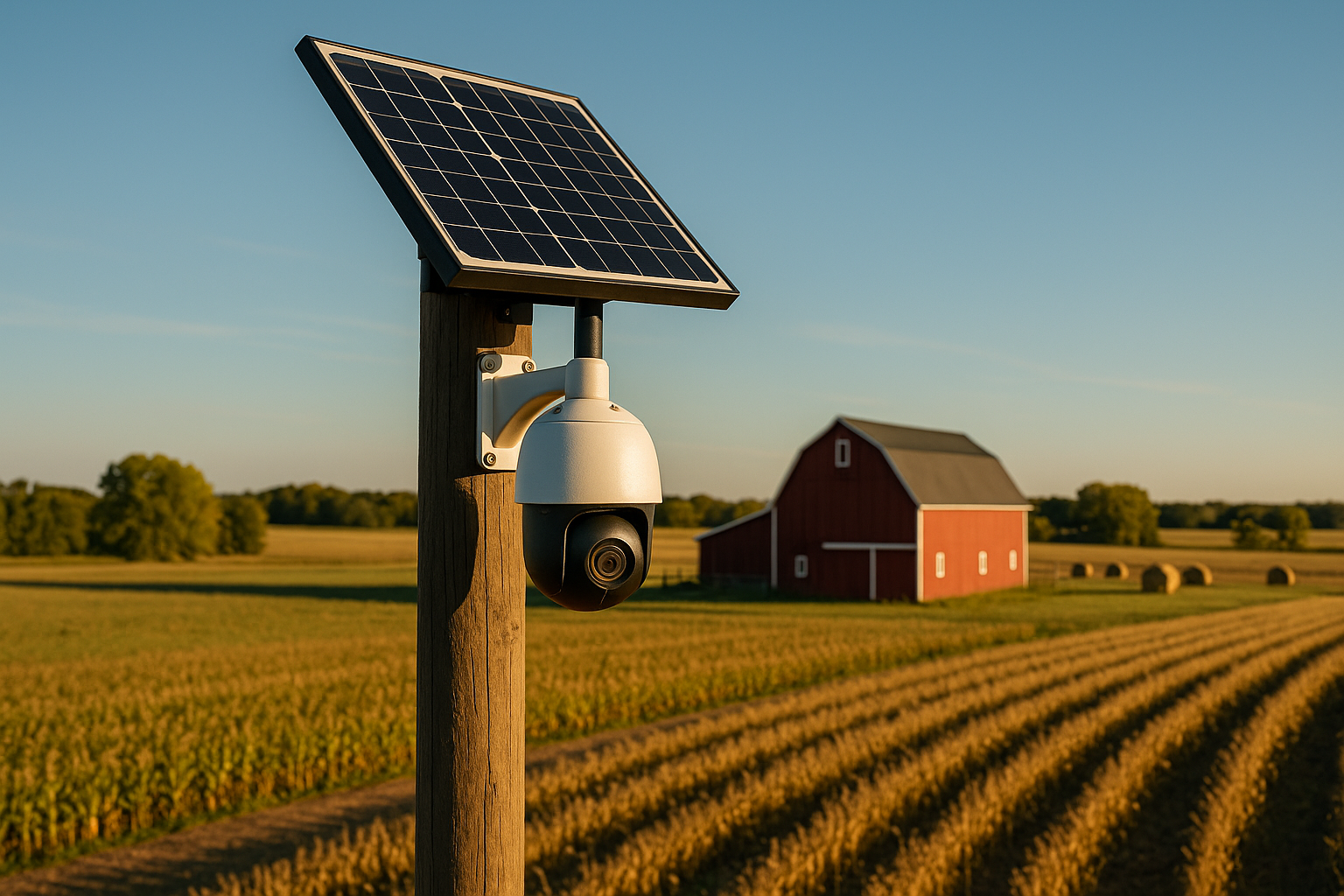
These systems typically combine four key components working together: a solar panel (usually 5W to 20W) that converts sunlight into electricity; a rechargeable battery (typically 10,000-20,000mAh) that stores energy for nighttime operation and cloudy days; a charge controller that manages power flow and prevents battery damage; and a wireless camera designed specifically for low power consumption.
“The RuralView 360 Zoom Camera & Solar Bundle provides complete independence from traditional power sources,” explains a rural security expert we partner with. This freedom from the grid offers tremendous advantages for farms with remote areas that need monitoring.
The benefits for farmers are substantial. You gain truly off-grid operation, allowing cameras to be installed anywhere with adequate sunlight. You’ll save significantly by eliminating expensive trenching and electrical work that would otherwise be required. The system is easily scalable—just add additional units as your needs change without worrying about infrastructure modifications. And perhaps most importantly, these systems aren’t vulnerable to power outages that might affect grid-connected cameras.
A Texas cattle rancher we worked with recently shared his experience: “We installed solar-powered 4G cameras at three remote water tanks that had experienced vandalism. The installation took less than an hour per location, and we’ve had continuous monitoring for over a year with minimal maintenance. When suspicious activity was detected last month, we received immediate alerts and were able to notify authorities before any damage occurred.”
When installing solar-powered systems, be sure to position the panel for maximum sun exposure (south-facing in our Northern Hemisphere) at approximately a 30-45 degree angle. Select appropriate battery capacity based on local weather patterns, and mount the cameras at 8-12 feet for both security and optimal viewing angles.
For truly comprehensive protection, your farm CCTV kit should work hand-in-hand with other security measures. This layered approach significantly improves overall effectiveness and provides backup if one system is compromised.
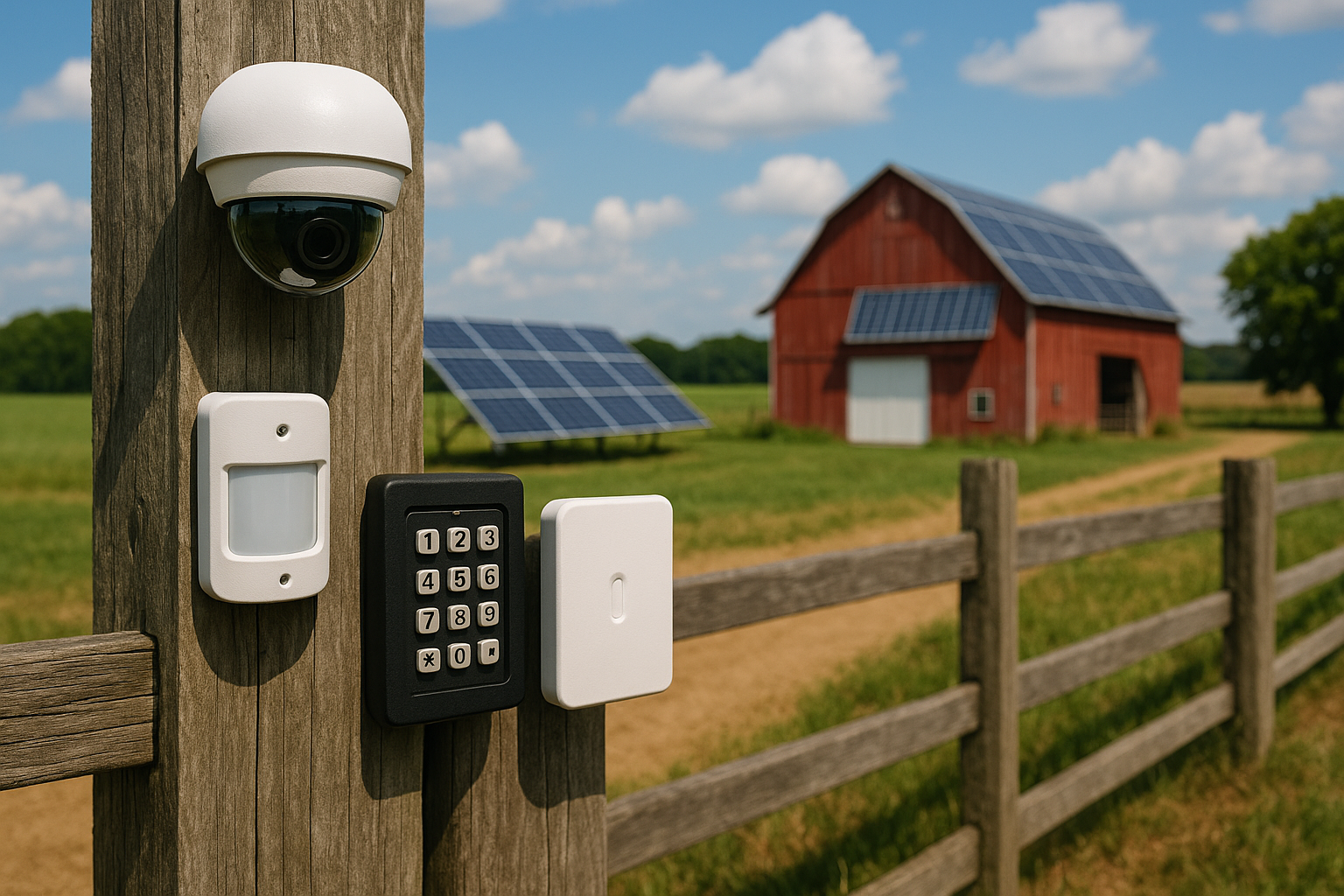
Modern motion detection technology has come a long way from basic sensors. Today’s options include PIR sensors that detect body heat, microwave sensors for wider coverage, dual-technology sensors that reduce false alarms, and AI-improved detection that can distinguish between people, vehicles, and animals. When integrated with your cameras, these systems can trigger recording, focus PTZ cameras on activity areas, activate deterrents like lights or sirens, and send you immediate alerts with video verification.
Alarm systems add another crucial layer of protection. Perimeter alarms detect boundary breaches before intruders reach your buildings. Building security sensors protect individual structures. Panic buttons allow for immediate alert activation if you encounter a threatening situation. When connected to your farm CCTV kit, these alarms provide visual verification of triggers (reducing false alarms), evidence collection during security events, and remote assessment of threats before responders arrive.
Access control systems help you manage who can enter your property and buildings. Gate access systems control vehicle entry with keypads, cards, or remote authorization. Building access controls limit and track entry to sensitive areas. When combined with cameras, you get visual verification before granting access and documentation of all entry and exit events.
Automated deterrents actively discourage potential intruders. Motion-activated security lighting, automated voice warnings, and disorienting strobe effects can all be triggered by your security system. When integrated with cameras, these deterrents ensure well-illuminated footage and create a synchronized response that maximizes psychological impact.
“How can farm CCTV systems be integrated with other security measures like motion detectors and alarms?” is a question we hear often. The answer lies in modern security platforms that bring these previously separate systems together under one umbrella.
At American S.E.A.L. Patrol Division, we specialize in creating these integrated security ecosystems for Houston-area farms. Our approach combines appropriate technologies based on your specific vulnerabilities and priorities, ensuring you get comprehensive protection without unnecessary complexity or expense.
One Houston area farm equipment dealer implemented this integrated approach after experiencing repeated theft. Their feedback was striking: “The combination of cameras, motion sensors, and access control has completely eliminated our theft problems. When motion is detected after hours, lights activate, cameras focus on the area, and we receive immediate alerts with video. The one time someone did attempt entry, they fled as soon as the deterrent sequence began, and we had clear footage to provide to law enforcement.”
By thoughtfully combining these various security elements, you create a system that’s far more effective than any single component could be on its own—giving you both better protection and greater peace of mind.
Let’s face it – setting up a security system might sound intimidating, but installing your farm CCTV kit doesn’t have to be complicated. With some careful planning and basic tools, many farmers successfully handle the installation themselves and save on professional fees. Of course, if you’re not comfortable climbing ladders or working with technology, professional installation is always an option!
Before you even open those equipment boxes, take some time to map out your strategy. Grab a cup of coffee, walk your property, and think like both a farmer and a potential intruder.
Start by sketching a simple security map of your property. Mark where your valuable equipment is stored, where livestock are kept, and all entry points to your farm. Don’t forget to note existing power outlets and internet connections – these will be crucial for determining where cameras can go without requiring extensive electrical work.
Think about your property’s unique vulnerabilities. That back gate that’s rarely used? Perfect spot for trespassers. The equipment shed with your expensive tractor? Definitely needs coverage. Those calving pens where you need extra monitoring during spring? Mark them down too.
“The biggest mistake I see farmers make is rushing to install cameras without a plan,” says one of our security specialists. “An hour of planning saves days of frustration later.”
Wired systems offer reliability that’s hard to beat, especially for your main buildings. Start by finding a secure, clean spot for your recorder (NVR/DVR). This is the brain of your system, so keep it somewhere dust-free, with good ventilation, and where it won’t be disturbed. Connecting it to an uninterruptible power supply (UPS) is smart protection against power fluctuations that are common on farms.
Running cables is often the most time-consuming part. Use quality CAT5e or CAT6 cables and keep them under the 328-foot limit for best performance. When running cables outdoors, protective conduit is absolutely worth the extra effort – Texas sun and occasional curious critters can make short work of exposed cables.
When mounting cameras, height is your friend – aim for 9-15 feet up. This keeps them out of easy reach while maintaining a good viewing angle. Point them slightly downward and away from direct sunlight to avoid glare. A little silicone sealant around outdoor connections goes a long way toward preventing moisture problems down the road.
Once physically installed, the final step is configuration. Modern systems are much more user-friendly than older technology. Set up motion detection zones (avoiding areas where trees move in the wind), establish your recording schedules, and download the mobile app so you can check your farm from anywhere.
If running cables across your property sounds like a nightmare, wireless systems offer a simpler alternative, though they do have limitations.
Start by confirming your WiFi signal reaches all the places you plan to install cameras. No signal means no camera feed! For larger properties, WiFi extenders or mesh networks can help cover the distance. Always secure your network with strong encryption – an unsecured camera system is worse than no system at all.
Mount your wireless receiver or NVR centrally for the best signal reception. Then install your cameras where they have both power access and good WiFi signal. Most wireless cameras still need power cables unless they’re battery-operated, so plan accordingly.
The pairing process varies by manufacturer but is typically straightforward – most modern systems use QR codes or simple button sequences to connect cameras to the receiver. Once paired, test each camera thoroughly before considering the job complete.
For those remote corners of your property where neither power nor WiFi reach, solar-powered 4G cameras are nothing short of revolutionary.
Begin by checking cellular coverage where you plan to install. A strong signal is essential for reliable monitoring. The solar panel positioning is critical – in Texas, face it south and angle it to catch maximum sunlight. Make sure trees or buildings won’t cast shadows on the panel during peak daylight hours.
Mount your camera securely, keeping in mind that these all-in-one units are often heavier than standard cameras. Connect the solar panel to the battery system following the manufacturer’s instructions, insert your activated SIM card, and configure through the manufacturer’s app.
A Texas rancher who installed these told us: “I was skeptical about solar cameras working through our summer storms, but they’ve been running for two years now without a single issue. Being able to check on my cattle from my phone while I’m in town has been a game-changer.”
Every farm presents unique challenges when installing security systems. Limited WiFi range is probably the most common issue – consider mesh networks or point-to-point wireless bridges to extend coverage to distant buildings.
Power availability is another frequent headache. When running new electrical lines isn’t practical, solar options or battery-powered cameras can fill the gap, though they’ll require occasional maintenance.
Lightning protection is particularly important for Texas farms. Install surge protectors on all wired connections and ensure proper grounding – a single lightning strike can fry an entire unprotected system.
For remote viewing quality, our technicians recommend an upload speed of at least 0.6MB, preferably 1MB or higher. This ensures you’ll have smooth video when checking your cameras from your phone or computer.
At American S.E.A.L. Patrol Division, we understand that every farm is different. Whether you choose professional installation or the DIY route, our Houston-based team is always available to provide guidance specific to your property. Many of our clients start with professional installation for their main system, then add additional cameras themselves as they become more comfortable with the technology.
The best security system is one that’s actually installed and working – so don’t let perfect be the enemy of good. Start with covering your most vulnerable areas, and you can always expand your system over time.
When it comes to protecting your farm, the decision to invest in farm CCTV kits involves weighing both immediate costs and long-term benefits. It’s not just about spending money—it’s about making a smart investment in your livelihood and peace of mind.
“Investing in advanced farm security cameras is both economically and emotionally more viable than dealing with the aftermath of theft or vandalism,” explains a security expert who’s spent years working with agricultural operations throughout Texas.
The upfront cost of a farm security system varies widely depending on your specific needs. Small systems with 4-6 cameras typically range from $1,000 to $2,500, while medium-sized setups with 8-12 cameras generally cost between $2,500 and $5,000. Larger operations requiring 16 or more cameras might invest $5,000 to $10,000 or more for comprehensive coverage.
Camera quality plays a significant role in pricing. Basic 1080p cameras with standard features might cost between $100-$200 each, while mid-range 4MP cameras with improved capabilities typically run $200-$350 per unit. Premium options—including 4K resolution, pan-tilt-zoom functionality, and advanced features—can range from $350 to $800 or more per camera.
Don’t forget about the brain of your system. Recording equipment like NVRs (Network Video Recorders) with 2TB storage typically costs $300-$600, while larger 8TB systems range from $600-$1,200. If you prefer cloud storage, plan for monthly subscriptions of $5-$15 per camera.
The way your cameras connect also impacts your budget. Wired systems require cabling at roughly $1-$2 per foot when professionally installed. Wireless systems often have higher per-camera costs but save on installation expenses. For remote locations, 4G systems offer excellent flexibility but require both higher equipment costs and ongoing data plans of $10-$40 monthly.
Installation is another consideration. While DIY installation saves labor costs, it requires time and basic technical skills. Professional installation typically runs $75-$150 per camera depending on complexity, with annual maintenance contracts ranging from $200-$500 based on system size.
The true value of farm CCTV kits becomes clear when you consider what they protect. Farm equipment theft costs the agricultural industry millions annually, with a single tractor or implement potentially representing a $50,000-$250,000 loss. Fuel theft often exceeds $5,000 annually on larger operations, while tools and portable equipment losses average $2,000-$10,000 per incident.
Beyond preventing theft, security systems often lead to insurance benefits. Many providers offer premium discounts of 5-20% for documented security systems, reduced deductibles with video verification, faster claims processing, and potentially improved coverage options.
The operational efficiencies shouldn’t be overlooked either. A good camera system reduces travel time monitoring remote locations, decreases livestock losses through timely intervention, saves labor during critical periods like calving season, and provides documentation for warranty claims on equipment failures.
A Houston farmer shared his experience: “After installing our system for $4,200, we received a 12% insurance discount saving $840 annually. We prevented at least one equipment theft when our alerts led to police response, potentially saving $75,000 in equipment. The system paid for itself within the first year, not counting the peace of mind it provides.”
You don’t need to break the bank to secure your farm effectively. Start by prioritizing coverage areas—focus your high-quality cameras on high-value targets and entry points. Strategic placement of fewer cameras with wider coverage angles often works better than numerous cameras with overlapping views. Using motion-activated recording maximizes storage efficiency and extends the life of your equipment.
Consider a phased implementation approach. Start with protecting your most critical areas and expand the system over time as budget allows. Choose scalable systems that make adding cameras easy, and invest in a quality NVR initially that can support future expansion.
Leverage your existing infrastructure wherever possible. Use your farm’s WiFi network if coverage is adequate, repurpose existing conduit or cable paths, and consider Power over Ethernet (PoE) systems to eliminate separate power wiring—a particular advantage in outbuildings.
Financing options can also make security more accessible. Many security providers offer monthly payment plans with little or no interest. Some insurance companies even offer security system financing with immediate premium discounts that help offset the payments. For business operations, security investments may qualify for Section 179 tax deductions, further improving your return on investment.
At American S.E.A.L. Patrol Division, we work with Houston-area farmers to develop customized security solutions that balance protection needs with budget considerations. Our experience has shown that a thoughtfully designed system focused on key vulnerabilities often provides better value than a larger system with redundant coverage.
When you weigh the potential losses against the investment in protection, farm CCTV kits often represent one of the smartest investments you can make in your agricultural operation’s future.
When you invest in a farm CCTV kit, you’re collecting valuable data that needs protection. After all, what good is a security system if it becomes a security risk itself? Think of your surveillance system like another outbuilding on your property – it needs its own locks and protection.
Modern farm security cameras connect to the internet, which opens up both opportunities and risks. It’s like having a gate to your property – useful for access, but needs proper locks to keep unwanted visitors out.
Your system might be vulnerable through unsecured WiFi connections or those factory-set passwords you never changed (we’ve all been there!). Outdated firmware can leave backdoors wide open, just like that shed door that doesn’t quite latch properly. And don’t forget about physical risks – cameras mounted within easy reach are just asking for trouble, like leaving your keys in the tractor.
There’s also the matter of privacy. Your cameras might capture footage of visitors, workers, or family members going about their day. Just like you wouldn’t appreciate someone watching your every move, it’s important to respect others’ privacy while maintaining security.
Protecting your surveillance system isn’t complicated, but it does require attention to detail – much like maintaining any piece of farm equipment.
Create a separate network for your security cameras rather than putting them on the same WiFi you use for everything else. Think of it as having a dedicated lane for farm equipment instead of mixing with regular traffic.
Use strong passwords that would make even your stubborn old tractor easier to start than your security system. And please, change those default passwords immediately – they’re about as secure as a fence made of paper.
Two-factor authentication adds an extra verification step for accessing your system remotely. It’s like having both a lock and a guard dog – either one helps, but together they’re much more effective.
Keep everything updated with the latest firmware. Security patches are like reinforcing weak spots in your fencing before they become actual breaches. A regular schedule for checking these updates is just as important as your equipment maintenance schedule.
Secure your recording equipment in a locked, access-controlled area. Your NVR/DVR is the brain of your operation – protect it like you would your most valuable livestock.
“Security isn’t just about having cameras – it’s about making sure those cameras and their footage remain under your control,” explains one of our security consultants at American S.E.A.L. Patrol Division. “We’ve seen cases where unsecured systems actually created new vulnerabilities instead of reducing them.”
Balancing security with privacy is a bit like managing your land – you need to protect what’s yours while respecting boundaries.
Make sure you post visible signs letting people know cameras are in use. It’s both a deterrent to wrongdoers and a courtesy to legitimate visitors. Nobody likes surprise surveillance.
Be thoughtful about camera placement. Avoid areas where people have a reasonable expectation of privacy, just as you’d respect your neighbor’s property line. Direct your cameras to capture only what’s necessary for security purposes.
Control who can access your footage with the same care you’d use for your financial records. Not everyone needs to see everything, and keeping logs of who views recordings helps maintain accountability.
Stay aware of regulations that might apply to your operation. Laws regarding surveillance can vary by state, and if you have employees, there may be additional workplace privacy considerations.
“The integration of AI and machine learning in security cameras now enables more accurate threat detection and reduced false alarms,” notes a security technology expert. “But this powerful technology requires equally robust data protection measures.”
At American S.E.A.L. Patrol Division, we’ve helped countless Houston-area farmers implement security systems that protect both their physical assets and digital data. With our guidance, you can feel confident that your farm CCTV kit is working for you, not creating new problems.
A security system is only as strong as its weakest point – and in today’s connected world, that weak point is often digital rather than physical. Taking these simple steps will ensure your investment in farm security delivers the protection and peace of mind you’re looking for.
Keeping your farm CCTV kit in tip-top shape isn’t just about protecting your investment – it’s about ensuring your security system works when you need it most. Farm environments can be particularly tough on electronic equipment, with dust, weather extremes, and curious critters all conspiring against your carefully installed cameras.
Think of your security system like your tractor – regular check-ups prevent bigger problems down the road. A simple monthly walk-around can catch issues before they compromise your security.
Each month, take a quick tour of your camera system. Check each camera for physical damage – has that windstorm knocked anything askew? Are your cameras still pointed where they should be? Those Texas thunderstorms can sometimes have their own ideas about camera positioning! While you’re there, wipe down the camera lenses with an appropriate cleaner. It’s amazing how quickly dust, pollen, and the occasional spider web can obscure your view.
“I schedule camera maintenance with my regular equipment checks,” shares a cattle rancher from just outside Houston. “Once a month, same day I check fluid levels in the tractors, I clean my camera lenses and make sure everything’s working right. Takes maybe 30 minutes for my whole 12-camera system.”
Every three months, dig a little deeper. This is when you should update your system’s software and firmware – those updates often contain important security patches that protect your system from hackers. It’s also a good time to check your storage situation. Is your recorder getting full? Are your oldest recordings being overwritten as expected? A quarterly password change is also smart practice – just be sure to keep track of those new passwords!
Once a year, give your system a complete physical. Test all your alarm notifications by triggering them intentionally. Check that mounting brackets aren’t showing signs of rust or wear. This annual check-up is also the perfect time to evaluate whether your current camera placement still meets your needs. Has your operation changed? Do you need to adjust coverage areas?
Farm environments can be particularly harsh on electronic equipment. That fine dust that seems to get everywhere during harvest season? It’s just as happy settling on your camera lenses, gradually reducing image quality until you might miss something important.
Heat is another Texas-sized challenge. Camera electronics can struggle when temperatures climb into the triple digits. Whenever possible, mount cameras where they’ll get some shade during the hottest part of the day. If that’s not possible, consider specialized housings with built-in cooling or heat dissipation features.
Wildlife seems magnetically attracted to security equipment. Birds love building nests on the nice flat tops of cameras, while spiders find camera housings perfect for web construction. Regular physical inspection helps catch these issues before they impact performance. For wire runs, protective conduit is worth every penny – it keeps curious rodents from turning your carefully installed cabling into an expensive snack.
Seasonal changes require attention too. That perfect camera angle in winter might be completely blocked by foliage come spring. Plan on seasonal adjustments to keep your views clear year-round.
Even with perfect maintenance, issues occasionally arise. Being prepared to handle them quickly minimizes your security downtime.
When a camera goes offline, start with the basics – check power connections and cables. A simple reboot of both the camera and recording system resolves many mysterious issues. If that doesn’t work, verify network connectivity and check for IP address conflicts if you’ve recently added new devices to your network.
Blurry or poor-quality images often come down to dirty lenses or cameras that have shifted position. A gentle cleaning and repositioning can work wonders. For night vision problems, check for nearby light sources that might be causing reflection or washing out your infrared illumination.
False motion alerts can drive anyone crazy with constant notifications. Adjust your motion sensitivity settings and create exclusion zones for areas with moving vegetation. The newest farm CCTV kits include AI-based motion detection that can distinguish between a person and a swaying tree branch – a worthwhile upgrade if false alerts are a persistent problem.
Storage filling too quickly usually means it’s time to adjust your recording settings. Consider recording only when motion is detected in less critical areas, or slightly reducing video quality to extend storage capacity.
“For optimal system performance, we recommend monthly visual inspections and quarterly thorough maintenance,” advises one of our security technicians at American S.E.A.L. Patrol Division. “In dusty farm environments, more frequent lens cleaning may be necessary, especially during harvest seasons.”
With proper care, your farm CCTV kit can provide reliable service for many years. The small investment of regular maintenance pays big dividends in system reliability and performance when it matters most – when there’s an actual security event. After all, the most expensive security system is the one that fails when you need it.
Every farm tells its own unique story – from sprawling cattle ranches to compact specialty crop operations, no two agricultural businesses face identical security challenges. Creating a customized farm CCTV kit solution ensures you’re investing wisely in protection that addresses your specific vulnerabilities without paying for features you’ll never use.
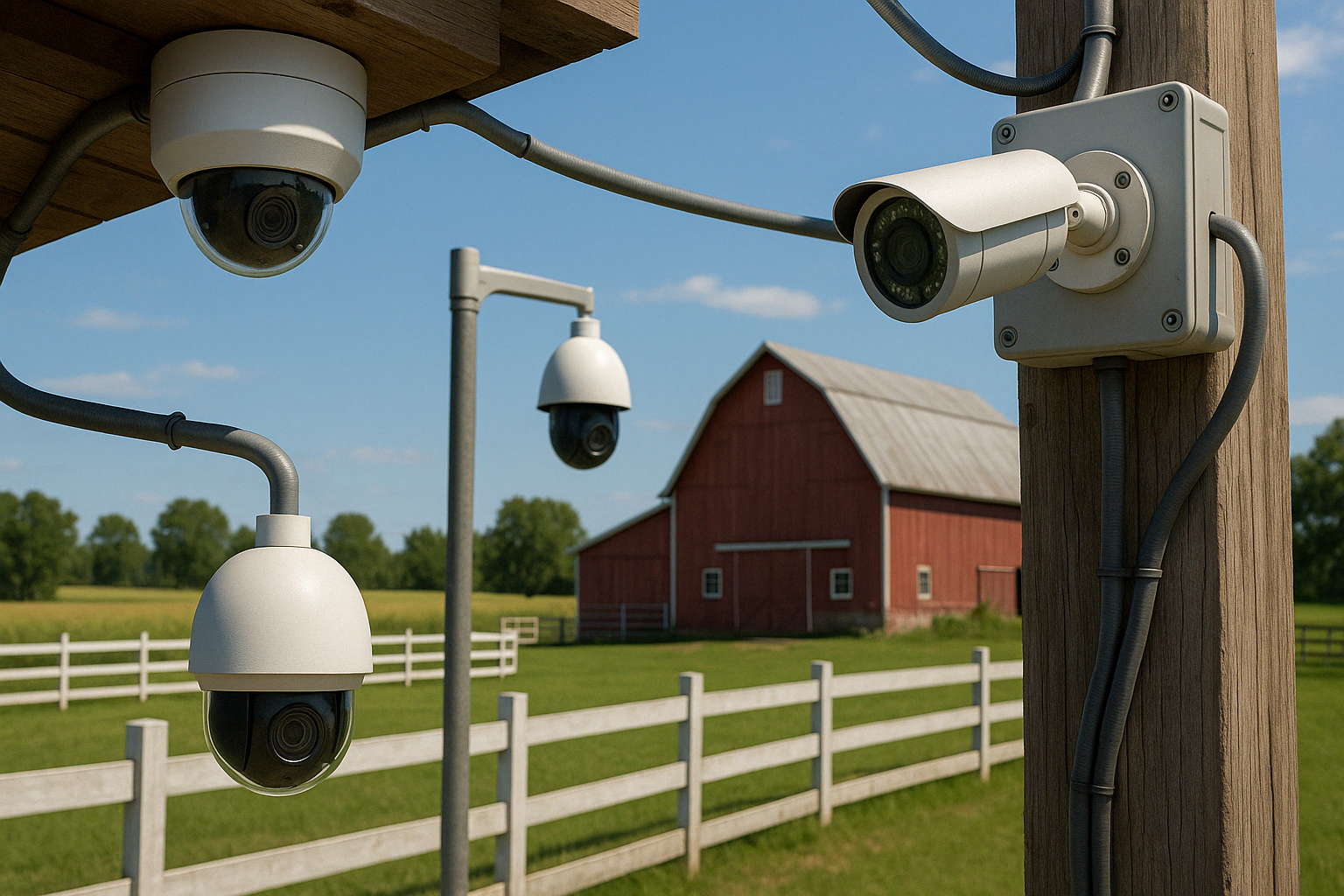
Before jumping into camera purchases, take time to walk your property with security in mind. What keeps you up at night? Is it the expensive tractor sitting in an isolated shed? Your prized breeding stock? Or perhaps that vulnerable stretch of boundary line where trespassers have entered before?
Start by identifying your critical assets – those expensive tractors and implements, your livestock housing areas, fuel tanks, chemical storage buildings, and anywhere you keep records or valuables. These high-value targets deserve priority protection.
Next, map out your vulnerability points – those farm gates that remain open uped during the day, isolated buildings far from the main house, and areas where you’ve experienced problems before. Don’t forget to consider boundaries with public roads or hiking trails where curious (or not-so-innocent) visitors might wander onto your property.
Your farm’s operational patterns also influence your security needs. Do you need temporary monitoring during calving season? Extra vigilance during harvest when valuable crops are being stored? Or perhaps coverage for times when the property is minimally staffed during family vacations?
“We thought we needed cameras everywhere until our security consultant helped us identify our true risk areas,” shared one Texas rancher. “Turns out, we needed quality coverage at just a few strategic spots rather than basic cameras scattered all over.”
If you’re managing a small farm under 50 acres, you’ll likely benefit from focusing on entry points and main buildings with a straightforward 4-8 camera system. These smaller setups prioritize ease of use and often work well as DIY installations. A 6-camera system typically provides excellent coverage for most small farms, with cameras positioned at the main entrance, equipment storage areas, and around primary buildings.
For medium-sized operations between 50-500 acres, consider implementing a zone-based approach. These farms often benefit from a mix of fixed cameras for consistent monitoring and PTZ (pan-tilt-zoom) cameras that can cover wide areas like equipment yards. Hybrid connectivity works well here – using WiFi near your main buildings while deploying 4G cameras in more remote locations. These medium systems typically include 8-12 strategically placed cameras integrated with complementary security measures like gate controls or alarm systems.
Large-scale farms over 500 acres require more comprehensive solutions with enterprise-grade equipment. These operations often benefit from advanced analytics that can automatically distinguish between animals, people, and vehicles to reduce false alarms. With 16+ cameras positioned throughout the property, these systems might include specialized features like license plate recognition at entry gates or thermal cameras for reliable perimeter monitoring regardless of lighting conditions.
Beyond basic security, many farmers find tremendous value in livestock monitoring applications. Positioned correctly, cameras can help you keep an eye on animals during critical periods without disturbing them. Imagine checking your phone at 2 AM to see if that heifer is calving yet, instead of trudging out to the barn in your pajamas. The right cameras with clear night vision can make this possible, giving you peace of mind during breeding and birthing seasons.
For crop and equipment protection, weatherproof cameras with long detection ranges shine. These systems often incorporate motion-triggered recording and alerts, with many farmers opting for solar-powered units that can be positioned in remote fields without running power lines. Adding deterrent features like flood lights and warning sounds that activate when motion is detected after hours can send potential thieves running before they even approach your equipment.
Perimeter security requires a different approach, often utilizing cameras with advanced motion detection capabilities and longer ranges. Many larger operations benefit from implementing virtual tripwires – digital boundaries that trigger alerts when crossed. A smart perimeter system might include visible cameras at main entry points (for deterrence) combined with more discreet monitoring at vulnerable boundary areas.
“I installed cameras primarily for security,” one Houston-area farmer told us, “but ended up using them just as much for checking on my pregnant goats and monitoring when delivery trucks arrive. The multiple uses made the investment even more worthwhile than I expected.”
Today’s farm CCTV kits can do double-duty, serving both security and operational needs. Modern systems can integrate with farm management software, linking camera feeds to livestock management systems or crop monitoring platforms. This integration creates efficiency – imagine being able to verify that an automatic feeder is working properly without walking to the far barn, or checking that irrigation systems are functioning correctly during off hours.
The remote management capabilities of these systems have transformed how many farmers operate. Being able to control gates and access points remotely, check operations across multiple properties from one interface, or verify that workers have arrived safely – all from your smartphone – adds convenience that goes beyond basic security.
“Your safety needs are complex, but your agriculture security technology shouldn’t be,” is the philosophy we accept at American S.E.A.L. Patrol Division. We’ve helped countless Houston-area farmers develop customized security solutions that address their specific concerns without unnecessary complexity or cost.
One dairy farmer we worked with put it perfectly: “Having experts help customize our system made all the difference. Rather than installing identical cameras everywhere, we now have specialized monitoring for our milk processing facility, different cameras watching our calving areas, and basic surveillance covering equipment storage. The custom approach actually saved us money while improving our security.”
The best farm CCTV kit isn’t necessarily the one with the most cameras or the most expensive features – it’s the one thoughtfully designed to address your farm’s unique security challenges while fitting your budget and technical comfort level. Taking time to assess your specific needs before purchasing will ensure you get a system that truly protects what matters most to you.
Anyone who’s raised livestock knows the sleepless nights that come with calving or lambing season. You’re constantly torn between checking your animals frequently enough to catch any problems and leaving them undisturbed enough to let nature take its course. This is where modern farm CCTV kits have truly changed the game for farmers.
These specialized camera systems let you keep a watchful eye on your animals without physically disturbing them during these sensitive times. Imagine being able to sip your coffee in the kitchen while checking in on a heifer that’s close to calving, or getting a few hours of much-needed sleep while your smartphone alerts you when unusual activity suggests labor has begun.
The night vision capabilities are particularly valuable since many births happen in darkness. Instead of trudging out to the barn with a flashlight every hour—potentially stressing your animals—you can quietly monitor the situation from afar with infrared technology that doesn’t disturb the natural lighting.
A Houston-area rancher told us about his experience: “Before installing cameras in our calving barn, we were getting up every hour through the night to check heifers. Now we can monitor from our bedroom on a tablet, only going to the barn when intervention is actually needed. Our sleep improved, and surprisingly, so did our calving success rate—likely because we disturbed the animals less.”
Beyond the obvious convenience, these systems create opportunities for better animal care. You can share live feeds or recorded footage with your veterinarian when you’re concerned about an animal’s condition. You’ll also have valuable documentation for your breeding program, helping you track which animals have the easiest births or most attentive mothering behaviors.
The peace of mind alone makes farm CCTV kits worth considering for livestock operations of any size. As one specialist put it, “Keep an eye on your livestock during foaling, lambing or calving season without having to be on-site 24 hours a day.”
The challenge of monitoring distant pastures or remote buildings used to be a major headache for farmers with larger properties. Traditional security systems simply couldn’t reach these areas without expensive infrastructure investments. That’s all changed with the development of wireless, solar-powered cameras with cellular connectivity.
These clever devices operate completely independently of your farm’s infrastructure. Instead of connecting to your WiFi network, they have built-in 4G/LTE modems that connect directly to cellular networks—the same networks your smartphone uses. This means you can place them virtually anywhere with cellular coverage, even miles from your main buildings.
Power comes from integrated solar panels (typically 5W-20W) that charge high-capacity batteries, eliminating the need for electrical wiring. Sophisticated power management systems ensure the cameras operate efficiently, often using motion-activation to conserve both power and data when nothing’s happening.
The real magic happens in the design details. These systems are built for harsh farm environments with weather-resistant enclosures (usually IP66-rated or better) that protect the sensitive electronics from dust, rain, and temperature extremes. Most can operate in temperatures from -4°F to 122°F, handling everything from Texas winter mornings to scorching summer afternoons.
“VOSKER security cameras work without Wi-Fi or electricity and use 4G-LTE mobile connectivity only, making them ideal for remote farm locations,” notes a recent security technology report. This freedom from traditional infrastructure makes these systems particularly valuable for Texas farms with extensive acreage.
A particularly impressive example is the V300 ULTIMATE camera, which offers “outstanding autonomy and 100% wire-free operation, promising reliable surveillance without the need for WiFi or electricity.”
These self-sufficient systems have transformed how farmers monitor remote assets. You can keep an eye on cattle grazing miles from your homestead, check water levels at distant tanks, monitor equipment stored at field edges, or keep watch over rarely-visited access points—all from the convenience of your smartphone.
Choosing between 4G and WiFi connectivity for your farm CCTV kit isn’t always straightforward. Each technology has distinct strengths and limitations that make it better suited for different situations around your property.
WiFi cameras generally cost less upfront—typically $100-300 per camera compared to $200-500+ for 4G models. They also don’t require monthly data plans, which can save you $10-50 per month per camera. If you already have strong WiFi coverage near your main buildings, these cameras offer excellent value and typically support higher video resolutions since data usage isn’t a concern.
However, WiFi cameras have one significant limitation: range. Most WiFi networks only reach about 300 feet from your router, though this can be extended with mesh networks or repeaters. They’re also dependent on your farm’s internet connection and power supply, meaning they’ll stop working during outages unless you have backup systems.
As one farmer put it, “WiFi cameras are perfect around the house and main barn, but useless for monitoring our back forty.”
4G cameras, by contrast, work anywhere with cellular coverage—potentially miles from your main buildings. They operate independently from your farm’s internet connection and, when paired with solar power, can function completely off-grid. This makes them ideal for remote locations like distant pastures, field equipment storage, or isolated access points.
“4G farm cameras are crucial for areas without stable WiFi connectivity,” explains a security specialist. They’re also much quicker to deploy since they don’t require any network configuration—just activate the SIM card and mount the camera.
The downside? Higher costs, both initially and ongoing. The monthly data plans add up, and you may face data caps that limit video quality or continuous recording options.
Many farmers find that a hybrid approach works best. WiFi cameras make sense around your farmhouse, main barn, and workshop where you already have strong internet. 4G cameras excel at monitoring those distant trouble spots that WiFi can’t reach.
At American S.E.A.L. Patrol Division, we’ve helped countless Houston-area farmers design custom security solutions that often incorporate both technologies. With over 15 years of experience with Texas security needs, we can help you determine which technology makes the most sense for each area of your property, balancing coverage needs with your budget.
Whether you’re monitoring calving pens, keeping an eye on expensive equipment, or securing distant access points, today’s farm CCTV kits offer flexible solutions that can be custom to your specific operation. The key is matching the right technology to each location’s unique requirements.
Selecting the right farm CCTV kit is a critical decision that impacts not just the security of your agricultural operation, but also its efficiency and your peace of mind. Throughout this guide, we’ve seen how modern farm security cameras offer so much more than simple surveillance—they provide comprehensive monitoring solutions custom to the unique challenges you face on your farm.
The landscape of farm security has changed dramatically in recent years. With nearly half of rural residents now viewing crime as a major concern according to the 2022 Rural Crime Report, taking proactive security measures isn’t just a good idea—it’s becoming an essential part of responsible farm management.
Fortunately, technology has evolved to meet your specific needs. From solar-powered 4G cameras that operate completely off-grid to specialized systems that help you monitor livestock during critical periods, today’s farm CCTV kits are purpose-built for agricultural applications. These aren’t just repurposed home security cameras—they’re designed to withstand the harsh realities of farm environments.
When selecting features for your system, your farm has unique requirements. The best weatherproofing rating (typically IP66 or higher), appropriate connectivity options (WiFi where available, 4G where not), suitable power solutions (wired, battery, or solar), and capabilities like night vision should all be chosen based on your specific situation. There’s no one-size-fits-all solution for farm security.
Creating truly comprehensive protection means thinking beyond cameras alone. By combining your farm CCTV kit with complementary security measures like access control systems, strategically placed motion sensors, and integrated alarm systems, you create a security ecosystem that’s much more powerful than any single component could be on its own.
While the initial investment in quality security equipment is important to consider, the true cost calculation extends far beyond the purchase price. Insurance discounts (often 5-20%), theft prevention, operational efficiencies, and the genuine peace of mind that comes from knowing your property is protected all contribute to the real return on investment. As one farmer told us, “The system paid for itself the first time it prevented a theft, but I can’t put a price on sleeping better at night.”
Don’t overlook the importance of maintenance in keeping your system reliable. Those regular cleaning sessions, firmware updates, and system checks might seem tedious, but they ensure your security system will function properly when you need it most—during an actual security event.
Perhaps most importantly, customizing your system to your specific farm layout, most valuable assets, and daily operational patterns ensures you get maximum protection without unnecessary expenditure. The right cameras in the right places will always outperform a larger number of poorly placed ones.
The future of farm CCTV kits looks incredibly promising. As agricultural technology continues to evolve, we’re seeing more intelligent analytics, seamless integration with other farm management systems, and improved capabilities that improve both security and operational efficiency. Imagine cameras that not only secure your property but also help monitor crop development or integrate with automated feeding systems—this convergence is already beginning.
“When it comes to farming we know that it’s more than a job. It’s a calling,” notes a security specialist with decades of agricultural experience. This fundamental truth underscores why protecting your farm with appropriate security technology matters so much—it’s not just about safeguarding property, but preserving a way of life.
At American S.E.A.L. Patrol Division, we’ve spent over 15 years helping Texas farmers develop security solutions that address their specific needs. Our Houston-based team combines cutting-edge technology with expert personnel for 24/7 monitoring and rapid response, ensuring both safety and peace of mind for our agricultural clients.
Whether you’re considering your first security system or looking to upgrade existing equipment, the best farm CCTV kit is one that addresses your specific vulnerabilities, integrates smoothly with your operations, and provides reliable protection without unnecessary complexity. Your farm deserves nothing less than a security solution as unique as the operation you’ve built.
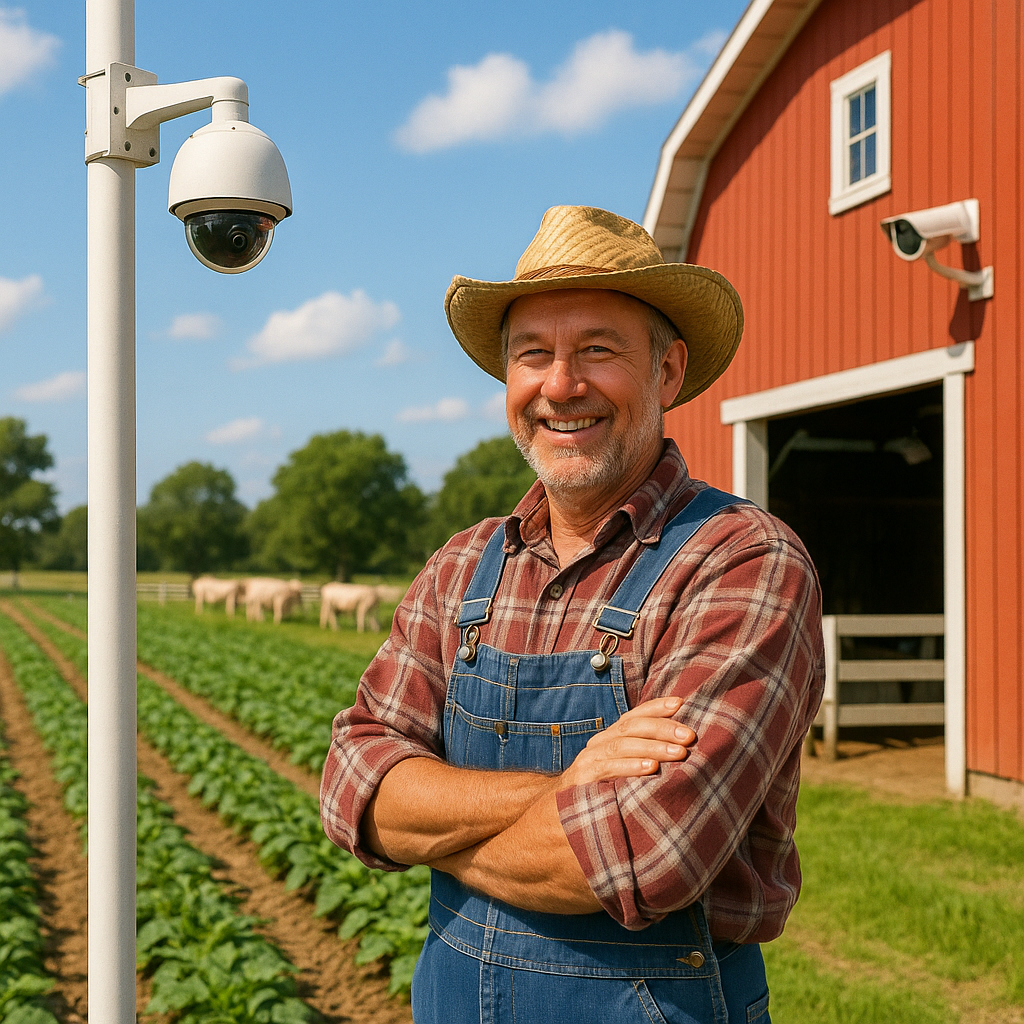
For more information about comprehensive security services custom to agricultural needs, contact American S.E.A.L. Patrol Division to discuss how we can help protect your farm, your livelihood, and your peace of mind.
A latest wifi cctv camera gives property managers like Sarah Thompson the ability to reliably monitor residential and commercial properties without the hassles of traditional wired installations.
If you want a quick look at the best features now available in wireless surveillance, here they are:
Choosing the right wifi CCTV camera helps ensure safety and peace of mind around the clock.
Here’s a simple infographic illustrating the latest advancements:

Easy latest wifi cctv camera glossary:
– latest cctv camera
– cctv good quality
– cctv monitoring security
The latest advances in WiFi CCTV cameras have completely reshaped home and business security. At American S.E.A.L. Patrol Division, we’ve seen how these incredible technologies are helping our Houston clients sleep easier at night (and trust us, getting quality sleep is a very underrated security feature!).
Let’s explore the most outstanding improvements that make the latest wifi cctv camera an absolute game-changer.

One significant upgrade on many of today’s cameras is dual-band WiFi connectivity. Traditional WiFi cameras worked only on the crowded 2.4 GHz band, which sometimes led to interference and unstable connections. But now, the best latest wifi cctv cameras operate seamlessly on both 2.4 GHz and 5 GHz frequencies.
Here’s why that’s a big deal: 2.4 GHz offers great range and easily penetrates walls and obstacles, which makes it ideal if you’re installing a camera far from your router. The 5 GHz band delivers faster data speeds and experiences less interference, perfect for smooth, high-quality streaming. These cameras automatically switch bands for optimal performance, so you don’t even have to think about it.
Chris, one of our Houston clients, recently upgraded to dual-band WiFi cameras and shared how his connection dramatically improved: “My video feed used to freeze all the time because of neighborhood WiFi traffic. Now it’s consistently smooth—huge difference!”
To get the most out of dual-band cameras, we recommend putting your router somewhere central and ensuring your internet plan has enough bandwidth to handle multiple camera feeds.
Remember when security footage looked like blurry Bigfoot sightings? Thankfully, those days are behind us. Today’s latest wifi cctv cameras offer crystal-clear resolution, ranging from 1080p HD up to ultra-HD 4K. Some popular models even provide 5MP super HD, which packs over double the detail of standard high-definition cameras.
Cameras like the Reolink Argus 4 Pro deliver stunning 4K images with wide, 180-degree views—meaning fewer blind spots. This outstanding clarity makes all the difference when you need to clearly identify faces, read license plates, or gather evidence after an incident occurs.
Our client Diana H., here in Houston, experienced this first-hand. She told us, “A thief took my neighbor’s package, and my camera captured every detail of his face. He was easy for the police to identify.”
Although higher resolution cameras might cost a bit more and need slightly more bandwidth and storage, the improved security they provide easily outweighs these minor considerations.
Good security doesn’t clock out at sunset. Thankfully, modern latest wifi cctv cameras have taken night vision to a whole new level. Goodbye grainy, black-and-white footage—hello vivid color and excellent detail, even in low-light situations.
Newer cameras use advanced infrared LED technology, starlight sensors, and even built-in spotlights to provide full-color night vision and dramatically improve nighttime clarity. The Reolink Argus 4 Pro features remarkable color night vision with a wide-angle view, making it feel almost like daytime footage.
Connor, a Houston business owner, initially felt skeptical about these claims: “I thought color night vision was just marketing talk, honestly,” he admitted. “But I’m amazed at how clearly these cameras pick up color and details—even with minimal street lighting. I’m sold.”
If your property doesn’t get much ambient light, we recommend choosing models with built-in spotlights. These lights activate when motion is detected, providing better footage and scaring away would-be intruders (bonus!).
If you’ve ever gotten frustrated by constant false alarms, you’ll appreciate this next feature. The latest wifi cameras now feature advanced artificial intelligence (AI) motion detection. They can easily tell the difference between a person, vehicle, pet, or random leaf blowing across your yard.
These intelligent cameras send alerts only for genuine threats—meaning you’ll no longer receive constant notifications just because a squirrel decided your yard was a theme park.
Some advanced cameras even incorporate facial recognition technology. That means they’ll recognize family members and known visitors, only alerting you when unfamiliar faces arrive. Houston client Chris V. loves this upgrade: “Before AI cameras, I was bombarded with false alerts. Now I only see notifications for important events like unexpected visitors or deliveries—I finally got my sanity back!”
Better still, fewer false alarms mean your camera records and streams less unnecessary footage, saving battery life and bandwidth.
Battery life used to be a significant limitation for wireless security cameras. But today, the latest wifi cctv cameras offer incredible improvements in power efficiency.
Depending on the model, batteries can now last anywhere from six months (like the Arlo Pro 5S 2K) to an impressive two years (Blink Outdoor 4). Even better, you’ll find plenty of flexible power solutions like rechargeable batteries, quick-swap battery systems, low-voltage wiring options, and even solar panel setups.
Here in sunny Houston, solar-powered cameras are a popular option. Diana H. installed solar-powered cameras around her property six months ago and told us, “The battery never drops below 90% even on cloudy days. It’s totally set-and-forget.”
For critical security areas, we often recommend combining battery power with solar charging. That way, your cameras stay active, no matter what—even through power outages.
Finally, perhaps one of our favorite improvements in the latest wifi cctv cameras is seamless smart home integration. Today’s cameras easily connect to popular platforms like Amazon Alexa, Google Assistant, and Apple HomeKit. That means you can control and view your security feeds through smart displays or even use voice commands, all from one unified app.
You can also create customized “if this then that” (IFTTT) automation routines. For instance, when a camera detects motion at night, it could automatically turn on outdoor lights and send you a live video stream to your phone.
Connor M. shared his experience with us, saying, “The integration sold me immediately. Now, whenever someone approaches my front door, my cameras turn on the lights automatically and alert me instantly. It’s like having a personal security guard!”
At American S.E.A.L. Patrol Division, we help our Houston-area clients design smart security solutions that fit their lives perfectly, combining convenience, control, and peace of mind.
For more information about WiFi camera technology and standards, check out the Wi-Fi Alliance’s official resource page for the latest on wireless connectivity standards that power modern security cameras.
For more helpful security info, check out these simple glossaries:
When it comes to choosing the latest wifi cctv camera for your property, you’ll probably run into the terms “wireless” and “wire-free.” While they sound similar, the differences between these two options can significantly affect your experience—so let’s clear things up.

A wireless camera doesn’t require a direct wired internet connection—but it still needs to plug into a power outlet. Think of it like your smartphone: no cable needed for internet, but you’ll eventually need to plug it in to recharge. Since wireless cameras rely on continuous electrical power, they typically offer higher-quality video streaming and can record continuously without interruption.
On the other hand, a wire-free camera is truly cable-free: no internet cables, and no power cords. It runs completely on batteries (or solar power, if you’ve got the sun shining bright, as we often do here in Houston). This means you can install it literally anywhere—on your fence, porch, garage, or even on that tree out back. However, that flexibility comes with a trade-off—you’ll need to periodically recharge or swap out batteries, and continuous recording is often limited to preserve battery life.
Let’s break down the differences a little more clearly:
Installation Complexity: Wireless cameras need to be placed near power outlets, limiting your placement options. Wire-free cameras give you total freedom—stick them wherever you need, no drilling or wiring required.
Maintenance Needs: Wireless cameras have minimal maintenance since you don’t deal with batteries. Wire-free cameras, on the other hand, will occasionally require your attention for battery charging or replacing.
Reliability and Performance: Wireless cameras offer continuous operation and higher video quality because they’re always plugged in. Wire-free cameras run on batteries, meaning you’ll get event-based recordings, and video quality might take a slight hit to conserve battery life.
Cost Considerations: Typically, wireless cameras have a lower upfront cost, while wire-free cameras involve a slightly higher initial investment because of their flexible, battery-operated nature.
Chris V., one of our Houston clients, experienced exactly this confusion firsthand: “Honestly, I just saw the word ‘wireless’ and assumed no wires at all. Boy, was I surprised when I had to rearrange my setup!” He ended up going with wire-free models for his detached garage that had no nearby outlet.
For another of our clients, Diana H., wire-free cameras were perfect for her vacation property. “We can place them anywhere without worries. Even during power outages, our cameras keep watching over the property.”
At American S.E.A.L. Patrol Division, our recommendation for most Houston-area properties is simple: choose wireless cameras for critical locations where continuous recording and reliable performance matter most, like entryways or driveways. Then, supplement your coverage with wire-free cameras for those tricky spots without nearby outlets, such as sheds, detached garages, or remote gates.
The choice comes down to your individual property needs and preferences. But don’t worry—we’ll gladly help you figure out the best combination for your situation.
The latest wifi cctv cameras bring powerful technology right into your home or business, offering incredible convenience and peace of mind. But like any connected device, they also raise important privacy and security concerns that you should be mindful of. Don’t worry—being informed and proactive can easily help you address these risks.
Because WiFi cameras transmit video data wirelessly, it’s crucial to ensure your footage stays protected. Always choose cameras that use strong end-to-end encryption and support secure connection protocols like WPA2 or WPA3 WiFi security. This ensures your video streams remain private and out of reach from unauthorized viewers.
When accessing your footage remotely—whether from your smartphone or computer—be sure the camera or app uses a secure HTTPS connection. For added peace of mind, enable two-factor authentication (2FA) on your camera accounts. 2FA ensures that even if someone guesses your password, they won’t access your footage without an additional verification step.
Our client Connor M. initially had concerns after reading news reports about hacked security cameras. After we explained how advanced encryption and multi-layered security actually work, he felt reassured. “Knowing the layers of encryption protecting my security footage really put my mind at ease,” Connor shared.
A surprising number of camera breaches happen simply due to weak or default passwords. Protect yourself by immediately changing any default passwords on your camera system. Use strong, unique passwords for each camera and avoid reusing passwords across multiple accounts (yes, this means no more “password123”). A quality password manager can help you keep track without hassle.
Manufacturers regularly release firmware updates that address newly finded security vulnerabilities. To stay ahead of potential threats, set your cameras to automatically update their firmware whenever possible. If auto-updates aren’t available, set a reminder to periodically check and update manually. If your cameras are older and no longer supported with firmware updates, it may be time for an upgrade.
Where your footage is stored matters too. Local storage, such as SD cards or NVR systems, keeps your data physically at your location. It’s secure from online threats—but vulnerable to physical theft. Cloud storage protects against physical risks, but introduces online transmission, making encryption even more important.
We usually suggest a hybrid approach, giving you the best of both worlds. Our client Diana H. explained, “Critical footage goes to secure cloud storage, while everyday recordings stay local. For my family, it feels like the perfect balance between safety and privacy.”
While enhancing your security with the latest wifi cctv camera, remember to respect your neighbors’ privacy. Position cameras to focus on your property, avoiding direct views into nearby homes or private spaces. Be aware of local laws and regulations about camera use—especially if you’re a landlord or operating a business. Proper disclosure to tenants or employees is not only courteous but often legally required.
For comprehensive information on privacy laws related to video surveillance, the Electronic Frontier Foundation provides excellent resources on digital privacy rights and best practices.
In Texas, where we at American S.E.A.L. Patrol Division serve our clients, it’s typically legal to record video on your property. However, certain restrictions apply to hidden cameras and audio recording. We always take time to inform our Houston customers about Texas laws to ensure compliance and peace of mind.
By staying informed and proactive, you can easily steer these privacy and security considerations. And remember, if you have any questions or want personalized guidance, our friendly security experts are always here to help!
Strategic placement is crucial to maximize the effectiveness of your latest wifi cctv cameras while minimizing the number of devices needed.

Entry Points
The most important locations to monitor are entry points to your property. When I visit clients’ homes in Houston, I always start by assessing their front and back doors, as statistics show these are the most common access points for intruders. First-floor windows are next on my priority list, followed by garage doors and any side gates or fence access points.
James, one of our recent clients, was surprised when I recommended focusing on his side gate rather than adding more cameras to his front yard. “That gate leads directly to my home office where I keep my equipment,” he told me later. “I never realized it was such a vulnerable spot until you pointed it out.”
Outdoor vs. Indoor Considerations
When placing outdoor cameras, weather resistance is non-negotiable here in Houston’s unpredictable climate. Look for models with IP65 or higher ratings to ensure they’ll withstand our famous summer thunderstorms and occasional winter freezes.
I always recommend mounting outdoor cameras at least 9 feet high. This isn’t just about preventing tampering—though that’s important—but also about capturing useful footage. Too low, and you’ll only see the top of someone’s hat; too high, and you’ll miss identifying features.
“We initially made the mistake of mounting our outdoor camera too low,” admits Chris V. “After consulting with American S.E.A.L. Patrol Division, we repositioned it higher and angled down, which both improved the view and made it harder for anyone to tamper with.”
For indoor placement, the considerations shift slightly. Focus on main living areas and places where you store valuables, but be mindful of privacy in bedrooms and bathrooms. The goal is to capture faces rather than just the tops of heads, so angle matters tremendously. I often find myself adjusting cameras during installation to ensure they’re capturing the most useful field of view.
WiFi Signal Strength
The performance of your latest wifi cctv camera depends heavily on signal strength. This might seem obvious, but I can’t tell you how many times I’ve been called to troubleshoot “faulty” cameras that were simply installed in WiFi dead zones.
Before finalizing any camera location, test the WiFi signal strength at that spot. For larger Houston properties, consider investing in mesh WiFi systems that ensure consistent coverage. Sometimes a simple WiFi extender can solve connectivity issues for cameras placed far from your router.
Maria, who lives in a sprawling ranch-style home in the Houston suburbs, was frustrated with her cameras constantly disconnecting until we identified the problem. “I never considered that my thick exterior walls would block the WiFi signal so completely,” she told me. “The mesh system you recommended solved everything—now I get alerts instantly no matter where the motion is detected.”
Blind Spots and Coverage Overlap
One of the most common mistakes I see in DIY security camera setups is failing to account for blind spots. Professional security installations consider creating overlapping fields of view so no single camera failure creates a vulnerability.
Wide-angle cameras with 120° or greater coverage help maximize your surveillance area. For particularly complex spaces, pan-tilt-zoom (PTZ) cameras offer flexible monitoring capabilities that can be adjusted remotely.
I always recommend positioning cameras so they can “watch” each other. This creates a security redundancy—if someone attempts to tamper with one camera, another will capture the activity.
“After a security assessment of my property, I was surprised by the blind spots we identified,” says Diana H. “Adding just two strategically placed cameras eliminated these vulnerabilities completely.”
Aesthetics and Deterrence
There’s an interesting balance to strike between visibility as a deterrent and aesthetic considerations. Some clients want their latest wifi cctv cameras prominently displayed as a warning to potential intruders, while others prefer more discreet installations that blend with their home’s architecture.
Both approaches have merit. Visible cameras can prevent crime before it happens—criminals typically avoid homes with obvious security measures. But discreet cameras have advantages too, particularly for catching someone who thinks they’ve identified and avoided all your security measures.
For clients concerned about curb appeal, I often recommend color-matching cameras to building exteriors. Modern security cameras come in various finishes that can complement rather than detract from your home’s appearance.
At American S.E.A.L. Patrol Division, we conduct thorough property assessments for our Houston clients to identify optimal camera placements that balance coverage, connectivity, and aesthetics. Every property has unique security needs and challenges, which is why cookie-cutter approaches rarely provide optimal protection.
The right camera placement isn’t just about installing devices—it’s about creating a comprehensive security envelope around your property that eliminates vulnerabilities while maximizing your investment in technology.
The real magic of the latest wifi cctv camera isn’t just in its standalone features—it’s in how easily it fits into your home’s entire smart ecosystem. Imagine your security cameras working hand-in-hand with your lights, alarms, and voice assistants. That’s what integration feels like: a seamless, intuitive experience that boosts your security and makes everyday life easier.
Many of today’s best wireless cameras effortlessly connect with popular smart home platforms like Amazon Alexa, Google Home or Google Assistant, Apple HomeKit, Samsung SmartThings, and versatile automation services like IFTTT (If This Then That). This compatibility ensures that no matter which system you’re loyal to, your cameras will likely fit right into your home network.
Our client Connor M. loves how easy it is now to keep an eye on his property. “When I’m cooking dinner or busy with the kids, I just say, ‘Alexa, show me the backyard,'” he explains. “My Echo Show instantly pulls up the camera feed. It’s convenient and hands-free, which is exactly what our busy family needs.”
Voice control integration provides huge convenience, especially when your hands are full or your smartphone isn’t within reach. It’s also fantastic for elderly or mobility-impaired family members, allowing everyone to feel comfortable and secure in their own home.
But smart integration isn’t just about convenience—it’s about proactive security. Imagine this: It’s late at night, and someone enters your driveway. Your smart camera immediately detects motion and triggers your outdoor lights to come on, illuminating any potential intruder. At the same time, an instant notification arrives on your smartphone with live footage of what’s happening. Diana H., another satisfied Houston client, describes this feature as, “like having a virtual security guard on duty around-the-clock.”
Automated scenarios like these can be customized to fit your lifestyle and property layout. Popular automation setups include using door and window sensors to activate specific cameras when opened, geofencing technology that arms or disarms your cameras based on your location, and scheduled recording modes that preserve your family’s privacy when you’re home.
Centralized control is another major benefit. Instead of juggling multiple apps for different security devices, you can manage your cameras, alarms, lighting, and more from one simple-to-use app. A centralized app also simplifies managing access for family members and ensures consistent notifications and settings across all your devices.
For extra peace of mind, many homeowners in Houston choose to combine their latest wifi cctv cameras with professional monitoring services. In an emergency, monitoring centers can quickly access your live camera feeds, verify threats instantly, and dispatch help faster. This integration significantly reduces the risk of false alarms and ensures rapid response when it truly matters.
At American S.E.A.L. Patrol Division, we specialize in setting up these fully integrated, customized smart security ecosystems for our Houston-area clients. By combining advanced camera technology, intuitive smart home integrations, and optional professional monitoring, we ensure your property—and, most importantly, your loved ones—stay safe and protected around the clock.
The terms might sound similar, but there’s an important difference that matters when picking the perfect camera for your home or business.
Wireless cameras connect to your internet via WiFi, eliminating the need to run video cables. However, they still need a power source—meaning you’ll have to plug them into an electrical outlet. That makes them ideal for spots near an available power outlet where continuous recording is important.
On the other hand, wire-free cameras are 100% cable-free—no cords, no fuss! They run entirely on batteries and transmit video wirelessly via your WiFi network. This means you can install them practically anywhere within WiFi coverage, even places far from outlets or where drilling holes isn’t practical.
Houston homeowner Chris V. learned this the hard way: “I initially bought ‘wireless’ cameras thinking they’d have no cords at all. Imagine my surprise when I realized they still needed to plug in! For my detached garage, I ended up going with totally wire-free options instead.”
To sum it up simply:
If you’ve ever faced buffering videos or frustrating connection drops, dual-band WiFi cameras can be a real game changer.
These latest wifi cctv cameras can connect to both 2.4 GHz and 5 GHz frequencies, each providing distinct advantages. The 2.4 GHz band offers better range and penetrates walls more effectively, making it great for cameras farther away from your router or placed outside. The 5 GHz band, meanwhile, provides faster data transfer speeds with less interference from other devices around your home or office—perfect for smooth, high-quality video streaming.
Diana H., another Houston client, told us, “When we upgraded to dual-band cameras, our feed went from constantly buffering to reliably crystal-clear. It’s been a huge improvement, especially when the neighbors’ WiFi networks get busy.”
The best part? Most dual-band cameras automatically choose the optimal frequency based on your network conditions, ensuring you always get the strongest, most stable connection.
To get the best results, we recommend placing your router in a central location, using a mesh WiFi system for larger properties, and keeping your router updated regularly.
Privacy and security are top priorities when installing any kind of surveillance device. Fortunately, following a few simple guidelines can ensure your family and property stay protected.
First, secure your home WiFi network. Always use strong encryption (WPA3 is best, but WPA2 is still good) and pick a unique, strong password. Keeping your router’s firmware updated is another easy way to prevent vulnerabilities.
Next, protect camera access by changing the default passwords that come with your cameras. Using unique passwords and enabling two-factor authentication adds an extra protective layer. Regularly updating your camera’s firmware also ensures any newly finded security issues are promptly patched.
Mindful placement of cameras is equally important. For outdoor use, make sure your cameras don’t unintentionally record your neighbor’s property. Indoors, avoid installing cameras in rooms where you’d naturally expect privacy, like bedrooms or bathrooms.
Connor M., one of our Houston clients, initially hesitated to install cameras because of privacy concerns. “But once American S.E.A.L. Patrol Division explained all these easy security steps and helped us place our cameras thoughtfully, my worries vanished,” he said.
Finally, familiarize yourself with local laws around video surveillance. Here in Texas, you can generally record video on your own property, but there are rules about hidden cameras or recording in private spaces.
Taking these straightforward precautions ensures your latest wifi cctv camera setup will securely protect your home without compromising privacy or peace of mind.
The evolution of the latest wifi cctv camera has completely reshaped what’s possible for home and business security. Today, anyone can access professional-level surveillance without the headache of complicated installations or bulky equipment. With features like dual-band connectivity, stunning 4K resolution, advanced AI-driven alerts, and effortless smart home integration, modern WiFi CCTV cameras offer protection and convenience we could only dream of a few years ago.
At American S.E.A.L. Patrol Division, we’ve spent over 15 years helping Houston families and business owners achieve genuine peace of mind. We understand that true security is about more than just advanced technology—it’s about combining modern equipment with professional installation, constant monitoring, and rapid response. Our experts have guided countless clients through the complexities of wireless security, ensuring each property receives a truly custom solution.
As WiFi CCTV camera technology continues to advance, you can count on us to stay ahead of the curve. We make sure our clients always enjoy the latest security innovations, backed by reliable monitoring and friendly service. Whether you’re securing a cozy single-family home, a busy apartment complex, or a busy commercial building here in Houston, we’re dedicated to creating security systems that match your exact needs.
If you’re ready to upgrade your property’s security, the team at American S.E.A.L. Patrol Division is here to help. For more information about our comprehensive security solutions or to schedule a friendly, no-pressure consultation, please visit our website or contact our Houston office directly.
The best security system isn’t just about buying cameras—it’s about forging a long-term partnership with experts who genuinely care about your safety. At American S.E.A.L. Patrol Division, we’re proud to be that partner and look forward to securing your peace of mind.
Finding the latest cctv camera for home is crucial if you care about securing your property and protecting your tenants. Today’s advanced CCTV cameras offer more than just footage—they actively deter crime, notify you of suspicious activities, and integrate with your existing smart-home platforms.
If you’re just here for a quick recommendation, here you go:
| Top CCTV Cameras for 2025 | Best Feature | Smart Home Compatibility |
|---|---|---|
| Premium HD Camera | Best Overall (1080p HD & AI Analytics) | Alexa, Google Home |
| Easy-Install Camera | Best DIY Installation & Alexa Integration | Alexa |
| Smart Recognition Camera | Continuous recording and facial recognition | Google Home |
| Ultra HD Camera | Cutting-edge 4K resolution | Alexa, Google Home |
| Professional Camera | Reliable 4K resolution and easy use | Alexa, Google Home |
These innovative CCTV systems feature crystal-clear video quality, reliable night vision, AI-powered intruder detection, and easy installation—everything you need to improve your property’s safety.
“Security is now about being smarter—because smarter makes us safer.”
Here’s a helpful infographic on how CCTV cameras deter crime and protect your property:

Latest cctv camera for home terminology:
– best cctv solution
– cctv camera with ip address
– cctv good quality

Home security technology has come a long way—not too long ago, CCTV cameras meant grainy footage and bulky equipment. Today, the latest CCTV cameras for home security deliver crystal-clear images, smart technology, and sleek designs you’d proudly display in your living room.
At American S.E.A.L. Patrol Division, we’ve watched these advancements unfold over our 15+ years of service in Texas. Nowadays, modern CCTV cameras offer impressive features like stunning 4K video, full-color night vision, two-way audio communication, and smart motion detection that can tell the difference between people, cars, pets, and even pesky squirrels.
An industry report recently highlighted how far we’ve come: “Over 5,000 hours of research, 100+ cameras tested, and 250+ simulated break-ins underline the industry’s commitment to rigorous product evaluation.” In other words, today’s home CCTV cameras are seriously battle-tested to ensure reliability when you need it most.
Let’s take a closer look at what makes today’s security cameras truly stand out.
Say goodbye to blurry, grainy images that make you wonder, “Is that a person or a shrub?” Today’s latest CCTV camera for home systems offer spectacular 4K resolution (that’s 3840 × 2160 pixels). This means clearer details, sharper images, and the ability to zoom in on important specifics—like faces or license plates—without losing clarity.
Night vision has also taken a giant leap forward. Advanced infrared technology lets modern cameras clearly see up to 30 meters (98 feet) in complete darkness. Even better, many newer cameras offer color night vision, capturing vivid color footage in low-light conditions rather than the traditional black-and-white images. Smart IR adjustment automatically fine-tunes infrared illumination, preventing washed-out images of faces at closer distances.
Some advanced models even use dual-light technology—switching between full-color night vision for close-up objects and infrared mode for distant ones. For instance, high-end 4K cameras featuring premium STARVIS sensors provide exceptional clarity even in dim conditions. Our team at American S.E.A.L. Patrol Division has seen many amazed clients marveling at the quality of these night-time images, finally answering the age-old security question: “What’s really going on in my backyard at night?”
One of the most impressive recent advances in home security is the use of Artificial Intelligence (AI). The latest CCTV cameras for home aren’t just passive observers—they actively analyze what’s happening right as it unfolds.
AI-powered cameras can differentiate between genuine threats and harmless movements. Instead of alerting you every time a leaf blows by, they intelligently distinguish between people, vehicles, animals, and other motions. Some sophisticated models even recognize familiar faces, letting your system know the difference between family members and strangers.
Additionally, smart cameras can detect unusual activity, like someone loitering around your porch or attempting to snatch a package. You can even set up “virtual boundary” lines; when someone crosses these invisible borders, you’re instantly notified.
Advanced cameras may also take action when suspicious activity is detected. Imagine a camera that automatically turns on bright spotlights, sounds an alarm, or even lets a security professional speak directly to potential intruders through the built-in speaker. That’s proactive security at its finest.
As one of our security experts frequently explains, “Today’s AI cameras dramatically reduce false alarms, ensuring you only get alerts that matter—no more midnight wake-ups because your neighbor’s cat decided to visit your flower bed again!”
If you’re interested in learning more about AI and how this fascinating technology works in cameras, check out this comprehensive guide on artificial intelligence in CCTV.
When choosing the latest CCTV camera for home security, you’ll need to decide between wired and wireless options. Both have their advantages, and the right choice depends on your particular needs and preferences.
Wireless cameras are popular because of their easy installation—no drilling holes or running cables through your walls. You can quickly set them up just about anywhere your Wi-Fi reaches, and you can move them around easily later. Plus, their cable-free design looks clean and modern in any home.
However, wireless cameras depend on Wi-Fi signals and batteries, meaning they’re susceptible to signal interference and may require occasional battery recharging or replacements.
Wired cameras, on the other hand, offer rock-solid reliability because they’re directly connected—no worrying about Wi-Fi signal drops or changing batteries. They often provide higher-quality video streaming and can’t be easily jammed or disabled remotely. The downside? Installation can be more involved, and relocating them later might mean additional work.
At American S.E.A.L. Patrol Division, we often suggest a hybrid security solution. For critical areas like front doors or garages, wired cameras deliver constant, uninterrupted surveillance. For secondary locations or areas that are more difficult to wire, wireless cameras offer convenient coverage and flexibility.
The good news? Many modern wired cameras now include battery backups to protect you during power outages, and some wireless options even feature solar panels for truly wire-free operation.
Whether wired, wireless, or a combination of both, today’s latest CCTV technology ensures your home security is always working hard—even when you’re relaxing on the couch.

When you’re looking into the latest CCTV camera for home use, it’s easy to get overwhelmed by all the technical jargon. Don’t worry—we’ve got your back. Here’s a clear, simple breakdown of the most important features you should consider, so you can pick a security camera that truly meets your needs.
First things first, resolution and image quality matter. While many affordable cameras still capture footage in decent 1080p HD, consider stepping up to 2K (2560 × 1440) or even 4K (3840 × 2160) resolution. Higher resolution cameras make it much easier to identify important details like faces, license plates, or even that pesky raccoon rifling through your trash again!
Another key element is the camera’s field of view (FOV). A wide-angle lens (120 degrees or more) lets you see more area with fewer cameras. If you need flexibility to zoom or reposition remotely, consider a Pan-Tilt-Zoom (PTZ) camera. These let you actively scan around your property to investigate suspicious activities in real-time.
For outdoor setups, always look for cameras with strong weather resistance. In Texas, weather conditions aren’t exactly gentle (hello, heatwaves and thunderstorms!). Cameras rated IP66 or IP67 offer solid dust and water protection. Additionally, models designed for extreme temperatures are ideal—your security system should stay reliable even during Texas’ blazing summers.
Don’t overlook the power options either. Battery-powered or solar-powered cameras offer easy installation and flexibility, but you’ll need to recharge batteries every so often. If you’d rather skip charging hassles, wired cameras powered directly from your home’s electrical system provide continuous operation without interruptions.
Good communication can make all the difference. That’s why we love cameras offering two-way audio. With this feature, not only can you hear what’s going on outside, but you can also speak directly through the camera. This is great for greeting guests, instructing delivery drivers, or giving an unwanted visitor a friendly reminder that you’re watching.
Privacy matters, too. Some advanced models offer local processing, meaning they analyze video footage directly on the camera itself rather than sending it to the cloud. This speeds up alerts, reduces privacy concerns, and helps ensure your data stays protected on your own property.
Once your camera records footage, that video needs somewhere to live. The latest CCTV cameras for home typically offer two storage choices: local or cloud.
With local storage, footage stays right there on-site. Many cameras support microSD cards (usually between 32GB and 256GB), giving you immediate access to your recordings without extra monthly fees. However, microSD cards are limited in space and can potentially be stolen along with the camera. For a more robust system, Digital Video Recorders (DVRs) and Network Video Recorders (NVRs) store much larger amounts of footage and usually offer higher video quality.
On the other hand, cloud storage safely backs up your footage off-site. While this option usually comes with a monthly subscription (around $5–$8 for basic plans), it protects your videos from theft or damage and lets you conveniently access footage from anywhere. Many cloud services use rolling storage—keeping footage for around 30 days before automatically overwriting it with newer clips. Some even offer event-based storage, uploading only when the camera detects activity, saving bandwidth and space.
At American S.E.A.L. Patrol Division, we often recommend combining local and cloud storage. This hybrid approach keeps your footage accessible even if your internet goes down, while also ensuring your most valuable videos are securely backed up online.
Today’s best security cameras aren’t standalone gadgets. The latest CCTV camera for home often integrates seamlessly with popular smart home platforms like Amazon Alexa, Google Home, or even Apple HomeKit. This integration lets you control and view your cameras right from your smartphone or by using simple voice commands.
Imagine you’re relaxing on your couch—just say, “Alexa, show me the front porch,” and your camera feed pops right up on your smart display. Integration also lets you set automated routines. For example, your outdoor lights and cameras can automatically activate when motion is detected at night, scaring away potential intruders and helping you see clearly what’s going on.
With integrated smart home systems, you can even create scenarios like a “Goodnight” routine, where your system arms your cameras, locks your doors, and turns off lights—all with a single tap or voice command. At American S.E.A.L. Patrol Division, we help Houston homeowners design customized security setups that easily integrate into their existing smart home ecosystem, keeping life convenient and safe.
Finally, let’s talk about what nobody loves—but everybody should consider: cost and maintenance. When choosing the latest CCTV camera for home, look beyond just the sticker price.
Initial costs can include more than just cameras. Consider whether you’ll need extra mounting hardware, weatherproof casings, or a central hub. DIY installation is usually affordable, but professional installation might cost between $100 and $500 depending on complexity. Individual cameras vary significantly in price, from around $30 for basic indoor cameras to over $250 for advanced outdoor models with features like color night vision and ultra-high resolution.
Ongoing costs are just as important. Cloud storage subscriptions typically range from $5 to $15 monthly but can climb higher if you have multiple cameras or want advanced features. If you’re using battery-powered cameras, remember you’ll need replacement batteries or occasional recharging. And don’t forget basic maintenance: regular cleaning to remove dust (especially important given Houston’s humidity!) and occasional software updates to keep everything running smoothly and securely.
At American S.E.A.L. Patrol Division, we offer maintenance plans to take the guesswork out of upkeep. We handle regular system checks, firmware updates, and cleaning—so you can relax knowing your security system is always working at its best.
The bottom line? Investing a little time into understanding these key features can make choosing your perfect security camera straightforward and stress-free.
The integration of artificial intelligence has revolutionized home security cameras, changing them from passive recording devices into proactive security systems. Smart detection features represent one of the most significant advancements in the latest CCTV cameras for home protection.

Remember those old security cameras that would alert you every time a leaf blew across your yard? Those days are thankfully behind us. Today’s AI-powered cameras are remarkably intelligent, able to distinguish between a curious squirrel and an actual intruder.
The latest CCTV camera for home security now comes with person detection that can recognize human shapes and movements. This means your phone won’t buzz with alerts when your neighbor’s cat decides to explore your garden, but you’ll know immediately if someone approaches your front door.
Some of our Houston clients tell us that this feature alone has transformed their experience. As Maria from Katy mentioned to us recently, “I used to ignore alerts completely because they happened so often. Now when my phone buzzes, I actually check it because I know it’s probably important.”
Beyond just detecting people, advanced cameras offer facial recognition capabilities that can identify familiar faces. Imagine your security system greeting your teenage kids when they arrive home from school, while alerting you when an unfamiliar face appears at your door. It’s not science fiction—it’s available right now.
Activity zones are another game-changer for homeowners with busy streets or active neighborhoods. Instead of monitoring your entire yard, you can tell your cameras to focus only on your driveway, front door, or windows. At American S.E.A.L. Patrol Division, we help our clients set up these zones strategically to maximize security while minimizing unnecessary alerts.

Have you noticed the surge in package deliveries lately? The industry has too, which is why package detection has become an increasingly popular feature. Your camera can specifically alert you when a package is left at your doorstep, helping you combat the rising problem of porch pirates in many Texas neighborhoods.
Perhaps most impressive is the unusual activity recognition found in premium systems. These cameras don’t just detect people—they analyze behavior. They can identify someone lingering too long outside your home, pacing back and forth suspiciously, or attempting to conceal their face. This proactive approach means you’re alerted to potential problems before they escalate.
“The review reveals that rigorous testing (over 5,000 research hours and 250 simulated break‐ins) provides a deep insight into the practical performance of cameras beyond just technical specifications,” notes one industry report. This level of testing ensures these AI features work reliably in real-world conditions.
The beauty of AI-powered security is how it solves the problem of “alert fatigue” that plagued earlier systems. As one of our clients in Spring, Texas told us: “Before upgrading to cameras with person detection, I was getting 30+ alerts daily, mostly from passing traffic or neighborhood pets. Now I only get notifications when someone actually approaches my property—it’s made a world of difference in actually paying attention to alerts.”
While the latest CCTV camera for home security offers unprecedented protection, it’s equally important to consider privacy implications—both for your household and others.
Modern security cameras capture intimate details of your home life and potentially your neighbors’ activities too. That’s why data security should be a top priority. Look for systems that offer end-to-end encryption for both transmitted and stored video. This ensures that even if someone managed to intercept your data, they couldn’t actually view your footage.
Your security system is only as secure as its passwords. We always advise our Houston clients to use strong, unique passwords for their camera accounts and enable two-factor authentication whenever possible. Think about it—what good is a security camera if hackers can easily access your feed?
Many of our clients at American S.E.A.L. Patrol Division express concern about capturing footage of neighbors or passersby. That’s where privacy zones come in handy. These allow you to black out certain areas from recording—like your neighbor’s yard or windows—while still monitoring your own property. It’s a simple way to be security-conscious and neighborly at the same time.
For those particularly concerned about data privacy, some newer cameras offer local processing capabilities. This means the AI analysis happens right on the camera itself rather than sending all your footage to a cloud server. As one security expert notes, “Cameras that store locally may appeal to users wary of cloud storage vulnerabilities.” We offer systems with flexible storage options so you can choose what works best for your comfort level.
Be aware that audio recording comes with additional legal considerations. In Texas and many other states, recording conversations requires consent from at least one party involved. Some cameras allow you to disable audio recording while maintaining video surveillance—a feature worth considering depending on your camera placement.
Don’t forget about proper signage. Those “Property Under Video Surveillance” signs aren’t just decorative—in many jurisdictions, they’re legally required. Even when not mandated by law, visible signs serve a dual purpose: they fulfill any notification requirements and act as an additional deterrent to potential intruders.
At American S.E.A.L. Patrol Division, we take privacy seriously and can help Houston homeowners configure their systems to maximize security while respecting privacy boundaries. We stay current with Texas privacy laws and can advise on compliant camera placement and configuration that keeps your family safe without crossing important legal and ethical lines.
When clients ask me this question at American S.E.A.L. Patrol Division, I always tell them the same thing: it depends on your specific situation. There’s no one-size-fits-all answer.
Wired cameras shine when reliability is your top priority. They don’t suffer from wireless interference, never need battery changes, and typically deliver more consistent video quality. This makes them perfect for monitoring your most vulnerable areas like main entrances or where 24/7 recording is essential. The downside? Installation can be more involved since you’ll need to run cables through walls or along baseboards.
Wireless cameras, meanwhile, are incredibly convenient. You can install them yourself in minutes without drilling holes or running cables. This makes them ideal if you’re renting, have a historical home where modifications are limited, or need to monitor spots far from power outlets. The trade-off is that you’ll need to recharge batteries periodically (unless they’re solar-powered) and may occasionally experience connectivity hiccups.
“While wireless cameras offer easier installation, wired systems typically deliver more reliable performance,” as our security experts often explain to Houston homeowners.
Here in Texas, we’ve found many clients benefit from a mixed approach—wired cameras guarding critical areas like front doors and driveways, with wireless options extending coverage to less accessible spots like detached garages or back gardens. This gives you the best of both worlds: rock-solid reliability where it matters most, plus flexible coverage everywhere else.
The difference between traditional motion detection and today’s AI-powered cameras is like night and day. I’ve seen this change during my years at American S.E.A.L. Patrol Division.
Before AI, cameras would alert you to everything that moved—falling leaves, passing cars, neighborhood cats—leading to “alert fatigue” where homeowners simply started ignoring notifications. Modern latest cctv camera for home systems with AI are dramatically smarter.
Today’s intelligent cameras can tell the difference between people, vehicles, animals, and other motion. They know a delivery person is worth alerting you about, but the neighbor’s dog isn’t. Some systems can even recognize specific faces, distinguishing between family members and strangers.
One Houston client told me, “I used to get 30+ notifications daily, most completely useless. Now I only get alerts that matter—like when my kids arrive home from school or when a stranger approaches the door.”
Beyond smarter alerts, AI enables proactive security. Advanced systems don’t just passively record—they actively deter threats. When suspicious activity is detected, these cameras can automatically trigger bright lights, sound alarms, or even enable two-way communication where you (or a monitoring agent) can speak directly to the person.
This shift from documenting crime to preventing it represents the most significant advancement in home security in decades. Rather than simply providing evidence after a break-in, today’s latest cctv camera for home systems often stop incidents before they occur.
When budgeting for a new CCTV system, it’s important to look beyond just the sticker price of the cameras. I always encourage our Texas clients to consider the total investment, both upfront and ongoing.
Your initial investment will include the cameras themselves ($30-250+ each, depending on features), possibly a base station ($100-200), and storage devices like an NVR or microSD cards ($10-500). If you’re not comfortable with DIY installation, professional setup typically runs $100-500 depending on system complexity and home size.
Don’t forget accessories like weather-resistant housings, mounting brackets, or extended cables. These smaller items can add up quickly.
The ongoing costs are where many homeowners get surprised. If you choose cloud storage, expect monthly fees ranging from $3-30+ depending on how many cameras you have and how long you want to keep footage. While some systems offer free basic cloud plans, these typically only keep footage for a day or two.
Latest cctv camera for home systems with local storage (like NVRs or microSD cards) can eliminate monthly fees, but you’ll miss out on the protection of off-site backup. As one security expert notes, “Cloud storage ensures your footage is safe even if burglars steal your cameras or NVR.”
Other recurring costs include electricity (minimal for most systems), battery replacements for wireless cameras, and occasional maintenance like lens cleaning or software updates. Some homeowners also find they need to upgrade their internet plan to handle the additional bandwidth demands.
At American S.E.A.L. Patrol Division, we pride ourselves on transparent pricing. We’ll help you understand exactly what you’re investing in and find the right balance between upfront costs and ongoing expenses. For many of our Houston clients, a hybrid approach works best—storing critical footage in the cloud while keeping routine recordings on local storage to minimize subscription costs.
A good security system is an investment in your peace of mind. When properly planned, the benefits far outweigh the costs.
Home security technology has come a long way in recent years—and today’s latest CCTV cameras for home are nothing short of impressive. Forget about those blurry, grainy videos where you couldn’t tell if your visitor was your neighbor or the mail carrier. Modern cameras offer crisp, clear 4K resolution, so you can see exactly who’s at your door (even if it’s just the pizza delivery guy).
And there’s more than sharp video quality. Features like advanced color night vision mean you won’t miss critical details, even on pitch-dark nights. AI-powered features can now distinguish between people, pets, and vehicles, so you don’t have to jump every time a squirrel runs across your yard.
When choosing the latest CCTV camera for home, think about exactly what your home needs. If you have a large property, you’ll want to map out how many cameras you’ll need and where they’ll go. Consider whether you prefer the reliable, always-connected nature of wired cameras or the flexibility of wireless ones. Each has its perks, and many Houston homeowners opt for a hybrid approach—wired for critical spots and wireless for flexibility elsewhere.
Smart home integration also matters. If you already have systems like Alexa or Google Home, pick cameras that play nicely with your existing smart devices. Being able to ask Alexa to show you who’s at the front door is not just convenient, it’s pretty fun (and handy when your hands are full).
Then there’s storage. Local storage gives you immediate hands-on control with MicroSD cards or DVR/NVR systems—no subscription needed. Cloud storage, on the other hand, offers the extra peace of mind that your footage is safely backed up off-site, even if the camera itself is tampered with. Many homeowners prefer a blend of both, giving you the best of both worlds.
Cost is always important. Budget for your cameras, installation, and any ongoing maintenance or subscription fees. Wireless cameras often have battery replacement needs, while wired setups might require professional install. At American S.E.A.L. Patrol Division, we’re transparent about costs—no surprise bills, thank you very much.
We understand that every home is unique, and your needs aren’t the same as your neighbor’s. That’s why at American S.E.A.L. Patrol Division, we take the time to listen to your concerns and help you design a system custom just for you. We’ve been doing this for over 15 years, combining cutting-edge tech with expert personnel to provide Texans with round-the-clock security and real peace of mind.
A good security system isn’t just about fancy cameras—it’s also about professional installation and regular maintenance. Our team ensures your cameras are placed in the best spots, configured correctly, and updated regularly. We handle the tech stuff, so you don’t have to.
Ready to upgrade your home security with the latest CCTV cameras for home? Reach out today for your free consultation. We’ll walk you through your options and recommend the best solution custom specifically to your home and family. No high-pressure sales pitch, just honest advice from folks who genuinely care about keeping your family safe.
For more information about our comprehensive home security services, hop over to American S.E.A.L. Patrol Division or give us a call at our Houston office. Let’s get your home safely protected—and give you one less thing to worry about tonight.
Apt security cameras are essential safety tools for renters looking to protect their living spaces. Based on our extensive research and testing, here are the top apartment security camera options:
| Camera Type | Best For | Key Features | Price Range |
|---|---|---|---|
| Wireless Indoor | Overall protection | 2K resolution, motion detection, no drilling | $25-$100 |
| Video Doorbell | Entrance monitoring | Package detection, visitor alerts | $50-$200 |
| Outdoor Wireless | Balcony/patio security | Weather-resistant, night vision | $40-$150 |
| Smart AI Cameras | Advanced monitoring | Person/pet detection, activity zones | $50-$200 |
| Peephole Cameras | Discreet monitoring | Easy installation, door monitoring | $60-$180 |
Apartment living presents unique security challenges. Over one-third of Americans rent their homes, and FBI data shows that ground-floor apartments are significantly more likely to be broken into than upper floors. The average American moves 11.4 times in their lifetime, making portable, non-damaging security solutions essential.
“Your home is your castle. You need a moat to keep the bandits out.”
According to a 2025 survey, 66% of renters would choose an apartment with security cameras over one without. This isn’t surprising – beyond deterring break-ins, modern apt security cameras help prevent package theft, monitor deliveries, and even provide evidence in tenant disputes.
For renters, the ideal security solution must balance effectiveness with installation constraints. You need something that won’t damage walls or risk your security deposit. Fortunately, today’s wireless cameras offer advanced features like 2K resolution, night vision, and smart alerts without requiring permanent installation.
Whether you’re concerned about package theft, want to monitor a ground-floor entrance, or simply seek peace of mind, the right apartment security camera can make all the difference in feeling safe in your rented space.

Basic apt security cameras terms:
– home camera system
– smart home security
– wireless security cameras for apartment buildings
Apartment living has plenty of perks—low maintenance, shared amenities, and flexible leases. But when it comes to security, renters face some unique challenges that homeowners often don’t.
According to the FBI Uniform Crime Reporting data, apartment burglaries are all too common, making up 62.8% of residential burglaries nationwide. Even more concerning, ground-floor apartments experience nearly three times more break-ins than apartments located higher up. If you’re living on the first floor, investing in reliable apt security cameras should be at the top of your to-do list.
You don’t need a moat filled with alligators around your apartment to keep thieves away (though that’s certainly creative!). Usually, just the sight of visible security cameras can send unwanted visitors packing.
Studies back this up: a University of North Carolina survey revealed that around 60% of burglars admitted that seeing security cameras convinced them to skip that particular home. John Martinez, a security consultant at American S.E.A.L. Patrol Division, puts it simply:
“Security cameras are like having a 24/7 security guard that never sleeps. Just knowing they’re being watched is enough to discourage most criminals.”
If you’re a frequent online shopper (and who isn’t these days?), you’ve probably worried about “porch pirates.” Package theft is sadly common in apartment complexes, with deliveries often left unattended by doors or in common areas.
Installing apt security cameras near your door can make your life much easier. A well-placed camera can capture evidence if someone tries to swipe your packages. Even better, modern cameras let you monitor deliveries remotely and send real-time alerts straight to your smartphone. No more anxious afternoons wondering if your latest Amazon order is safe!
Anyone who’s lived with roommates knows that disagreements occasionally pop up (Did someone really eat your leftover pizza again?). Security concerns aren’t always about strangers—sometimes they involve people you already know.
With everyone’s consent, placing an apartment security camera in common areas can help settle disputes quickly. Instead of arguments turning into “he said, she said,” you’ll have clear visual evidence. Martinez adds:
“We’ve seen countless roommate conflicts resolved in minutes because of security camera footage. It takes away the guessing and gets straight to the truth.”
Today’s apt security cameras connect easily to smartphones, making it simple to keep an eye on your apartment from anywhere. Whether you’re traveling for work, enjoying a vacation, or simply at the office, you can quickly check in and make sure everything’s safe and sound.
Maybe you’re worried about maintenance visits while you’re away, or want to ensure your four-legged friend isn’t causing trouble (we’ve all come home to find a very guilty-looking dog!). Remote monitoring gives you the confidence to live your life knowing you’re fully informed about what’s happening at home.
At American S.E.A.L. Patrol Division, we’ve helped renters across Houston find security solutions custom to their apartments. From ground-floor dwellers looking for extra protection to busy professionals seeking convenience, our experts know exactly how to set you up safely—without violating lease agreements or leaving holes in the walls.

Choosing the right apartment security camera is more than a smart decision—it’s essential for your peace of mind, safety, and the comfort of knowing your apartment is protected.
Choosing the right apt security cameras can feel daunting. With so many options available, how do you find the perfect fit for your apartment? Don’t stress—we’ve done the homework for you. After extensive testing and hearing from apartment residents throughout Houston, we’ve narrowed it down to our top five recommendations. These cameras balance convenience, renter-friendly installation, and advanced security features to help you sleep easy at night.
Wireless indoor security cameras are your first line of defense for apartment protection. They’re compact, easy to set up, and require no drilling or permanent installation, making them perfect for renters.
When choosing a wireless indoor camera, look for one with 2K resolution or higher to ensure you get clear footage of faces and details. Motion detection with customizable zones helps prevent unnecessary alerts every time your cat strolls across the living room. And, if you have pets or family members at home, two-way audio lets you check in and say hello throughout the day.
Night vision is another crucial feature, giving you peace of mind even in the dark. Additionally, consider options with local storage to avoid monthly cloud storage fees.
Carlos Reyes, our security technology specialist at American S.E.A.L. Patrol Division, explains it well: “Indoor cameras provide best flexibility. Move them from room to room, reposition as necessary, and simply pack them up when you move.”
For maximum coverage in a typical apartment, place one camera in the main living area, ideally with a clear view of the entry door. If you’re on a ground floor or have accessible windows, consider adding a second camera to cover those vulnerable entry points.

If your apartment has frequent visitors or deliveries, a video doorbell camera is a must-have. These clever devices help you monitor your front door, screen visitors, and reduce package theft.
Look for a model with package delivery monitoring that alerts you when your orders arrive. Motion-activated recording ensures you won’t miss suspicious activity even if no one rings the bell. Plus, with two-way audio, you can speak directly to visitors without opening your door.
Installation is easy and renter-friendly—many video doorbells mount using strong adhesive strips or attach to existing peepholes, causing no damage.
John Martinez, our security consultant at American S.E.A.L. Patrol Division, recommends video doorbells highly: “They remove uncertainty about who’s at your door. That’s invaluable for single renters or anyone wary of unexpected visitors.”
Does your apartment have a patio, balcony, or ground-floor entry point? An outdoor wireless security camera can help you monitor these areas effectively. Designed specifically for outdoor use, these apt security cameras withstand heat, rain, and the Texas sun.
When selecting an outdoor camera, choose one with a minimum weather-resistance rating of IP65 or higher. Solar-powered options are great—no need to worry about changing batteries or running wires. To clearly identify visitors or intruders even at night, pick one with improved color night vision and wide-angle lenses. Cameras with built-in spotlights can also discourage unwanted visitors.
“Outdoor cameras complete your apartment’s security perimeter,” says Reyes. “Even a small balcony or patio can be an entry point. Keeping an eye on it helps you stay safe.”
Today’s smartest apartment security cameras leverage artificial intelligence to make your life easier. AI-improved cameras significantly reduce false alerts, so you only get alerts when something truly matters.
Look for features like person detection, so you don’t get notifications every time a shadow or tree moves outside your window. Pet detection helps eliminate alerts for your furry roommates, while package detection notifies you when your online orders arrive. Some advanced models even offer facial recognition, letting you know exactly who’s at your door.
Martinez says, “AI cameras are real game-changers for apartments. They filter out irrelevant alerts, helping you stay focused on genuine security events.”

Peephole cameras might be the most apartment-friendly security devices out there. They’re designed to replace or improve your existing peephole, offering a discreet and fully reversible installation.
These cameras typically feature an interior viewing screen, allowing you to see visitors safely from inside. You’ll be notified of motion in your hallway, and most models provide clear footage even under dim hallway lighting thanks to built-in night vision.
“Peephole cameras are ideal for apartments with strict landlord rules,” says Reyes. “They provide doorbell camera features without changing the outward appearance of your door or drilling holes.”
If your apartment building has historical preservation guidelines or if your landlord is particularly cautious, peephole cameras provide the security you need without risking your security deposit.
No matter your apartment type or security concern, one of these five apt security cameras will fit your needs and your lifestyle. Ready to choose the right one? We’re here to help!
Selecting the right apt security cameras for your apartment doesn’t have to be complicated. After working with countless renters across Houston, we’ve finded it’s easiest to focus on a few key features. Let’s break down each important consideration clearly, so you can confidently find the perfect camera for your needs.
The first question renters usually have is: “How clear does my camera footage need to be?” Resolution is a big deal because higher image quality helps you see critical details, like faces, license plates, or small objects.
1080p resolution is good enough for basic security. Footage will be clear enough to see what’s happening, especially in well-lit areas.
For better detail and clearer identification, we recommend stepping up to 2K (1440p). You’ll easily see faces and important details, even when zooming in digitally.
While 4K resolution gives the best clarity, keep in mind that this higher quality also means using more internet bandwidth and storage space. Most renters find 2K hits the sweet spot between clarity and ease-of-use.
Our security expert, Carlos Reyes from American S.E.A.L. Patrol Division, puts it simply: “If there’s ever a problem, higher resolution makes it much easier to clearly identify what’s going on. That can make all the difference.”
Choosing between local storage and cloud storage is another important decision for apartment residents. Here’s the simple breakdown:
Local storage involves using a microSD card inside your camera. You’ll pay for it only once, with no monthly fees. Local storage also gives you total privacy since the footage is kept right in your home. But remember, once the storage card fills up, the older video gets overwritten automatically.
Cloud storage lets you store your footage online. You can access your videos remotely from anywhere, and your footage stays safe even if your camera gets damaged or stolen. But cloud storage usually involves a small monthly fee (typically $3-$15) per camera.
We usually suggest renters go with a hybrid approach—local storage for everyday recordings, plus cloud storage to securely save important events like motion alerts or package deliveries.
Most apt security cameras use Wi-Fi connectivity, which works perfectly for most apartment renters. It’s simple, fast, and doesn’t cost extra because you’re using your apartment’s existing internet. The only downside: if your internet goes down, your camera temporarily stops working.
Cellular-connected cameras keep working even when Wi-Fi is down. They’re ideal if you have unreliable internet or want extra reassurance during outages. But keep in mind you’ll pay extra each month for a cellular data plan.
“For the average apartment dweller, Wi-Fi connectivity is usually enough,” explains our security technology expert, Carlos Reyes. “But if your Wi-Fi often fails or if you just need extra peace of mind, cellular cameras are a great backup solution.”
Good night vision matters—a lot. Most security incidents happen in dimly lit areas, hallways, or at night. You want your camera to clearly record what’s happening, even in complete darkness.
Standard night vision cameras use infrared (IR) technology. These capture clear black-and-white images in total darkness. They’re great for basic monitoring.
For apartments with dim lighting, color night vision or starlight sensors give you clearer, full-color images even in very low light. Cameras with built-in spotlights also illuminate areas whenever motion is detected, startling intruders and providing clearer footage.
“Clear night vision makes the difference between spotting suspicious activity and seeing vague shadows,” explains John Martinez, security consultant at American S.E.A.L. Patrol Division. “If you want real peace of mind, pick a camera with strong low-light performance.”

Motion detection transforms your camera from a simple recorder into an active security guard. But you don’t want constant alerts every time your neighbor walks by or a tree casts a shadow. Advanced motion detection features help focus your alerts on things that really matter.
Look for cameras with smart features like person detection, which separates people from animals or moving objects. Customizable activity zones allow you to select exactly what areas you want your camera to monitor—like your front door or balcony. Smart notifications send real-time alerts straight to your phone if a person approaches your door, and adjustable sensitivity settings avoid false alarms from pets or passing shadows.
“In apartments, customizable motion detection is essential. It helps you keep an eye on what’s important without overwhelming you with unnecessary notifications,” Reyes explains. “It’s like having a security guard who knows exactly what to look out for.”
For apartment renters, installation ease matters. You don’t want to lose your security deposit because your cameras left holes or damaged walls.
Thankfully, many apt security cameras are designed specifically with renters in mind. Look for options that use peel-and-stick installation, magnets, or clamps. These solutions won’t damage your walls or doors, yet they remain securely in place.
Not sure about installation? Learn more about non-damaging installation methods here.
Finally, be mindful of privacy issues and legal guidelines. Apartment residents need to be especially careful about respecting neighbors’ privacy. Generally speaking, you should focus your cameras only on your own property—never toward neighbors’ windows or doors.
Not sure what’s allowed? Be informed about the legality of security cameras and always confirm with your landlord or rental property manager before installing anything permanent.
By carefully considering these key factors, you’ll find the ideal apt security cameras to protect your apartment and give you peace of mind. Apartment security isn’t just about technology—it’s about feeling truly safe and comfortable in your home.
Installing apt security cameras in an apartment can feel tricky, especially when you’re trying to protect your space without risking your security deposit. At American S.E.A.L. Patrol Division, we’ve helped hundreds of Houston renters boost their apartment security without causing damage or issues with landlords. Here are some pro tips and pointers to set up your cameras the right way.
The biggest concern most renters have is avoiding property damage. Thankfully, today’s security camera technology offers plenty of hassle-free installation options that won’t leave holes, marks, or permanent alterations.
One popular, damage-free method is adhesive mounting. For lightweight indoor cameras, good old Command strips work wonders. They’re strong enough to hold securely but gentle enough to remove without a trace. For heavier outdoor wireless cameras, stronger solutions like industrial-grade adhesive or 3M VHB tape give you rock-solid hold, even in harsh weather.
Another versatile and non-destructive choice is using tension-based solutions. Want a camera positioned up high without drilling anything? Consider a spring-loaded tension rod that wedges between two walls or in a doorway. Clamp mounts are another fantastic option—they securely attach to balconies, railings, shelves, or furniture without any screws or adhesives.
Here’s the key—match your mounting method to your camera’s weight and the surface you’re attaching to. As our technology specialist Carlos Reyes explains, “Textured walls or uneven surfaces might require different adhesives or creative mounting options. Picking the right solution ensures your camera stays put without leaving any damage behind when you move.”

Before you jump into installing your new apt security cameras, it’s important to consider your landlord’s perspective. Review your lease carefully to understand any restrictions or mentions of security devices, modifications, or cameras.
If your lease isn’t clear or specifically prohibits camera installation, it’s worthwhile to have a friendly conversation with your landlord. The best way to approach this discussion is to:
At American S.E.A.L. Patrol Division, we’ve seen countless landlords actively support tenants who install security cameras responsibly, especially when presented with well-thought-out solutions. Some property managers around Houston even keep a list of recommended cameras and installation guidelines that meet their approval.
When choosing where to install your apt security cameras, think like a burglar. Where are your apartment’s most vulnerable entry points?
Start by placing your main camera at the primary entry door, giving you a clear view of everyone entering and leaving. Consider monitoring ground-level windows or easily accessible balconies or patios—especially in ground-floor apartments. Covering these key entry points will significantly boost your security.
If you’re in a small apartment or studio, one wide-angle camera placed strategically can often cover your entire doorway and main living area without needing multiple devices. For larger apartments, additional cameras in common spaces like your living room can capture crucial activity, helping you keep an eye on guests, roommates, or workers visiting your place.
Don’t forget about power! As a renter, permanent electrical wiring is usually off-limits—so what’s your best bet?
For most apartment renters, battery-powered security cameras are the easiest solution. These cameras run completely wire-free and typically last between 3 to 6 months on a single charge, perfect for simple setup and easy maintenance.
For outdoor spots or sunny balconies, solar-charged cameras are a fantastic choice. They harness the sun’s energy to keep your camera charged indefinitely—no battery swaps needed.
If you prefer a plug-in camera, hiding cords along baseboards or using cord covers can keep your setup tidy. Just make sure cords are easy to remove without damaging walls or paint.
And what about the big question: Will installation damage the property? Security expert Rachel Cericola puts it plainly: “You need something super simple to install. Something that won’t damage your walls or lose your deposit.” At American S.E.A.L. Patrol Division, we couldn’t agree more. Every recommendation we make for apartment residents focuses on striking the perfect balance between strong security and preserving your apartment’s condition.
For a deeper dive into installation methods that won’t hurt your deposit, see this helpful guide: Will Installation Damage the Property?
Installing apt security cameras in your apartment can offer incredible peace of mind—but before you set up your surveillance system, it’s crucial to understand the legal and privacy factors involved. Ensuring you comply with local laws and respect the comfort and privacy of your neighbors will help you avoid unnecessary disputes and headaches.
First off, surveillance laws vary across states and cities—so familiarize yourself with local regulations. Generally speaking, you have the right to record video inside your own apartment. But there are some important restrictions to keep in mind.
Common legal guidelines to follow include:
John Martinez, an experienced consultant with American S.E.A.L. Patrol Division here in Texas, explains it this way: “Video recording inside your apartment is generally straightforward, but audio recording and common-area surveillance need to be approached with care. It’s always safest to double-check your local laws or consult with property management before setting up your system.”
Beyond the law, it’s just good neighbor etiquette to consider how your apt security cameras might affect those around you. No one wants to feel spied on—here are some simple ways to respect others’ privacy:
As John Martinez points out, “Being considerate is key. When neighbors know your camera is strictly for your own security—and not snooping on their private spaces—they usually feel much more comfortable.”
Every apartment complex has different rules, so it’s important to review your lease or speak with property management before installing cameras. Some common apartment guidelines you might encounter include restrictions on:
Carlos Reyes, a security technology expert at American S.E.A.L. Patrol Division, emphasizes, “Your lease is your best friend. If your apartment guidelines aren’t clear, a quick chat with your property manager or leasing office can clear up any confusion and ensure you stay on good terms.”
Sometimes, it’s just good practice—or even required—to let people know they’re being recorded:
Additionally, visible signs indicating cameras are in use can act as an effective deterrent, discouraging would-be intruders before they even approach your door.
As John Martinez adds, “Clear signage isn’t just about complying with laws—it also strengthens the effectiveness of your security cameras by increasing their visibility as a deterrent.”
For even more details on surveillance laws in your area, you can check out this helpful external article on the legality of security cameras.
By understanding and respecting these legal and privacy considerations, you can confidently install your apt security cameras, knowing your apartment and your relationships with neighbors and management are secure.
While apt security cameras provide a solid first step toward securing your apartment, combining them with complementary tools and good habits creates a complete, layered defense. At American S.E.A.L. Patrol Division, we often tell our clients that great security is like dressing for unpredictable Texas weather—layers are your best bet for covering all bases.
Your apartment door is your first line of defense. Upgrading to a smart lock gives you greater control without causing landlord headaches. Smart locks offer keyless entry, allowing you to open up your door using a pin code, smartphone app, or even your voice. This means no more fumbling for keys or worrying about copies ending up in the wrong hands.
With smart locks, you can grant temporary, time-limited access codes to trusted visitors or maintenance workers, and track exactly who enters your apartment and when. Our Houston clients particularly love pairing smart locks with video doorbell or peephole cameras. This setup lets you verify visitors and grant access remotely—even if you’re stuck at work or lounging by the pool.

Even the best cameras can’t watch everything at once. That’s where door and window sensors step in. These small, affordable devices alert you immediately if someone opens a door or window, giving you valuable extra time to respond in an emergency. You can even integrate these sensors with your apt security cameras, prompting them to start recording as soon as a sensor is activated.
For renters, portability is key. Most sensors are peel-and-stick, so you can easily remove them when you move without damaging property or risking your deposit. Ground-floor apartment renters especially should consider placing sensors on all windows, balcony doors, and entryways to secure potential entry points.
Even the most high-tech systems rely on your day-to-day behaviors to stay effective. At American S.E.A.L. Patrol Division, we remind apartment residents that good security habits are as important as technology.
Make sure to consistently lock doors and windows—even when you’re home. Always verify visitors through your cameras or peephole before opening doors. Regularly test your cameras, sensors, and smart locks to ensure they’re working properly. Password-protect all your security apps with strong, unique passwords, and stay on top of software updates for all devices.
It might seem simple, but many apartment security incidents we’ve seen were avoidable by just sticking to these straightforward routines. Security is as much about common sense as cutting-edge tech.
Modern apt security cameras and smart devices work best when they operate together seamlessly. Imagine this scenario: your door sensor detects unexpected movement, your indoor camera immediately begins recording, and your smart lights suddenly turn on, startling an intruder and clearly capturing their face.
By integrating your devices, you create coordinated responses and automated routines. Systems can automatically arm themselves when you leave or go to bed, and you can easily control everything from a single smartphone app. This simplified control means fewer missed steps and greater peace of mind.
Finally, never underestimate the value of good neighbors. Building relationships with people around you creates an informal network of eyes and ears that technology alone can’t match. At American S.E.A.L. Patrol Division, we encourage residents to introduce themselves to neighbors, share security tips, and alert each other to suspicious activities.
Consider joining community apps or groups focused on apartment security. Coordinate with trusted neighbors to pick up each other’s packages when you’re away, and always report suspicious activity promptly to apartment management or local authorities.
We’ve helped set up resident security groups in several Houston apartment communities, and the results speak for themselves—fewer thefts, quicker responses, and more secure, comfortable living spaces all around.
By layering these additional measures with your apt security cameras, you build a truly comprehensive apartment security system. After all, nothing beats the feeling of knowing you’ve got every angle covered.
After helping hundreds of Houston apartment residents secure their homes, we’ve compiled answers to the questions we hear most often about apt security cameras. Let’s tackle your biggest concerns about apartment security.
Yes, you absolutely can install security cameras in your apartment, though there are important factors to consider before mounting that first camera.
Most standard lease agreements allow cameras inside your private living space. After all, you have the right to monitor and protect your own home. However, things get trickier when it comes to exterior installations or cameras pointed toward common areas.
“The general rule is that you can monitor your own private space,” explains John Martinez from our team at American S.E.A.L. Patrol Division. “However, limitations often apply to shared areas or exterior modifications.”
We’ve found that most Houston landlords are surprisingly supportive of reasonable security measures. Many understand that security-conscious tenants tend to be more responsible overall. Some newer apartment complexes even include specific provisions for resident security cameras in their lease agreements.
For the smoothest landlord relationship, we recommend reviewing your lease for specific restrictions, choosing non-destructive installation methods, keeping your cameras focused only on your private space, and having a quick conversation with management about any cameras that might capture exterior areas.
One of the biggest concerns we hear from renters is about potential damage to walls or doors. Good news: modern security cameras can be installed without causing any damage to your apartment.
Today’s apt security cameras come with multiple mounting options specifically designed with renters in mind:
“The apartment security industry has evolved significantly to address renters’ needs,” notes Carlos Reyes from our technical team. “Today’s cameras offer multiple non-destructive mounting options specifically designed for rental properties.”
High-quality removable adhesives can securely hold cameras without leaving residue. Tension rods allow positioning cameras without any wall contact whatsoever. Many renters simply use existing furniture like bookshelves or entertainment centers as camera platforms. Several of our recommended models even include stylish tabletop stands requiring no mounting at all.
When it’s time to move out, removing adhesive-mounted cameras properly is key to protecting your security deposit. We recommend warming the adhesive with a hairdryer on low setting, gently pulling the mount parallel to the wall (not straight outward), using adhesive remover for any stubborn residue, and finishing with an appropriate surface cleaner. Follow these steps, and your landlord will never know the cameras were there.
Absolutely! Apartment security cameras are designed to be fully portable, which is perfect considering the average American moves 11.4 times in their lifetime.
Unlike old-school hardwired security systems that became permanent fixtures, today’s wireless apt security cameras are made to move with you. Most detach quickly from their mounts, and cloud service subscriptions transfer seamlessly to your new address. The flexible mounting options that make these cameras apartment-friendly also make them adaptable to almost any new living space.
“Portability is one of the greatest advantages of modern wireless security systems for renters,” explains Martinez. “Today’s apartment-friendly cameras are designed to move with you, protecting each new home just as effectively as the last.”
When preparing to relocate your security system, we suggest taking photos of your current setup for easy recreation, saving any custom settings you’ve created, updating your address in monitoring apps before you move, and packing cameras separately from mounts to prevent damage. Some systems even offer specific “mover’s kits” with additional mounting hardware and setup guides for your new location.
This is where personal needs and apartment layout come into play. While there’s no one-size-fits-all answer, we can offer some general guidelines based on apartment size:
For studio or one-bedroom apartments, 1-2 strategically placed cameras usually provide excellent coverage. Focus on your entry door and main living area. In two-bedroom units, 2-3 cameras typically work well, covering the entry, living area, and perhaps a hallway or second entry point. Larger three-bedroom apartments might benefit from 3-4 cameras to monitor multiple entry points and common areas. And if you’re on the ground floor, consider adding 1-2 extra cameras for window or balcony coverage.
“More cameras isn’t always better,” advises Reyes. “Strategic placement of fewer high-quality cameras often provides better coverage than many lower-quality devices.”
In our Houston installations, we’ve found that most apartments can be effectively monitored with just 2-3 well-placed cameras. The most critical areas to cover are your main entry door, living room/main interior space, and any vulnerable windows or secondary entries.
For those on a tight budget, we recommend starting with a single camera covering your main entry door, then expanding your system as needs and resources allow. Even one well-placed camera can significantly improve your security.
Most modern security cameras do require internet connectivity for full functionality, though the degree of dependence varies by model.
Internet connectivity primarily affects two things: remote viewing and notifications. Most wireless cameras need Wi-Fi to send alerts to your phone and allow you to check in remotely. However, many cameras can continue basic recording functions without internet by saving footage to local storage like SD cards.
“If your internet goes down, many cameras will continue recording to local storage, though you won’t receive alerts or be able to view footage remotely,” explains Martinez.
For apartments with unreliable internet, we recommend cameras with robust local storage options, systems with cellular backup capabilities for critical monitoring, and setting up automatic reconnection features to minimize disruption when service returns.
Some premium security cameras even include dedicated cellular connectivity options, ensuring your security system keeps working even if your home internet is completely down. These typically require an additional monthly service fee, but the peace of mind can be well worth it for many apartment dwellers.
At American S.E.A.L. Patrol Division, we help Houston residents evaluate their specific connectivity needs and recommend appropriate solutions based on their internet reliability, security concerns, and budget constraints. Every apartment situation is unique, and we pride ourselves on finding the right security camera solution for your specific circumstances.
Securing your apartment with the right apt security cameras is about more than gadgets—it’s an investment in your safety, peace of mind, and overall quality of life. Throughout this guide, we’ve explored the unique security challenges that renters face daily, along with practical solutions to keep you, your belongings, and your loved ones safe and sound.
Today’s apartment security technology has come a long way. Wireless indoor cameras, discreet peephole cameras, outdoor weather-resistant options, video doorbells, and smart cameras with AI features are all powerful tools designed specifically with renters in mind. These devices help keep intruders, package thieves, and even roommate disputes at bay, without putting your security deposit at risk.
Choosing the right apt security cameras depends on balancing advanced features with renter-friendly installation methods. Strategic camera placement is key. Cover entry points, such as your main door, windows, balconies, and patios—especially if you’re on the ground floor. Combine this with smart detection features to minimize false alarms, and night vision capabilities for clear footage in low-light conditions.
Of course, installation is a big consideration for renters. Modern cameras offer plenty of non-destructive mounting options like peel-and-stick methods, tension rods, and freestanding mounts. These solutions ensure you won’t leave behind damage, preserving your security deposit and keeping landlords happy.
It’s also important to respect privacy—both yours and your neighbors’. Position your cameras thoughtfully, avoiding areas where others have a reasonable expectation of privacy. Adhering to local laws regarding surveillance and audio recording ensures you keep your security measures above-board and worry-free.
At American S.E.A.L. Patrol Division, we’ve been helping Houston residents secure their apartments for over 15 years. Our security experts understand the unique needs of renters, from lease restrictions to portability concerns. We’re here for you—ready to help you select and install a camera system that perfectly fits your apartment lifestyle.
Effective apartment security isn’t just about technology—it’s about building good habits and being mindful of your surroundings. Locking doors consistently, verifying visitors before opening the door, keeping your security software updated, and working closely with your community all strengthen your overall safety. Pairing smart devices like apt security cameras with simple practices creates layers of protection that no intruder can easily bypass.
Whether you’re worried about package theft, curious pets while you’re away, or just want the comfort of knowing what’s happening outside your door, today’s security cameras are an easy, flexible solution. And when you move, your security system moves with you—keeping you protected no matter how often life takes you to new places.
Your apartment might be temporary, but your sense of security shouldn’t be. With the right cameras, thoughtful installation, and good security habits, you can feel safe and comfortable every day of your renting journey.
Need personalized guidance or ready to secure your apartment right away? Visit American S.E.A.L. Patrol Division’s apartment security camera systems or contact our security experts directly. We’re always here to help you find the perfect security solution—one that fits your apartment, lifestyle, and budget.
Because no matter where you live, feeling safe at home is priceless.
The latest cctv camera technologies are redefining security, offering smarter and more efficient solutions than ever before. As we look towards the future of video surveillance, several key trends are shaping how CCTV systems are designed and deployed.
AI-Powered Video Analytics: Cameras now use artificial intelligence to not only record but also analyze footage in real-time. This improves security by rapidly identifying potential threats.
Cloud-Native Solutions: Modern CCTV systems are moving to the cloud, allowing for scalable, remote monitoring and storage.
Edge Computing: This innovation reduces latency, allowing cameras to process data on-site, ensuring rapid response to any detected incidents.
5G Integration: With faster transfer speeds, 5G connectivity improves the capability of CCTV systems, making them more reliable, especially in areas with high data demand.
Incorporating these advancements, CCTV technology is increasingly capable of providing robust security solutions for both residential and commercial properties. These innovations are changing how property managers like Sarah Thompson protect their premises, enhancing safety and offering peace of mind.

Key latest cctv camera vocabulary:
– best cctv solution
– cctv good quality
– cctv monitoring security
The latest CCTV camera technologies are changing how we think about security. Let’s explore four key advancements: AI analytics, cloud storage, edge computing, and 5G integration.
CCTV systems are getting smarter. With AI analytics, cameras can now do more than just record. They can analyze footage in real-time, identifying potential threats and anomalies quickly and accurately. This is a game-changer for security teams who need to make fast decisions based on reliable data. AI video analytics work by using deep learning algorithms to recognize patterns and behaviors, which means fewer false alarms and more precise detection.
Gone are the days of bulky storage devices. Modern CCTV systems are embracing the cloud. This shift allows for scalable, remote monitoring and storage. You can access footage from anywhere, anytime, as long as you have an internet connection. Cloud storage not only offers flexibility but also improves data security. By storing data off-site, the risk of losing footage due to local hardware failures is significantly reduced.
Edge computing is all about speed and efficiency. By processing data directly on the device, rather than sending it to a central server, edge computing reduces latency. This means faster incident responses and improved bandwidth efficiency. For example, if a camera detects motion, it can trigger an alert in real-time, without delay. This technology ensures that security teams can act swiftly, potentially preventing incidents before they escalate.
5G is revolutionizing connectivity. With its faster transfer speeds and greater network capacity, 5G integration improves the capabilities of CCTV systems. It allows for smooth, low-latency video streaming, even in high-demand areas. This means clearer, more reliable footage, and the ability to support more cameras on a single network. As 5G becomes more widespread, we can expect even more advancements in CCTV technology.
These innovations in CCTV technology are not just about improving security; they’re about providing peace of mind. Whether you’re managing a busy office or a quiet neighborhood, the latest CCTV camera technologies offer smarter, more efficient ways to keep your property safe.

In latest CCTV camera technologies, AI and video analytics are making waves. Here’s how they are changing surveillance:
Deep learning is like teaching a camera to think. It uses algorithms that mimic the human brain to understand video footage. This means cameras can now recognize people, objects, and even complex behaviors. Over time, these systems learn and get better at identifying unusual activities. For example, a camera might notice if someone is lingering in a restricted area and send an alert.
Smart analytics turn raw video into actionable data. With AI, cameras can analyze hours of footage to find patterns and trends. This helps security teams focus on real threats. Imagine a camera that can tell the difference between a stray cat and a potential intruder. Smart analytics reduce false alarms, saving time and resources.
AI-powered CCTV systems generate a lot of data. This “big data” is valuable for security planning. By analyzing trends over time, organizations can improve their security strategies. For instance, they might notice that incidents happen more often at night and decide to increase patrols during those hours. Big data helps make smarter, data-driven decisions.

These AI advancements are not just about technology; they’re about making security smarter and more efficient. With deep learning, smart analytics, and big data, the latest CCTV camera systems provide insights that were impossible before. This means better protection and peace of mind for everyone involved.
Cloud-based solutions are changing the latest CCTV camera technologies. They offer flexibility, cost savings, and advanced features that were previously hard to achieve.
Cloud servers are like having a virtual storage room for your CCTV footage. Instead of keeping data on physical devices, it’s stored online. This offers several benefits:
The As a Service (AaS) model is all about paying for what you need. Instead of buying expensive equipment, you subscribe to a service. Here’s why this is great:
The Internet of Things (IoT) connects devices over the internet. In CCTV, this means cameras can communicate and work together. Here’s how:
Combining cloud servers, AaS, and IoT networks makes the latest CCTV camera systems more efficient and user-friendly. These technologies ensure that your security setup is not only powerful but also adaptable and easy to manage.
This seamless integration of cloud-based solutions is paving the way for smarter and more effective surveillance systems.
Edge computing is revolutionizing the way the latest CCTV camera systems operate. It brings processing power directly to the camera, rather than relying on distant servers. This shift offers several key benefits that improve security operations:
With edge computing, video data is processed right at the camera. This means there’s no need to send large amounts of data back and forth to a central server. As a result, the time it takes to analyze and respond to events is much shorter.
By processing data locally, edge computing reduces the amount of data that needs to be transmitted over the network. This leads to better use of bandwidth.
Edge computing allows for advanced video analytics to be performed at the camera itself. This capability provides real-time insights into what’s happening on the ground.
Edge computing is a game-changer for CCTV systems, offering speed, efficiency, and precision. As this technology becomes more common, expect to see even more innovative features in the latest CCTV camera models. This evolution is making surveillance smarter and more responsive, setting a new standard for security solutions.
The integration of 5G technology into the latest CCTV camera systems is changing security surveillance with its impressive speed and reliability. This new wave of technology brings several benefits that improve the capabilities of CCTV systems.
5G networks are incredibly fast, with transfer speeds up to 100 times faster than 4G. This speed boost allows for real-time video streaming and quicker data sharing.
Thermal imaging cameras, when combined with 5G, offer reliable detection capabilities even in challenging environments. These cameras detect heat instead of visible light, making them ideal for low-light or no-light situations.
The combination of 5G and thermal imaging is particularly beneficial in high-security areas where reliable detection is crucial.
5G and thermal imaging are setting a new standard in CCTV technology, offering faster, more reliable, and versatile surveillance solutions. As these technologies continue to evolve, the latest CCTV camera systems will become even more effective in ensuring safety and security across various environments.
The world of CCTV is evolving rapidly, with several exciting technologies leading the charge. Key among these is AI-powered video analytics. This technology uses deep learning to analyze footage, turning hours of video into valuable data. It can recognize patterns, detect anomalies, and even identify specific objects or people in real-time. This means security teams can respond faster and more accurately to incidents.
Cloud storage is another game-changer. Instead of storing footage on local devices, it’s stored on remote servers. This makes accessing and sharing video easier and more secure. Plus, with cloud-based solutions, you can scale your storage needs as your system grows.
Cybersecurity is crucial as more CCTV systems connect to the internet. Newer cameras come with advanced security features to protect against hacking and unauthorized access, keeping your surveillance data safe.
Choosing between a 2K and 4K security camera depends on your needs and budget.
For most home and small business applications, a 2K camera offers a good balance of quality and cost. But if you need the highest level of detail, a 4K camera might be worth the investment.
The latest CCTV camera innovations include infrared night vision and continuous surveillance capabilities.
These technologies are making CCTV systems more effective and versatile, ensuring they meet the demands of modern security challenges.
As we look towards the future of security, it’s clear that cutting-edge technology is changing the landscape. At American S.E.A.L. Patrol Division, we understand the importance of staying ahead of these trends to provide the best protection for our clients. With over 15 years of expertise, we combine the latest advancements with our skilled personnel to deliver unparalleled security services in Texas.
Our approach integrates AI-powered video analytics and cloud-based solutions to improve surveillance capabilities. This means that our clients benefit from real-time insights and the ability to respond swiftly to any incidents. By leveraging cloud storage, we ensure that your data is not only secure but also easily accessible when you need it.
Moreover, as 5G technology continues to roll out, we are preparing to offer even faster and more reliable surveillance options. This will allow for seamless monitoring, even in the most challenging conditions.
We are committed to using the latest CCTV camera technologies to safeguard your premises, whether residential or commercial. Our goal is to provide peace of mind through reliable and professional security services.
For those interested in learning more about how we can protect your property with these advanced solutions, we invite you to explore our security services and find how American S.E.A.L. Patrol Division can meet your security needs.
In embracing these innovations, we continue to set the standard for security services, ensuring that your safety and peace of mind are always our top priority.