Apartment security camera laws: 7 Powerful Tips for Safe 2025
Balancing Security and Privacy in Apartment Buildings
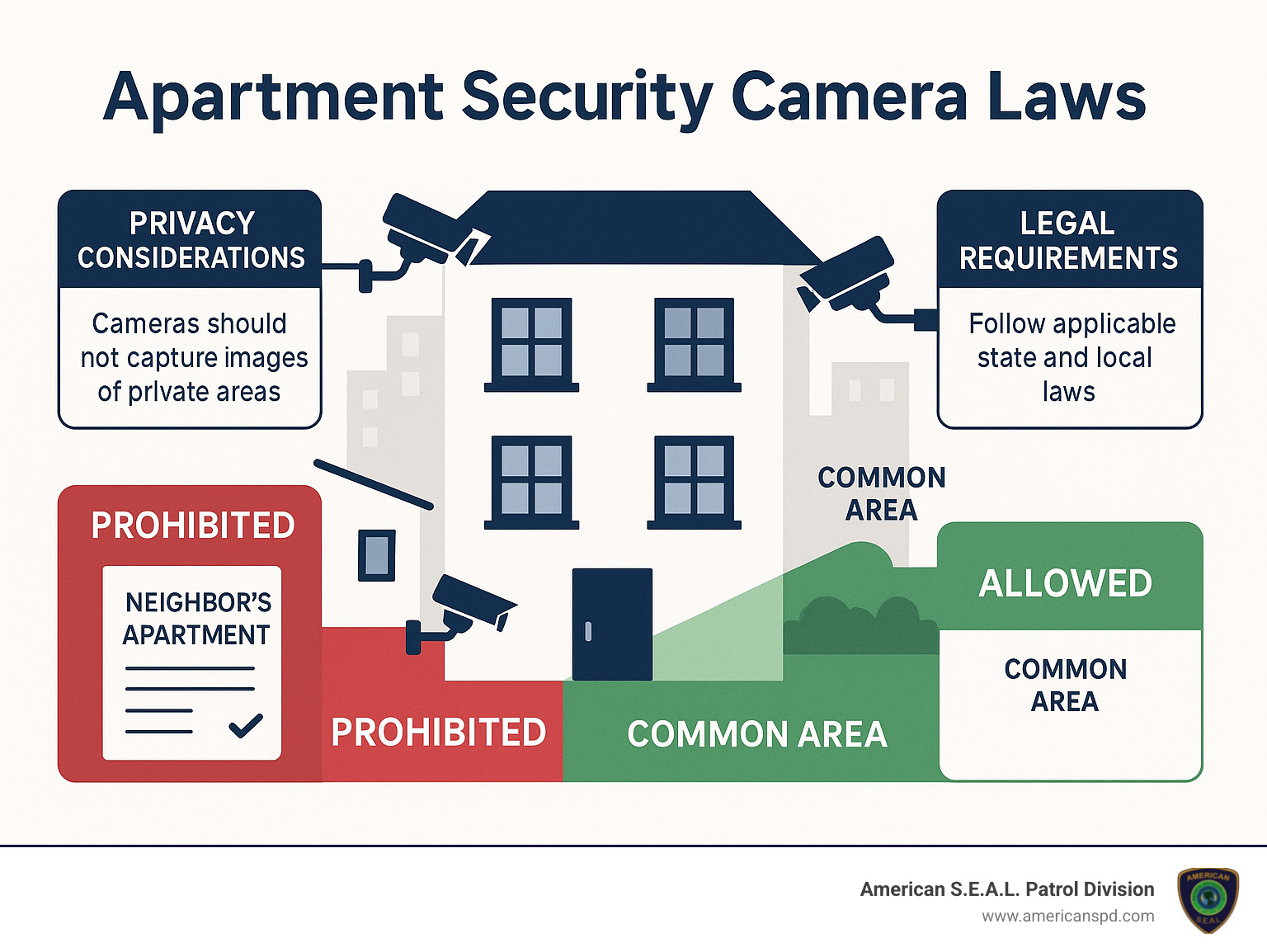
Apartment security camera laws govern where cameras can be installed, who can install them, and what privacy protections must be respected in multi-unit residential buildings. Here’s what you need to know:
| Key Legal Points | Summary |
|---|---|
| Common Areas | Landlords may install cameras in hallways, lobbies, parking lots, laundry rooms, mailrooms, and other shared spaces |
| Private Areas | Cameras are prohibited in bathrooms, bedrooms, or inside tenant units |
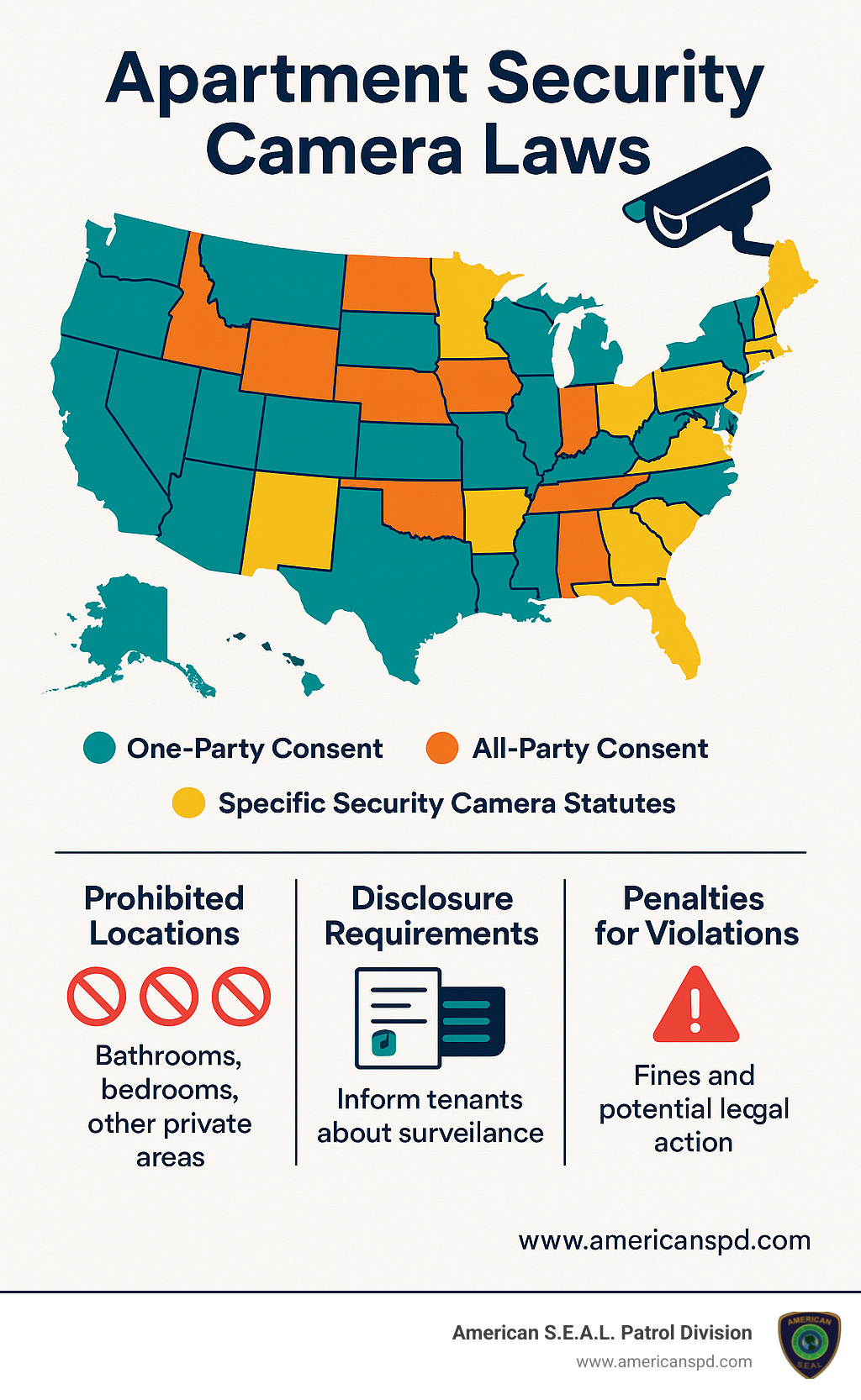
| Audio Recording | 11 states require all-party consent for audio recording |
| Tenant Rights | Tenants can typically install cameras inside their units but need permission for exterior/common area installation |
| Disclosure | Landlords must inform tenants about surveillance systems (some jurisdictions require signage) |
| Data Retention | Some localities mandate 30-day minimum footage retention (up to 180 days if requested) |
There are plenty of reasons to have security cameras in apartment buildings – to deter thieves, identify criminals, and prevent damage to the property. But navigating the legal landscape can be tricky.
As a property manager or tenant, understanding apartment security camera laws helps you balance legitimate security needs with privacy rights. The rules vary significantly by state and even by county, with some jurisdictions like Prince George’s County in Maryland now requiring high-resolution cameras and specific retention periods.
The fundamental principle across all jurisdictions is the “reasonable expectation of privacy” – cameras are generally permitted in common areas but prohibited in spaces where people expect privacy. While federal law provides a baseline, state and local regulations add important nuances that property managers must follow.
For landlords, this means careful camera placement and proper tenant notification. For tenants, it means knowing your rights regarding both landlord surveillance and your own security options.
“Safety is a top priority for tenants, and many renters want to install security cameras to protect their homes. However, there are legal concerns when it comes to placing security systems in a rental property,” notes one legal expert.
Understanding these rules isn’t just about compliance – it’s about creating a secure living environment while respecting everyone’s privacy rights.
Relevant articles related to Apartment security camera laws:
– Advanced surveillance technology
– Affordable security camera systems
Apartment Security Camera Laws Explained
Navigating the legal landscape of apartment security cameras feels a bit like putting together a puzzle where the pieces come from different boxes. There’s no single “apartment security camera law” that covers everything – instead, we’re looking at a blend of federal, state, and local rules that sometimes overlap and sometimes leave gaps.
“There’s no specific federal law telling you exactly when, where, and how to use security cameras in apartments. But don’t mistake that for a free-for-all – there are definitely national privacy laws you need to follow,” says one legal expert who specializes in surveillance law.
One of the most detailed regulations recently emerged in Prince George’s County, Maryland. Starting October 2023, if you own a high-occupancy building or senior living facility there, you’ll need to:
- Install video systems with at least 1080p resolution
- Keep footage for a minimum of 30 days (and up to 180 days if law enforcement or a tenant asks)
- Risk civil penalties up to $500 if you don’t comply
This kind of specific regulation is likely the direction many localities will head as they try to balance security needs with privacy rights.
The need for apartment security is clear – FBI data shows over half of all burglaries target homes. But this doesn’t give anyone carte blanche to install cameras wherever they want.
What makes apartment security camera laws particularly tricky is that only 15 states have specific security camera statutes. In the other 35 states, you’re navigating by general privacy principles, local rules, and common sense.
What Does “Apartment security camera laws” Cover?
When we talk about apartment security camera laws, we’re actually covering several important areas:
Video recording generally faces fewer restrictions than audio recording. The Federal Wiretap Act (18 U.S.C. §2511) gets particularly strict about capturing private conversations – you might need consent from one or all parties depending on your state.
Hidden cameras are almost universally frowned upon in areas where people expect privacy. For common areas, visible cameras are not just good practice – in many places, they’re legally required.
Signage isn’t mandated everywhere, but posting notices about cameras serves two purposes: it deters potential wrongdoers and establishes a form of implied consent for recording. Even when not required by law, it’s smart practice.
Data storage has become a hot topic, with some places like Prince George’s County now specifying exactly how long you need to keep footage. Even without explicit laws, hanging onto recordings for at least 30 days makes good sense.
Consent requirements vary dramatically by state, especially for audio. Eleven states require everyone being recorded to consent: California, Connecticut, Florida, Illinois, Maryland, Massachusetts, Montana, Nevada, New Hampshire, Pennsylvania, and Washington.
As one security professional put it: “These days, recording video is as easy as tapping your phone. But that video’s staying power can either be your shield or your liability if you don’t understand the laws.”
State Snapshots & Recent Updates
Let’s take a quick tour of how apartment security camera laws vary across some key states:
California takes privacy seriously – perhaps more than any other state. Under California Penal Code §647, secretly recording someone in private areas without consent isn’t just frowned upon – it’s illegal. California Penal Code §632 adds another layer by prohibiting eavesdropping on confidential communications without everyone agreeing.
Texas follows a more relaxed one-party consent approach for audio recording. While there aren’t specific laws just for apartment building cameras, general privacy principles still apply. Landlords can place cameras in common areas but must stay away from private spaces.
Florida’s Video Voyeurism law (Section 810.14) specifically prohibits secretly watching someone in a place where they reasonably expect privacy. Like California, Florida requires all parties to consent for audio recording.
Maryland, beyond that specific Prince George’s County rule I mentioned earlier, requires all-party consent for audio recording. Video surveillance gets the green light in common areas but is a definite no-go in private spaces.
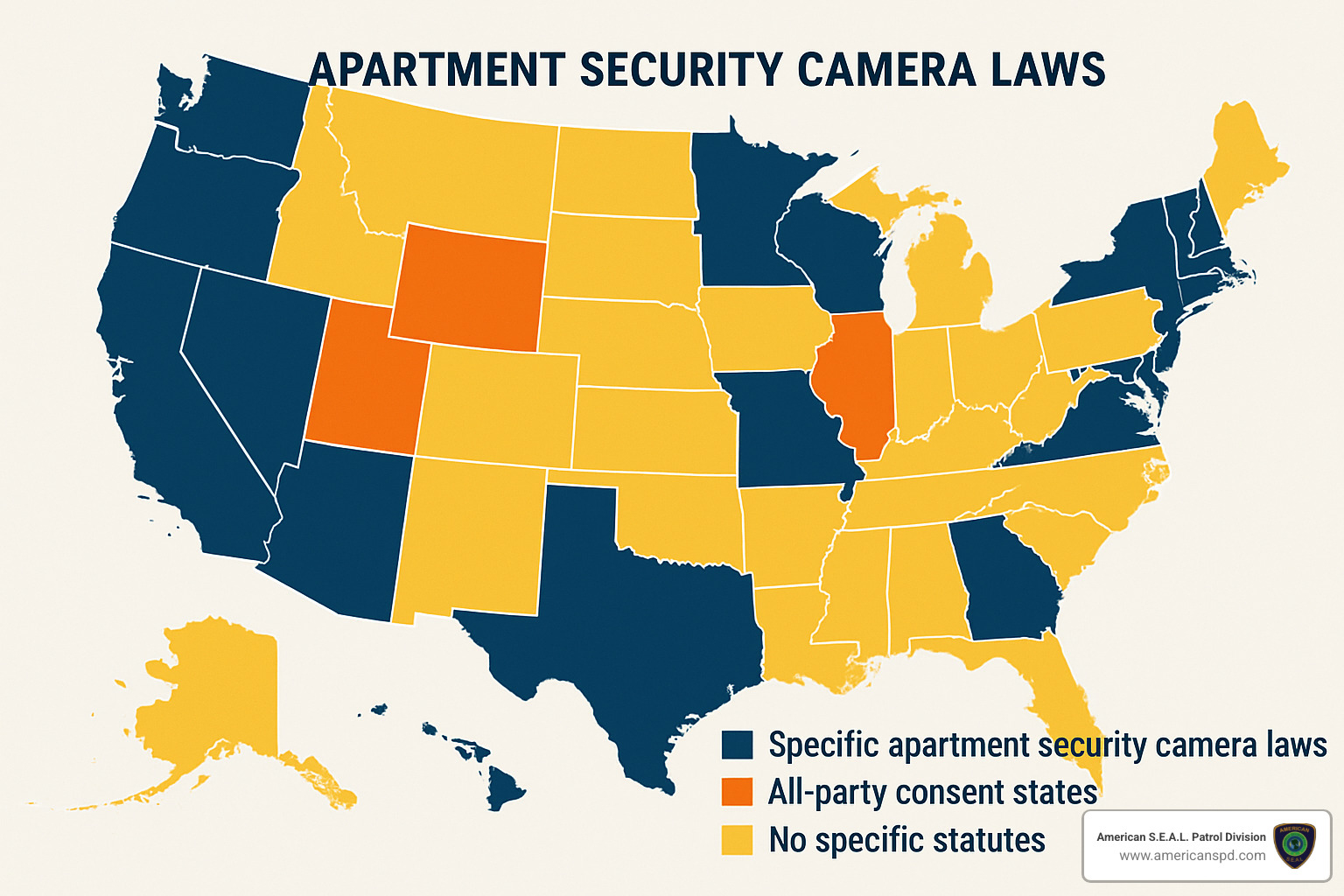
Local ordinances add yet another layer to consider. Some cities require you to register security cameras with the local police, especially if they connect to alarm systems.
One legal expert offers this practical advice: “When in doubt about your local rules, just call the District Attorney’s office. They can clarify your rights and obligations without you having to become a legal expert yourself.”
Understanding these rules isn’t just about avoiding fines – it’s about creating a secure environment where everyone’s rights are respected. The best security solutions balance effective monitoring with appropriate privacy protections.
Privacy Boundaries & “Reasonable Expectation”
The idea of “reasonable expectation of privacy” forms the heart of apartment security camera laws. This concept emerged from the landmark Supreme Court case Katz v. United States (1967), which gave us what legal experts now call the “Katz test” for determining where privacy deserves legal protection.
According to the Cornell Law School’s legal encyclopedia, you have a reasonable expectation of privacy when two conditions are met: first, you personally expect privacy in that situation, and second, society generally agrees that your expectation is reasonable. It’s both personal and cultural.
“Think about it like this,” says one privacy attorney I spoke with. “If you’re doing something you wouldn’t do in the middle of a public park, chances are you’re in a space where cameras shouldn’t be recording you.”
For apartment dwellers and landlords, this creates some clear boundaries about where cameras belong—and where they absolutely don’t:
In areas with a reasonable expectation of privacy, cameras are generally prohibited. This includes the inside of tenant apartments, bathrooms, changing rooms, bedrooms, and even areas visible through windows of private units. The rule of thumb? If you’d close the door or draw the blinds while doing something, it probably shouldn’t be on camera.
On the flip side, areas without a reasonable expectation of privacy typically include common spaces like lobbies, hallways, stairwells, elevators, parking areas, laundry facilities, mail rooms, and shared amenities like pools or gyms. These are fair game for security monitoring, though other rules may still apply.
“Apartment security camera laws” and Expectation of Privacy
When we apply these privacy expectations to apartment living, several interesting situations arise that aren’t always black and white.
Take front-door views, for instance. While landlords can legally place cameras in hallways, pointing a camera directly at your apartment door might cross a line in some jurisdictions. “There’s a difference between monitoring a hallway for security and specifically watching who enters and exits your unit,” explains a tenant rights attorney. “The latter can feel invasive and may constitute harassment.”
In SROs and boarding houses where tenants share kitchen and living spaces, the rules get even trickier. Your bedroom and bathroom remain private, but common living areas may be legally monitored, even though they feel more private than a typical apartment building lobby.
We’ve seen cases where surveillance crosses into tenant harassment. One particularly egregious example resulted in a $575,000 settlement for tenants who were targeted with excessive surveillance after complaining about building conditions. If you’re a landlord using cameras to monitor specific tenants or questioning them about guests you’ve seen on footage, you’re treading in dangerous legal waters.
Hidden cameras present the most serious privacy violations. If you find one in your apartment, don’t remove it (it’s evidence!), but do document its location with photos. Contact law enforcement immediately, notify your landlord in writing, and consider reaching out to a tenant rights attorney.
As one security expert puts it, “Good security is about making everyone feel safer, not watched. When tenants feel their privacy is respected, they’re actually more likely to participate in keeping the community secure.”
Landlords: Allowed Locations, Disclosure, Penalties
If you’re a landlord or property manager, knowing where you can legally place cameras is crucial to staying on the right side of apartment security camera laws. The golden rule is pretty straightforward: cameras belong in common areas only, where tenants shouldn’t expect privacy.
Placement Rules for Landlords
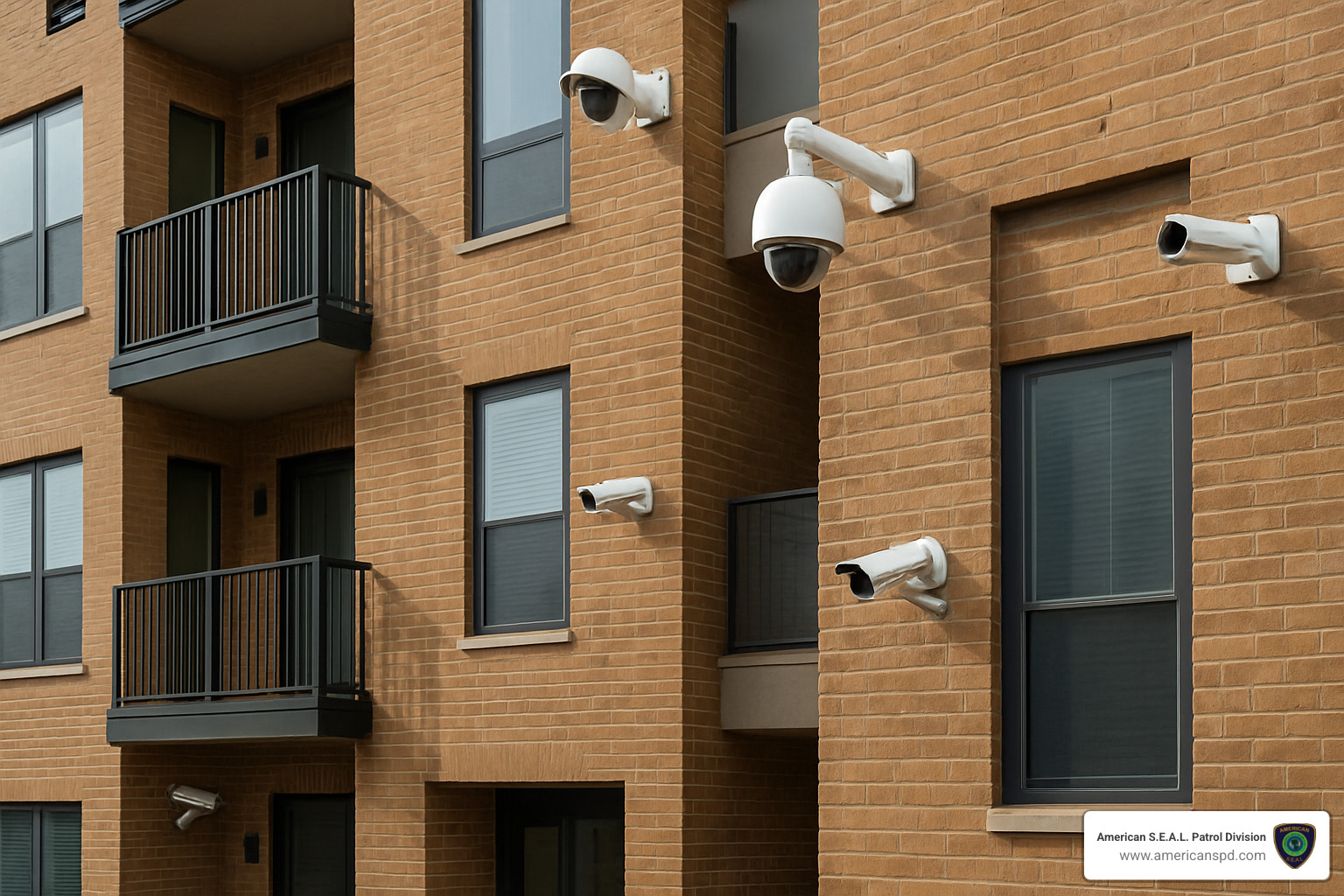
As a property owner, you’re generally safe installing security cameras in shared spaces like lobbies, hallways, and parking areas. Think of it this way – if it’s a space where residents would expect to encounter their neighbors, it’s probably okay for camera placement.
“Along with providing a clean, habitable living environment, property owners must also provide a safe place for tenants to enjoy their lives,” explains a seasoned security expert. “But safety measures should never cross the privacy line.”
You can confidently install cameras in entryways, elevators, laundry rooms, mail areas, and outdoor spaces like swimming pools or fitness centers. Just remember – bathrooms, changing areas, and especially the inside of tenant units are absolutely off-limits. And be careful about camera angles that might capture the interior of apartments through windows – that’s a privacy violation waiting to happen.
| State | Common Area Cameras | Hidden Cameras | Audio Recording | Disclosure Required |
|---|---|---|---|---|
| California | Allowed | Prohibited | All-party consent | Yes |
| Texas | Allowed | Allowed with restrictions | One-party consent | Recommended |
| Florida | Allowed | Prohibited in private areas | All-party consent | Yes |
| Maryland | Allowed | Prohibited in private areas | All-party consent | Yes |
Disclosure & Retention Requirements
Transparency isn’t just good practice – in many places, it’s the law. You need to tell your tenants about your surveillance system, though exactly how varies by location.
Your lease agreement is the perfect place to spell out the details. Include information about camera locations, whether you’re recording audio, how long you keep footage, who can access it, and why you have cameras in the first place. Being upfront builds trust with your residents while keeping you legally protected.
“Posting signs about surveillance serves multiple purposes,” notes one property manager we work with. “It deters potential criminals, eliminates privacy expectations in that area, and shows tenants you’re being open about security measures. Burglars have even admitted that a building with visible cameras often isn’t worth the trouble.”
As for keeping that footage, some areas now have specific requirements. Prince George’s County in Maryland requires a minimum 30-day retention period, expandable to 180 days if requested. Even without local mandates, holding onto recordings for at least a month is wise. As one security professional puts it, “That 30-day window gives tenants and police enough time to request evidence if they find an incident weeks after it happened.”
Consequences of Violations
Breaking apartment security camera laws can hit your wallet and reputation hard. The penalties aren’t just theoretical – they’re being enforced with increasing frequency.
Civil fines start at a few hundred dollars but can quickly escalate depending on where your property is located. Beyond government penalties, tenant lawsuits for privacy invasion might leave you on the hook for emotional distress damages, actual damages, and sometimes even punitive damages that can reach into six figures.
In more serious cases – particularly if cameras are placed in private areas – you could face criminal voyeurism charges. California’s Penal Code §647, for example, makes secretly recording someone in a private area a misdemeanor offense.
Perhaps most concerning for property managers is the risk of harassment claims. One California case resulted in a $1.56 million settlement for 30 tenants in an SRO building where surveillance was part of a pattern of harassment. Using cameras to target specific residents or questioning them about their guests based on footage can quickly cross into legally problematic territory.
“The cameras are meant to protect everyone, not to monitor specific tenants,” advises an attorney specializing in landlord-tenant law. “When surveillance feels like spying, that’s when the legal troubles begin.”
Tenants: What You Can (and Can’t) Install
As a renter, you have your own set of rights when it comes to installing security cameras under apartment security camera laws. But navigating these waters can be tricky – you want to feel safe in your home without violating your lease or accidentally breaking privacy laws.
“You want to keep your place safe, but you don’t want to lose your deposit,” as one tenant’s rights advocate perfectly puts it.
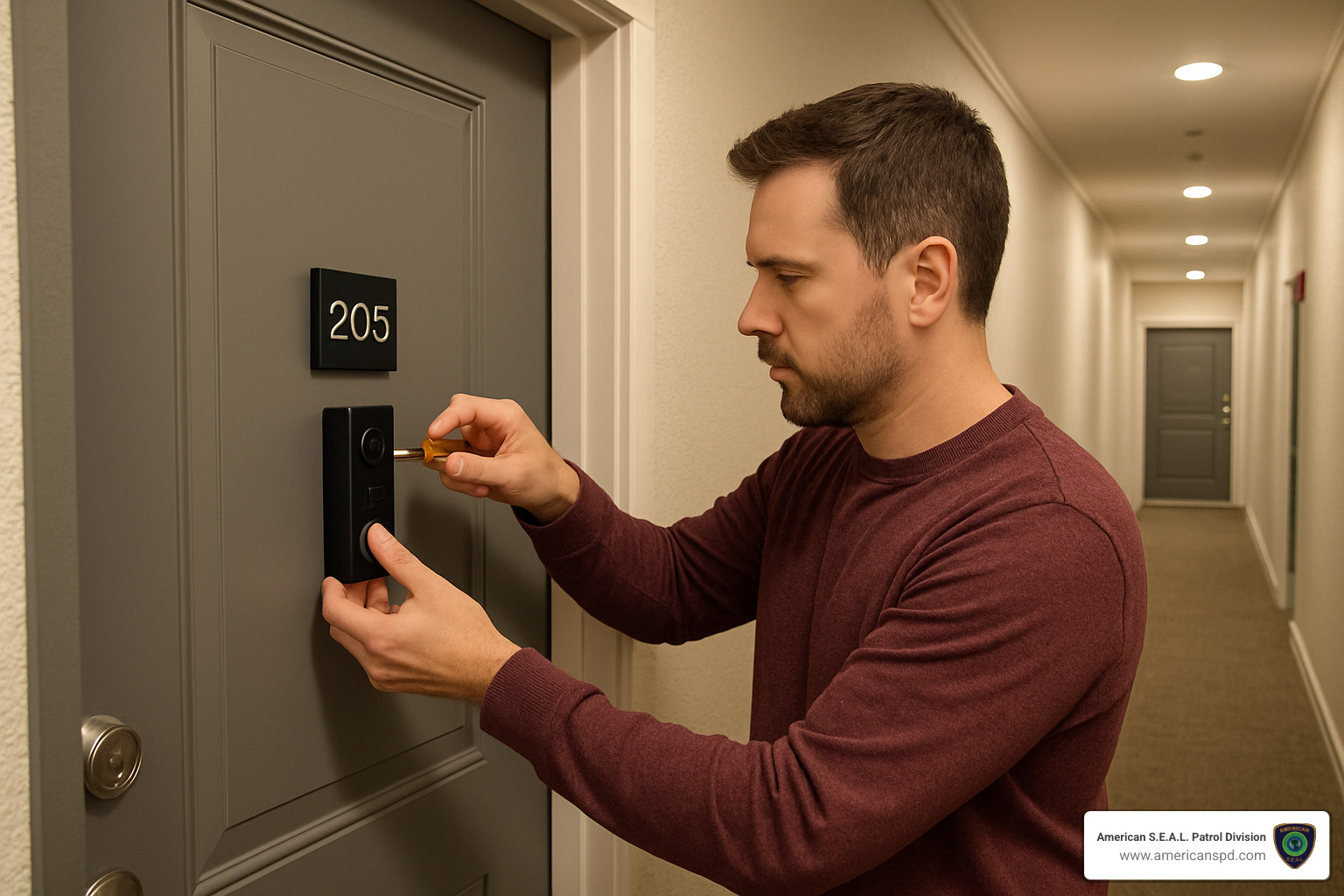
The good news is that most tenants can install cameras inside their own units without issue. Wi-Fi cameras that don’t require drilling or permanent installation are your best friends here. You can also usually install doorbell cameras that only monitor your specific entryway, especially if they use existing peepholes or temporary mounts.
What you typically can’t do is install cameras in hallways or other common areas without explicit permission, make permanent modifications to the property, or record areas where others expect privacy. And if you live in an all-party consent state, recording audio without proper consent is a definite no-no.
Getting Landlord Permission for Your Cameras
Before you start setting up your security system, take a moment to review your lease. Many leases have specific clauses about alterations or security devices that might affect your plans.
The most successful approach is submitting a formal written request to your landlord that covers all the bases. Be specific about what type of cameras you want to install, exactly where you’d put them, and how you’ll mount them. If you’re planning a doorbell camera, for example, explain whether it requires drilling or if you’ll use a damage-free mounting option.
Smart tenants emphasize the benefits for everyone. As one renter shared with me, “When I explained that my doorbell camera would help catch package thieves that had been hitting our building, my landlord was actually enthusiastic about it!”
Focus on non-invasive installation methods in your request. Landlords are much more likely to approve cameras that use adhesive mounts, freestanding options, or other methods that won’t leave damage behind when you move out.
“In most cases, tenants have the right to use security cameras inside the rented apartment, and we recommend using WiFi cameras, which do not need to be hardwired, thus avoiding causing damage to the walls and contractual disputes with the landlord,” explains one tenant advocate.
Alternatives When Common-Area Cameras Are Off-Limits
If your landlord puts the kibosh on your hallway camera plans, don’t despair! You’ve got options that can still boost your security without crossing any lines.
Video doorbells are often permitted since they only monitor your specific entryway. Models that use existing peepholes or adhesive mounts are particularly landlord-friendly.
You can also position indoor cameras inside your unit facing the entry door to capture anyone who enters. This keeps all recording activity within your private space while still monitoring the most important access point.
Motion-activated lights can be a powerful deterrent without any recording issues at all. Most criminals prefer to work in the shadows, and sudden bright light can send them scurrying.
For a completely different approach, consider organizing a community watch program with your neighbors. “A united neighborhood front can do wonders to deter intruders,” suggests one tenant advocate. Something as simple as a building WhatsApp group where neighbors can alert each other to suspicious activity can significantly improve security.
Don’t forget about renters insurance either. While it won’t prevent a break-in, comprehensive coverage provides financial protection if the worst happens.
One tenant shared their success story: “After three neighboring apartments were ‘cleaned out’ during break-ins, I installed a battery-powered doorbell camera with my landlord’s permission. It gave me peace of mind without causing any property damage.”
Even when you’re allowed to install cameras, you must follow the same privacy rules as landlords. As one legal expert wisely advises, “Recording another tenant without consent—especially in private or shared spaces—can violate privacy laws and lease agreements.”
Compliance Checklist, FAQs & Best Practices
Let’s be honest—keeping up with apartment security camera laws can feel like trying to hit a moving target. But don’t worry! I’ve put together some straightforward guidance to help both landlords and tenants stay on the right side of the law.
Quick Compliance Checklist
For landlords, compliance isn’t just about avoiding fines—it’s about creating a safe environment where tenants feel both protected and respected.
If you’re a property owner, start by researching your local laws before installing any equipment. Only place cameras in common areas where people don’t expect privacy, and make sure they’re clearly visible—hidden cameras are almost always a legal no-no.
“I always tell property managers that transparency is your best friend,” says one security consultant. “When tenants know where cameras are and why they’re there, they’re much more likely to appreciate them rather than object.”
Make sure to inform your tenants in writing about all camera locations and include these details in your lease agreements. Even if your state doesn’t require it, posting signs in areas under surveillance is a smart move that serves as both a deterrent and a disclosure.
For tenants wanting to boost their security, always check your lease first. Most landlords are reasonable about allowing doorbell cameras and interior security devices as long as you ask permission and choose installation methods that won’t damage the property. Remember to respect your neighbors’ privacy by angling cameras only toward your own entryway.
According to the Federal Wiretap Act, unauthorized audio recording can land you in serious hot water. When in doubt, disable the audio recording feature on your security cameras, especially if you live in an all-party consent state.
Frequently Asked Questions about Apartment Security Camera Laws
Q: What should I do if I find a hidden camera in my apartment?
Finding a hidden camera in your private space can be incredibly unsettling. If this happens, try to stay calm and document everything. Take clear photos of the device without touching or moving it (since it’s potential evidence). Call the police immediately—this isn’t just a lease violation; it could be a criminal offense.
“Many victims make the mistake of removing the camera,” explains a privacy attorney. “But preserving the evidence exactly as you found it gives you the strongest legal position.”
After contacting law enforcement, notify your landlord in writing about what you found. This paper trail matters if you need to take further action. Many tenants in this situation also benefit from consulting with a tenant’s rights attorney who specializes in privacy violations.
Q: Do I need to post a sign if I have video surveillance?
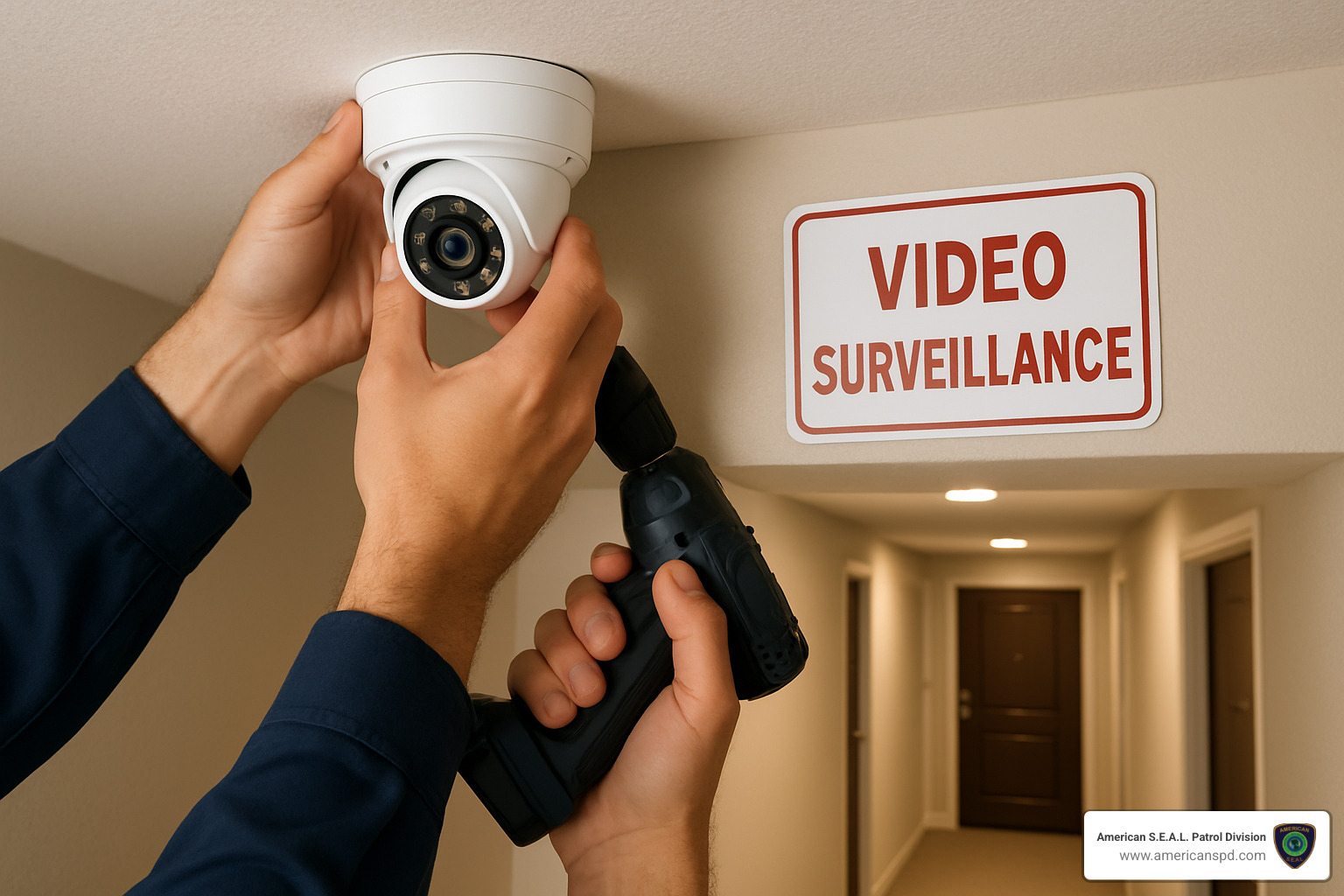
While federal law doesn’t explicitly require signage for private security cameras, posting notices is almost always a good idea. Signs serve multiple purposes—they deter potential wrongdoers, establish implied consent in some jurisdictions, and simply show good faith to your neighbors or tenants.
As one property manager put it: “The signs cost me about $15 total, and they’ve prevented countless awkward conversations and concerns. Best money I’ve spent on my security system.”
Q: Can audio ever be recorded legally with security cameras?
Yes, but tread carefully here. The rules for audio recording are much stricter than for video. In one-party consent states, you must be participating in the conversation to record it legally. In all-party consent states like California and Florida, everyone being recorded needs to agree to it.
Many security professionals recommend a simple approach: “Just disable the audio features on your cameras,” advises one expert. “The video provides 95% of the security benefit without 95% of the legal headaches.”
Q: Can a landlord install cameras after I’ve already signed my lease?
Generally, yes—landlords can add security measures to common areas even mid-lease. However, they must still notify all tenants in writing, and the cameras must comply with all privacy laws. If you believe the new cameras substantially change your living conditions (for example, if they’re pointed directly at your door in a way that feels intrusive), you may have grounds to object.
Q: Can my landlord use security footage to evict me?
If the cameras are legally installed in common areas, that footage could potentially be used as evidence of lease violations. However, any footage from illegally placed cameras would likely be thrown out in court. As one housing attorney notes, “Evidence obtained illegally typically can’t be used against you—that’s a fundamental principle of our legal system.”
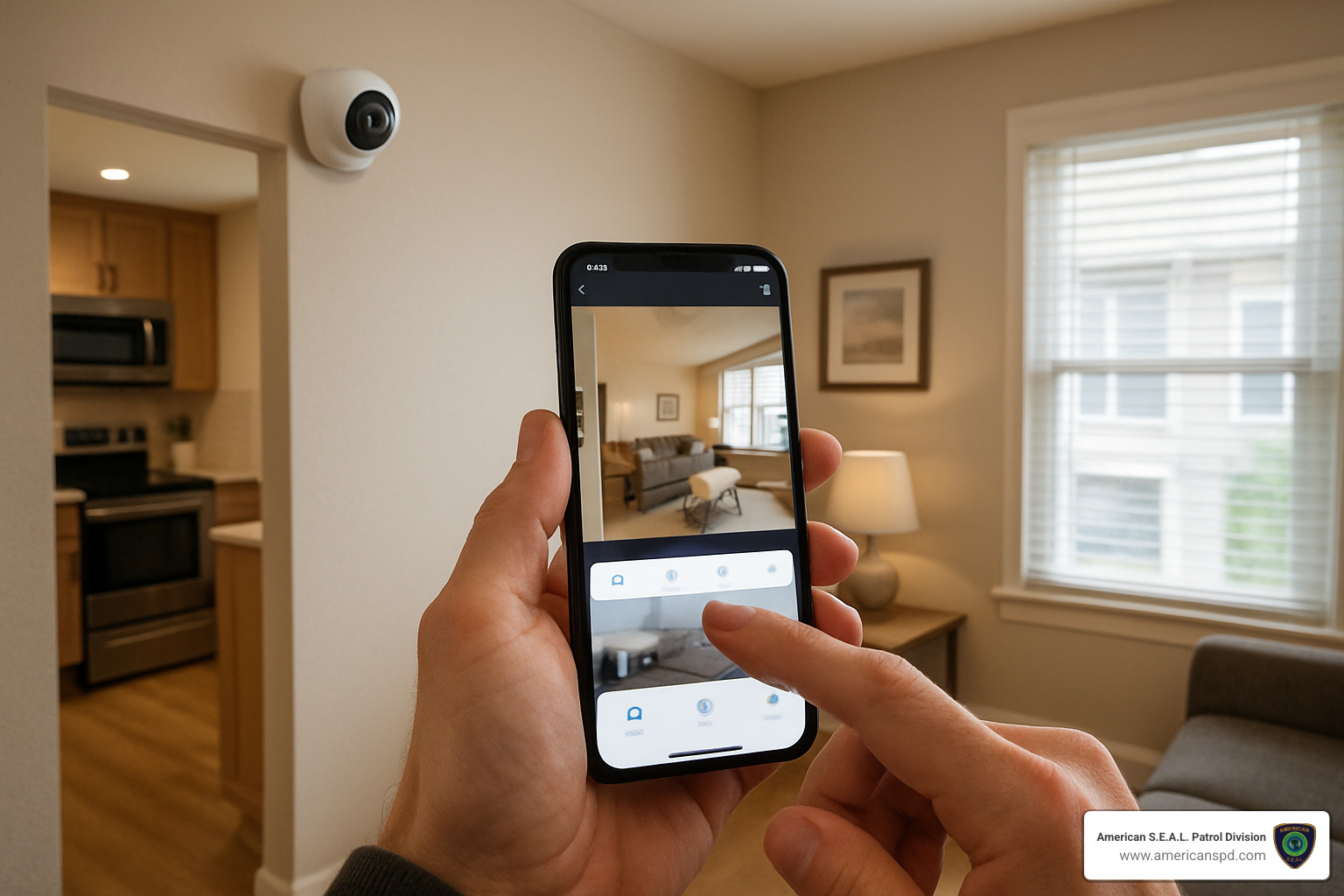
Q: Can I install a security camera that views part of my neighbor’s property?
The golden rule of apartment security cameras: only record what’s yours. Positioning your camera to capture your neighbor’s private space isn’t just potentially illegal—it’s also just not neighborly.
“Your security shouldn’t come at the expense of someone else’s privacy,” explains a security specialist. “Good camera placement can protect your space without invading others’.”
Q: Do apartment security camera laws apply to fake or dummy cameras?
Fake cameras have fewer legal restrictions since they don’t actually record anything. However, they should still only be placed in areas where real cameras would be legal. Some tenants have successfully argued that intimidating camera placement—even with fake devices—constitutes harassment.
Security is important, but so is creating a comfortable living environment where everyone feels their privacy is respected. With a little care and communication, both landlords and tenants can use security technology to create safer apartment communities.
At American S.E.A.L. Patrol Division, we understand the complexities of apartment security and can help you steer these regulations while creating a truly secure environment. Our Texas security expertise ensures your system will be both effective and compliant with all relevant laws.
Conclusion
Navigating apartment security camera laws isn’t just about following rules—it’s about creating safe homes where everyone feels secure and respected. Whether you’re managing a property or just trying to protect your apartment, understanding these laws helps you improve safety without stepping on anyone’s privacy.
After exploring all the legal ins and outs, a few principles stand out:
Privacy and security aren’t enemies—they’re partners. The best security systems respect both. Common areas are generally fair game for cameras, while private spaces deserve to remain private. Visible cameras not only comply with laws but also serve as better deterrents than hidden ones. And clear communication with tenants or landlords prevents misunderstandings before they happen.
Here in Houston and throughout Texas, we at American S.E.A.L. Patrol Division have seen how proper security camera implementation transforms apartment communities. Over our 15 years protecting residential properties, we’ve helped countless property managers create security systems that residents appreciate rather than worry about.
The security landscape keeps evolving—just look at Prince George’s County’s new requirements for high-resolution cameras and specific retention periods. This trend toward more detailed regulations will likely continue across the country as communities seek the right balance between watchfulness and privacy.
By following the guidelines we’ve shared, you can create a safer living environment that respects everyone’s boundaries. Good security doesn’t feel invasive—it feels protective.
For apartment communities in Houston looking for security solutions that steer these complex waters, our team brings both technical expertise and a deep understanding of the local legal landscape. We believe security should provide peace of mind, not new worries.
For more information about our comprehensive security services for apartment communities in Houston, please visit our website.