
Apartment complex security Houston: 7 Powerful Ways for Safer 2025
Why Houston Apartment Complex Security Matters More Than Ever
Apartment complex security Houston property managers face unique challenges that demand immediate attention. With over 100,000 burglaries occurring in houses last year and Houston’s multifamily market adding more than 20,000 new units, security has become a top priority for both residents and property managers.
Quick Security Solutions for Houston Apartment Complexes:
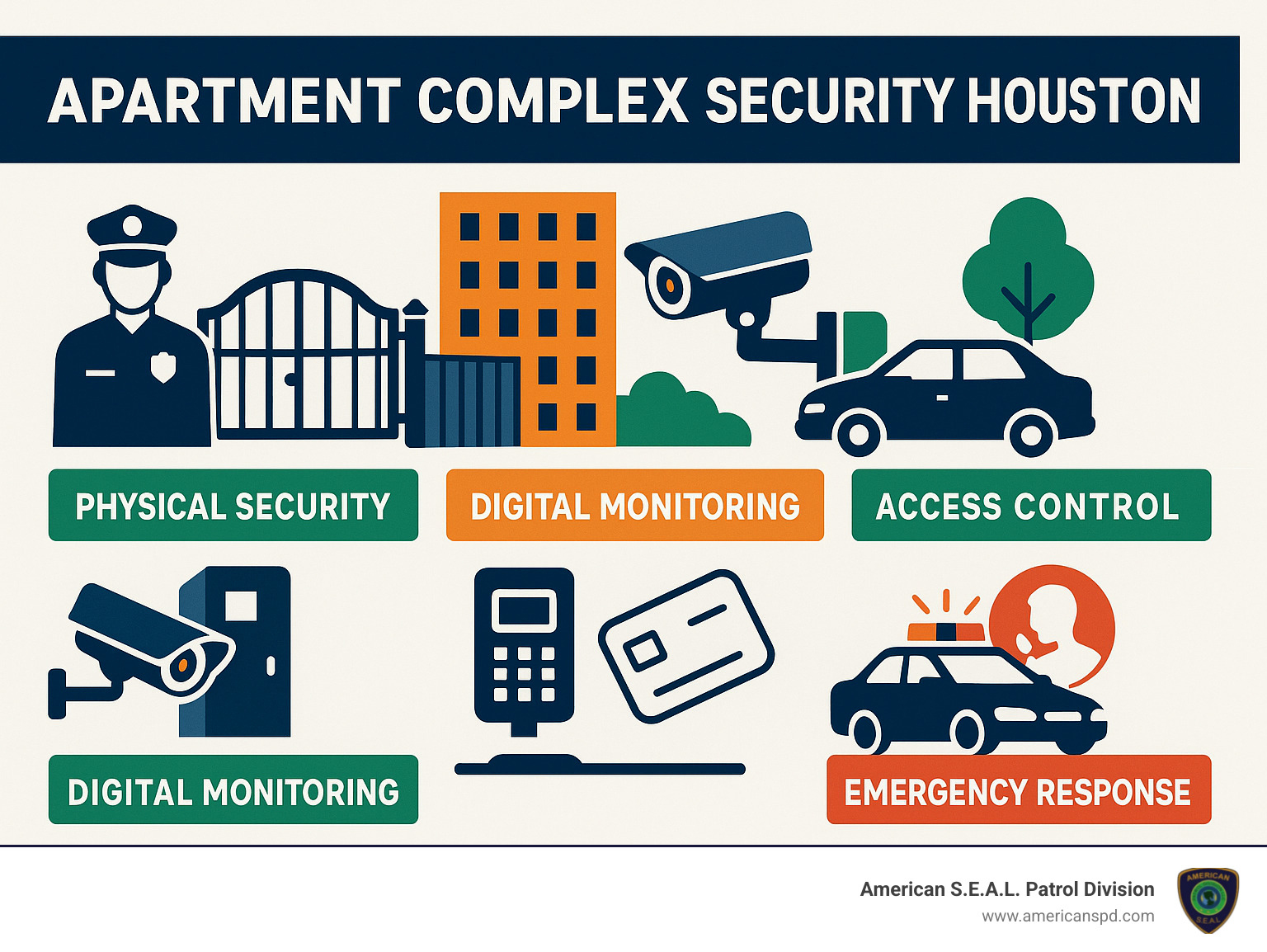
- Physical Protection: On-site security guards, gated access, perimeter fencing, strategic lighting
- Digital Monitoring: Live video surveillance, license plate recognition, mobile patrol units, access control systems
- Emergency Response: 24/7 monitoring services, two-way audio deterrence, rapid law enforcement alerts
- Legal Compliance: Texas Property Code §92.056 requirements, Blue-Star certification programs
- Cost-Effective Options: Virtual guard services, integrated alarm systems, mobile surveillance units
Recent incidents highlight the urgency of this issue. Tenants at The Standard Apartments in Houston filed a lawsuit against property management after a series of car thefts and vandalism incidents, while a Harris County apartment resident was forced to defend themselves during an attempted break-in.
The good news? Many apartment complexes report significant decreases in criminal activity of as much as 20 percent after only a few weeks of implementing visible security patrols. After Citywide Security took over security at The Modern Residences in Houston, the property saw a 40% decrease in incident reports.
This guide will walk you through proven strategies that combine traditional security measures with cutting-edge technology. Whether you’re managing a single property or overseeing multiple complexes, you’ll find practical solutions that protect residents while enhancing property value.
Apartment Complex Security Houston: Key Challenges and Trends
Living in Houston means dealing with some tough security realities, especially if you’re managing or living in an apartment complex. After working with Houston properties for over 15 years, we’ve seen how these challenges keep evolving – and unfortunately, they’re not getting easier.
Let’s be honest about what’s happening out there. Apartment complex security Houston managers are facing a perfect storm of problems. With more than 100,000 burglaries hitting residential properties last year alone, criminals have figured out that apartment complexes make attractive targets. Think about it – multiple entry points, lots of foot traffic, and enough people coming and going that a stranger doesn’t immediately stand out.
Houston’s incredible growth is making things even more complicated. Our metro area now has over 2 million people, with strong job growth in trade, transportation, and utilities bringing in new residents every day. More people means more opportunities for both legitimate residents and those with less honest intentions.
The incidents we respond to most often tell the story: vehicle break-ins and tire theft top the list, followed by package theft from mail areas that feel like sitting ducks. Then there’s unauthorized access to buildings and amenities, vandalism in parking lots, trespassing and loitering, and the always-frustrating property damage and graffiti.
One particularly concerning case involved a Harris County apartment where a resident shot and killed an alleged home invader. While the resident acted in self-defense, it highlights how serious these security threats have become.
| Crime Type | Houston Rate (per 100k) | U.S. Average (per 100k) |
|---|---|---|
| Property Crime | 3,247 | 2,109 |
| Burglary | 512 | 376 |
| Motor Vehicle Theft | 789 | 284 |
| Larceny-Theft | 1,946 | 1,449 |
Lawsuits & Resident Frustration
When security fails, the consequences go way beyond just frustrated residents. Tenants at EaDo apartment complex file lawsuit over security concerns shows exactly what happens when problems pile up without proper response.
The Standard Apartments situation was a textbook example of how not to handle security. Residents documented everything – broken gates that stayed broken, cameras that didn’t work, and management that seemed to brush off their concerns. One resident’s car got hit twice in a single month. Imagine paying rent and dealing with that stress every day.
Here’s what makes property managers lose sleep: under Texas Property Code §92.056, landlords have real legal obligations when it comes to health and safety. When they don’t step up, tenants have some serious options. They can terminate their lease without penalty, fix security problems themselves and deduct costs from rent, or pursue legal action for negligence.
We’ve watched property managers learn this lesson the hard way. The legal costs are just the beginning – there’s also increased vacancy rates, terrible online reviews, and a damaged reputation that can take years to rebuild. It’s always cheaper to get security right from the start than to clean up the mess later.
Houston’s Booming Multifamily Market
Houston’s multifamily housing market is absolutely exploding, with more than 20,000 new units opening their doors. That’s great news for housing availability, but it’s created fierce competition for quality tenants.
Security has become the secret weapon that separates successful properties from struggling ones. We’ve seen properties with solid security programs enjoy higher occupancy rates, longer lease terms, reduced tenant turnover, premium rental pricing, and those golden positive online reviews that drive new leases.
Class B properties – which make up a huge chunk of Houston’s apartment landscape – feel this pressure most intensely. These properties often need to upgrade their security systems to compete with newer developments. The good news? The investment typically pays for itself through improved tenant satisfaction and reduced liability exposure.
The math is pretty simple: happy, safe residents stay longer and refer their friends. Properties that invest in comprehensive security aren’t just protecting people – they’re protecting their bottom line too.
Building a Layered Defense: Physical and Digital Solutions
Think of apartment complex security Houston like protecting your home – except you’ve got dozens or hundreds of “homes” to watch over. That’s why smart property managers build what we call a layered defense system. It’s like having multiple locks on your front door, a security system, and a watchful neighbor all working together.
The beauty of layered security is that when one system has a bad day (and they all do sometimes), the others keep working. We’ve learned this lesson the hard way over our 15 years in the business. A broken gate becomes much less concerning when you have cameras, guards, and access control systems all backing each other up.
Here’s how the layers work together: perimeter control keeps unwanted visitors from getting in easily, detection systems spot trouble before it grows, human presence provides the judgment call that technology can’t make, access management ensures only authorized people get through, strategic lighting eliminates dark corners where problems hide, and communication systems connect everything together for rapid response.
Physical Barriers & Patrols
There’s something reassuring about seeing a uniformed security guard walking the property. It tells residents that someone cares about their safety, and it tells potential troublemakers that this isn’t an easy target. We’ve seen crime rates drop significantly just from having visible security presence.
Security personnel form the backbone of any good security program. The best guards bring law enforcement or military experience, but they also understand that they’re part of the community. They know residents by name, help with minor issues, and create that human connection that makes people feel truly safe.
Patrol strategies matter more than you might think. Random schedules keep criminals guessing – if they can’t predict when security will come around, they’re much less likely to try anything. We use GPS tracking to make sure our guards cover every corner of the property, not just the easy-to-reach areas.
Access control starts with functioning gates, but it doesn’t end there. We’ve seen too many properties where broken gates become symbols of neglect rather than security. Regular maintenance and backup systems ensure that controlled access actually controls access.
The perimeter security elements like proper fencing, motion-activated lighting, and clear sight lines work together to eliminate hiding spots. Good lighting design provides both security benefits and energy savings – modern LED systems can light up parking areas when motion is detected, then dim down to save power.
Digital Shields & Remote Monitoring
While physical security handles what you can see, digital systems watch everything else. Modern apartment security demands technology that works around the clock, in all weather conditions, providing eyes and ears where human guards can’t be.
Live video monitoring has revolutionized apartment security. High-definition cameras connected to our monitoring centers mean trained professionals are watching your property 24/7. When they spot something suspicious, they can intervene immediately through two-way audio systems – often stopping incidents before they become real problems.
License plate recognition systems automatically log every vehicle that enters and exits your property. This creates an invaluable investigative tool and helps identify vehicles that don’t belong. We’ve helped solve countless cases using LPR data to track when and how incidents occurred.
Mobile surveillance units give you flexibility that fixed cameras can’t match. These portable towers can be deployed quickly to address emerging security concerns or provide temporary coverage during events or construction. They’re particularly useful for properties that are expanding or dealing with seasonal security challenges.
Smart access control systems let residents use their phones instead of fumbling for keys, while maintaining detailed logs of who enters and when. Biometric readers add an extra security layer for sensitive areas like mail rooms or amenity centers.
Thermal imaging cameras work effectively even in complete darkness and bad weather. They detect heat signatures rather than relying on visible light, ensuring comprehensive coverage regardless of environmental conditions. This technology has proven especially valuable for monitoring large parking areas and perimeter zones during overnight hours.
The key to making all these systems work together is proper integration. When your video management system talks to your access control, and both connect to your alarm systems, you get a complete picture of what’s happening on your property in real-time.
Smart Tech Upgrades for 24/7 Protection
The security landscape has changed dramatically over the past decade, and apartment complex security Houston properties that accept smart technology are seeing remarkable results. We’ve watched our clients transform their security operations by combining traditional approaches with innovative tech solutions that work around the clock.
Think of smart security technology as having a team of vigilant guards who never sleep, never get distracted, and can be in multiple places at once. These systems don’t replace human security personnel – they make them incredibly more effective.
The beauty of modern security technology lies in its ability to prevent problems before they become incidents. AI-powered analytics can spot unusual behavior patterns that might escape human notice, while two-way audio systems let security personnel intervene immediately without needing to physically rush to the scene.
Live video monitoring systems have become the backbone of effective apartment security. Professional monitoring centers provide continuous oversight of your property, with trained operators who know the difference between a resident coming home late and someone who shouldn’t be there. These aren’t just cameras recording footage for later review – they’re active security tools that enable real-time intervention.
License plate recognition technology has proven particularly valuable for Houston properties. These systems automatically capture and analyze every vehicle entering your complex, instantly flagging stolen cars, banned individuals, or vehicles connected to previous incidents. One of our clients found a vehicle involved in break-ins at a neighboring property, allowing them to alert authorities before any crimes occurred on their premises.
Mobile surveillance units offer flexibility that fixed cameras simply can’t match. When a property experiences increased criminal activity in a specific area, these deployable towers can be positioned within hours. They’re solar-powered, wireless-connected, and often deter criminal activity through their mere presence.
Modern access control systems have evolved far beyond simple key cards. Today’s solutions integrate biometric readers, mobile apps, and temporary access codes into seamless platforms. Residents can grant delivery personnel access through their smartphones while maintaining complete logs of who entered when.
Apartment Complex Security Houston Tech Checklist
When evaluating technology upgrades for your property, certain components have proven essential for comprehensive protection. High-definition IP cameras with night vision capabilities form the foundation, but they’re only as good as the storage and monitoring systems supporting them.
Cloud-based video storage ensures footage remains accessible even if on-site equipment is damaged or stolen. Mobile access allows property managers to check on their communities from anywhere, while real-time alert systems ensure immediate notification of unusual activity.
Integration with local law enforcement databases can automatically flag individuals with outstanding warrants or restraining orders. This capability has helped several of our clients prevent domestic violence incidents and other serious crimes.
Multi-factor authentication for access control adds crucial security layers without significantly inconveniencing residents. Temporary access codes eliminate the need for physical key exchanges with visitors and service personnel, while automatic lockdown capabilities can secure the entire property during emergencies.
Two-way audio systems at entry points and common areas enable immediate communication with security personnel. Emergency communication buttons in elevators and stairwells provide residents with direct lines to help when they need it most.
Integrating Systems for Maximum ROI
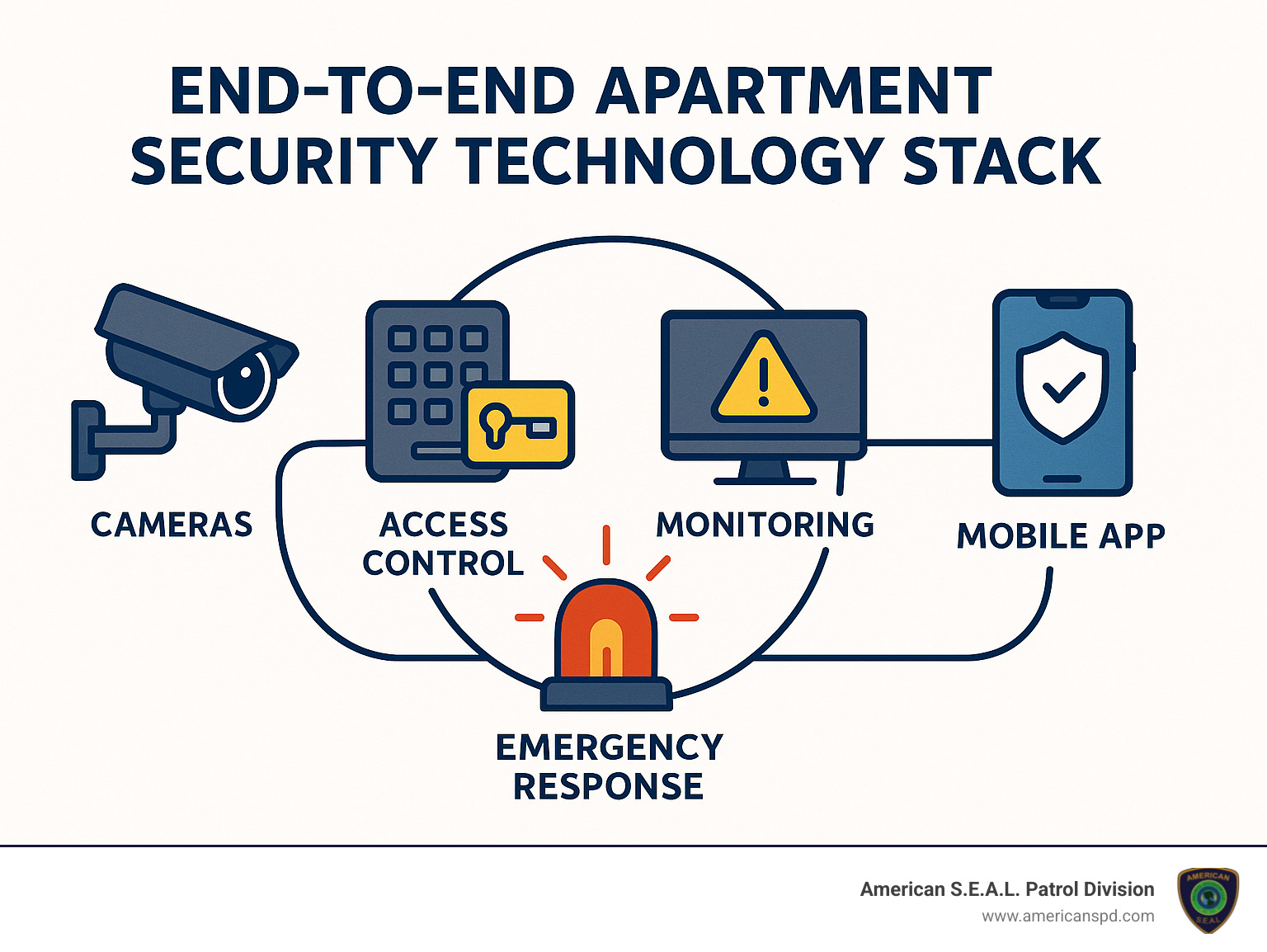
The magic happens when individual security components work together as a unified system. We’ve seen properties achieve remarkable results by ensuring their cameras, access control, alarms, and monitoring systems communicate seamlessly with each other.
Automated response capabilities represent the pinnacle of integrated security. When an alarm triggers, cameras automatically focus on the affected area while access control systems lock down specific zones. Security personnel receive comprehensive information instantly, enabling faster and more informed responses.
Streamlined management through single interfaces allows security teams to monitor all systems from one location. Instead of juggling multiple screens and applications, operators can see everything happening across the property in real-time. This comprehensive view often reveals patterns and connections that might be missed when monitoring systems separately.
Improved investigation capabilities emerge when data from multiple systems correlates automatically. Video footage, access logs, and alarm records combine to create detailed incident timelines that prove invaluable for law enforcement and legal proceedings.
The financial benefits of integration often surprise property managers. Reduced operational costs result from needing fewer personnel to monitor more comprehensive systems. Better coverage and faster response times lead to fewer incidents, which translates to lower insurance premiums and reduced liability exposure.
When implementing integrated systems, network infrastructure becomes critically important. All connected devices need reliable, high-speed connections to function properly. Clear maintenance protocols ensure systems remain operational, while comprehensive staff training maximizes the investment in technology.
The key to successful integration lies in choosing systems designed to work together from the ground up, rather than trying to force incompatible technologies to communicate.
Compliance, Risk Assessment & Community Engagement

Building a secure apartment community goes far beyond installing cameras and hiring guards. Apartment complex security Houston property managers need to understand the legal landscape, conduct regular risk assessments, and engage residents as partners in safety efforts.
We’ve learned through our 15 years in Houston that the most successful security programs combine technology and personnel with smart compliance strategies and active community involvement. When residents feel informed and engaged, they become your best early warning system.
The legal side might seem intimidating, but it’s actually straightforward once you understand the basics. Texas has clear guidelines about what property managers must do to keep residents safe, and following these rules protects everyone involved.
Landlord Legal Duties in Houston
Texas Property Code §92.056 isn’t just legal jargon – it’s your roadmap for responsible security management. Understanding these requirements helps you avoid costly lawsuits while providing the protection your residents deserve.
Reasonable response time forms the foundation of your legal obligations. When residents report security concerns in writing, you can’t just file the complaint and forget about it. The law requires action within a reasonable timeframe, which typically means addressing urgent safety issues within days, not weeks.
Essential safety features must be maintained consistently. This includes functioning door locks, adequate lighting in common areas, and secure entry points. We’ve seen property managers face legal trouble over something as simple as burned-out light bulbs in stairwells – small problems can become big liabilities.
Incident documentation protects both you and your residents. Detailed records of security incidents, response actions, and follow-up measures demonstrate your commitment to safety. More importantly, good documentation helps identify patterns and prevent future problems.
Privacy considerations become increasingly important as surveillance technology advances. Residents need to know where cameras are located and how footage is used. Clear policies about monitoring help avoid privacy violations while maintaining security effectiveness.
When landlords fail to meet these obligations, tenants have several options under Texas property codes. They can provide written notice and reasonable repair timeframes, terminate their lease for unaddressed safety concerns, make repairs themselves and deduct costs from rent, or pursue legal remedies for negligence.
Blue-Star certification from the Houston Police Department provides official recognition of your security standards. This certification can be valuable for marketing purposes and offers some legal protection by demonstrating your commitment to professional security practices.
Apartment Complex Security Houston Playbook: Audits & Education
Regular security audits might sound like corporate busy-work, but they’re actually your best tool for staying ahead of problems. We recommend comprehensive security assessments twice annually, plus additional reviews after significant incidents or system upgrades.
Physical security assessments examine everything from lighting and fencing to access control and building security. We look for blind spots, worn equipment, and potential vulnerabilities that criminals might exploit. Sometimes the biggest security improvements come from simple fixes like trimming overgrown bushes or replacing broken gate hardware.
Technology reviews ensure your cameras, alarms, and access systems work as intended. Technology fails gradually – cameras lose focus, sensors become less sensitive, and software needs updates. Regular testing catches these issues before they compromise security.
Personnel evaluation examines guard training, patrol effectiveness, and response protocols. Even experienced security professionals benefit from regular training updates and performance reviews. We also assess whether staffing levels match your property’s actual security needs.
Policy reviews analyze security procedures, incident response plans, and resident communication strategies. As properties evolve and new threats emerge, security policies need updates to remain effective.
Community engagement transforms residents from passive observers into active security partners. Resident safety workshops teach personal safety techniques, emergency procedures, and proper use of security systems. When residents understand how security works, they’re more likely to use it correctly and report problems promptly.
Neighborhood watch programs organize resident participation in community security awareness. These programs work particularly well in Houston’s diverse communities, where residents often bring valuable cultural perspectives on safety and security.
Digital communication through security newsletters, mobile apps, and social media keeps residents informed about security updates and safety tips. Regular communication builds trust and demonstrates your ongoing commitment to their safety.
Emergency preparedness requires clear evacuation plans for various scenarios, communication protocols for alerting residents during emergencies, established relationships with local police and fire departments, and regular drills to ensure everyone understands emergency procedures.
The goal isn’t to turn your apartment complex into a fortress – it’s to create a community where residents feel safe, informed, and engaged in their own security.
Frequently Asked Questions about Apartment Complex Security Houston
What is the most effective first step for improving security?
The most effective first step is conducting a comprehensive security assessment to identify your property’s specific vulnerabilities. After 15 years of serving Houston apartment complexes, we’ve learned that the biggest immediate impact usually comes from implementing visible security measures like uniformed guards or marked patrol vehicles.
But here’s the thing – every property is different. What works for a downtown high-rise might not be the right solution for a suburban garden-style complex. That’s why we always start with understanding your unique challenges.
If you’re dealing with high vehicle crime, your first priority should be improved parking lot lighting and license plate recognition systems. We’ve seen properties reduce car break-ins by 60% just by upgrading their lighting and adding LPR cameras.
For properties struggling with unauthorized access, focusing on access control upgrades and entry point monitoring delivers the fastest results. One client saw trespassing incidents drop by 75% within the first month of installing proper gate controls and intercoms.
Package theft is becoming increasingly common across Houston. Installing secure package lockers and mailroom surveillance typically pays for itself within six months through reduced liability and improved resident satisfaction.
When residents express general safety concerns, deploying visible security patrols and improving perimeter lighting creates immediate peace of mind. The psychological impact of seeing uniformed security personnel can’t be overstated.
We always recommend starting with a professional security consultation. This isn’t a sales pitch – it’s about developing a prioritized action plan based on your specific risks and budget. Many property managers are surprised to learn that effective security doesn’t always require massive upfront investments.
How often should security systems be audited or upgraded?
Your security systems need regular attention to stay effective. We recommend comprehensive audits twice a year, with additional reviews following any significant incidents, technology upgrades, or changes in your local crime patterns.
Think of it like maintaining your car – regular check-ups prevent bigger problems down the road. Our maintenance protocols have evolved over 15 years of real-world experience.
Every three months, we conduct focused reviews that include system functionality testing, camera angle verification, access control database updates, and staff training refreshers. These quarterly check-ins catch small issues before they become security gaps.
Annual assessments are more comprehensive. We evaluate your complete security system, update threat assessments based on current crime trends, plan technology upgrades, and review all policies and procedures. Houston’s security landscape changes constantly, and your systems need to adapt.
Incident-triggered reviews happen whenever something goes wrong. We immediately assess what happened, analyze system performance during the emergency, integrate resident feedback, and verify legal compliance. These reviews often reveal improvements that wouldn’t be obvious during routine audits.
For technology upgrades, plan on a 3-5 year cycle for major systems like cameras and access control. Software updates and minor improvements should happen continuously. The good news is that modern systems are designed for gradual upgrades rather than complete replacements.
Houston’s rapid growth means new security challenges emerge regularly. Properties that stay ahead of these changes through regular audits consistently outperform those that take a “set it and forget it” approach.
What can residents do if they feel security is inadequate?
Residents aren’t powerless when they believe their apartment complex security Houston management isn’t providing adequate protection. You have both practical and legal options, but the key is approaching the situation strategically.
Start by documenting everything. Take photos of broken gates, non-functioning lights, or damaged fencing. Keep written records of incidents with dates, times, and details. Video evidence can be particularly powerful. This documentation becomes crucial if you need to escalate your concerns.
Submit written complaints to property management with specific examples rather than general complaints. Instead of saying “security is bad,” explain that “the north parking lot gate has been broken for three weeks, and I’ve witnessed two unauthorized vehicles enter the property.” Specific problems get faster responses.
Request information about current security measures and planned improvements. Good property managers will be transparent about their security programs and timeline for addressing concerns. If management is evasive or dismissive, that’s often a red flag.
Contact other residents to gauge shared concerns. Individual complaints might get ignored, but organized resident concerns typically receive immediate attention. Property managers understand that unhappy residents lead to negative reviews and higher turnover.
Under Texas Property Code §92.056, you have specific legal rights. You can review your lease agreement for security-related provisions, understand your rights regarding safety issues, and potentially terminate your lease if the landlord fails to address documented safety concerns after proper notice.
Consider forming neighborhood watch groups or engaging with local community policing programs. These grassroots efforts often complement professional security services and demonstrate resident commitment to community safety.
If problems persist, consult with tenant rights organizations or legal counsel. Many offer free consultations and can help you understand your options without immediately escalating to litigation.
The most important thing to remember is that documentation is everything. Keep detailed records of all security incidents, your complaints, and management responses. This paper trail protects you regardless of which path you choose to pursue.
Conclusion
Creating effective apartment complex security Houston isn’t about choosing between high-tech gadgets or human guards – it’s about bringing them together in a way that actually works. After 15 years of protecting Houston properties, we’ve learned that the most successful security programs feel seamless to residents while being incredibly thorough behind the scenes.
Think of it like a well-orchestrated symphony. Your license plate recognition system might spot a suspicious vehicle, but it takes a trained security officer to assess the situation and decide whether to approach the driver or call for backup. Your cameras can record everything, but experienced personnel know how to position themselves to prevent incidents rather than just document them.
The beauty of a comprehensive approach is how quickly you’ll see results. Many of our clients notice immediate improvements in resident confidence once visible security measures are in place. That peace of mind translates into longer lease terms, positive reviews, and word-of-mouth referrals that make your property stand out in Houston’s competitive rental market.
Your security investment pays dividends beyond just preventing crime. Properties with robust security programs consistently command higher rents, experience lower turnover, and face fewer liability issues. When residents feel safe walking to their cars at night or receiving packages during the day, they’re more likely to renew their leases and recommend your property to friends.
The legal protection aspect can’t be overlooked either. With lawsuits like the EaDo case making headlines, property managers who take proactive security measures are much better positioned if incidents do occur. Having documented security protocols, regular audits, and professional response procedures shows courts and insurance companies that you take resident safety seriously.
Starting your security journey doesn’t have to be overwhelming. Begin with a thorough assessment of your current vulnerabilities, then prioritize improvements based on your specific challenges and budget. Whether you’re dealing with parking lot break-ins, unauthorized access, or general safety concerns, there’s always a logical first step that can make an immediate difference.
Security is an ongoing conversation with your residents. The properties that see the best results are those that keep residents informed about security improvements, listen to their concerns, and adjust their approach based on real feedback. Your security program should evolve with your community’s needs.
At American S.E.A.L. Patrol Division, we’ve seen how the right security approach transforms not just safety statistics, but the entire atmosphere of a property. Residents relax, property values increase, and management teams can focus on creating great living experiences instead of constantly reacting to security incidents.
Every Houston apartment complex deserves residents who feel truly safe coming home. Whether you’re ready to implement comprehensive security upgrades or just want to understand your options better, professional guidance can help you create a security program that protects your residents, your property, and your investment.
For more information about how we can help secure your Houston apartment complex, visit our security services page or contact our team for a comprehensive security assessment custom to your property’s unique needs.

