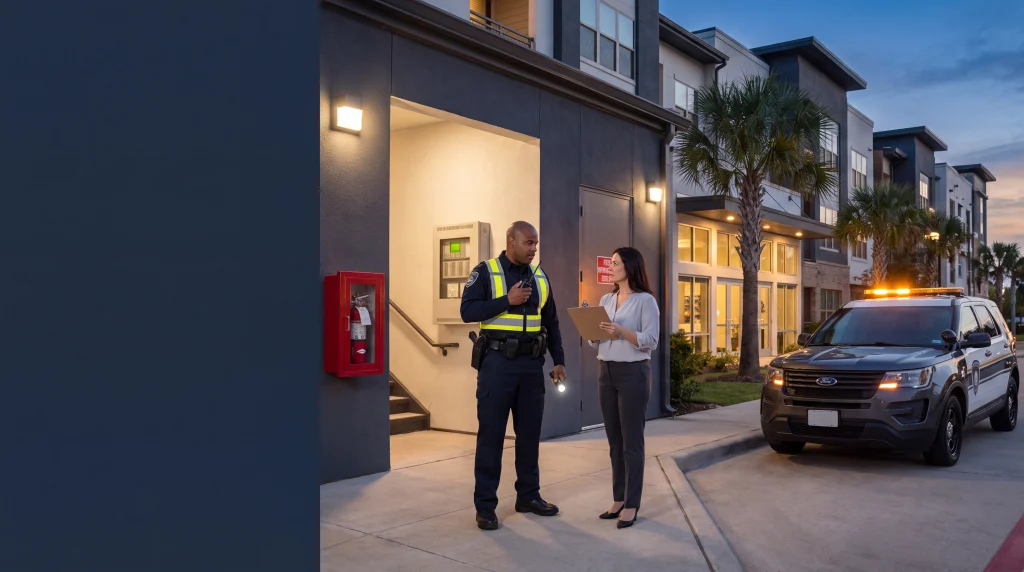
Fire watch services Houston refers to continuous, on-site monitoring of a property when fire protection systems are impaired or offline. During this period, a trained officer patrols affected areas, identifies hazards, keeps egress routes clear, and documents every round until systems are restored or the Authority Having Jurisdiction (AHJ) authorizes termination. For Houston multifamily and commercial properties, moving quickly to maintain compliance protects life safety and aligns with expectations from the Houston Fire Department (HFD) and your insurance carrier. American S.E.A.L. Patrol Division is licensed, bonded, and insured to support emergency fire watch in Houston, TX—backed by 15+ years of patrol experience and a 24/7 live dispatch.
Whenever a building’s fire alarm, sprinkler, or other life safety systems are out of service or impaired, a fire watch provides human oversight to reduce risk until those systems are fully operational again. While specific triggers, staffing requirements, and timelines come from your AHJ (often HFD), property managers should be ready to act without delay.
In Houston, the AHJ typically defines when a fire watch must begin, how it must be staffed, what areas it must cover, and when it can end. If you’re unsure, call your fire alarm vendor and follow Houston Fire Department Fire Marshal’s Office or AHJ directions. Document who you spoke with, the time, and any instructions provided. Your monitoring company may also require specific notifications you should complete for property compliance Houston.
The core objective is life safety—making sure people can exit quickly and that first responders can reach the site without barriers. That calls for clear egress pathways, visible exits and signage, reliable communication, and documented patrols that cover all affected areas.
The following checklist is designed for apartments and multifamily communities in Houston. Always defer to the AHJ’s instructions for your specific property.
Checklist highlights at a glance:
Officers must physically check the spaces where risks could develop or go unnoticed, especially in low-traffic zones like storage areas, mechanical rooms, and service corridors.
Maintain a clear paper trail showing when fire watch began and ended, who provided coverage, and which buildings or areas were included.
If an area cannot be accessed during any round (e.g., a locked door), log the exception and resolve it quickly with maintenance.
Capture relevant details about hazards or responses, and keep vendor service tickets or restoration letters together for AHJ or insurance review.
Note the date, time, contact names, and any guidance provided during notifications or follow-ups.
Our officers provide continuous coverage with time-stamped, GPS-verified rounds and real-time incident documentation. A live, 24/7 dispatch supports escalation and coordination throughout the impairment.
We understand multifamily realities—multiple buildings, garages, amenity spaces, package rooms, and after-hours access. Courtesy officers can assist with controlled access and resident wayfinding when requested.
We tailor post orders to your property layout and risk areas, and we can support rapid activation to minimize coverage gaps when systems fail unexpectedly.
American S.E.A.L. Patrol Division is licensed, bonded, and insured. Texas DPS Private Security Bureau License #C28662701.
From our on-the-ground experience supporting Houston multifamily communities, the smoothest fire watch activations happen when managers share a simple site map, stairwell access codes, and a contact for the alarm vendor up front. That allowed our officers to set an efficient patrol route, verify problem areas quickly, and keep residents informed while technicians worked to bring systems back online—without missed rounds or gaps in documentation.
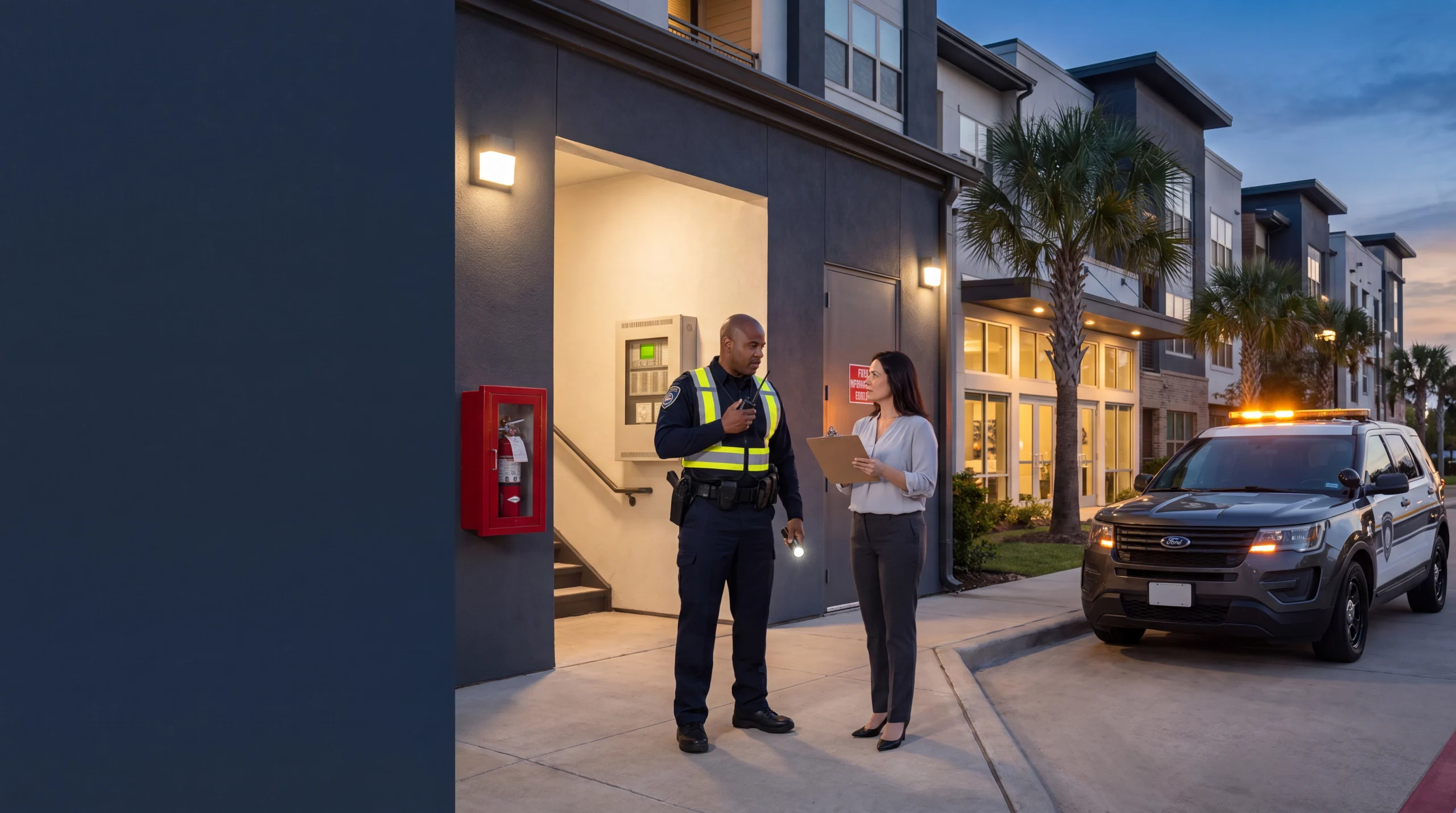
Clear records demonstrate due diligence, support insurance and compliance reviews, and help teams learn from each incident. GPS-verified logs and 24/7 dispatch notes show exactly when and where patrols occurred, which can be essential if questions arise later.
American S.E.A.L. Patrol Division focuses on proactive, apartment-friendly operations—mobile and foot patrols, courtesy officers for common areas, CCTV monitoring with real-time response, and gate access control when needed. Our team integrates with property operations, coordinates with your vendors, and produces time-stamped, GPS-verified documentation you can trust.
American S.E.A.L. Patrol Division
16420 Park Ten Place, #590, Houston, TX 77084
Licensed, bonded, insured — Texas DPS Private Security Bureau License #C28662701
Life safety comes first. When alarms or sprinklers are down, a clear plan and accountable fire watch services Houston help protect residents and staff while keeping your property compliant. If you need rapid, reliable coverage with GPS-verified patrols and 24/7 dispatch, our Houston team is ready to help. Request a free quote or contact dispatch to get started.
Short answer: A fire watch is continuous, documented patrol when life safety systems are impaired, activated as soon as an impairment is confirmed or when the AHJ (often HFD) directs it.
Expanded answer: In Houston, a fire watch provides human oversight whenever fire alarms, sprinklers, or related life safety systems are out of service or impaired. You should begin immediately after confirming an impairment—or sooner if the Authority Having Jurisdiction (AHJ), often the Houston Fire Department (HFD), instructs you to start. The goal is zero coverage gap until systems are restored and the AHJ/monitoring company clears you to end.
Short answer: The AHJ is often the Houston Fire Department; follow your vendor’s and HFD’s directions and document all notifications.
Expanded answer: For most Houston multifamily and commercial properties, the AHJ is the Houston Fire Department. If you’re unsure, call your alarm/sprinkler vendor first and follow their guidance and any HFD directions. Log who you spoke with, the time, any reference numbers, and the instructions received. Also complete any required notifications with your monitoring company.
Short answer: Start immediately once you confirm the impairment or when directed by the AHJ—don’t leave a coverage gap.
Expanded answer: Life safety is the priority. As soon as a panel is offline, sprinklers are shut down, or detection/notification is compromised, activate emergency fire watch. If the AHJ provides a start time or staffing requirement, follow it. Keep clear documentation of the start time and coverage plan.
Short answer: They patrol affected areas, keep exits clear, spot hazards, and record time-stamped observations—escalating issues to 911/dispatch as needed.
Expanded answer: A compliant round covers interiors, exteriors, corridors, stairwells, attics, garages, and utility rooms. Officers verify clear egress paths, check for smoke or unusual odors, confirm fire extinguishers are visible and accessible (visual checks), note damaged signage/lighting, and document every pass. They maintain real-time communication with dispatch and escalate hazards immediately per protocol.
Short answer: The AHJ sets the frequency—some cases require continuous roving; others allow defined intervals.
Expanded answer: Patrol frequency depends on the severity of impairment and the AHJ’s direction. Your instructions might be continuous presence or rounds at specific intervals across all affected areas. Whatever the requirement, keep consistent, time-stamped logs and note any temporary access limitations.
Short answer: Yes. Many compliant fire watch assignments are handled by trained unarmed officers; staffing depends on AHJ guidance and property risk.
Expanded answer: The AHJ and your risk profile determine whether armed or unarmed officers are appropriate. Trained unarmed guards regularly perform compliant fire watch in Houston. What matters most is training, clear post orders, and consistent documentation—not the presence of a firearm.
Short answer: Start/stop times, coverage schedule, officer names, patrol logs, incident reports, vendor tickets, and all notifications.
Expanded answer: Maintain a complete paper trail: start and end times, buildings covered, patrol frequency and routes, officer names/badges, time-stamped (ideally GPS-verified) logs, incident reports and photos (if appropriate), vendor work orders, restoration confirmation, and records of all notifications to your monitoring company and the AHJ.
Short answer: Until systems are restored and the AHJ/monitoring company confirms you can end coverage.
Expanded answer: Duration varies with the impairment and repair timeline. Continue fire watch until your vendor verifies restoration, you have written confirmation, and the AHJ and/or monitoring partner indicates coverage can be terminated. Document the close-out in your final log.
Short answer: With trained officers, GPS-verified patrol logs, 24/7 live dispatch, apartment-focused coverage, and property-specific post orders.
Expanded answer: Our Houston team provides mobile and foot patrols, time-stamped GPS-verified rounds, and real-time incident documentation supported by 24/7 live dispatch. We tailor post orders to your layout—including garages, amenity spaces, and package rooms—and can assist with controlled access when needed. Licensed, bonded, and insured; Texas DPS PSB License #C28662701. From first-hand experience on Houston multifamily sites, the fastest activations happen when managers share a simple site map, access codes, and an alarm vendor contact up front—this lets officers lock in patrol routes, verify problem areas quickly, and keep residents informed without missed rounds.
Short answer: A site map, keys/fobs and codes, access to panels/risers, vendor contacts, and marked high-risk areas.
Expanded answer: Gather a labeled site map (buildings, stair IDs, riser rooms), keys/fobs, gate and elevator access, roof ladders (if applicable), and after-hours contacts. Flag high-risk zones such as mechanical rooms, storage areas, attics, garages, and amenity spaces. Having this ready supports immediate, compliant coverage.
Short answer: Yes—officers can help manage controlled access and document vendor arrivals and departures.
Expanded answer: With management authorization, officers can coordinate entry to riser rooms, gates, and panels, escort contractors as needed, and record vendor arrival/departure times in the log. This supports safe access and thorough documentation during repairs and testing.
Short answer: Contact our team or request a free quote online for rapid deployment.
Expanded answer: For urgent fire watch services Houston, visit our Contact Us page or request a Free Quote to share your property details and timeline. We mobilize trained officers with GPS-verified logging and 24/7 dispatch support. Links: Contact Us (https://www.americanspd.com/contact-us/) and Free Quote (https://www.americanspd.com/free-quote/). You can also learn more about our broader Houston security services at https://americanspd.com/.