Moe Shariff · October 2, 2026
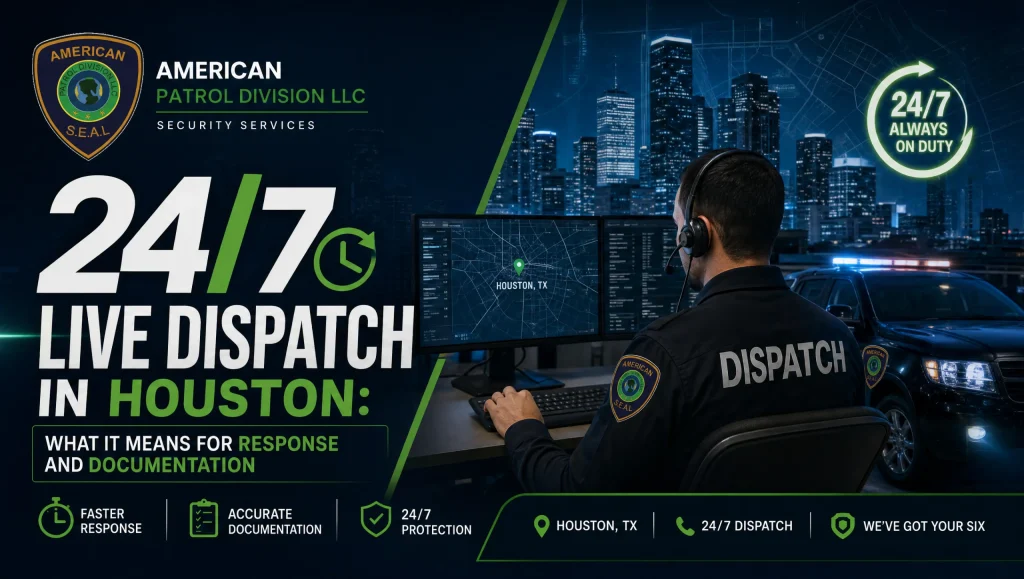
If you manage apartments or multifamily communities in Houston, you’ve likely heard providers talk about “24/7 live dispatch.” Here’s what that actually looks like in the real world. At American S.E.A.L. Patrol Division, our 24/7 live dispatch Houston desk is staffed by trained professionals who answer tenant hotlines, triage calls, deploy the nearest patrol, coordinate with cameras and gate access, and produce clear, time-stamped documentation you can act on—day or night.
On a recent Saturday night in West Houston, our dispatcher took a tenant hotline call about noise and suspicious activity near a gate. Within a minute, we reviewed nearby camera feeds, routed the closest mobile unit, and logged the call with a GPS/timestamp. The officer arrived, assessed the situation, and issued a courteous warning. Before the officer cleared, the dispatcher uploaded a brief incident report with photos for the property manager’s morning review. It’s the kind of calm, methodical workflow our team relies on—nothing flashy, but consistently effective for Houston communities.
24/7 live dispatch in Houston means a human-staffed security operations desk that answers tenant hotlines around the clock, triages calls, routes the nearest patrol, coordinates with CCTV and gate access, and produces time-stamped incident documentation property managers can act on.
A well-run 24/7 live dispatch Houston program connects your tenants, managers, patrol officers, and cameras into a single responsive system: fast, informed response when it counts and incident documentation you can trust in the morning. With human-staffed triage, GPS-verified patrol coordination, and clear, shareable reports, you get the operational backbone your multifamily community needs to reduce repeat issues over time. If you want a calm, scalable plan tailored to your property, contact our dispatch team today—we’re here to help you align coverage, communication, and reporting across your Houston portfolio.
Image alt text suggestion: 24/7 live dispatch Houston—dispatcher coordinating patrol across CCTV and patrol units
Short answer: It’s a human-staffed security desk that answers tenant hotlines, triages calls, routes patrols, coordinates with cameras and gates, and documents incidents around the clock.
Expanded answer: In practice, 24/7 live dispatch Houston means trained local dispatchers answer every call, ask clarifying questions, weigh context, and send the nearest patrol unit using GPS. They can pull CCTV feeds, provide or verify gate access, and create time-stamped, plain-language reports managers can act on the next morning.
Short answer: Real people answer, verify your location, assess risk, and route the closest patrol—day or night.
Expanded answer: The hotline is the front door for alerts. Dispatchers confirm who/what/where/when, note immediate hazards, and assign a priority level. High-risk issues (threats to people or property) move first. Every call is logged with timestamps and notes so nothing gets lost between shifts.
Short answer: Safety risks first; nuisance items are documented and scheduled.
Expanded answer: Dispatchers quickly classify calls: imminent threats and property damage get immediate response; lower-priority concerns are queued for the nearest available unit. This triage—paired with GPS-aware routing—keeps officers focused on what matters most in the moment.
Short answer: Closest unit is sent, with en route/on scene/cleared timestamps and GPS.
Expanded answer: Dispatch locates the nearest vehicle or foot patrol and provides concise details to speed response. Officers confirm each stage, creating verifiable proof of presence. For multifamily properties, courtesy officers and roving units share standardized updates for a clear picture without inbox overload.
Short answer: Dispatchers verify activity on camera and manage gate entries in real time.
Expanded answer: If a caller references a hotspot or motion is detected, dispatch pulls up the exact feed, guides officers, and handles access—temporary codes, vendor checks, or looping in maintenance if hardware is failing. Live verification reduces response time and improves outcomes.
Short answer: Time-stamped, GPS-verified logs and plain-language reports—often with photos.
Expanded answer: Reports include what triggered the response, observations, actions taken, and any guidance to tenants or visitors. Follow-up notes flag maintenance needs (e.g., lighting, gates). Sensitive media is shared via secure links to balance transparency and privacy. Ask to see samples via our Houston security services hub: https://americanspd.com/
Short answer: Your property-specific call tree defines it.
Expanded answer: We follow your preferred outreach order (manager, maintenance, towing, HPD non-emergency) and contact method (call, text, or email). Overnight alerts can be limited to high-priority events; routine matters can be summarized in morning reports so managers aren’t woken for non-urgent issues.
Short answer: Dispatch alerts a patrol supervisor, notifies the manager, and coordinates with HPD or the fire department as needed.
Expanded answer: Predefined steps ensure nothing is missed. The dispatcher maintains a real-time log, supports officers with camera checks or additional resources, and compiles a clear incident summary afterward with recommendations.
Short answer: Contacts, escalation tiers, camera/gate access, and reporting preferences.
Expanded answer: A quick site walkthrough or map helps identify entrances, blind spots, and patterns. We then build call flows, patrol routes, and distribution lists around your staffing, resident expectations, and budget. When you’re ready, request a free quote here: https://www.americanspd.com/free-quote/
Short answer: Access-controlled sharing, clear retention policies, and full licensing/insurance.
Expanded answer: Reports and media are shared securely with authorized stakeholders. We’re licensed, bonded, and insured in Texas (Texas DPS Private Security Bureau License #C28662701). If you need specifics on report access or retention, contact us: https://www.americanspd.com/contact-us/
Short answer: Large footprints, busy common areas, or recurring issues benefit from combined coverage.
Expanded answer: GPS-verified mobile patrols strengthen deterrence and close response gaps across multiple entrances. Courtesy officers keep clubhouses, pools, package rooms, and garages orderly with dispatch support. For details, see GPS-verified mobile patrols: https://www.americanspd.com/?p=3944 and our apartment security overview: https://www.americanspd.com/?p=3951
Short answer: Yes—dispatch-coordinated fire watch with compliant rounds and documentation.
Expanded answer: If your alarm or sprinkler system is impaired, we align patrol schedules and reporting to meet requirements until systems are restored. Learn more: https://www.americanspd.com/?p=3952 and https://www.americanspd.com/?p=3948
{
“@context”: “https://schema.org”,
“@type”: “FAQPage”,
“mainEntity”: [
{
“@type”: “Question”,
“name”: “What is “24/7 live dispatch Houston” for multifamily communities?”,
“acceptedAnswer”: {
“@type”: “Answer”,
“text”: “Short answer: It’s a human-staffed security desk that answers tenant hotlines, triages calls, routes patrols, coordinates with cameras and gates, and documents incidents around the clock. Expanded answer: In practice, 24/7 live dispatch Houston means trained local dispatchers answer every call, ask clarifying questions, weigh context, and send the nearest patrol unit using GPS. They can pull CCTV feeds, provide or verify gate access, and create time-stamped, plain-language reports managers can act on the next morning.”
}
},
{
“@type”: “Question”,
“name”: “How does the tenant hotline work after hours?”,
“acceptedAnswer”: {
“@type”: “Answer”,
“text”: “Short answer: Real people answer, verify your location, assess risk, and route the closest patrol—day or night. Expanded answer: The hotline is the front door for alerts. Dispatchers confirm who/what/where/when, note immediate hazards, and assign a priority level. High-risk issues (threats to people or property) move first. Every call is logged with timestamps and notes so nothing gets lost between shifts.”
}
},
{
“@type”: “Question”,
“name”: “How are calls prioritized for real-time response?”,
“acceptedAnswer”: {
“@type”: “Answer”,
“text”: “Short answer: Safety risks first; nuisance items are documented and scheduled. Expanded answer: Dispatchers quickly classify calls: imminent threats and property damage get immediate response; lower-priority concerns are queued for the nearest available unit. This triage—paired with GPS-aware routing—keeps officers focused on what matters most in the moment.”
}
},
{
“@type”: “Question”,
“name”: “How does patrol coordination work with GPS-verified logs?”,
“acceptedAnswer”: {
“@type”: “Answer”,
“text”: “Short answer: Closest unit is sent, with en route/on scene/cleared timestamps and GPS. Expanded answer: Dispatch locates the nearest vehicle or foot patrol and provides concise details to speed response. Officers confirm each stage, creating verifiable proof of presence. For multifamily properties, courtesy officers and roving units share standardized updates for a clear picture without inbox overload.”
}
},
{
“@type”: “Question”,
“name”: “How does dispatch integrate with CCTV monitoring and gate access?”,
“acceptedAnswer”: {
“@type”: “Answer”,
“text”: “Short answer: Dispatchers verify activity on camera and manage gate entries in real time. Expanded answer: If a caller references a hotspot or motion is detected, dispatch pulls up the exact feed, guides officers, and handles access—temporary codes, vendor checks, or looping in maintenance if hardware is failing. Live verification reduces response time and improves outcomes.”
}
},
{
“@type”: “Question”,
“name”: “What incident documentation will property managers receive?”,
“acceptedAnswer”: {
“@type”: “Answer”,
“text”: “Short answer: Time-stamped, GPS-verified logs and plain-language reports—often with photos. Expanded answer: Reports include what triggered the response, observations, actions taken, and any guidance to tenants or visitors. Follow-up notes flag maintenance needs (e.g., lighting, gates). Sensitive media is shared via secure links to balance transparency and privacy. Ask to see samples via our Houston security services hub: https://americanspd.com/”
}
},
{
“@type”: “Question”,
“name”: “Who gets notified—and when?”,
“acceptedAnswer”: {
“@type”: “Answer”,
“text”: “Short answer: Your property-specific call tree defines it. Expanded answer: We follow your preferred outreach order (manager, maintenance, towing, HPD non-emergency) and contact method (call, text, or email). Overnight alerts can be limited to high-priority events; routine matters can be summarized in morning reports so managers aren’t woken for non-urgent issues.”
}
},
{
“@type”: “Question”,
“name”: “How are high-priority incidents escalated?”,
“acceptedAnswer”: {
“@type”: “Answer”,
“text”: “Short answer: Dispatch alerts a patrol supervisor, notifies the manager, and coordinates with HPD or the fire department as needed. Expanded answer: Predefined steps ensure nothing is missed. The dispatcher maintains a real-time log, supports officers with camera checks or additional resources, and compiles a clear incident summary afterward with recommendations.”
}
},
{
“@type”: “Question”,
“name”: “What should property managers prepare to get started?”,
“acceptedAnswer”: {
“@type”: “Answer”,
“text”: “Short answer: Contacts, escalation tiers, camera/gate access, and reporting preferences. Expanded answer: A quick site walkthrough or map helps identify entrances, blind spots, and patterns. We then build call flows, patrol routes, and distribution lists around your staffing, resident expectations, and budget. When you’re ready, request a free quote here: https://www.americanspd.com/free-quote/”
}
},
{
“@type”: “Question”,
“name”: “How do you handle data privacy and compliance?”,
“acceptedAnswer”: {
“@type”: “Answer”,
“text”: “Short answer: Access-controlled sharing, clear retention policies, and full licensing/insurance. Expanded answer: Reports and media are shared securely with authorized stakeholders. We’re licensed, bonded, and insured in Texas (Texas DPS Private Security Bureau License #C28662701). If you need specifics on report access or retention, contact us: https://www.americanspd.com/contact-us/”
}
},
{
“@type”: “Question”,
“name”: “When should we pair live dispatch with mobile patrols or courtesy officers?”,
“acceptedAnswer”: {
“@type”: “Answer”,
“text”: “Short answer: Large footprints, busy common areas, or recurring issues benefit from combined coverage. Expanded answer: GPS-verified mobile patrols strengthen deterrence and close response gaps across multiple entrances. Courtesy officers keep clubhouses, pools, package rooms, and garages orderly with dispatch support. For details, see GPS-verified mobile patrols: https://www.americanspd.com/?p=3944 and our apartment security overview: https://www.americanspd.com/?p=3951”
}
},
{
“@type”: “Question”,
“name”: “Do you support fire watch or life-safety needs during outages?”,
“acceptedAnswer”: {
“@type”: “Answer”,
“text”: “Short answer: Yes—dispatch-coordinated fire watch with compliant rounds and documentation. Expanded answer: If your alarm or sprinkler system is impaired, we align patrol schedules and reporting to meet requirements until systems are restored. Learn more: https://www.americanspd.com/?p=3952 and https://www.americanspd.com/?p=3948”
}
}
]
}